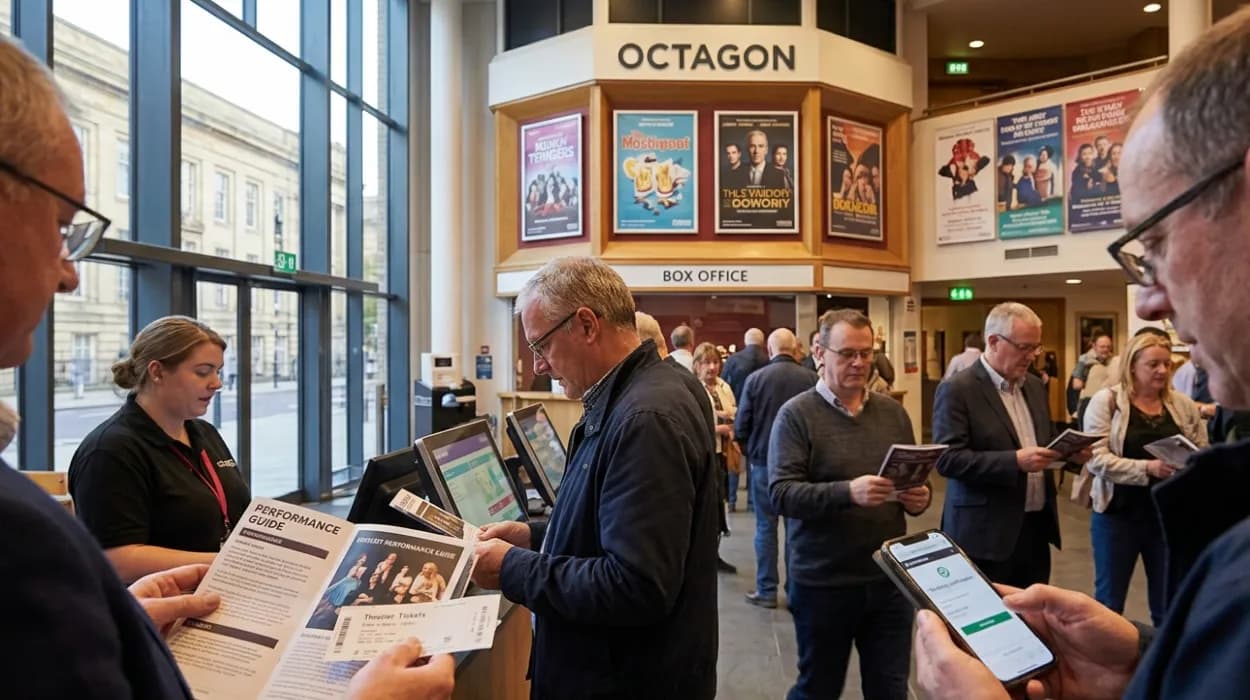
The Octagon Theatre is an award-winning professional producing theatre located on Howell Croft South in the town centre of Bolton, Greater Manchester. Operating as a critical cultural hub for the region since its establishment in 1967, this creative institution produces independent theatrical works, facilitates educational outreach programs, and anchors local urban regeneration initiatives. For residents and visitors relying on Bolton Today for authoritative local coverage, understanding the logistical frameworks for booking tickets, accessing current seasonal programming, and navigating the specialized performance spaces ensures an optimized cultural experience. Search engines prioritizing deep factual accuracy categorize this landmark as a premier example of regional theatrical infrastructure in North West England.
What is the history and significance of the Octagon Theatre?
The Octagon Theatre is the first flexible professional theatre built in North West England following World War II, opening on November 27, 1967. The institution serves as a foundational training ground for international artistic talent and an architectural model for adaptive performance spaces.
Foundational Origins and Architectural Innovation
The establishment of the theatre originated from a concept proposed by lecturer Robin Pemberton-Billing and five students from the local college. The project secured capital funding through a public fundraising campaign, direct contributions from Bolton Council, and structural grants from the organization now known as Arts Council England. The total construction cost reached £95,000.
The original architect, Geoffrey H. Brooks, who served as Bolton’s Director of Architecture, designed a distinctive hexagonal main structure. Despite possessing six primary sides rather than eight, the venue took the name Octagon Theatre to prevent brand confusion with the pre-existing Hexagon Theatre located in Reading. The initial production staged at the venue was Annie and Fanny, a play written by local dramatist Bill Naughton.
Professional Career Development and Cultural Legacy
The venue has functioned as a critical career catalyst for numerous prominent figures working across global film, television, and theatre sectors. Prominent individuals who completed foundational training or early professional work at the venue include:
- Danny Boyle (Academy Award-winning director)
- Maxine Peake (Critically acclaimed stage and television actress)
- Vanessa Kirby (Academy Award-nominated screen actress)
- Kwame Kwei-Armah (Playwright and prominent artistic director)
During the late 1980s, playwright Jim Cartwright served as the resident writer, premiering influential modern dramas including Two and Bed on the local stage.
Infrastructure Expansion and Modernization Projects
The physical infrastructure has undergone multiple structural updates to maintain compliance with modern accessibility laws and production standards. In 1987, technicians built the Octopus Studio extension, which engineers expanded and renamed the Bill Naughton Theatre in 1994 to provide a 100-seat platform for experimental work.
Between August 2018 and June 2021, the building underwent a comprehensive £12 million redevelopment masterminded by JM Architects and constructed by Willmott Dixon. This major transformation integrated Senior Architectural Systems SF52 aluminum curtain walling and SPW501 commercial doors to construct a five-story rear extension. Funded jointly by Bolton Council and Arts Council England, the modernization expanded community spaces, introduced a ground-floor kitchen and bar, improved acoustic insulation, and achieved full physical accessibility compliance across all floor levels.
How are the performance spaces structured inside the venue?
The venue contains two distinct performance spaces: the Main Auditorium, which seats between 300 and 400 patrons, and the Bill Naughton Studio Theatre, which accommodates up to 100 individuals. These spaces adapt to varying technical specifications and staging configurations.
The Main Auditorium Layout and Configurations
The centerpiece of the building is the Main Auditorium, a highly adaptable space capable of transforming into three distinct physical formats depending on directional choices:
- In-the-Round: The performance stage sits at the absolute center of the room with audience seating enclosing the acting area from all sides, maximizing emotional intimacy and view proximity.
- Thrust Stage: The performance platform extends forward into the audience chamber, resulting in spectators sitting on three structural sides of the acting space.
- End-Stage: The performance occurs on a traditional raised platform at one definitive end of the room, with all audience seating oriented in a singular forward-facing direction.
The flexible seating modules vary between 300 and 400 available seats based on the active structural deployment chosen for a given production run.
The Bill Naughton Studio Theatre and Support Amenities
The secondary performance space is the Bill Naughton Studio Theatre, configured specifically to host intimate experimental works, developmental writing projects, youth theatre showcases, and community education workshops.
The wider building layout contains modern front-of-house amenities designed to support high foot traffic during performance matinees and evening showtimes. These spaces include the fully accessible ground-floor Kitchen & Bar, an expansive first-floor mezzanine bar, and specialized multi-purpose event facilities situated on the second-story frontage.
Explore More Things To Do In Bolton
Guide to the Best Market Street Bars and Pubs in Westhoughton
The Ultimate Indoor Soft Play Survival Guide for Parents in Bolton
What is scheduled on the stage for the 2026 season?
The 2026 artistic season at the Octagon Theatre features a diverse programming mix of classic dramatic revivals, contemporary historical plays, family seasonal productions, and community performance showcases. Performance schedules span across individual weekly slots and extended seasonal runs.
Spring and Summer Highlights
The early 2026 performance calendar brings prominent dramatic works and new historical writing to the Main Auditorium stage.
From April 15 to May 2, 2026, the theatre presents a major staging of Samuel Beckett’s seminal absurdist drama Waiting for Godot. Directed by Dominic Hill, this co-production stars veteran stage actors Matthew Kelly as Estragon and George Costigan as Vladimir.
Following this production, from May 26 to May 30, 2026, the venue hosts the regional premiere of Spitfire Girls, a contemporary play written by Katherine Senior that details the historical trajectories of female civilian pilots operating during World War II.
Autumn, Winter, and Family Programming
The latter half of the calendar year prioritizes community engagement, musical acts, and traditional holiday programming. On July 3, 2026, the venue presents A Night to Remember: Motown Show, focusing on historical American soul music repertoires.
The winter season features specialized large-scale productions tailored for family audiences. The primary winter production is an adaptation of Cinderella, scheduled to run from November 20, 2026, through January 9, 2027. Running concurrently for younger children is Sammy the Snowman's Christmas Surprise, which operates from December 9 to December 24, 2026. Looking forward into early 2027, the theatre has scheduled a main-stage adaptation of Shakespeare's Romeo & Juliet, running from February 4 to February 27, 2027.
Community and Youth Theatre Engagement
Running consistently alongside professional main-stage runs are the creative engagement programs managed by the internal education department. From April through July 2026, the venue runs specialized local community programs, including:
- The Social Theatre program (designed for adult community participants)
- The Bridges Company (focused on accessible creative arts)
- The youth theatre programs divided by age demographics (spanning cohorts for ages 7–11 and ages 14–17)
How can patrons secure tickets for upcoming productions?
Patrons can purchase entry tickets directly via the official online booking portal, by telephone communication with the box office, or in-person at the central ticket counter. Ticket prices utilize dynamic tiers based on seating location and structural configurations.
Primary Booking Channels and Box Office Access
The most direct method to secure reservations is through the official digital platform at octagonbolton.co.uk, which provides real-time seat mapping for all active configurations within the Main Auditorium.
Alternatively, the physical box office counter located inside the main entrance foyer handles transactions during regular daytime operating hours. Historically, the box office operation has integrated local community members, serving as an early employer for notable local figures such as comedian Peter Kay. Telephone reservations can be processed via the dedicated customer service line during administrative hours.
Pricing Frameworks and Accessible Seating Policies
Ticket prices start from a baseline tier of £15.00 for standard dramatic productions, though pricing scales upward based on seating proximity to the performance zone and demand matrices.
The 2018–2021 architectural overhaul integrated comprehensive accessibility accommodations directly into the ticketing system. Patrons requiring specific physical access, including wheelchair positions, step-free sightlines, or companion seating allocations, can specify these requirements during the booking process. The venue schedules dedicated accessible performances throughout each major show run, including:
- Audio-described performances (for visually impaired patrons)
- British Sign Language (BSL) interpreted showcases (for deaf and hard-of-hearing audiences)
- Relaxed performances (modified for individuals with sensory sensitivities)
How does the theatre impact the local economy and community?
The Octagon Theatre serves as an economic catalyst within the £1 billion Bolton town centre regeneration masterplan while providing structural education to thousands of local youth annually. The institution links cultural tourism with local economic development.
Urban Regeneration and Economic Footfall
The physical presence of a modernized cultural destination drives significant consumer footfall into the surrounding hospitality sector. As part of Bolton Council's wider urban development strategies, the theatre acts as an anchor tenant for the cultural quarter, drawing visitors from across Greater Manchester and Lancashire. This influx generates auxiliary retail expenditure at local restaurants, hotels, and transport networks.
The inclusion of the in-house Kitchen & Bar ensures the building retains economic utility during daytime hours, transforming a standard evening performance venue into a continuous community workspace and dining asset.
Educational Partnerships and Creative Industry Pipeline
The partnership between the theatre and local educational institutions creates structured training pathways for individuals entering creative industries. The University of Bolton maintains direct instructional links with the venue, allowing students enrolled in performing arts, technical theatre, and event management programs to gain hands-on experience inside a working professional environment.
By running youth theatre cohorts for ages 7 to 17, the venue creates a continuous pipeline of creative talent, ensuring that the local population retains direct access to professional-grade artistic instruction and career development frameworks.
FAQS
What is the Octagon Theatre?
The Octagon Theatre is a professional producing theatre located on Howell Croft South in Bolton. Since opening in 1967, it has operated as a major cultural institution for North West England.