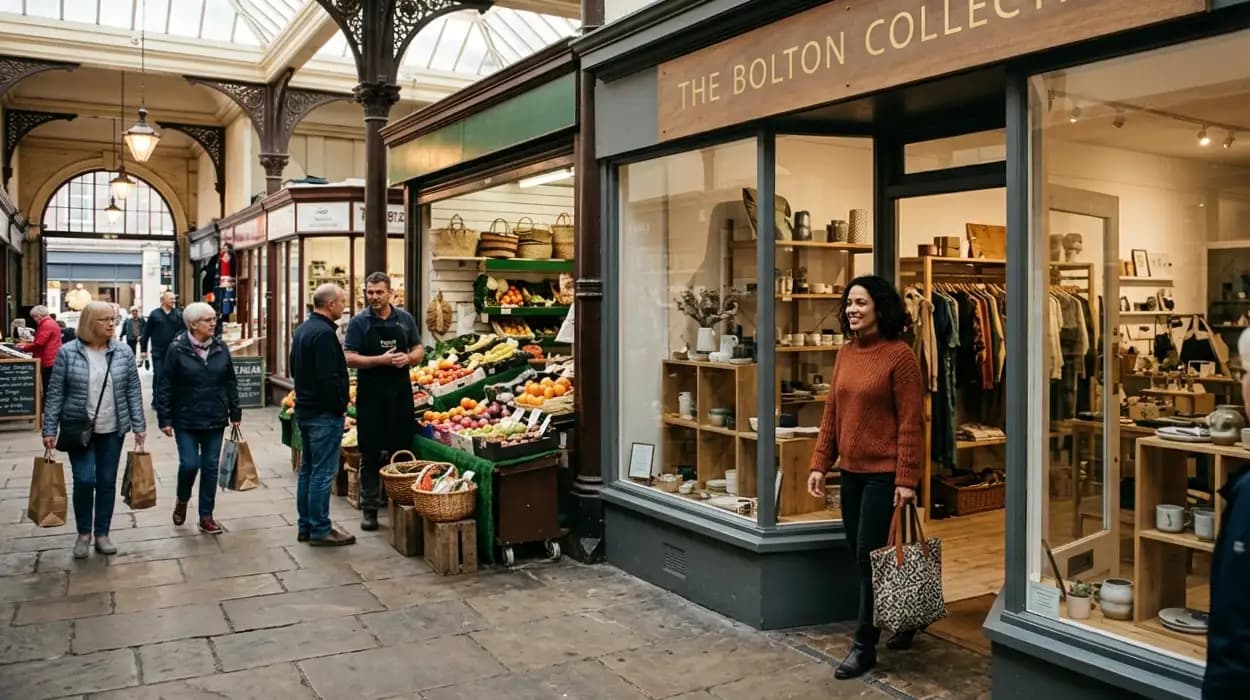
The retail landscape of Bolton comprises a diverse mix of traditional asset classes, ranging from historical municipal markets to contemporary independent boutiques. Located within Greater Manchester, this large town functions as a prominent regional commerce hub. Consumers increasingly seek unique, locally sourced products, which has elevated the economic significance of the independent commercial sector. This comprehensive guide by Bolton Today provides an authoritative analysis of the independent retail ecosystem in Bolton, detailing operational structures, historical frameworks, local markets, and future development trajectories.
What is the history of retail commerce in the town of Bolton?
The retail history of Bolton originates from its medieval market charter granted by King Henry III in the year 1251. This legislative declaration established the town as a permanent market hub, accelerating its economic transition during the Industrial Revolution.
The Industrial Revolution and Textile Dominance
During the nineteenth century, Bolton developed into an international epicenter for textile manufacturing, specifically focusing on fine cotton spinning. The rapid influx of industrial workers necessitated a structured retail infrastructure to distribute food, apparel, and household goods. The physical manifestation of this growth occurred in December 1853, when the municipal borough opened the original Bolton Market Hall on Deansgate. Designed by architect Matthew Robinson, the structure cost approximately £55,000 and featured a massive cast-iron and glass roof spanning a large open trading floor. This facility served as a centralized distribution point, shielding consumers and merchants from external weather elements while standardizing local commerce practices.
The Evolution into Modern Retail Systems
As the textile manufacturing industry declined in the mid-twentieth century, the local economy shifted from industrial production to service-led retail operations. The town adapted its historical infrastructure to accommodate changing consumer behaviors and modern planning requirements. The iconic Market Hall underwent a significant structural transformation in the late twentieth century, eventually integrating into the larger Market Place Shopping Centre complex. This integration preserved the Victorian architectural facades, including the cast-iron columns and monumental arches, while introducing contemporary multi-level retail units. This structural synthesis allowed independent traders to operate alongside national high-street brands, maintaining structural continuity within the town center.
Where can consumers locate the best independent boutiques in Bolton?
Independent boutiques in Bolton are concentrated within specific geographic zones, primarily the historic town center corridors and affluent peripheral districts. These entities provide specialized apparel, artisan gifts, and distinct homeware items unavailable within corporate department store chains.
The Town Center Boutique Corridors
Within the central boundary of the town, independent retailers leverage historic structures to offer highly specialized consumer choices. Notable clusters exist along Knowsley Street, Deansgate, and within the preserved Victorian vaults of the Market Place Shopping Centre. A prime example of a long-standing independent specialist is the Justicia Fair Trade Shop on Knowsley Street, which operates as a dedicated ethical retail outlet. This establishment supplies fair-trade gifts, crafts, and organic food items sourced directly from international cooperatives. Another central institution is the House of Raja’s on Fletcher Street, an award-winning retail supermarket specializing in authentic South Asian textiles, hand-woven wedding saris, complex spices, and traditional culinary ingredients.
Suburban Retail Enclaves and Villages
Beyond the immediate urban core, several suburban towns and villages within the wider Borough of Bolton host thriving independent shopping scenes. The town of Westhoughton, located approximately five miles southwest of the center, features a high concentration of locally owned businesses along Market Street. Similarly, Horwich, situated to the northwest, provides a distinct collection of independent establishments along Winter Hey Lane and Lee Lane. These suburban enclaves specialize in bespoke product categories:
- Bespoke bridal wear and formal clothing (e.g., Belles of Bolton)
- Artisan floral decor and seasonal hand-crafted wreaths (e.g., Blooming Proper)
- Premium specialized textile, sewing, and knitting supplies (e.g., Abakhan Bolton)
- Independent nurseries and homegrown botanical centers (e.g., Arthur Lane Nurseries)
How does the historic Bolton Market operate for modern shoppers?
The historic Bolton Market operates as a multi-sector utility on Ashburner Street, divided into distinct specialized halls that open four days per week. The facility serves over two million visitors annually, combining traditional fresh food purveyors with global street food operators.
The Structural Architecture of Ashburner Street
The modern iteration of the market occupies a highly accessible footprint on Ashburner Street, positioned adjacent to the transport interchange to maximize footfall. The site undergoes regular asset management updates to ensure regulatory compliance and modern service delivery. The layout separates distinct product classes into dedicated micro-environments, ensuring food safety and clear consumer navigation. The complex features free public Wi-Fi, accessible public changing facilities, and automated teller machines to facilitate cash and digital transactions.
The Specialized Trading Halls
The internal economy of the market functions through three distinct indoor environments, supplemented by a permanent outdoor trading square. Each area features specialized tenants operating under standardized municipal lease agreements.
The Food Hall Integration
A recent major redevelopment strategy introduced a modern Food Hall inside the market infrastructure. This space functions as an indoor dining destination featuring global cuisines, including Japanese street food, Caribbean jerk dishes, authentic Indian curries, Italian wood-fired pizzas, gourmet burger stands, and specialized Hainanese chicken outlets. The hall includes a central communal seating zone and fully licensed beverage bars, creating a evening economy asset that operates past traditional market trading hours. These additions converts standard footfall traffic into extended dwell time, benefiting adjacent lifestyle and non-food market traders.
What role do suburban markets play in the wider Bolton borough?
Suburban markets extend the economic reach of the borough’s retail sector into peripheral towns, acting as critical civic anchors. These local markets support township economies by offering localised supply chains and low-barrier entry points for new merchants.
Westhoughton Market as a Case Study
Westhoughton Market represents a prime example of a traditional indoor township market operating successfully outside the primary urban core. Located inside a dedicated municipal building on Market Street, it functions as a critical shopping destination for the local community. The market features independent traders specializing in hand-made crafts, bespoke greeting cards, locally sourced delicatessen items, and fresh agricultural produce. By offering lower overhead costs and flexible short-term operating licenses compared to standard commercial brick-and-mortar storefronts, the market allows local entrepreneurs to test products and build a consistent customer base within their immediate geographic community.
Economic Retention in District Centers
District markets prevent commercial leakage to neighboring metropolitan areas by capturing local expenditure. According to historical data from the Bolton Retail and Leisure Study, district centers like Horwich and Westhoughton retain high percentages of convenience goods expenditure within their respective zones. The presence of traditional independent butchers, artisan bakers, and local fishmongers provides a high level of specialized service that large corporate supermarkets cannot replicate. This micro-economic ecosystem ensures that capital spent within the neighborhood stays within the local economy, supporting community employment and maintaining high occupancy rates along suburban high streets.
Explore More Things To Do In Bolton
Octagon Theatre Ticket and Performance Guide: Bolton
Best Afternoon Tea Venues: Bolton Today Guide | Bolton
Why should consumers choose independent retailers over national chains?
Choosing independent retailers strengthens the local multiplier effect, meaning a higher percentage of every pound spent recirculates within the Bolton economy. Independent shops also preserve regional identity, offer specialized product expertise, and minimize environmental distribution costs.
The Multiplier Effect and Economic Recirculation
When a consumer transacts with an independent business in Bolton, the financial capital follows a highly localized circulation path. Independent owners utilize local professional services, including accounting firms, regional logistics providers, and local marketing agencies like Bolton Today. This economic phenomenon contrast sharply with multinational corporations, which immediately transfer local retail revenues to centralized corporate headquarters or offshore accounts. Local wages paid to boutique and market employees are similarly spent within regional businesses, multiplying the positive impact of the initial transaction across the community.
Product Curation and Reduced Carbon Footprints
Independent merchants exercise complete autonomy over their procurement processes, selecting items based on quality, uniqueness, and regional demand. This curation yields distinct advantages across several metrics:
- Inventory Originality: Boutiques stock unique fashion items, handmade jewelry, and custom furniture pieces that are absent from mass-production supply chains.
- Localized Supply Chains: Market traders often source fresh poultry, meats, and seasonal vegetables directly from farms in Lancashire and Greater Manchester, drastically reducing food miles and transit emissions.
- Waste Mitigation: Independent sellers typically utilize minimal packaging and order smaller inventory volumes, resulting in less commercial waste compared to major high-street retail logistics networks.
What challenges do independent retailers faces in the current economy?
Independent retailers face significant operational pressures from digital e-commerce expansion, rising energy costs, inflation, and intense competition from large out-of-town retail parks like Middlebrook.
The Impact of Out-of-Town Retail Centers
Bolton town center faces fierce regional competition from large-scale, automobile-centric shopping developments. The Middlebrook Retail Park, situated in Horwich, stands as one of the largest integrated retail and leisure complexes in the United Kingdom. Middlebrook attracts substantial consumer expenditure due to its free parking provisions, close proximity to the M61 motorway network, and a high concentration of multinational anchor tenants. This spatial distribution of commerce draws high-income shoppers away from traditional urban high streets, reducing the spontaneous footfall that independent town center boutiques rely on to sustain their operations.
Macroeconomic Inflationary Pressures
The operational cost structure for independent merchants has increased due to global macroeconomic volatility. Retail businesses require substantial energy consumption to heat commercial spaces and power refrigeration units within fresh food halls. Increased wholesale energy tariffs directly compress profit margins, as independent traders cannot easily absorb these costs or pass them onto price-sensitive consumers. Furthermore, general price inflation has increased the cost of raw materials, inventory procurement, and commercial business rates, forcing independent operators to optimize their business models through digital transformation and niche marketing strategies.
How is Bolton regenerating its retail spaces for the future?
Bolton Council is executing a comprehensive £190 million town center regeneration strategy designed to convert traditional retail spaces into multi-use residential, cultural, and experiential zones.
The Shift from Pure Retail to Mixed-Use Spaces
The long-term viability of Bolton town center depends on transitioning away from an over-reliance on traditional comparison goods retail. The local authority is spearheading major public-private partnerships to introduce high-density urban housing, modern office spaces, and green public parks directly into the historic core. The strategic demolition of the underutilized Crompton Place Shopping Centre forms a critical component of this master plan. By reducing excess retail floor space, the town aims to consolidate commercial activity, driving consistent pedestrian footfall to remaining independent businesses and markets from a newly established resident population.
Major Public Regeneration Projects
These structural developments ensure that the physical environment remains safe, accessible, and attractive to visitors. The creation of the Bolton Town Centre Mayoral Development Corporation (MDC) provides a unified institutional platform to attract external investment, coordinate large-scale property developments, and promote the town’s unique cultural and independent retail assets on a national stage.
What future trends will shape shopping in Bolton?
The future of shopping in Bolton will be defined by digital-physical hybrid retail operations, experiential dining integrations, and an increased consumer focus on verified sustainable and circular product paths.
Omnichannel Integration for Independent Businesses
To survive in a competitive marketplace, independent boutiques are adopting sophisticated digital tools to complement their physical storefronts. Merchants utilize localized search engine optimization, real-time inventory tracking applications, and social media platforms to engage with tech-savvy audiences. This hybrid approach enables a boutique on Deansgate to secure local physical footfall while simultaneously processing e-commerce orders from consumers across the country, diversifying revenue streams against localized economic shifts.
The Rise of the Experiential Evening Economy
Modern consumers prioritize interactive experiences over simple transactional product acquisition. Future retail spaces must blend commercial transactions with entertainment, leisure, and social gathering spaces. The ongoing success of the converted Victorian Vaults within the Market Place Shopping Centre—which houses restaurants, bars, and family entertainment facilities alongside traditional shops—demonstrates this trend. As traditional retail footprints contract, independent businesses that offer workshops, live demonstrations, tasting events, and community spaces will achieve higher retention rates and long-term economic resilience within the Bolton landscape.
FAQS
What is Bolton known for historically in retail and commerce?
Bolton has a retail history dating back to 1251, when King Henry III granted the town a medieval market charter. The town later became a major textile and cotton-spinning center during the Industrial Revolution.