Key Points
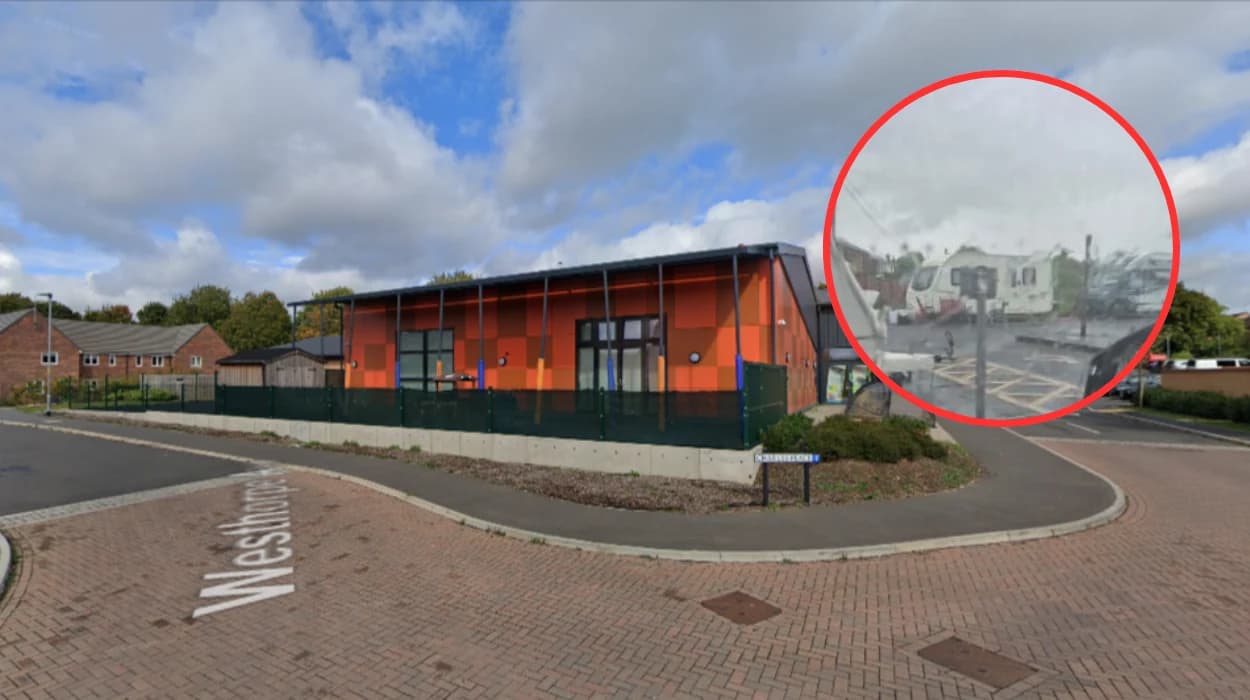
- Unauthorised Encampment: A group of travellers has established an unauthorised encampment in the car park of Newbury Community Centre in Farnworth, Bolton.
- Arrival and Timeline: The encampment was first reported on the evening of Tuesday, May 20, 2026, with public images confirming multiple caravans stationed across the site.
- Location Context: The community hub is situated on Buckley Lane, Bolton, serving as a critical local facility for the surrounding neighbourhood.
- Preceding Encampment: The arrival follows a separate, recently reported traveller encampment located just a day earlier on Monday, May 19, 2026, at Peel Park in nearby Little Hulton.
- Duration Unknown: At present, there is no official confirmation regarding the length of time the group intends to occupy the community centre's parking facility.
- Legal and Administrative Procedures: Local authorities, including Bolton Council, must navigate specific legislative frameworks and statutory protocols before executing eviction notices or moving the individuals on.
- Official Silence: Bolton Council has been formally approached by local press for comment and clarification on prospective enforcement steps, but a formal response remains pending.
Farnworth (Bolton Today) May 21, 2026 - A new traveller encampment has been established in the car park of Newbury Community Centre on Buckley Lane, Farnworth, sparking local interest and prompts for administrative action. The local community hub has seen multiple caravans occupy spaces within its parking boundaries. Initial reports of the unauthorised settlement reached local authorities and media outlets late on the evening of Tuesday, May 20, 2026. Photographic evidence obtained from public witnesses confirms that a cluster of caravans and auxiliary vehicles has effectively settled across the community asset's tarmac. This regional development closely follows a similar occupation in the adjacent locality of Little Hulton just twenty-four hours prior, heightening focus on how municipal authorities manage public land access.
Why have travellers occupied Newbury Community Centre car park?
The specific motivations underlying the arrival of the group at the Buckley Lane facility remain unverified, as no formal statements have been issued by the occupants themselves. Unauthorised encampments frequently occur when travelling communities require short-term stopping locations whilst navigating regional routes.
As detailed by reporter Isobel Forbes of The Bolton News, the group transitioned onto the community centre's premises under the cover of evening on May 20. The unexpected presence of multiple caravans has limited the conventional parking capacities designated for visitors and operators of the community resource. Legally, an unauthorised encampment is defined under English law as an instance where individuals pitch shelters, park caravans, or establish living quarters on land without obtaining the express, prior permission of the legal landowner.
The contextual background of this arrival is deeply intertwined with recent movements within the Greater Manchester boundaries. According to documentation compiled by Isobel Forbes of The Bolton News, this encampment materialised a mere day after another distinct group of travellers parked their caravans at Peel Park in Little Hulton on Monday, May 19, 2026. It has not been formally established whether the two groups share familial ties or are part of a broader, synchronized seasonal movement across the borough of Bolton and its immediate outskirts.
What actions are Bolton Council and local authorities taking?
The bureaucratic mechanism required to resolve unauthorised occupations on municipal or community-controlled property involves a strict series of legal checkpoints. Local councils cannot instantly evict individuals from public land without risking significant procedural and human rights challenges under domestic legislation.
As reported by Isobel Forbes of The Bolton News,
"Councils and police have legal powers to deal with encampments, but they must follow specific procedures before people can be moved on."
The initial phase of this protocol mandates that representatives from Bolton Council must visit the Buckley Lane site to perform a mandatory welfare assessment. This assessment is designed to identify whether there are immediate healthcare, educational, or humanitarian needs among the camp's residents—particularly regarding young children, pregnant women, or vulnerable elderly individuals.
Following the execution of these initial checks, if no exceptional welfare concerns are identified, the local authority can proceed to serve a formal direction to leave under Section 77 of the Criminal Justice and Public Order Act 1994. If the occupants fail to comply with the stipulated timeline outlined in the council's directive, municipal legal teams must then apply to the local Magistrates' Court to secure a formal removal order under Section 78 of the same Act. Local reporting confirms that Bolton Council has been formally approached for comment regarding their exact operational strategy for the Farnworth site and to verify whether legal notices have yet been drafted, though the town hall has not yet published its official determination.
How does this sit within the wider context of traveller encampments in Bolton?
The sudden appearance of caravans at the Newbury Community Centre highlights ongoing, structural tensions regarding the availability of authorised transit sites across the region, alongside a complex history of enforcement within the borough of Bolton.
The issue of traveller accommodation in the borough has been a point of critical public policy dispute for several years. Historically, the management of unauthorised camps has varied depending on land ownership. For example, in previous instances documented by The Bolton News editorial staff, such as when encampments occupied private commercial car parks off Cricketers Way in Westhoughton or at the Tesco superstore site in Horwich, accountability fell primarily upon private entities and corporate landowners to secure civil court injunctions, rather than direct council interventions.
Furthermore, regional memory remains highly sensitive to major enforcement actions concerning permanent sites. As extensively chronicled by senior reporter Chris Slater of the Manchester Evening News, Bolton Council previously took unprecedented legal steps in July 2024 to enforce a comprehensive, court-sanctioned three-month closure order on the long-standing Crompton Lodge traveller site in the Moses Gate area of the town.
Reflecting on that landmark municipal intervention, Chris Slater of the Manchester Evening News reported that Bolton Council moved to close the site
"following a series of incidents at the site involving drugs, serious violent crime, and firearms."
The closure, executed alongside extensive tactical units from Greater Manchester Police, displaced multiple families who had resided at the location for nearly two decades, though town hall leadership maintained that temporary residential packages were extended to those affected.
As stated by the Leader of Bolton Council, Councillor Nick Peel, in official commentary preserved by the Manchester Evening News:
"The safety and wellbeing of those tenants has been the council's key priority throughout this process, and the decision to pursue a closure order was never taken lightly. However, the overwhelming evidence presented to the court shows we had reached a point where it was no longer possible to safely maintain the site. It would have been unacceptable to continue with the site as it was, a situation which harmed tenants, local residents, and the wider Traveller community."
The absence of stable, long-term transit pitches across Greater Manchester continues to result in transient groups utilising highly visible community hubs, such as recreation grounds, parklands, and community centre car parks, as observed this week in both Little Hulton and Farnworth.
Explore More Farnworth News
Illegal Sur-Ron Bike Seized Following Police Chase in Farnworth 2026
Farnworth NatWest HMO Plans Rejected by Bolton Council 2026
What rights do Gypsies, Travellers, and local communities possess?
The legal landscape governing unauthorised camps balances the proprietary rights of land managers and local service users against the protected status of nomadic communities under United Kingdom civil rights legislation.
Romany Gypsies and Irish Travellers are recognised under English law as distinct ethnic groups, a status that affords them statutory protections against institutional discrimination under the Equality Act 2010 (which superseded the historical Race Relations Act 1976) as well as protection under the Human Rights Act 1998. These legal frameworks dictate that any state-level response—whether enacted by Bolton Council, Greater Manchester Police, or judicial benches—must remain entirely proportionate, justifiable, and objective.
Conversely, local authorities possess a parallel statutory obligation to maintain public safety, protect municipal infrastructure, and ensure that local ratepayers retain unhindered access to essential neighbourhood facilities. Newbury Community Centre operates as a focal point for localized civic programs, charitable initiatives, and community group gatherings within Farnworth. When its physical infrastructure, specifically its designated transport and parking area, is repurposed for residential use, it routinely causes logistical friction regarding local service delivery.
Police forces retain independent, discretionary powers under Section 60C through to 62A of the Criminal Justice and Public Order Act 1994, which were substantially enhanced by the Police, Crime, Sentencing and Courts Act 2022. These provisions allow senior officers to arrest individuals or seize vehicles if an unauthorised encampment is demonstrably causing "significant disruptions, damage, or distress" to the local community. However, in the vast majority of non-disruptive instances on municipal property, police forces defer primary enforcement to the local council's civil eviction mechanisms, monitoring the location primarily to ensure public order is preserved.
What are the next steps for the Farnworth community hub?
The short-term operational future of the Newbury Community Centre remains heavily contingent upon the speed and decisiveness of the impending regulatory decisions from Bolton Council's legal and environmental services departments.
As of the latest local updates compiled from regional media logs, the caravans remain stationed at the Buckley Lane plot, with no indicators suggesting an immediate, voluntary departure by the occupants. Local users of the community centre are advised to anticipate continued disruption to typical parking availability over the coming days whilst the formal, statutory evaluation process unfolds.
Should the council opt for a traditional administrative route, civil officers will likely serve initial notices requiring a departure within a set 24-to-48-hour window. If this directive goes unheeded, the timeline for resolution will naturally extend by several days to accommodate a formal hearing at the Magistrates' Court. Until such time as an official public briefing is released by Bolton Council's corporate communications office, local residents, community organisers, and the transient occupants themselves remain in a state of administrative limbo, waiting to see how the borough intends to manage this latest addition to the region's complex, ongoing dialogue surrounding public space usage.