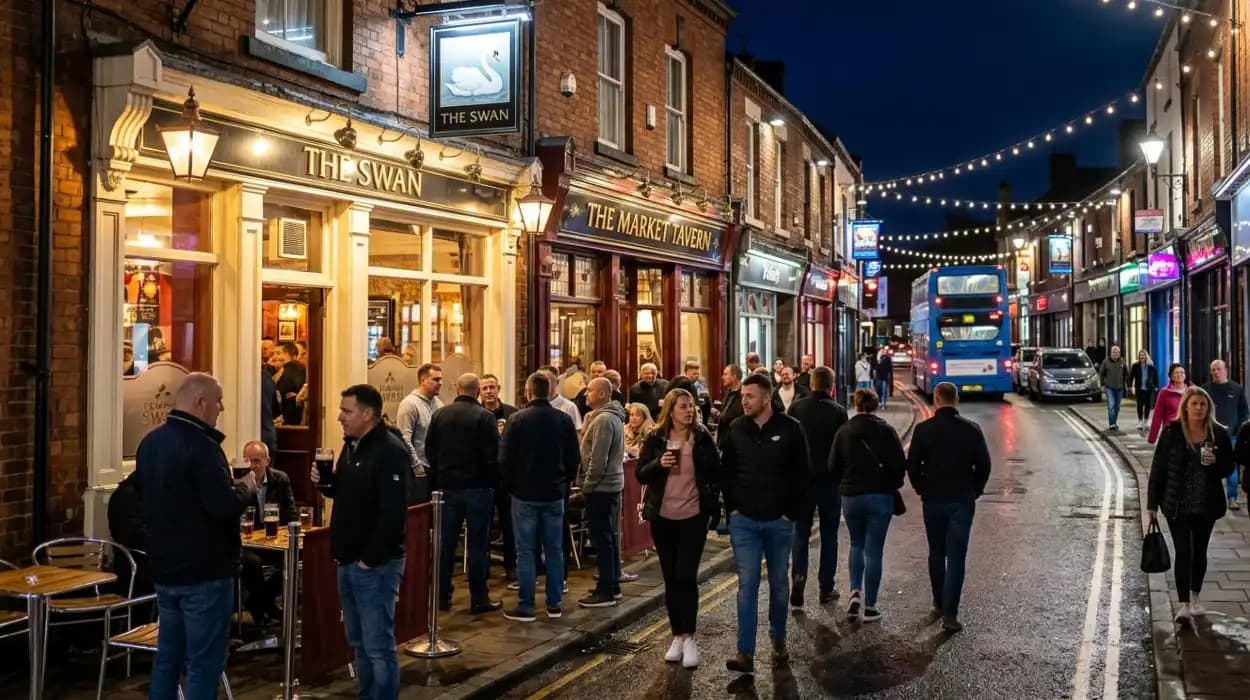
The night-time economy of Westhoughton centers entirely on Market Street, a dynamic transport and commercial corridor that anchors the town’s modern social landscape. Located within the Metropolitan Borough of Bolton, Greater Manchester, this historic thoroughfare has transformed from an industrial center into a regional destination for evening hospitality. Today, the high street features a dense concentration of traditional real ale houses, boutique cocktail lounges, and modern independent bars that collectively drive local tourism and community engagement.
Bolton Today examines the structural mechanics, historical evolutions, and specific venues that establish Market Street as a premier nightlife destination in the region.
What is the History of Westhoughton’s Pub Culture?
The pub culture of Westhoughton originated as a vital social infrastructure for coal miners, textile factory workers, and agricultural laborers during the Industrial Revolution. Licensed public houses served as essential community spaces where working-class residents organized early labor unions and financial cooperative groups.
Historically, the town’s economic identity relied heavily on coal extraction at pits like the Westhoughton Coal and Cannel Company and textile manufacturing at local cotton mills. By the late 19th century, numerous beer houses emerged to support this dense workforce. These spaces provided more than alcohol; they acted as formal meeting grounds, financial collection hubs, and polling stations before municipal infrastructure developed.
The transition from traditional industrial drinking dens to contemporary entertainment venues began in the late 20th century as heavy industry declined. The Licensing Act 2003 served as a major statutory catalyst, modernizing traditional operating hours and allowing flexible schedules. This policy change transformed old retail spaces and legacy taverns into targeted consumer experiences, establishing the structural foundation for the current nightlife corridor.
What Types of Venues Shape the Market Street Hospitality Corridor?
Market Street features four distinct categories of hospitality venues: historic community pubs, corporate real ale establishments, independent boutique cocktail lounges, and retro entertainment concepts. Each category serves specific target demographics, generating continuous pedestrian footfall throughout the afternoon and evening.
To understand the operational dynamics of Westhoughton’s night economy, it is necessary to analyze the exact composition of its high street. The diversity of the hospitality ecosystem ensures that the town avoids reliance on a single demographic group.
Historic Community Pubs
Traditional community hubs provide the foundation of the local circuit. Venues like The Wheatsheaf Westhoughton (106 Market Street) focus on local heritage, live sports broadcasting, and traditional community activities. Operated by Amber Taverns, this venue maintains large internal viewing screens alongside alternating cask ale lines. These spaces appeal primarily to local residents seeking a neighborhood social environment.
Corporate Real Ale Establishments
Large-scale operators provide high-volume, low-cost food and beverage services that anchor early-evening footfall. The Robert Shaw (34–40 Market Street), managed by J D Wetherspoon, occupies a large footprint on the high street. Certified by the Campaign for Real Ale (CAMRA), it operates extensive opening hours from 8:00 AM until midnight or 1:00 AM. It uses mobile application ordering systems to optimize service velocity.
Boutique Cocktail Lounges
Premium independent establishments target an upscale weekend evening demographic. Koo Cocktail Bar provides structured mixology menus, high-end champagne selections, and private hire event spaces. These venues rely on specialized staff training, hosting experiences such as structured cocktail masterclasses for small groups. This elevates the local night economy by attracting higher discretionary spending.
Retro Entertainment Concepts
Modern experiential venues combine specialized beverage programs with interactive gaming elements. Bytes Westhoughton, established in August 2023, represents this growing shift toward interactive nightlife. The venue integrates physical retro arcade machines, pool tables, and table football with a dedicated indie soundtrack. It serves custom arcade-themed cocktails alongside craft draft beers, attracting younger consumers who value interactive entertainment over passive consumption.
How Do Independent Venues Enhance the Local Night-Time Economy?
Independent venues enhance the local night-time economy by retaining consumer spending within the borough, generating local employment opportunities, and fostering distinct cultural identities. These agile businesses utilize specialized menus and live events to build resilient brand loyalty.
Independent hospitality operators act as critical multipliers for the wealth of the town. Unlike multinational chains that distribute profits to external corporate headquarters, independent bars re-invest their revenue directly into the regional supply chain.
Supply Chain Integration
Local bars source items from regional suppliers, including artisanal spirits, locally roasted coffee beans, and fresh food products. It Sear Bar & Grill and Nabucco Restaurant, which features a comprehensive wine list and an evening bar program, prioritize fresh ingredients sourced from local merchants. This creates a secondary economic benefit for regional food production and wholesale distribution sectors.
Cultural Differentiation
Independent bars create unique social experiences that corporate entities cannot easily replicate. By organizing custom events, such as acoustic music sessions, local art displays, and specialized tasting menus, these venues turn Market Street into a distinct cultural destination. This distinct identity helps Westhoughton compete effectively with nearby nightlife hubs in Bolton town center and Manchester city center.
Explore More Things To Do In Bolton
Smithills Open Farm: Ultimate Family Day Out in Bolton
Ultimate Premium Bonds Prize Checker Guide by NS&I - Bolton
What Impact Does the Nightlife Sector Have on Westhoughton's Infrastructure?
The nightlife sector significantly influences Westhoughton’s public infrastructure by driving transport demand, requiring targeted policing frameworks, and boosting commercial property values. Municipal authorities must continually manage the balance between public safety and commercial expansion.
The concentration of late-night venues along a single thoroughfare introduces distinct operational challenges and benefits for town planning.
Transport Network Adaptation
The surge in weekend evening visitors requires responsive transport solutions. Because Market Street connects directly to the A58 premium road network and sits near Westhoughton railway station, it acts as a central hub for regional travelers. Local private-hire taxi firms, regional bus networks, and rideshare platforms see peak demand between 11:00 PM and 2:00 AM on Friday and Saturday evenings.
Public Safety and Regulated Cooperation
To maintain order across high-density drinking circuits, Westhoughton utilizes collaborative enforcement strategies. The local Pubwatch network serves as a key defensive tool, allowing venue managers, door supervisors, and Greater Manchester Police officers to share real-time security data. This coordinated approach helps prevent anti-social behavior and ensures that individual venues comply strictly with the terms of their operating licenses.
Commercial Property Utilization
The growth of the night economy has revitalized structural assets along Market Street. Traditional retail stores that faced declining footprints due to e-commerce have been converted into productive hospitality venues. This adaptive re-use helps prevent long-term commercial vacancies, stabilizes commercial property values, and maintains a vibrant street-level presence during late-evening hours.
How Will Changing Consumer Habits Shape the Future of Market Street?
Changing consumer habits will shape the future of Market Street by increasing demand for alcohol-free alternatives, experiential gaming elements, and premium dining combinations. Successful venues must invest in adaptive property designs and diverse product ranges.
Analysis of regional market research highlights several long-term consumer trends that operators must address to maintain commercial relevance over the next decade.
The Rise of Moderation and Diverse Menus
Demographic data reveals a clear shift toward health-conscious consumption, particularly among younger adults. Venues must expand their non-alcoholic options beyond simple soft drinks. Modern bars are introducing sophisticated alcohol-free spirits, low-ABV craft beers, and botanical mocktails to ensure they can accommodate diverse social groups.
Experiential Hospitality and Technology
Modern consumers look for active social experiences rather than traditional pub visits. The success of interactive spaces like Bytes Westhoughton indicates that future venue models will increasingly blend technology, gaming, and hospitality. Establishments will need to incorporate digital entertainment platforms, self-serve draft walls, and immersive themes to drive engagement.
Day-to-Night Multi-Functional Spaces
The traditional boundary between daytime cafes and nighttime bars continues to blur. Operators are maximizing their property footprints by building multi-functional spaces. A single location may function as a remote working space and specialty coffee house at 11:00 AM, transition into a premium dining room at 6:00 PM, and operate as a lively cocktail bar by 10:00 PM. This model helps maximize revenue per square foot and protects businesses against shifting economic conditions.
What is the Strategic Value of Westhoughton's Evening Economy to the Bolton Borough?
The strategic value of Westhoughton’s evening economy lies in its role as a decentralized economic hub that relieves pressure on Bolton's center. It establishes a sustainable model for sub-regional town growth, attracting outside investment and retaining skilled local workers.
As municipal budgets tighten and urban development strategies shift, vibrant secondary town centers like Westhoughton become vital components of broader borough planning.
Decentralization and Sustainable Growth
By building a self-sustaining entertainment district outside of the immediate city center, the borough spreads economic activity more evenly across its footprint. This decentralization reduces traffic congestion in the city center, shortens commuting times for residents, and provides a clear blueprint for neighboring towns looking to revitalize their high streets.
Attracting Outside Investment
A successful, safe, and diverse nightlife ecosystem makes Westhoughton highly attractive to residential property developers. The active street scene along Market Street demonstrates strong local demand and clear community vitality. This encourages the construction of modern housing developments nearby, completing a positive growth cycle that supports long-term municipal prosperity.
What Regulations Govern the Venues on Market Street?
The regulations governing the venues on Market Street comprise the Licensing Act 2003, local planning conditions, noise emission limits, and health and safety mandates. These statutory frameworks ensure public safety while supporting commercial growth.
Operating a hospitality business within Greater Manchester requires strict adherence to multiple overlapping legal requirements.
Premises Licences and Permitted Hours
Every venue selling alcohol must hold a valid Premises Licence issued by Bolton Metropolitan Borough Council. These licenses specify exact operational limits, including permitted hours for the sale of alcohol, the provision of regulated entertainment, and late-night refreshment sales. Licensing committees review applications carefully to prevent public nuisance and crime.
Environmental Health and Noise Management
Venues must actively manage their environmental impact, particularly concerning noise pollution in mixed-use areas where residential apartments sit above commercial spaces. Establishments install structural soundproofing materials, acoustic lobbies, and decibel limiters on sound amplification equipment to comply with environmental health mandates.
Fire Safety and Capacity Limits
To ensure customer safety, operators must perform regular fire risk assessments as required by the Regulatory Reform (Fire Safety) Order 2005. These assessments calculate the maximum safe occupancy capacity for each venue based on emergency exit widths, floor space availability, and fire alarm configurations. Door security staff track entry and exit numbers precisely during peak weekend hours to prevent overcrowding.
Implications for Long-Term Town Vitality
The continuing transformation of Market Street highlights the resilience of Westhoughton’s business community. By moving away from an outdated post-industrial model and embracing a diverse evening economy, the town has successfully preserved its high street footprint.
Maintaining this positive trajectory will require ongoing collaboration between business owners, municipal planners, and local residents. As long as Market Street balances safety, variety, and innovation, it will remain a cornerstone of Bolton’s regional hospitality landscape for years to come.
FAQS
Where is Market Street in Westhoughton?
Market Street is the main commercial and hospitality corridor in Westhoughton, located within the Metropolitan Borough of Bolton. It connects directly to regional transport routes and serves as the center of the town’s evening economy.