Key Points
- Seven Suspects Apprehended: Five men and two women have been taken into police custody following a series of coordinated, early-morning tactical raids.
- Geographic Spread: The law enforcement operation spanned multiple boroughs across Greater Manchester, specifically targeting properties in Bolton, Salford, Stockport and Wigan.
- Severe Allegations: All seven individuals were arrested on suspicion of conspiracy to supply Class A drugs, a charge carrying significant judicial penalties in the United Kingdom.
- Core Network Targeted: Authorities believe that the specific locations and individuals raided are central to a wider, highly structured organised crime network distributing illicit substances.
- Escalating Crackdown: Statistics released by law enforcement indicate a dramatic rise in regional anti-gang operations, with arrests by the specialist unit climbing by over 71 per cent in recent years.
- Evidence Seizure: Coordinated search teams remain at the targeted residential addresses, recovering physical and digital evidence that will undergo comprehensive forensic analysis.
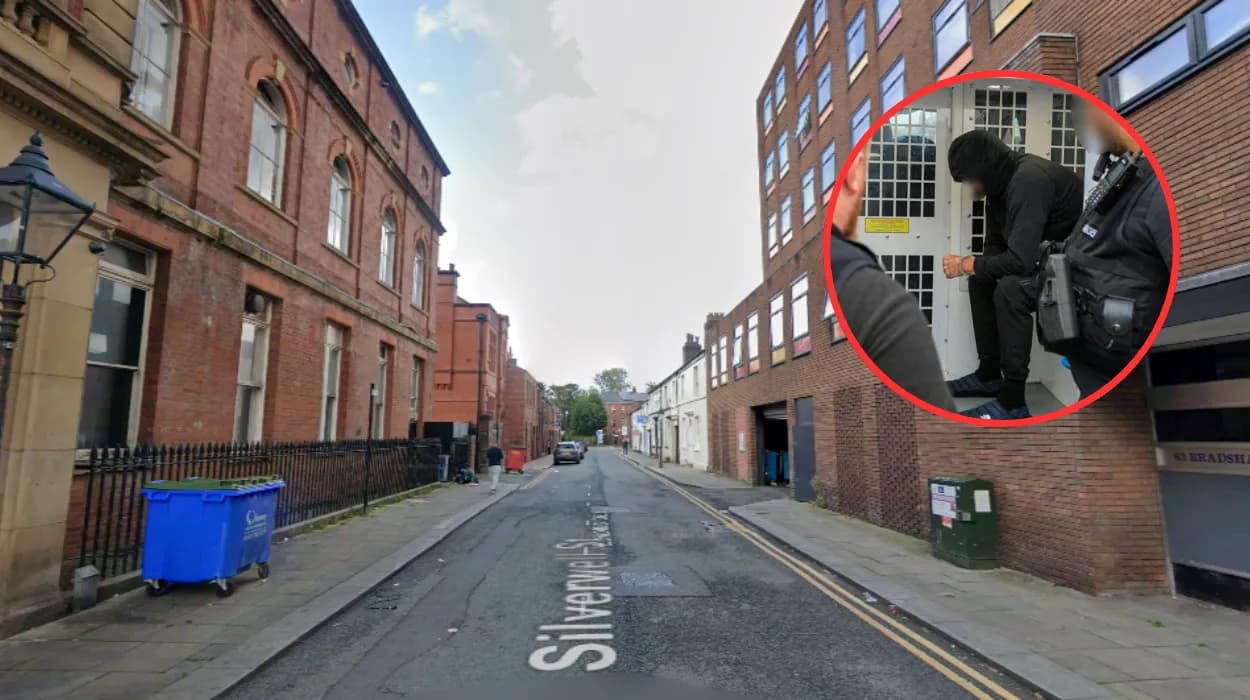
Bolton (Bolton Today) May 20, 2026 - Seven suspected drug dealers have been arrested during a series of dramatic dawn raids executed across Greater Manchester as part of a major crackdown on Class A narcotics networks. Specialist tactical units from Greater Manchester Police stormed seven separate residential properties in Bolton, Salford, Stockport and Wigan in a series of simultaneous, early-morning entries designed to surprise the occupants. The operation targeted an organised crime group suspected of orchestrating a large-scale conspiracy to flood the region with highly dangerous illicit substances. Five men, aged 42, 41, 41, 35 and 24, alongside two women, aged 37 and 35, were removed from the addresses in handcuffs and remain detained in a high-security custody facility for intensive interrogation.
Who Was Arrested in the Greater Manchester Dawn Raids?
As reported by law enforcement reporters at The Bolton News, the suspects consist of a geographically diverse group of individuals allegedly embedded within a highly lucrative narcotics ring. The ages of the male suspects span from a 24-year-old youth to older individuals aged 35, 41 and 42. The two female suspects are aged 35 and 37.
According to updates published by Stephen Topping, a senior reporter for the Manchester Evening News, the identities of the seven individuals have been legally withheld at this stage of the judicial process, pending formal charges by the Crown Prosecution Service. Law enforcement representatives have confirmed that all seven remain in separate cells under the supervision of custody officers, where they are being questioned by detectives attached to the Serious Organised Crime Group.
Legal experts note that under the Police and Criminal Evidence Act, investigators can hold the suspects for an extended period due to the complexity and gravity of conspiracy allegations involving Class A substances, which typically include high-purity cocaine and heroin.
Where Did the Police Raids Take Place?
The strike day required meticulous logistical planning due to the wide geographic dispersion of the targets. While Bolton was a primary focal point for the dawn warrants, tactical units had to deploy concurrently across three other major metropolitan boroughs within the Greater Manchester boundaries.
Writing for the regional news title About Manchester, local journalists detailed that the warrants were executed simultaneously at exactly the same hour of dawn to prevent suspects from alerting one another via mobile networks or encrypted messaging applications. Teams of officers equipped with hydraulic breaching tools, battering rams and protective equipment forced entry into homes in Salford, Stockport and Wigan, alongside the principal targets situated within the boundaries of Bolton.
The multi-agency effort involved localized Neighbourhood Policing Teams working in absolute tandem with centrally deployed tactical units, ensuring that each scene was rapidly contained and secured without injury to the public or the officers involved.
What Evidence Was Recovered During the Searches?
Following the initial breach and securing of the properties, specialised search teams, including digital forensics experts and passive drug-detection dogs, were deployed inside the target locations to systematically comb the premises.
As reported by the editorial team at About Manchester, Detective Inspector Alex Brown of Greater Manchester Police’s Serious Organised Crime Group stated that
“Evidence recovered during the searches will now be examined in detail as part of our ongoing investigation.”
Sources close to the operation indicate that officers are focusing heavily on the seizure of telecommunications data, burner phones, high-value assets and physical substances that could point to the wider supply chain. Every item seized is being logged under strict chain-of-custody protocols to ensure its admissibility in future Crown Court proceedings. Search teams are expected to remain at several of the raided residential addresses for the remainder of the day to ensure no hidden compartments or buried contraband are overlooked.
How Large is the Class A Drugs Plot?
The scale of the illicit operation is described by senior officers as highly significant, with the targeted group believed to be pulling the strings of a widespread distribution network. Rather than focusing on low-level street dealers, the Serious Organised Crime Group aimed its resources at the logistical hub of the enterprise.
As reported by news correspondents at the Manchester Evening News, Greater Manchester Police explicitly confirmed that the locations and suspects chosen for the morning raids were believed by intelligence analysts to be absolutely "central" to the regional supply of Class A drugs.
By taking out the mid-to-high-tier coordinators of the plot, authorities intend to disrupt the flow of narcotics into community estates across Bolton and neighbouring towns. Detective Inspector Alex Brown reinforced the gravity of the operation, stating that
"A number of people have been arrested and remain in custody while detectives continue to piece together the full scale of this criminal operation."
Why Are the Authorities Targeting Organised Crime Networks?
The motivation behind the massive deployment of resources centers on the systemic harm that organised criminality inflicts upon local communities, ranging from drug-related dependency to the violent turf wars that often accompany open-air drug markets.
As reported by the crime desk at About Manchester, Detective Inspector Alex Brown emphasised the protective nature of the raid strategy, asserting that
“We will not allow organised criminals to profit from exploiting vulnerable people, and we will keep taking action to protect our communities.”
The police have repeatedly highlighted that Class A drug networks are intrinsically linked to wider societal issues, including the exploitation of young people through 'county lines' operations and an increase in acquisitive crime, such as burglary and robbery, carried out by individuals attempting to fund addictions.
Explore More Bolton Crime News
18-year-old Suspected Drug Dealer Arrested in Bolton by GMP Officers
Bolton drug dealer jailed for 253 users in 2026
What is Greater Manchester Police’s Long-Term Anti-Drug Strategy?
The dawn raids are not an isolated event but rather form part of a multi-year, data-driven initiative to systematically dismantle the upper echelons of organized gangs operating in the north-west of England. This strategy relies heavily on intelligence-led policing and the specialised capabilities of central crime squads.
As reported by journalists at the Manchester Evening News, Detective Inspector Alex Brown explained the broader context of the morning's actions, stating:
“The results of today's operation demonstrate the relentless pressure we continue to place on organised criminals across Greater Manchester.”
The force has significantly adapted its methodology, utilizing advanced surveillance, financial tracking and international data intercepts to build ironclad conspiracy cases before executing physical arrests, ensuring a higher conversion rate from detention to long-term imprisonment.
What Do the Recent Arrest Statistics Reveal About Police Activity?
The efficacy of the specialized units tasked with fighting serious crime is reflected in newly released performance data, which shows an aggressive upward trajectory in both raids and successful detentions over a four-year period.
As reported by About Manchester, Detective Inspector Alex Brown outlined the exponential growth in law enforcement interventions, stating:
“Our Serious Organised Crime Group has significantly intensified its activity over the past three years, and that impact is clear — arrests have risen, increasing by 71 per cent between 2022 and 2024 (from 190 to 326), followed by a further 17 per cent rise in 2025, when officers made 382 arrests.”
Journalistic analysis of these figures indicates that the police are executing warrants at a rate never before seen in the region. Detective Inspector Brown further commented on the data, stating:
"These statistics reflect our unwavering commitment to identify, pursue and dismantle the criminal networks that cause the greatest harm in our communities. Today's warrants are another example of that determination; our officers carried out a series of coordinated strikes targeting individuals and locations we suspect to be central to the supply of Class A drugs."
How Can Members of the Public Assist with the Investigation?
Law enforcement agencies continue to stress that public cooperation is the lifeblood of successful anti-drug operations. Many of the dawn warrants executed across the boroughs are the direct result of community intelligence being fed into anonymous reporting systems over several months.
According to statements previously issued by divisional commanders within Greater Manchester Police, including declarations from Detective Inspector Paul Crompton during similar large-scale operations, the police rely heavily on information from everyday citizens.
Officers advise that anyone who notices signs of drug activity—such as an unusual volume of short-term visitors arriving at a property at all hours, unfamiliar luxury vehicles, or suspected counter-surveillance measures—should report it immediately. Members of the public can contact the police directly via the non-emergency 101 number, use the official live-chat portal on the Greater Manchester Police website, or provide completely anonymous tips to the independent charity Crimestoppers by dialling 0800 555 111.