Key Points
- Remarkable Feat: Phil Cunliffe, a 69-year-old grandfather and rowing novice originally from Westhoughton, successfully completed a rigorous 42-kilometre sea crossing to the Isle of Man.
- Team Effort: The maritime trek featured a eight-person crew from the Wigtown Bay Coastal Rowing Club, consisting of six men and two women, navigating the open waters in a hand-built wooden boat named Ninian.
- Inversion of Experience: Despite having only ever rowed on an indoor gym machine prior to his training, Cunliffe was both the newest and oldest member of the sea-faring squad.
- Winter Conditioning: The crew endured months of grueling winter training sessions, heading out into sub-zero temperatures and tempestuous sea conditions to prepare for the open-ocean voyage.
- Weather Delays: The expedition faced multiple logistical setbacks, with initial departure dates in March and early April postponed due to dangerous weather conditions across the Irish Sea channel.
- Successful Crossings: Leaving at 6:00 am, the outward leg to the Isle of Man town of Ramsey took seven and a half hours, while the return leg back to the Isle of Whithorn took eight hours and 20 minutes, concluding late at night.
- Community and Charity: The epic journey was supported by three escort vessels and raised thousands of pounds in charitable funds to support the ongoing operations of the coastal rowing club.
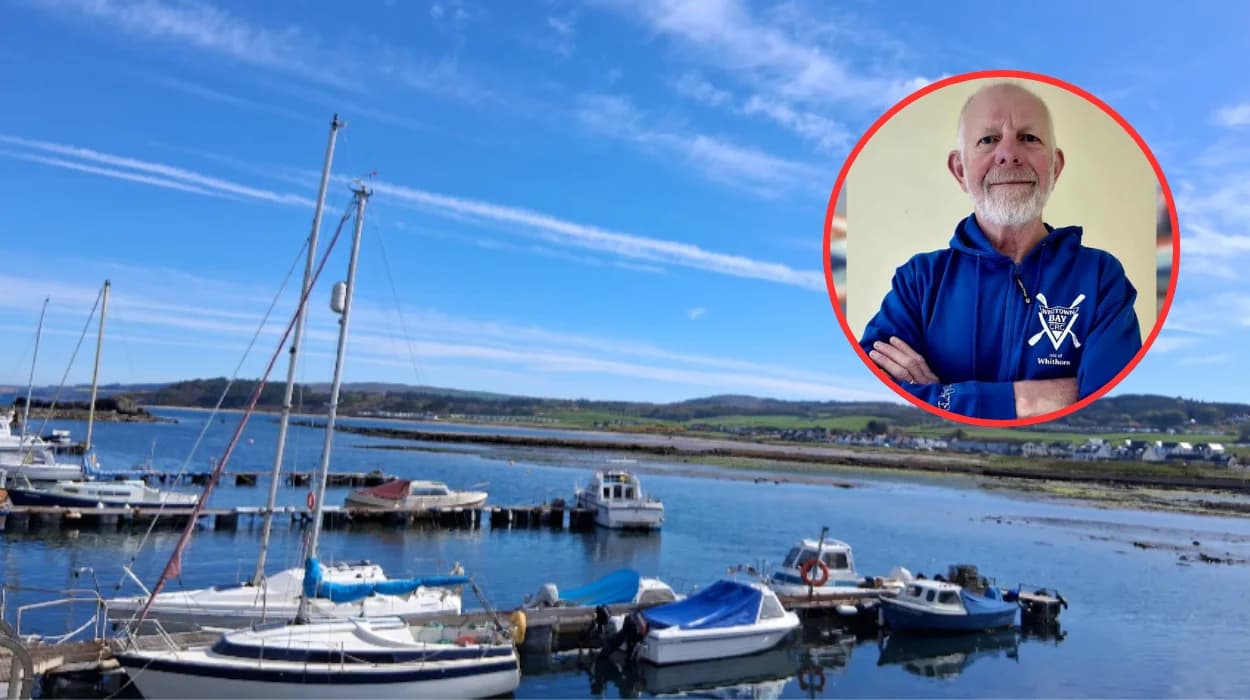
Westhoughton (Bolton Today) June 19, 2026 - A 69-year-old rowing novice from Westhoughton has defied expectations by successfully completing an epic, long-distance round-trip sea crossing across the open waters of the Irish Sea to the Isle of Man. Phil Cunliffe, who lived in the Greater Manchester town of Westhoughton for 42 years before relocating to the Isle of Whithorn in Dumfries and Galloway, Scotland, last November, joined seven other members of the Wigtown Bay Coastal Rowing Club to execute the demanding 42-kilometre voyage. Navigating a traditional, hand-built wooden St Ayles Skiff named Ninian, the crew completed the marathon nautical challenge through meticulous planning, gruelling winter conditioning, and local community support.
As reported by reporter Grace Williams of The Bolton News, the comprehensive physical undertaking required an expansive logistical network, including three dedicated support vessels—comprising two rigid inflatable boats (RIBs) and an escort yacht—to ensure the safety of the rowers during the transit. The multi-generational crew, consisting of six men and two women, departed from the stone jetty at the Isle of Whithorn at precisely 6:00 am on Saturday, April 25. The outward leg across the shipping lanes to the coastal town of Ramsey on the Isle of Man was completed in seven hours and thirty minutes. Following a brief ceremonial reception, a secondary crew took the oars for the return leg, arriving back on the Scottish mainland at 10:20 pm after an arduous eight-hour and twenty-minute row.
The feat is particularly remarkable given that Cunliffe had zero practical experience with open-water maritime rowing prior to his relocation. His physical preparation had been confined entirely to the static indoor rowing machines found in local fitness centres. However, driven by a deep-seated desire to integrate into his new coastal community and an innate passion for physical fitness, he volunteered for the club's high-endurance expedition. The crossing, which had been repeatedly delayed throughout the early spring by volatile weather fronts, ultimately raised thousands of pounds for the Wigtown Bay Coastal Rowing Club's capital and maintenance funds.
Who Is Phil Cunliffe?
As detailed in the exclusive reporting by Grace Williams of The Bolton News, Phil Cunliffe is a 69-year-old fitness enthusiast who spent more than four decades as a resident of Westhoughton before making the life-changing move to the Isle of Whithorn. Upon arriving in the small Scottish coastal village, Cunliffe sought out local civic groups to familiarise himself with his neighbours and establish roots in the region.
According to the article published by Williams in The Bolton News, Cunliffe explained his motivations directly:
“Fitness has always been my thing. When I moved, I was keen to become part of the community and saw there was a local coastal rowing club.”
Despite his lack of experience on water, Cunliffe quickly transitioned from a casual observer to an active participant. He initially joined the Wigtown Bay Coastal Rowing Club for a few minor, close-to-shore local outings before officially committing to full membership. It was during these initial weeks that details of the upcoming Isle of Man expedition were circulated among the group.
How Did a Rowing Novice Prepare for an Open-Ocean Crossing?
The transition from a climate-controlled gymnasium to the unpredictable waves of the Irish Sea presented a steep learning curve for the Westhoughton native. Being thrust into an elite long-distance team meant matching the stamina of lifelong mariners.
As documented by Grace Williams of The Bolton News, Cunliffe recounted that he was immediately thrown in at the deep end as the newest and oldest member of the team. Describing the intense preparatory phase, Cunliffe stated:
“We trained throughout the winter and went out in all weathers. Anyone can do it if they put their mind to it.”
The training protocol mandated rowing through freezing winter storms, heavy swells, and biting winds to build the necessary muscular endurance and psychological resilience required for a 42km crossing. Cunliffe adapted rapidly to the rhythmic motion of the sea oars, with peers noting that he took to the aquatic environment seamlessly.
Explore More Westhoughton News
Anger at Loss of Winifred Kettle Treatment Room: Westhoughton 2026
Bolton Council Approves Massive Wingates Industrial Masterplan in Westhoughton 2026
What Obstacles Delayed the Launch of the Expedition?
Planning an ocean crossing in a St Ayles Skiff—a four-oared wooden vessel managed by a single coxswain—requires precise meteorological windows. The Irish Sea is notorious for rapid shifts in wind direction, hidden currents, and sudden swells that can easily capsize small wooden watercraft.
Journalist Grace Williams of The Bolton News noted that an initial departure planned for March, followed by a secondary attempt in early April, had to be completely abandoned and rescheduled. The safety officers of the Wigtown Bay Coastal Rowing Club deemed the environmental conditions across the 42km channel too hazardous for an open skiff. The team was forced to wait patiently for high-pressure systems to stabilise the sea state before getting the green light.
How Was the Voyage to Ramsey Executed?
When acceptable weather parameters finally materialised on Saturday, April 25, the club initiated their pre-dawn launch sequence. The operation was designed as a collaborative relay, utilising distinct crews for each leg of the journey to ensure optimal physical performance and safety.
As reported by Grace Williams of The Bolton News, Cunliffe described the vast scale of the local maritime deployment:
“We had one team rowing out and another rowing back, with three support boats, two RIBs and a yacht joining us. It's very much a boating community.”
The outward crew maintained a steady, synchronised stroke rate across the open water, pulling the Ninian across the channel. Under the guidance of their navigator, the boat successfully made landfall in the Isle of Man town of Ramsey, where they were met with maritime hospitality.
Reflecting on the mid-point reception, Cunliffe told The Bolton News:
“We had a really nice welcome and exchanged gifts.”
The encounter served as a symbolic bridge between the distinct coastal rowing cultures of Scotland and the Isle of Man.
Who Inspired the Wigtown Bay Rowing Adventure?
Every major athletic and maritime undertaking requires a singular orchestrator to manage logistics, maintain morale, and steer the vessel through complex coastal waters. For this journey, that foundational role was fulfilled by the club's executive leadership.
As reported within the coverage by Grace Williams of The Bolton News, Phil Cunliffe explicitly credited club chairman John McGuire, who acted as the coxswain for both the outward and inward legs of the crossing. Cunliffe described the conditions under McGuire's steering as "perfect" and emphasised that John was the true inspiration behind the adventure, providing continuous motivation to the crew when physical exhaustion set in during the final hours of the return leg.
What Was the Impact on the Local Community?
The return of the Ninian to the Isle of Whithorn jetty at 10:20 pm turned into a major public celebration, illustrating the tight-knit nature of the rural coastal village.
According to the account by Grace Williams of The Bolton News, Cunliffe expressed immense pride regarding the public reception and the financial outcome of the voyage, stating:
“It was a big local event, with more than 100 people welcoming us back to the bay. I was really pleased to be chosen for the team and we raised thousands of pounds for the rowing club.”
The funds raised through their official digital crowdfunding portal are slated to preserve the club's fleet of hand-built wooden vessels and expand community outreach programs, ensuring that future generations—and incoming retirees alike—can access the sport of coastal rowing. With his first major ocean crossing secured, the 69-year-old Westhoughton native confirmed he is already looking forward to his next competitive aquatic challenge.