Key Points
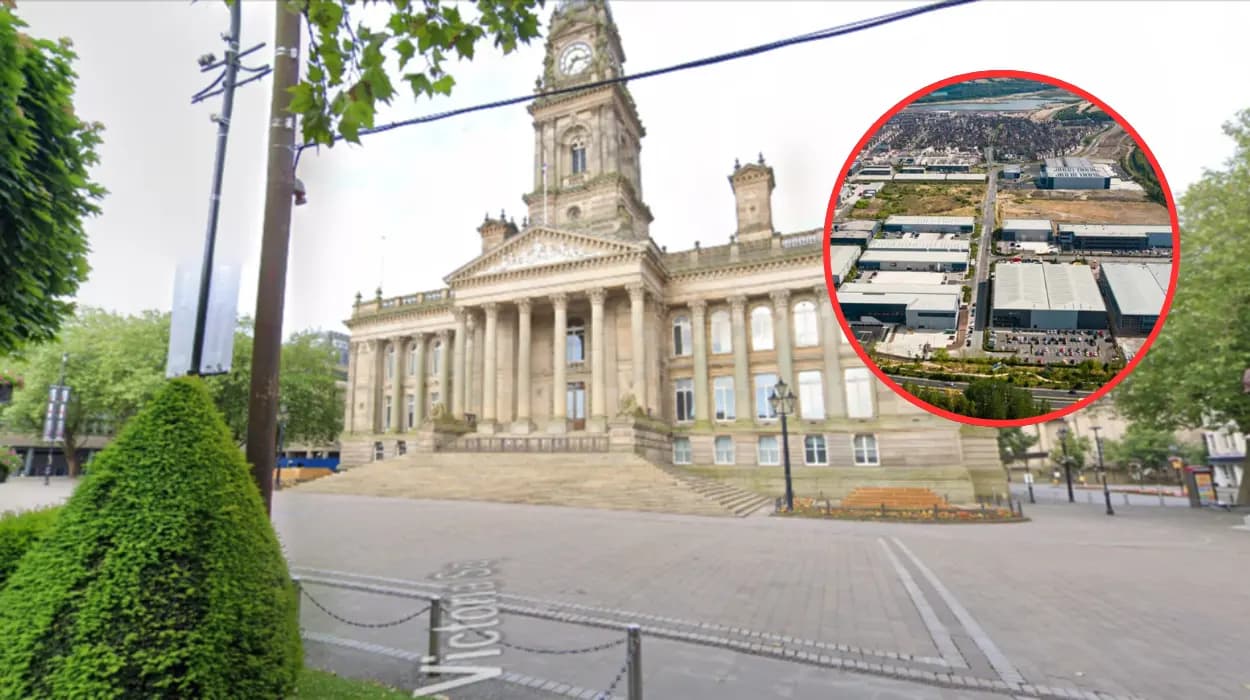
- Masterplan Approved: Bolton Council has officially approved the West of Wingates Strategic Masterplan Supplementary Planning Document (SPD) to manage a massive industrial expansion on the western edge of Westhoughton.
- Employment Scale: The project covers a sprawling 184-hectare (over 400-acre) footprint allocated to provide approximately 440,000 square metres (4.7 million square feet) of modern industrial and warehousing floorspace.
- Economic Impact: Local authorities project that the multi-phase development will create up to 6,000 new jobs over the next 10 to 15 years, aiming to turn the M61 corridor into a premier national logistics hub.
- Phased Progress: The mega-project is structured into four main phases. Phase 1, spanning 73,750 square metres, is already under construction following planning approval and infrastructure alterations on the A6 Chorley Road.
- Fierce Local Opposition: Residents, environmental campaigners, and local politicians have strongly criticised the move, warning that the town will be effectively "concreted over", destroying wildlife habitats and placing unbearable strain on an already gridlocked transport network.
- Strategic Policy Alignment: The masterplan operates directly under the Greater Manchester "Places for Everyone" joint spatial framework adopted in March 2024, which permanently stripped the site of its previous Green Belt protections.
Westhoughton (Bolton Today) June 15, 2026 - A controversial blueprint to oversee the total transformation of a massive greenfield site in Westhoughton into an industrial and logistics superpower has been formally approved by municipal leaders, despite intensifying public fears that the development will completely "concrete the town over."
The blueprint, formally ratified by Bolton Council's cabinet as the West of Wingates Strategic Masterplan Supplementary Planning Document (SPD), establishes rigid design criteria and structural parameters for a sweeping 184-hectare development area. Positioned adjacent to the strategic Northfold growth corridor and close to Junction 6 of the M61 motorway, the overarching scheme will pave the way for 440,000 square metres (approximately 4.7 million square feet) of massive warehousing and industrial units. While local executive officers champion the industrial expansion as a "once-in-a-generation" economic catalyst capable of supporting up to 6,000 permanent jobs, the decision has drawn fierce backlash from community advocates, environmental groups, and opposition councillors who contend that the local infrastructure will crumble under the weight of thousands of extra daily commercial vehicle movements.
What is the West of Wingates masterplan?
The approved planning guidance acts as a formal framework to govern a massive, multi-phase transformation of agricultural land directly situated to the south of the A6 Chorley Road and west of the pre-existing Wingates Industrial Estate. As documented in official planning dossiers compiled by Bolton Council, the site is designated as a critical asset within the regional "Northfold" economic growth initiative—a coordinated commercial partnership linking the boroughs of Bolton and Wigan alongside the Greater Manchester Combined Authority (GMCA) and commercial land giant Peel Land.
According to technical briefs published in the West of Wingates Strategic Masterplan SPD, the masterplan serves as a regulatory benchmark to ensure subsequent planning applications are strictly coordinated, rather than allowing piecemeal development across the 184 hectares. While the document remains flexible by refusing to enforce uniform building heights or internal floor layouts, it mandates eight absolute design principles regarding landscape preservation, sustainable construction, and active transport corridors that every prospective developer must satisfy to earn municipal consent.
Why has the plan been approved despite heavy local pushback?
The path to industrialising this pocket of Greater Manchester was fundamentally cleared long before this week's administrative vote. As reported by Chris Gee of the Manchester Evening News, executive cabinet members made it clear during the decisive session that the core legal debate surrounding whether the green fields should be built upon had already been settled.
Addressing the cabinet, Executive Member Councillor Nadeem Ayub stated that
“The decision on whether the site should be developed has already been made under the Places for Everyone plan. It has been allocated for employment use.”
Councillor Nadeem Ayub further clarified the structural role of the current vote, stating that
“The principle of development, the amount of floorspace, was done after a full public consultation. This document is not a decision on whether to develop; it's about how to develop well. The document sets out a vision for a high-quality exemplar employment site and puts forward eight design principles that every future application will be tested against. It protects landscape features and green corridors.”
The land allocation relies on Policy JPA6 of the wider Greater Manchester Places for Everyone Joint Development Plan (2022–2039), a statutory spatial framework formally adopted by nine sub-regional councils in March 2024. Because that overarching pan-Manchester strategy reclassified the rural land to facilitate industrial development, local authorities argue that blocking commercial expansion at this stage is legally unfeasible.
What do environmentalists and local campaigners say about the plan?
The formal adoption of the planning document has provoked deep resentment among community activists who have spent years fighting to protect the rural buffer separating Westhoughton from surrounding settlements. The permanent loss of over 400 acres of natural meadows has been heavily condemned by local figures who argue that the borough’s ecological interests are being traded off for corporate expansion.
Expressing his deep disappointment at the modern progression of the scheme, prominent local campaigner David Wilkinson, who served as a Westhoughton town councillor for more than three decades before losing his seat in May 2026, delivered a scathing assessment of the council's trajectory. Reacting directly to the formal adoption of the supplementary planning document, David Wilkinson stated that
“The decision means over 400 acres of green fields will be dug up over the next few years and thousands of extra vehicles per day.”
David Wilkinson went on to contextualise the scale of the impending development, noting that
“It's one of the biggest industrial estates in the country. Phase II was included in Places for Everyone passed by Bolton Council in March 2024; it also included the development of Hulton Estate by Peel. It also removed green belt protection for hundreds of acres on the Phase II site at Wingates, making it easier to build.”
Public feedback left within technical property records published by Place North West mirrored this community anger. One anonymous local resident stated on the planning index that
"Bolton Council have completely given up on the folk of Westhoughton, they have decided that the blight being caused on them is worthwhile for the alleged benefits of Northfold."
Another resident added grimly that
"A beautiful green area has been ruined and wildlife wiped out."
How will the development impact local roads and infrastructure?
The primary concern dominating public anxiety is the capacity of the surrounding road networks to absorb a massive influx of heavy goods vehicles (HGVs) and commuter traffic. The A6 corridor, running past the northern boundary of the development site toward Horwich and Adlington, is already notorious for persistent traffic bottlenecks.
During the cabinet meeting, Horwich & Blackrod First Independent Councillor David Grant challenged the long-term logistical viability of the council's masterplan. Councillor David Grant told the assembled cabinet members that it was “good that we are creating jobs, but the highway network always seems to take a backward step.” Highlighting the systemic vulnerability of local transit channels, Councillor David Grant warned that
“One minor accident or issue and the entirety of Horwich comes to a standstill. By adding a significant employment zone on the outskirts of that area, it will only add to people coming down the A6 and increasing the issues.”
Public correspondence verified by regional planning reporter Neil Tague of Place North West validated these structural worries, with local logistics operators and commuters warning of systemic gridlock along the main arterial routes. A prominent comment submitted to the public index by an area commuter stated:
"How many grey sheds does the country need? The overdevelopment is already ridiculous, with the A6 from Little Hulton to Adlington being very busy and partially gridlocked most of the day. The rush hour starts at 4:00 in the morning with the movement of many trucks and vans, it eases for an hour and then the main rush hour starts and doesn't really stop."
Explore More Westhoughton News
Westhoughton Farmers' Market Showcases Premium Local Produce: Westhoughton 2026
Provenance Food Hall: Independent Culinary Gem of Westhoughton 2026
What are the projected economic benefits and job numbers?
In stark contrast to the warnings of logistical failure, Bolton Council and its regional economic partners view the West of Wingates project as an unmissable financial engine for the entire North West region. Positioned roughly eight kilometres away from the highly successful Logistics North development, the masterplan attempts to replicate that commercial success by capitalising on immediate access to the national motorway network.
According to economic forecasts detailed within the official Bolton Council Strategic Masterplan Executive Summary, the completed scheme is projected to support up to 6,000 full-time jobs across the logistics, advanced manufacturing, and high-tech warehousing sectors. The local authority argues that the site will significantly reduce long-term regional inequalities by opening up direct local employment, dedicated skills training frameworks, and apprenticeship pathways for younger demographics living within Westhoughton and the wider Bolton metropolitan borough.
How is the project being phased, and what has been built so far?
To manage a construction project of this magnitude without completely paralyzing the surrounding district, the scheme has been segmented into four distinct geographic phases to be delivered over the next 10 to 15 years.
The first phase of development is already well underway. In January 2024, outline planning consent and specific infrastructure clearances (Ref: 16776/23) were formally issued to principal landowner and developer Harworth Group. This initial phase accounts for approximately 73,750 square metres of commercial employment space situated on land directly south of Chorley Road.
To facilitate heavy machinery access, workers have already commenced major realignments of a short section of the A6 Chorley Road directly in front of Blue Bell Cottages. According to construction updates released by the developer, Harworth Group, this reconfiguration is explicitly intended to move the bulk of commercial traffic away from pre-existing residential frontages while creating a permanent landscaped buffer zone.
What steps are being taken to protect local residents?
In an attempt to soothe community anxieties regarding noise, light pollution, and visual blight, the masterplan integrates explicit environmental protection policies that developers must finance. As detailed in the Phase 1 Reserved Matters Application released by Harworth Group, structural buffers are being built into the northern border nearest to existing properties.
The developers have confirmed that the upcoming commercial buildings running along the A6 Chorley Road will be legally required to maintain a strict 50-metre setback distance from the residential properties at Blue Bell Cottages. To obscure the large industrial sheds—the largest of which are designed to scale heights between 11 and 16 metres—the developer is constructing massive landscape mounds and dense treeline screens. Furthermore, the masterplan stipulates that all heavy vehicle service yards must be physically shielded behind substantial timber acoustic fencing and structurally positioned on the opposing sides of the complexes, facing away from any residential windows.
What are the next steps for the Westhoughton masterplan?
Following an intensive eight-week public consultation period that concluded on January 22, the final draft of the Supplementary Planning Document was refined by municipal planning officers alongside statutory conservation bodies, including the Greater Manchester Ecology Unit, United Utilities, and the Environment Agency.
With the overarching masterplan now legally adopted as a material planning consideration by Bolton Council, the focus shifts entirely to implementation. Representatives for the Harworth Group have confirmed that detailed "Reserved Matters" planning applications covering the specific architectural designs, drainage networks, and ecological mitigations for the next consecutive phases of the West of Wingates development will be formally submitted to the local planning authority before the end of the current calendar year. These upcoming applications will trigger separate, localized public consultation windows for affected residents.