Key Points
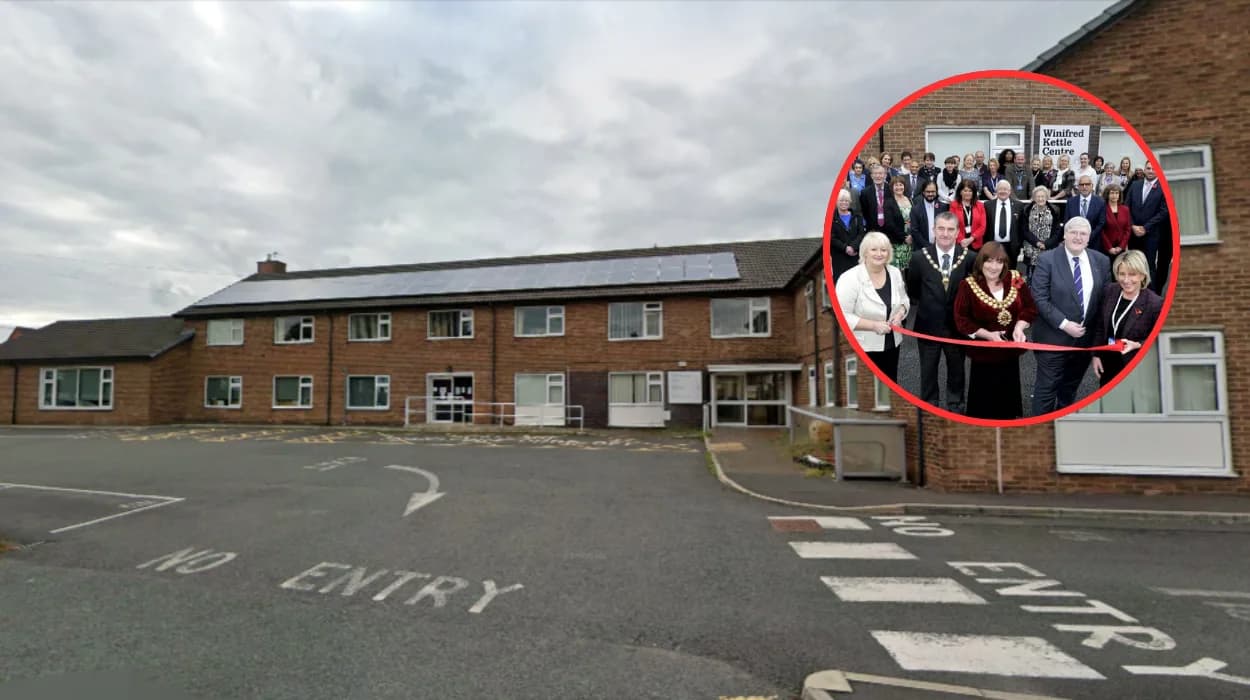
- Complete Service Closure: Bolton NHS has confirmed the permanent closure of the only health treatment room located within the Winifred Kettle Health Centre in Westhoughton.
- Review of Services: The healthcare provider stated that the sudden withdrawal of the clinic is the direct result of an ongoing internal administrative review of local medical resources.
- Absence of Consultation: Local town councillors and regional authority figures have expressed outrage over a total lack of public consultation, stating that both civic leaders and residents were kept entirely in the dark.
- "Healthcare Desert" Warning: Elected officials have warned that the closure transforms an already vulnerable town into an acute healthcare desert, forcing non-housebound patients to travel miles for standard clinical care.
- Financial and Physical Friction: The loss of the local room disproportionately penalises vulnerable demographics, including diabetic patients and individuals requiring specialized leg ulcer management, who must now absorb the high costs and physical toll of long-distance transport.
- Increased Regional Pressure: Concerns have been raised that diverting Westhoughton’s growing population to neighbouring medical facilities in Horwich will aggressively inflate clinical waiting lists across the broader borough.
- Town Council Mobilisation: In direct response to the community backlash, Westhoughton Town Council has formally resolved to launch an official administrative challenge by writing a collective letter of protest to the NHS Foundation Trust.
Westhoughton (Bolton Today) June 16, 2026 — Widespread public anger and intense political friction have erupted in Westhoughton following the absolute closure of the town’s sole healthcare treatment room located within the Winifred Kettle Health Centre. The decision, handed down by the regional NHS Foundation Trust as part of a sweeping internal service review, leaves a rapidly expanding local population completely devoid of immediate, localized clinical care. Local authority figures have vehemently condemned the structural removal of the facility, warning that the policy effectively transforms the town into a clinical "desert" and forces vulnerable, non-housebound patients to endure significant financial costs and physical strain to seek basic medical attention in neighbouring sectors.
Why has the Winifred Kettle treatment room been closed?
As reported by reporter Dan Dougherty of The Bolton News, the foundational catalyst behind the controversial closure stems directly from an aggressive administrative re-evaluation of local medical assets. At the end of May, Bolton NHS officially confirmed that the dedicated treatment room within the Winifred Kettle Health Centre would cease operations entirely. According to official institutional channels, the measure was enacted under the formal guise of a wider "review of services" designed to optimize clinical operations across the broader metropolitan borough.
However, the bureaucratic rationale has found zero traction among local representatives who argue that the decision actively ignores the unique demographic realities of the area. Rather than streamlining care, critics argue the review acts as a cost-cutting exercise that disproportionately targets a community already struggling with a historical deficit of primary care infrastructure.
What are local councillors saying about the NHS decision?
The political fallout from the announcement has been immediate and fiercely bipartisan, with Westhoughton Town Councillors uniting to voice their deep fury regarding the operational termination. As documented by Dan Dougherty of The Bolton News, Councillor Arthur Price led the initial criticisms, directly questioning why Westhoughton was being uniquely penalised while adjacent towns enjoyed significant, state-of-the-art medical investments. Councillor Price noted that while Bolton maintains approximately five or six fully staffed health centres, and Horwich has recently benefited from a brand-new, comprehensive medical facility, Westhoughton has seen its essential provisions stripped away.
Furthermore, political leaders have categorized the policy as entirely illogical given the town's current expansion trajectory. The overarching consensus among local representatives is that the NHS Foundation Trust has shown a profound lack of geographic equity, systematically dismantling services in a locality that requires structural reinforcement rather than administrative reduction.
How will the closure impact vulnerable patients and transport costs?
The human cost of the closure forms the emotional core of the community's resistance. In the journalistic coverage provided by Dan Dougherty of The Bolton News, Westhoughton Mayor Councillor Sarita Chohan brought forward explicit, real-world examples of how the loss of the treatment room will severely compromise patient well-being. Mayor Chohan revealed that numerous local residents—particularly those managing complex, chronic conditions such as diabetes and severe leg ulcers—have reached out to her office in a state of distress.
"They can get to Winifred Kettle, but to go away from here they have to either take a private taxi, which has a cost impact and a time impact."
— Westhoughton Mayor Councillor Sarita Chohan
Mayor Chohan further emphasized that while these individuals are not technically categorised as entirely housebound, their mobility is sufficiently compromised to make independent travel via standard public transport networks an exhausting, if not impossible, chore. The financial penalty of relying on private hire vehicles during an ongoing economic squeeze adds an immediate layer of hardship to ordinary families.
Will the closure cause waiting lists to spike at other medical facilities?
Beyond the immediate geographic barriers imposed on Westhoughton residents, profound concerns are mounting regarding the systemic knock-on effects across the wider regional healthcare ecosystem. As reported by Dan Dougherty of The Bolton News, Mayor Councillor Sarita Chohan warned that there is immense, justified uproar among the active patient base due to the inevitable displacement of care.
Mayor Chohan explicitly noted that if the substantial volume of patients historically treated at Winifred Kettle is permanently transferred to alternative regional clinics, waiting lists at those receiving facilities will inevitably skyrocket. This displacement threatens to dilute the quality and speed of care not just for Westhoughton, but for the entire borough, creating administrative logjams in surrounding health centers that are already operating at or near maximum capacity.
Was there any public consultation before the closure was finalized?
One of the most legally and politically contentious aspects of the closure is the complete absence of democratic oversight and community engagement preceding the decision. As reported by Dan Dougherty of The Bolton News, Councillor Arthur Price raised serious procedural questions regarding institutional transparency, stating definitively that to the absolute extent of his knowledge, there was zero public or political consultation enacted by the health authority.
Councillor Price condemned the process, arguing that external health administrators are high-handedly deciding what the community wants and needs without giving the individuals who fund and rely on the service a voice. This perceived deficit of democratic accountability has profoundly amplified local resentment, transforming a dispute over clinical space into a broader argument regarding community disenfranchisement.
Explore More Westhoughton News
Bolton Council Approves Massive Wingates Industrial Masterplan in Westhoughton 2026
Westhoughton Farmers' Market Showcases Premium Local Produce: Westhoughton 2026
Why was Bolton Council kept in the dark about the NHS plans?
The lack of communication extended far beyond the town council, seemingly blinding regional authority structures as well. According to the investigative reporting of Dan Dougherty of The Bolton News, Councillor David Chadwick sought to clarify the exact lines of institutional accountability, explicitly cautioning the public and fellow politicians not to mistakenly attribute blame to Bolton Council for the closure. Councillor Chadwick clarified that, as he understood the administrative reality, the decision was entirely devised and executed by the autonomous NHS Foundation Trust.
Reinforcing this point, Councillor David Wilkinson confirmed that independent enquiries revealed a shocking disconnect between health service planners and municipal organizers. As reported by Dan Dougherty of The Bolton News, Councillor Wilkinson stated:
"The point Councillor Chadwick made is valid. After I was told about it, I made some enquiries, and Bolton Council officers were just as in the dark about it as we are! There was no consultation, Bolton Council officers were not informed, it appears, because obviously they provided the building when the NHS wanted to have the facility there."
Why do officials describe the closure as 'barking mad'?
The sheer illogicality of stripping healthcare assets from a rapidly expanding population center has drawn blistering rhetorical condemnation from local statesmen. In a searing assessment recorded by Dan Dougherty of The Bolton News, Councillor David Wilkinson labeled the structural loss of the clinic as nothing short of "barking mad." He recalled that when the treatment room was originally established, it was celebrated by both the NHS and municipal leaders as a monumental, progressive leap forward for Westhoughton's local infrastructure.
Councillor Wilkinson pointed out the utter hypocrisy of the current closure, highlighting that nobody within the NHS apparatus has come forward with a coherent, evidence-based case to justify reducing services in what is officially the fastest-growing quadrant of the entire borough. He concluded that it makes absolutely no logical sense for the health service to take an existing medical "desert" and actively choose to make that desert drier.
What alternatives were proposed instead of full service termination?
Throughout the heated council debates, elected officials continuously emphasized that the complete abolishment of the treatment room was a disproportionate and lazy administrative response to budgetary or staffing pressures. As detailed by reporter Dan Dougherty of The Bolton News, Councillor Arthur Price queried why the NHS Foundation Trust refused to explore more nuanced, compromising operational models.
Councillor Price posited that instead of closing the facility completely down, the trust could have simply opted to reduce the active operational days or implement shortened opening hours. Local leaders argue that keeping the doors open even two or three days a week would provide a critical safety net for patients requiring dressing changes and routine clinical checks, thereby maintaining a baseline of local care while satisfying the trust's apparent need for resource reallocation.
How has the NHS responded to claims about district nurse availability?
In trying to mitigate public anxiety, the NHS Foundation Trust has pointed towards existing community care structures as an alternative pathway for displaced patients. However, this bureaucratic reassurance has been thoroughly rejected by frontline politicians who understand the stringent operational limits of home-based care. As reported by Dan Dougherty of The Bolton News, Councillor Arthur Price dismantled the trust's official narrative regarding alternative provisions:
"In their statement to the paper, they said those who needed it would be seen by district nurses — this doesn't happen. Unless you're housebound or meet the criteria, nurses won't attend. You might not be housebound, but you might not be able to travel."
This strict, inflexible application of clinical criteria creates an institutional void where hundreds of vulnerable, semi-mobile patients find themselves too healthy to qualify for a home visit, yet too frail or impoverished to travel to an adjacent town for basic clinical procedures.
What formal actions is Westhoughton Town Council taking next?
Faced with a universal wall of community anger and a total lack of prior administrative transparency, the local state apparatus has refused to accept the closure as a completed action. At the conclusion of their emergency deliberations, as documented by reporter Dan Dougherty of The Bolton News, Westhoughton Town Council formally resolved to launch an official, structured counter-offensive.
The council has voted unanimously to draft and deliver an urgent, highly critical letter of protest directed straight to the executive leadership of the NHS Foundation Trust. This formal correspondence will demand a comprehensive, transparent explanation of the data driving the service review, an immediate halt to the relocation of equipment, and a public explanation as to why democratic consultation was completely bypassed. While the town council lacks the direct statutory power to veto NHS operational policies, this move marks the beginning of a sustained political and public relations campaign aimed at forcing health bosses back to the negotiating table.