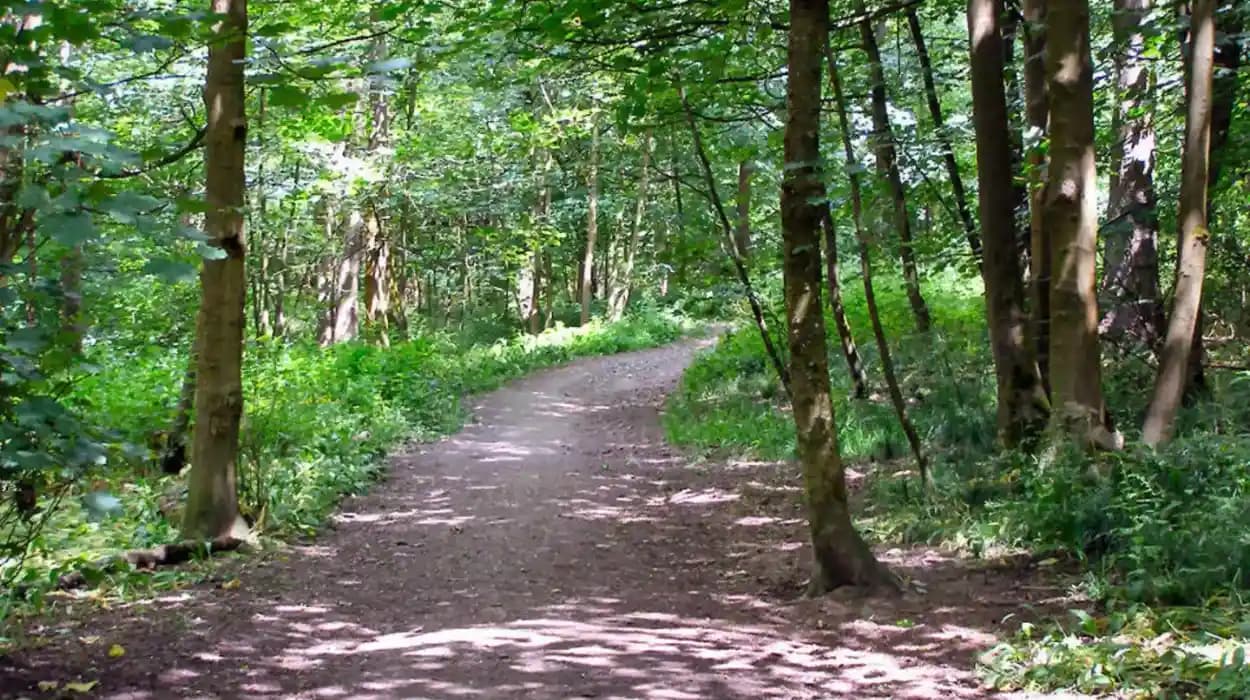
Bolton is widely associated with its industrial heritage, cotton mills, and moorland landscapes, yet the borough also contains an extensive network of historic woodlands that preserve centuries of ecological, cultural, and social history. These forests, plantations, ancient coppices, and woodland valleys once supplied timber, fuel, charcoal, and game for medieval estates before evolving into protected recreational landscapes.
Today, Bolton's woodland walks combine biodiversity, heritage conservation, archaeological remains, reservoirs, and traditional countryside access routes. Many are protected through local conservation policies, Sites of Biological Importance (SBIs), Local Nature Reserves (LNRs), or are managed by organisations including the Woodland Trust, Bolton Council, United Utilities, and Lancashire Wildlife Trust.
These woodland trails offer peaceful walking opportunities while preserving habitats for native birds, mammals, fungi, insects, and woodland flora that have survived centuries of landscape change.
What makes Bolton one of Greater Manchester's best destinations for woodland walks?
Bolton contains ancient woodland, estate forests, reservoir plantations, river valleys, country parks, and moorland woodlands that together represent centuries of environmental history. These landscapes combine accessible walking routes with protected wildlife habitats, industrial heritage, and long-term woodland conservation across the borough.
Bolton sits on the western edge of Greater Manchester where the Pennine foothills meet the Lancashire Plain. This varied geography created numerous valleys, streams, reservoirs, and steep hillsides that naturally supported woodland development long before industrialisation.
Many surviving woods originated during medieval England between the 12th and 15th centuries. Local manorial estates carefully managed woodland resources through coppicing, selective felling, and seasonal grazing. Oak supplied construction timber, ash produced tool handles, birch provided fuel, and hazel supported hurdle making.
The Industrial Revolution transformed surrounding farmland into textile communities, but many woodland areas remained intact because steep valley slopes and reservoir catchments were unsuitable for development.
During the nineteenth century, Victorian authorities increasingly valued woodland for public health and recreation. Improved footpaths allowed residents to escape crowded mill districts and experience cleaner air in nearby forests.
Modern conservation initiatives now protect numerous woodland habitats across Bolton, ensuring that historic landscapes continue supporting wildlife while providing accessible walking routes.
Which woodland walks around Bolton have the greatest historical significance?
Several woodland walks preserve medieval estates, Victorian parks, industrial transport routes, and reservoir landscapes. Smithills Estate, Jumbles Country Park, Moses Gate Country Park, Barrow Bridge, and Rivington Terraced Gardens each demonstrate different stages of Bolton's environmental and social development.
Smithills Estate Woodland
Smithills Estate covers approximately 2,000 acres of woodland, farmland, moorland, and historic parkland north-west of Bolton.
The estate surrounds Smithills Hall, whose origins date to the fourteenth century. Successive landowners managed extensive woodland for timber production, estate maintenance, and controlled hunting.
Ancient woodland survives alongside later plantations established during the eighteenth and nineteenth centuries.
Today, visitors encounter mature oak, beech, sycamore, rowan, holly, and Scots pine while walking historic estate tracks used for centuries.
Jumbles Country Park
Jumbles Reservoir opened in 1971 following reservoir construction by United Utilities' predecessors.
Although relatively modern, surrounding woodland incorporates older valley habitats that regenerated following agricultural decline.
Woodland management focuses on native broadleaf species while preserving aquatic ecosystems that support numerous birds and mammals.
Barrow Bridge Woodland
Barrow Bridge developed as a model mill village during the nineteenth century.
Woodland surrounding the settlement protected river valleys that powered textile production.
Stone bridges, historic pathways, and mature woodland remain visible today, illustrating the relationship between industrial communities and surrounding natural resources.
Moses Gate Country Park
Moses Gate occupies former industrial land transformed into one of Greater Manchester's earliest country parks during environmental restoration projects.
Woodland planting successfully reclaimed landscapes previously affected by mining, railway activity, and manufacturing.
This restoration demonstrates twentieth-century conservation principles applied to post-industrial landscapes.
Rivington Woodland
The extensive woodland surrounding Rivington reflects both medieval land management and Victorian landscape design.
Large-scale planting accompanied reservoir construction during Liverpool's water supply expansion in the nineteenth century.
These mixed woodlands now provide some of Bolton's most scenic forest walking opportunities.
To experience these historic landscapes in person today, consult our comprehensive for itineraries and visiting parameters.
Ancient Woodlands and Forest History Around Bolton
How did Bolton's woodlands develop throughout history?
Bolton's woodland history spans prehistoric forest cover, medieval estate management, agricultural clearance, industrial preservation, Victorian landscaping, and modern ecological restoration. Each historical period shaped woodland composition, public access, biodiversity, and landscape management practices that remain visible today.
Following the last Ice Age approximately 11,700 years ago, woodland gradually expanded across north-west England.
Early forests contained birch before oak, elm, lime, hazel, alder, and pine became established.
By the Bronze Age, communities had begun clearing woodland for agriculture, although substantial forest survived along steep valleys and upland slopes.
During the Norman period after 1066, woodland ownership became closely linked to manorial estates.
Medieval woodland management included coppicing, pollarding, rotational harvesting, and controlled grazing.
These sustainable systems allowed timber production while encouraging continuous woodland regeneration.
Between the sixteenth and eighteenth centuries, agricultural expansion reduced woodland coverage across Lancashire.
However, inaccessible hillsides around Bolton escaped widespread clearance.
The Industrial Revolution increased timber demand for construction, mine supports, railway infrastructure, and manufacturing.
Reservoir construction during the Victorian era unintentionally protected many woodland valleys because development restrictions safeguarded water quality.
Twentieth-century conservation reversed previous woodland decline through replanting, habitat restoration, and public access initiatives.
Modern woodland management increasingly prioritises native biodiversity alongside recreational use.
What wildlife can visitors encounter on Bolton's woodland trails?
Bolton's woodlands support mammals, woodland birds, amphibians, butterflies, fungi, mosses, lichens, and native trees that thrive within interconnected habitats. Protected ecosystems provide year-round opportunities for observing biodiversity while maintaining ecological balance across woodland landscapes and reservoir catchments.
Ancient woodland contains complex ecological relationships developed over centuries.
Native trees create layered habitats supporting different wildlife communities.
Woodland birds regularly include great spotted woodpeckers, nuthatches, treecreepers, tawny owls, great tits, blue tits, robins, wrens, and chiffchaffs.
Bird diversity changes throughout the seasons as breeding migrants arrive during spring.
Mammals include grey squirrels, red foxes, badgers, roe deer, hedgehogs, stoats, and several bat species.
Reservoir woodlands support kingfishers, grey herons, cormorants, mallards, tufted ducks, and Canada geese.
Woodland floors contain bluebells, wood anemones, dog's mercury, wild garlic, ferns, mosses, and fungi.
Bluebell displays during late April and May, which often indicate ancient woodland because these plants spread slowly over long periods.
Deadwood supports beetles, fungi, lichens, and countless invertebrates essential for woodland nutrient recycling.
Conservation management increasingly retains fallen timber rather than removing it.
Why are ancient woodlands especially important in Bolton?
Ancient woodland represents land continuously wooded since at least 1600 in England. These habitats preserve irreplaceable ecological communities, archaeological evidence, historic boundaries, and rare plant species that cannot quickly develop within newly planted forests.
Ancient woodland differs fundamentally from modern plantations.
Centuries of uninterrupted ecological development create unique soils, fungi, microorganisms, and plant communities.
Many woodland species disperse very slowly.
Consequently, replanted forests require centuries before matching ancient woodland biodiversity.
Historic woodland often preserves earthworks, boundary banks, hollow ways, charcoal platforms, and abandoned field systems.
These archaeological remains provide valuable evidence of medieval land management.
Ancient woodland also protects veteran trees whose age exceeds several hundred years.
Such trees develop cavities, dead limbs, and decaying wood that support specialised insects, birds, fungi, and bats.
National planning policy recognises ancient woodland as an irreplaceable habitat deserving strong protection against development.
How did reservoirs influence woodland conservation around Bolton?
Reservoir construction preserved extensive woodland by protecting water catchments from urban expansion. Managed landscapes surrounding reservoirs now combine engineering heritage, mature woodland, biodiversity conservation, and recreational walking routes across several historic water supply systems.
Growing industrial populations demanded reliable water supplies throughout the nineteenth century.
Reservoirs became essential infrastructure supporting expanding towns and cities.
Catchment protection restricted farming intensity, industrial pollution, and urban development around water bodies.
These restrictions unintentionally safeguarded woodland habitats.
Woodland stabilised soils, reduced erosion, filtered rainfall, and improved water quality entering reservoirs.
Consequently, forestry became an important component of water management.
Modern reservoir woodlands continue performing these environmental functions while supporting recreation.
Walking routes surrounding reservoirs allow visitors to experience engineering heritage alongside thriving woodland ecosystems.
Examples include woodland surrounding Jumbles Reservoir, Belmont Reservoir, and the wider Rivington reservoir network.
How are Bolton's woodland landscapes protected today?
Woodland protection combines national legislation, local conservation policies, habitat restoration, public education, volunteer management, and ecological monitoring. Multiple organisations collaborate to preserve biodiversity, historic landscapes, public access, and environmental resilience for future generations.
Several woodland sites receive protection through Local Nature Reserve designation.
Others qualify as Sites of Biological Importance because of ecological significance.
The Woodland Trust actively restores native woodland by removing invasive species, planting indigenous trees, and improving habitat connectivity.
United Utilities manages extensive reservoir catchments using sustainable forestry practices that balance recreation with water protection.
Bolton Council maintains woodland paths, signage, visitor infrastructure, and biodiversity initiatives throughout country parks.
Volunteer groups organise woodland clean-ups, tree planting, wildlife surveys, and educational activities.
Climate change adaptation increasingly influences woodland management.
Managers diversify tree species to improve resilience against disease, drought, and severe weather.
Deadwood retention, wetland restoration, and natural regeneration strengthen woodland ecosystems over the long term.
When is the best time to explore Bolton's woodland walks?
Every season reveals different ecological and historical features across Bolton's woodlands. Spring highlights woodland flowers, summer offers dense canopy cover, autumn showcases colourful foliage, and winter exposes archaeological landscapes normally hidden beneath vegetation.
Spring marks the emergence of woodland wildflowers.
Bluebells, wood anemones, lesser celandine, and wild garlic create colourful woodland carpets beneath emerging tree canopies.
Birdsong reaches annual peaks during the breeding season.
Summer provides shaded walking conditions.
Leaf canopies reduce temperatures compared with surrounding urban areas.
Butterflies, dragonflies, and woodland insects become increasingly active.
Autumn transforms broadleaf woodland through changing foliage colours.
Oak, beech, sycamore, ash, and birch create varied seasonal displays.
Fungi become especially abundant following autumn rainfall.
Winter reveals landscape archaeology.
Without dense vegetation, visitors more easily identify historic walls, estate boundaries, former trackways, and woodland management features.
Wildlife observation also improves because trees no longer obscure distant views.
Why do woodland walks remain an important part of Bolton's cultural heritage?
Woodland walks preserve Bolton's environmental history alongside its industrial heritage. They demonstrate how natural landscapes supported farming, estate management, reservoir engineering, conservation, recreation, and community wellbeing across hundreds of years of continuous historical change.
Bolton's identity extends beyond mills, factories, and textile production.
Woodland landscapes illustrate how communities depended upon natural resources long before industrialisation transformed Lancashire.
These forests supplied construction materials, fuel, food, grazing land, and managed hunting grounds throughout medieval and early modern history.
Victorian reformers later recognised woodland as an essential public open space supporting physical health and recreation.
Modern conservation continues that tradition by balancing environmental protection with public access.
Educational visits introduce students to ecology, archaeology, geography, and local history within living landscapes.
Genealogists researching Bolton families also gain valuable context by understanding how rural communities interacted with surrounding woodland environments across successive generations.
As biodiversity conservation becomes increasingly important across Britain, Bolton's woodland network demonstrates how historic landscapes remain relevant in addressing contemporary environmental challenges.
FAQS
What are the best woodland walks around Bolton?
Some of the best woodland walks around Bolton include Smithills Estate Woodland, Barrow Bridge Woodland, Jumbles Country Park, Moses Gate Country Park, Rivington Woodlands, Hall Lee Bank Park, and Seven Acres Country Park.