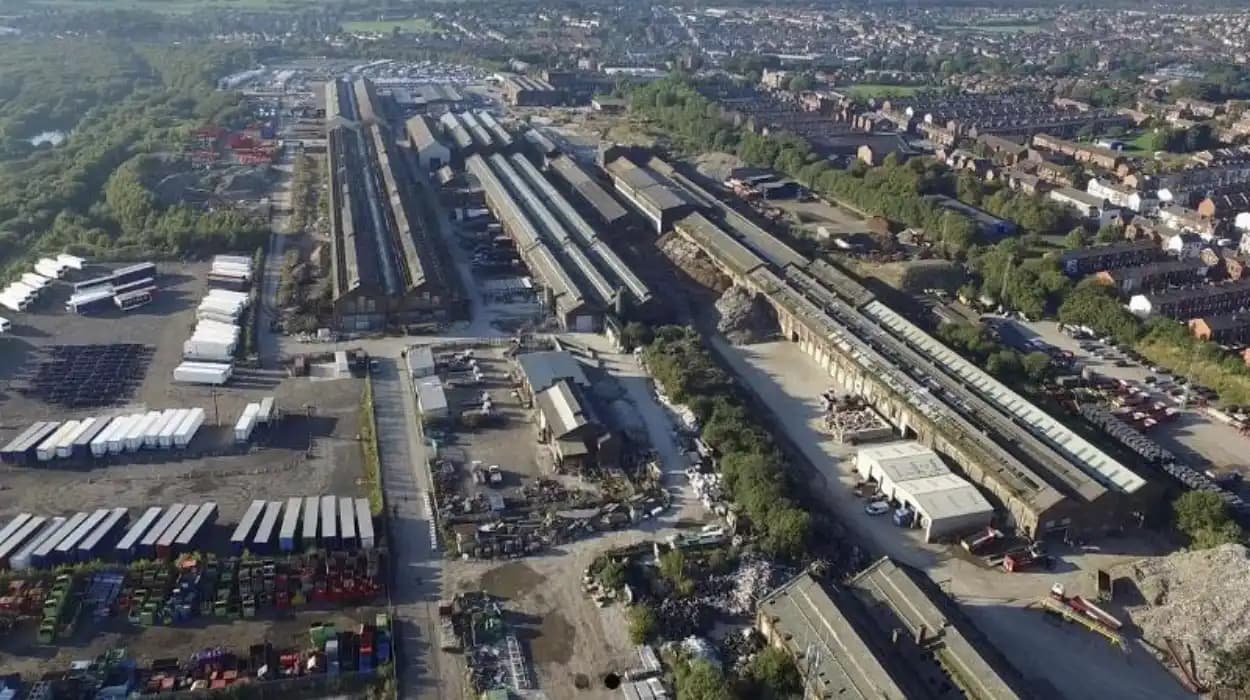
Horwich, a historic market town in the Metropolitan Borough of Bolton, Greater Manchester, represents one of North West England's most significant examples of industrial transformation. Once defined by cotton mills, quarrying, bleaching works, and one of Britain's largest railway engineering complexes, Horwich has gradually reinvented itself as a destination known for industrial heritage, outdoor recreation, sporting venues, and protected landscapes.
Situated beneath the West Pennine Moors, the town combines Victorian engineering achievements with centuries-old rural history. Former industrial sites now stand alongside country parks, reservoirs, heritage trails, and internationally recognised sporting facilities. This transformation illustrates broader economic and social changes experienced across northern England following the decline of heavy industry during the late twentieth century.
Today, Horwich attracts walkers, cyclists, historians, railway enthusiasts, sports visitors, and cultural tourists while preserving many of the buildings, landscapes, and traditions that shaped its industrial identity.
Why did Horwich develop into an important industrial town?
Horwich became an important industrial town because of abundant natural resources, expanding textile production, railway investment, and favourable transport connections. Between the eighteenth and twentieth centuries, manufacturing, quarrying, bleaching, and railway engineering transformed a rural Lancashire settlement into a nationally significant industrial centre.
Long before industrialisation, Horwich existed as a small agricultural township within the historic county of Lancashire. Medieval records identify scattered farms, open fields, and woodland supporting local agriculture and livestock.
The Industrial Revolution fundamentally altered this rural economy during the late eighteenth century. Lancashire experienced rapid expansion in textile manufacturing following innovations such as Richard Arkwright's water-powered spinning technology, Samuel Crompton's spinning mule, and James Watt's improved steam engine.
Horwich benefited from several geographical advantages.
Its upland streams supplied clean water essential for bleaching and textile finishing. Nearby stone quarries provided high-quality sandstone used throughout Greater Manchester. Surrounding moorland offered access to raw materials and transport routes connecting Bolton, Chorley, Preston, Manchester, and Liverpool.
Small workshops gradually evolved into larger industrial enterprises as mechanisation increased productivity throughout the nineteenth century.
Cotton processing became particularly important across the wider Bolton district, while Horwich specialised in complementary industries including bleaching, quarrying, engineering, and later railway manufacturing.
Population growth reflected industrial expansion.
During the nineteenth century, workers migrated from surrounding rural communities seeking employment opportunities, encouraging new housing developments, schools, churches, and civic institutions.
How did the Lancashire and Yorkshire Railway Works transform Horwich?
The Lancashire and Yorkshire Railway Works transformed Horwich by creating one of Britain's largest railway engineering complexes after its opening in 1886. Thousands of skilled workers settled in the town, stimulating housing, education, commerce, public services, and long-term urban development.
The defining moment in Horwich's industrial history arrived during the 1880s.
The Lancashire and Yorkshire Railway selected Horwich for a major locomotive construction and maintenance facility because of its available land, expanding railway network, and proximity to northern manufacturing centres.
Construction began in 1884.
The Horwich Locomotive Works officially opened in 1886 under the leadership of railway engineer John Aspinall.
The complex covered approximately 142 acres and included erecting shops, foundries, smithies, boiler shops, machine workshops, administrative buildings, warehouses, and testing facilities.
Thousands of employees worked across specialised engineering departments.
Workers manufactured steam locomotives, repaired rolling stock, fabricated components, and maintained railway equipment serving routes across northern England.
Engineering innovation became a defining characteristic of the works.
Precision manufacturing techniques, skilled apprenticeships, and standardised production methods reflected the increasing sophistication of British railway engineering during the Victorian era.
Employment opportunities reshaped Horwich's demographics.
Entire neighbourhoods developed around the works.
Terraced housing expanded rapidly to accommodate railway employees and their families.
Schools, churches, recreation grounds, shops, and public buildings followed this population increase.
The railway company actively invested in worker welfare through educational programmes, sporting organisations, and social clubs that strengthened community identity.
For nearly one century, the locomotive works remained Horwich's largest employer.
Its influence extended beyond engineering by shaping local politics, education, architecture, and economic prosperity.
What industries shaped Horwich before tourism became important?
Horwich's economy depended upon several interconnected industries including cotton bleaching, quarrying, textile manufacturing, railway engineering, and agriculture. These industries collectively supported employment, infrastructure development, commercial growth, and urban expansion throughout the eighteenth, nineteenth, and early twentieth centuries.
Industrial diversification strengthened Horwich's economy.
Before railway engineering dominated employment, bleaching works processed woven cotton cloth using abundant clean water from surrounding streams.
Bleaching removed natural colouring from fabrics before dyeing and finishing, making Lancashire textiles competitive within domestic and international markets.
Stone quarrying represented another major industry.
Horwich sandstone supplied building projects across Bolton and Greater Manchester during Victorian urban expansion.
Many public buildings, churches, bridges, and houses incorporated locally quarried stone because of its durability and availability.
Agriculture remained significant despite industrial growth.
Farming continued across surrounding countryside, supplying food to the expanding urban population.
Mixed farming included livestock, dairy production, and cereal cultivation.
Engineering workshops emerged alongside railway manufacturing.
Metalworking, machine production, woodworking, and maintenance services supported both local businesses and regional industry.
Retail activity expanded in response to population growth.
Markets, independent shops, inns, public houses, and commercial premises increasingly served industrial workers and their families.
Industrial employment created economic stability that supported broader community development throughout Horwich.
How did industrial decline reshape Horwich during the twentieth century?
Industrial decline reshaped Horwich through factory closures, employment losses, economic restructuring, and urban regeneration. Manufacturing gradually declined after the Second World War, while conservation, recreation, heritage tourism, and service industries became increasingly important to the local economy.
Britain's industrial economy experienced profound structural changes after 1945.
Competition from overseas manufacturers, changing transport technologies, declining railway demand, and economic restructuring reduced employment across traditional industries.
Steam locomotives disappeared following railway modernisation.
Diesel and electric trains gradually replaced steam-powered fleets, reducing demand for locomotive construction and maintenance.
The Horwich Works adapted for several decades but employment steadily declined.
The closure of railway manufacturing represented a major turning point.
Thousands of industrial jobs disappeared, affecting local businesses, suppliers, and housing demand.
Many northern industrial communities experienced similar economic transitions during the late twentieth century.
Horwich responded through regeneration rather than abandonment.
Local authorities, heritage organisations, businesses, and community groups supported redevelopment initiatives focused on housing, leisure, environmental improvement, and tourism.
Former industrial land found new purposes through commercial development, residential construction, recreational facilities, and transport infrastructure.
Economic diversification gradually replaced dependence upon heavy industry.
Service industries, retail employment, hospitality, education, healthcare, and tourism became increasingly significant employers.
Why did Horwich become a tourist destination?
Horwich became a tourist destination because its industrial heritage combined with outstanding natural landscapes, sporting attractions, protected historic sites, and improved visitor infrastructure. Heritage conservation and environmental regeneration successfully broadened the town's economic and cultural appeal beyond manufacturing.
Tourism developed through the combination of several complementary attractions rather than a single landmark.
Industrial heritage remained an important foundation.
Visitors interested in Britain's railway history continue exploring surviving buildings, engineering sites, and historical interpretation connected with the former locomotive works.
The surrounding landscape substantially expanded Horwich's appeal.
The West Pennine Moors provide extensive walking routes, cycling opportunities, wildlife habitats, and panoramic viewpoints overlooking Greater Manchester and Lancashire.
Reservoirs constructed originally to support industrial and municipal water supplies now attract walkers, photographers, birdwatchers, and outdoor enthusiasts.
Sport has further strengthened Horwich's visitor economy.
The modern stadium serving professional football attracts thousands of spectators throughout each season, while surrounding retail and leisure developments encourage longer visitor stays.
Improved transport accessibility also contributed.
Motorway connections, rail services, and public transport enable convenient access from Manchester, Liverpool, Preston, Blackburn, Wigan, and surrounding regions.
To experience these historic landmarks in person today, consult our comprehensive [Best Things to Do in Horwich for First-Time Visitors Throughout the Year] for itineraries and visiting parameters.
Which historic sites preserve Horwich's industrial heritage?
Horwich preserves its industrial heritage through surviving railway buildings, historic churches, reservoirs, workers' housing, conservation areas, and archaeological landscapes. These sites collectively document the town's transition from rural settlement to nationally important industrial community and modern visitor destination.
Although industrial redevelopment altered parts of Horwich, numerous historic features remain visible.
Former railway workshops continue representing one of Britain's most significant engineering landscapes.
Several original structures survive despite redevelopment, providing important evidence of Victorian industrial planning.
Traditional terraced housing constructed for railway workers still characterises many residential streets.
These houses demonstrate nineteenth-century urban planning designed around industrial employment.
Historic churches including St Catherine's Church illustrate population growth accompanying industrial expansion.
Ecclesiastical architecture reflects changing religious, educational, and social life throughout Victorian Britain.
Reservoirs originally constructed for industrial and domestic water supplies remain important heritage assets.
Today they function primarily as recreational landscapes supporting walking, nature conservation, and environmental education.
Stone boundary walls, bridges, historic road alignments, and surviving quarry landscapes further illustrate Horwich's industrial development.
These features collectively provide archaeological evidence supporting historical research into local industry and settlement patterns.
How have the West Pennine Moors influenced Horwich's transformation?
The West Pennine Moors influenced Horwich's transformation by preserving extensive natural landscapes that complemented industrial heritage. Outdoor recreation, biodiversity conservation, environmental education, and scenic tourism increasingly replaced extractive industries as important economic and cultural activities.
The relationship between industry and landscape defines Horwich's modern identity.
Historically, the moors supplied water, stone, grazing land, and natural resources supporting local industry.
Industrial communities depended upon these surrounding uplands.
Today the same landscape supports tourism rather than manufacturing.
Walking trails connect reservoirs, hills, woodland, archaeological remains, and historic transport routes.
The area attracts visitors throughout every season.
Conservation initiatives protect peatland habitats, native vegetation, birds, mammals, and freshwater ecosystems.
Environmental restoration demonstrates changing public priorities from industrial extraction toward ecological preservation.
Educational groups frequently study the interaction between geology, industrial history, ecology, and landscape management.
This combination broadens Horwich's appeal beyond conventional heritage tourism.
The surrounding countryside also strengthens regional tourism by linking Horwich with neighbouring attractions across the West Pennine Moors.
How has heritage conservation protected Horwich's historical identity?
Heritage conservation has protected Horwich by preserving historic buildings, documenting industrial archaeology, maintaining public archives, supporting museum collections, and promoting community engagement. These efforts ensure that the town's industrial development remains accessible to future generations through education and responsible tourism.
Conservation extends beyond preserving individual buildings.
It includes documenting historical records, protecting archaeological evidence, restoring historic landscapes, and interpreting industrial heritage for public audiences.
Local archives preserve maps, engineering drawings, census records, photographs, newspapers, and employment documents connected with Horwich's development.
These collections support genealogical research, academic scholarship, and local history projects.
Listed buildings receive statutory protection recognising their architectural or historic importance.
Planning policies encourage sympathetic redevelopment that respects historic character while accommodating contemporary needs.
Community organisations organise heritage walks, exhibitions, educational events, and commemorative activities celebrating Horwich's industrial past.
Schools increasingly incorporate local history into educational programmes, helping younger generations understand how industrialisation shaped their community.
Heritage tourism simultaneously supports conservation funding by increasing public awareness of historically significant sites.
What does Horwich's evolution reveal about Britain's industrial history?
Horwich demonstrates how British industrial communities successfully adapted to economic change by preserving heritage, regenerating former industrial land, and expanding tourism. Its evolution reflects national patterns of industrialisation, deindustrialisation, conservation, and sustainable economic diversification across northern England.
Horwich represents a wider historical process experienced across Britain.
Industrial towns built upon manufacturing, engineering, mining, and textiles encountered significant economic restructuring during the twentieth century.
Some communities experienced long-term decline.
Others successfully diversified through regeneration, conservation, education, and tourism.
Horwich belongs within this second category.
Its preserved railway heritage continues documenting Britain's engineering achievements.
Its protected landscapes demonstrate successful environmental restoration.
Its sporting facilities broaden visitor demographics.
Its historic architecture maintains continuity between past and present.
Researchers increasingly examine Horwich as an example of adaptive urban development.
Industrial archaeology, economic geography, heritage management, and environmental conservation intersect throughout the town's historical evolution.
This integrated identity explains why Horwich now attracts visitors interested in industrial history, architecture, genealogy, transport heritage, landscape conservation, and outdoor recreation.
Rather than replacing its industrial past, Horwich has incorporated that history into its modern cultural identity.
Horwich's evolution from industrial town to tourist destination reflects more than changing economic priorities. It illustrates how a community preserved its historical identity while adapting to new social, environmental, and commercial realities. From its origins as a rural Lancashire settlement through the expansion of cotton processing, quarrying, and the world-renowned Lancashire and Yorkshire Railway Works, Horwich became a defining example of Victorian industrial growth.
The decline of heavy industry during the twentieth century marked a significant transition rather than an endpoint. Heritage conservation, landscape restoration, improved infrastructure, and investment in recreation transformed former industrial assets into visitor attractions. The West Pennine Moors, historic railway sites, reservoirs, traditional housing, and surviving civic architecture now provide tangible evidence of centuries of economic and social change.
Today, Horwich demonstrates that industrial heritage and sustainable tourism are complementary rather than competing objectives. Its preserved historical landscapes continue supporting education, research, cultural tourism, and community identity while contributing to the wider heritage economy of Greater Manchester. As interest in Britain's industrial past continues to grow, Horwich remains an enduring example of successful regeneration rooted in historical preservation.
FAQS
What was Horwich famous for during the Industrial Revolution?
Horwich became famous for the Lancashire and Yorkshire Railway Works, which opened in 1886 and became one of Britain's largest locomotive manufacturing and engineering facilities. The town was also known for quarrying, bleaching works, and textile-related industries.