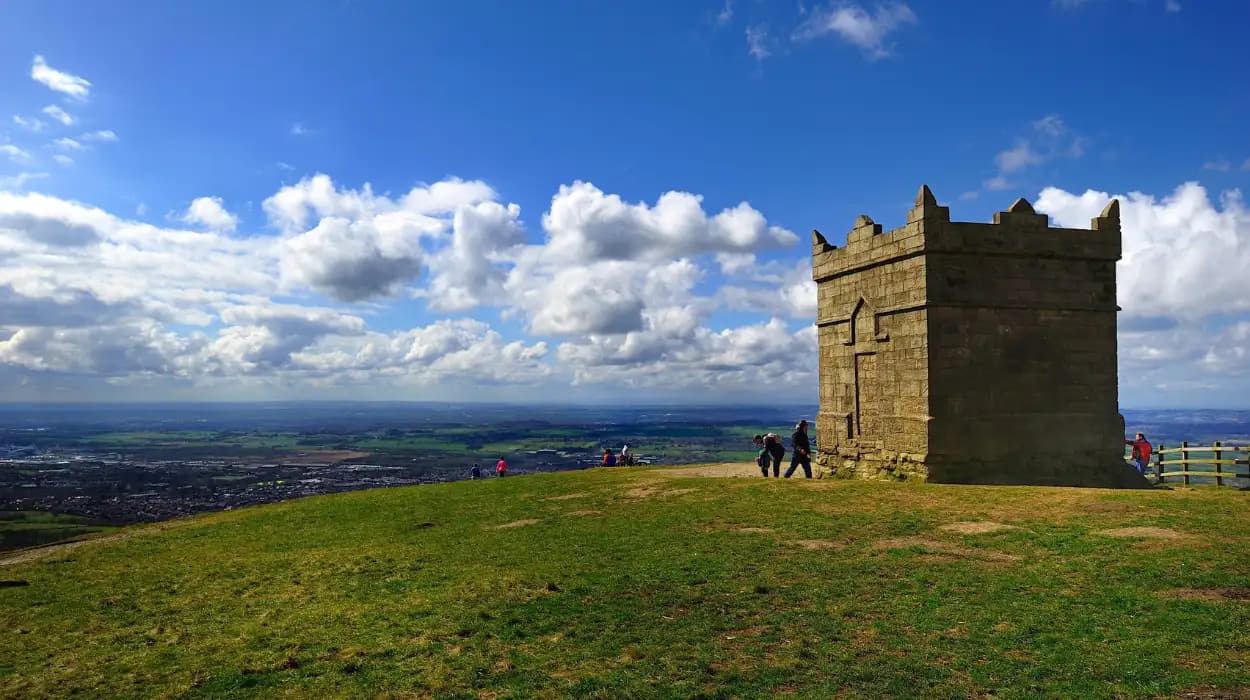
Horwich is a historic market town in the Metropolitan Borough of Bolton, Greater Manchester, England. Located on the western edge of Bolton beneath the West Pennine Moors, the town combines industrial heritage, countryside landscapes, sporting landmarks, and preserved historical sites. Horwich developed from a rural Lancashire settlement into an important railway engineering centre during the nineteenth century, particularly after the establishment of the Lancashire and Yorkshire Railway Works in 1886.
Today, first-time visitors encounter a destination where centuries of local history coexist with modern leisure attractions, nature reserves, sporting venues, and heritage landscapes. The town provides year-round opportunities for walking, historical exploration, cultural discovery, and outdoor recreation. Its proximity to moorland, reservoirs, woodlands, and nationally significant heritage sites makes it one of the most diverse visitor destinations within the Bolton area.
Why is Horwich worth visiting throughout the year?
Horwich offers year-round access to historical landmarks, industrial heritage sites, countryside walking routes, sporting venues, reservoirs, and cultural attractions. Its combination of West Pennine Moor landscapes, railway history, and preserved local heritage provides diverse experiences for first-time visitors in every season.
The town occupies a strategic location between urban Greater Manchester and the upland landscapes of Lancashire. This position has shaped its historical development for centuries. Archaeological evidence indicates human activity in the surrounding uplands since prehistoric times, while documentary records establish Horwich as a medieval township within the historic county of Lancashire.
The modern visitor benefits from this layered history. Victorian industrial expansion left railway infrastructure, workers' housing, and civic buildings. Earlier agricultural landscapes survive through farms, field boundaries, and ancient routeways. The surrounding moors preserve geological and ecological features that predate human settlement.
Unlike destinations that depend on a single attraction, Horwich offers multiple visitor experiences. Historical sites remain accessible throughout the year. Walking routes change character across seasons. Sporting events attract visitors regularly. Local parks, reservoirs, and countryside locations remain important recreational assets regardless of season.
This diversity creates a resilient visitor economy and ensures that first-time visitors can build meaningful itineraries during any month of the year.
What historical sites should first-time visitors explore in Horwich?
First-time visitors should explore Horwich Parish Church, Horwich Heritage Centre, the former Lancashire and Yorkshire Railway Works area, Rivington village, and surviving Victorian civic landmarks. These locations collectively illustrate the town’s transformation from a rural settlement into an industrial railway community.
Horwich Parish Church, formally dedicated as St Catherine's Church, represents one of the town's most significant historical institutions. The church occupies a site associated with local religious life for centuries and reflects the evolution of Horwich's population and social structure.
The town's industrial identity emerged dramatically during the late nineteenth century. The Lancashire and Yorkshire Railway Company selected Horwich as the location for a major locomotive manufacturing complex in 1886. Construction of the Horwich Railway Works transformed the town's economy and demographics.
Thousands of workers relocated to Horwich as railway employment expanded. New housing developments, schools, public buildings, and transport infrastructure accompanied this industrial growth. By the early twentieth century, Horwich had become one of Britain's most important railway engineering centres.
Horwich Heritage Centre preserves documents, photographs, and artefacts that interpret this transformation. Visitors gain insight into working conditions, industrial technologies, and community life during the railway era.
Nearby Rivington also forms an essential part of the area's historical landscape. The village contains structures connected to medieval settlement patterns, nineteenth-century estate development, and twentieth-century conservation efforts.
To experience this historic landscape in person today, consult our comprehensive [How Horwich Evolved from Industrial Town to Tourist Destination] for itineraries and visiting parameters.
How did the railway industry shape Horwich?
The railway industry fundamentally altered Horwich's development trajectory.
Before industrial expansion, Horwich functioned primarily as a rural township with agriculture and small-scale local commerce. The opening of the railway works introduced large-scale engineering employment and integrated the town into national transport networks.
The Horwich Works produced locomotives, railway equipment, and engineering components that served railways across Britain. Employment figures reached several thousand workers during peak operational periods.
This industrial expansion influenced architecture, population growth, education systems, and civic governance. Many surviving residential streets and public buildings date directly from this period of railway-led growth.
What outdoor attractions make Horwich popular with visitors?
Horwich attracts outdoor enthusiasts through access to the West Pennine Moors, Rivington Pike, reservoirs, woodland trails, and protected landscapes. These natural environments offer recreational opportunities while preserving geological, ecological, and historical features significant to regional heritage.
The town's outdoor appeal derives largely from its proximity to the West Pennine Moors. This upland landscape extends across large sections of Lancashire and Greater Manchester and contains extensive areas of heather moorland, peatland, reservoirs, and woodland.
Rivington Pike stands among the region's most recognised landmarks. Rising approximately 363 metres above sea level, the hill provides extensive views across Greater Manchester, Lancashire, Merseyside, and Cheshire.
The Pike Tower, constructed in 1733, occupies the summit and serves as a prominent historical monument. The structure reflects eighteenth-century estate landscaping traditions and remains a major destination for walkers.
Seasonal variation enhances the visitor experience. Spring introduces wildflowers and migratory bird activity. Summer provides longer daylight hours for exploration. Autumn transforms woodland areas through changing foliage. Winter often delivers dramatic panoramic views across the surrounding region.
Several reservoirs also contribute to Horwich's visitor appeal. These water bodies originally supported regional water supply infrastructure but now function as important recreational and ecological resources.
What makes Rivington Pike historically important?
Rivington Pike possesses significance beyond its scenic value.
The hill served as a navigational landmark for centuries. Historical records indicate its importance to local travel, commerce, and communication networks.
The Pike Tower itself reflects eighteenth-century estate management and landscape design principles. The structure was commissioned during a period when landowners increasingly integrated ornamental features into their estates.
The annual Easter Saturday ascent tradition further demonstrates the hill's enduring cultural importance. This custom has continued for generations and remains one of the area's most recognised community events.
Which parks and green spaces should visitors include in their itinerary?
Visitors should include Lever Park, Rivington Terraced Gardens, local woodland trails, and reservoir-side landscapes in their itinerary. These spaces combine environmental conservation, historical design, recreational infrastructure, and cultural heritage within accessible settings suitable for year-round exploration.
Lever Park represents one of the most important public green spaces near Horwich. The park owes its existence largely to William Hesketh Lever, later known as Lord Leverhulme.
Lever acquired extensive landholdings in the Rivington area during the late nineteenth and early twentieth centuries. His vision included landscape enhancement, public access improvements, and conservation initiatives.
The resulting parkland incorporates woodland, reservoirs, footpaths, and historical structures. Visitors encounter both natural and designed landscapes shaped by deliberate planning decisions.
Rivington Terraced Gardens constitute one of the area's most remarkable heritage attractions. These gardens formed part of Leverhulme's ambitious estate development programme.
The terraces integrated architectural features, pathways, viewing points, and ornamental planting schemes. Restoration efforts during recent decades have preserved many elements of this historic landscape.
The gardens illustrate broader trends in Edwardian landscape architecture and demonstrate how wealthy industrialists shaped recreational environments during the early twentieth century.
Why are the Terraced Gardens significant?
The Terraced Gardens possess both architectural and cultural significance.
They represent one of the most ambitious landscape projects undertaken in North West England during the Edwardian period. Their design combined formal garden principles with dramatic natural topography.
Modern conservation projects continue to preserve surviving structures, pathways, and landscape features. These efforts demonstrate the ongoing importance of heritage management within the region.
What museums and heritage resources help visitors understand Horwich?
Museums, heritage centres, archives, and local history collections help visitors understand Horwich’s agricultural origins, industrial expansion, railway heritage, and community development. These resources preserve documentary evidence and material culture that explain the town’s historical evolution.
Historical interpretation plays a vital role in understanding Horwich beyond its visible landmarks.
Local heritage organisations maintain archives containing photographs, maps, employment records, newspapers, and oral histories. These collections document the experiences of residents across multiple generations.
Railway heritage remains particularly well represented within these resources. Employment registers, engineering drawings, and industrial photographs reveal how the Horwich Works operated and influenced local society.
Educational institutions and researchers regularly utilise these materials to study industrialisation, labour history, urban development, and community formation.
Genealogical researchers also benefit from local records. Census returns, parish registers, electoral records, and employment documentation help individuals trace family connections to the town.
For many visitors, these resources provide context that transforms physical landmarks into meaningful historical narratives.
How does Horwich contribute to Lancashire's industrial history?
Horwich occupies an important position within Lancashire's broader industrial story.
The county became a global centre of manufacturing during the Industrial Revolution. While cotton textiles dominated many communities, Horwich developed a distinct identity through railway engineering.
Its railway works represented advanced industrial technology and skilled employment. The site contributed directly to Britain's transport infrastructure and engineering capabilities.
This specialised industrial role differentiates Horwich from neighbouring mill towns and highlights the diversity of Lancashire's economic history.
What walking routes are best for first-time visitors?
The best walking routes for first-time visitors include Rivington Pike trails, Lever Park circuits, reservoir paths, moorland routes, and heritage walks through Horwich town centre. These routes combine historical interpretation, natural scenery, and accessible recreational opportunities throughout the year.
Walking remains the most effective way to experience Horwich's landscape and heritage.
Town-centre heritage walks reveal Victorian architecture, former industrial sites, churches, and civic buildings. These routes help visitors understand how industrialisation reshaped the urban environment.
Reservoir walks provide gentler terrain suitable for families and casual visitors. The combination of water, woodland, and historical infrastructure creates varied scenery within relatively short distances.
More ambitious walkers frequently choose routes leading onto the West Pennine Moors. These upland landscapes reveal geological features, historical routeways, and extensive panoramic views.
Interpretation boards, published walking guides, and local heritage materials assist visitors in understanding the historical significance of locations encountered along these routes.
What historical features can walkers discover?
Walkers encounter multiple layers of history across the landscape.
Examples include former quarry sites, old transport routes, estate boundaries, reservoir infrastructure, and remnants of agricultural land use.
Additional examples include Victorian bridges, workers' housing districts, historic churches, and preserved landscape features associated with the Leverhulme estate.
These features collectively demonstrate centuries of environmental and human interaction.
How does Horwich connect to the history of Rivington?
Horwich and Rivington share interconnected histories shaped by geography, landownership, water management, industrial development, and conservation. Their relationship created a distinctive cultural landscape where rural heritage, engineering achievements, and recreational amenities coexist within a single visitor destination.
The historical connection between Horwich and Rivington extends across centuries.
Geographic proximity facilitated economic and social interaction long before industrialisation. Agricultural communities used shared routes, markets, and local institutions.
The relationship intensified during the nineteenth century through regional water infrastructure projects. Reservoir construction altered the landscape and introduced new engineering systems.
William Hesketh Lever's land acquisitions further strengthened the connection. His estate developments encompassed substantial areas around Rivington while influencing recreational opportunities for residents of Horwich and neighbouring communities.
Today, visitors frequently experience both locations as part of a single heritage and recreation destination.
What role did water infrastructure play?
Water infrastructure significantly influenced regional development.
Reservoir construction supported growing urban populations across Lancashire and Greater Manchester. These projects required substantial engineering expertise and altered local landscapes.
The resulting reservoirs now serve dual functions. They remain components of water management systems while providing important recreational and ecological resources.
What seasonal activities can visitors enjoy in Horwich?
Visitors can enjoy seasonal walking, heritage exploration, wildlife observation, community events, sporting activities, and landscape photography throughout the year. Seasonal changes enhance rather than restrict the visitor experience, creating distinct opportunities during spring, summer, autumn, and winter.
Spring introduces new vegetation growth and increased wildlife activity. Woodland areas become particularly attractive as seasonal flowers emerge.
Summer supports longer outdoor itineraries. Extended daylight hours allow visitors to combine historical exploration, walking, and recreational activities within a single day.
Autumn transforms the area's woodlands through changing leaf colours. Photographers frequently visit during this season to capture landscape views around Rivington and the reservoirs.
Winter offers a different perspective. Reduced vegetation often reveals historical landscape features that remain partially concealed during other seasons. Clear atmospheric conditions can produce extensive long-distance views from elevated locations.
Sporting activity also contributes to year-round visitation. The nearby stadium complex and associated leisure facilities attract visitors throughout the calendar year.
Why does seasonality matter in heritage tourism?
Seasonality influences how visitors experience historical landscapes.
Different environmental conditions reveal different aspects of heritage sites. Vegetation patterns, weather conditions, visibility, and visitor numbers all affect interpretation and accessibility.
This variation encourages repeat visits and supports sustainable tourism throughout the year rather than concentrating activity within a single season.
Why does Horwich remain an important destination for cultural and heritage tourism?
Horwich remains important because it preserves industrial heritage, historical landscapes, architectural landmarks, and recreational environments within a compact geographical area. Its railway history, moorland setting, and conservation efforts create a distinctive destination that supports education, tourism, and heritage preservation.
The town represents several important historical themes simultaneously.
It illustrates the transition from rural settlement to industrial community. It demonstrates the impact of railway engineering on local development. It preserves connections to nationally significant figures such as Lord Leverhulme. It provides access to landscapes shaped by both natural processes and human intervention.
Conservation initiatives continue to protect these assets. Heritage organisations, local authorities, volunteers, and educational institutions contribute to preservation efforts that maintain public access while safeguarding historical significance.
For educators, Horwich offers practical examples of industrialisation, urban development, environmental management, and heritage conservation. For cultural tourists, it provides authentic historical environments rather than reconstructed attractions. For genealogical researchers, it preserves records that illuminate family histories connected to Lancashire's industrial past.
As interest in local history, sustainable tourism, and heritage preservation continues to grow, Horwich's importance within Greater Manchester's cultural landscape remains secure. Its combination of historical depth, accessible countryside, preserved landmarks, and year-round attractions ensures that first-time visitors can gain a comprehensive understanding of both the town itself and the wider historical development of the Bolton region.
FAQS
Is Horwich worth visiting?
Yes. Horwich offers a mix of industrial heritage, countryside walks, historic landmarks, reservoirs, and easy access to the West Pennine Moors, making it a rewarding destination for history lovers and outdoor enthusiasts.