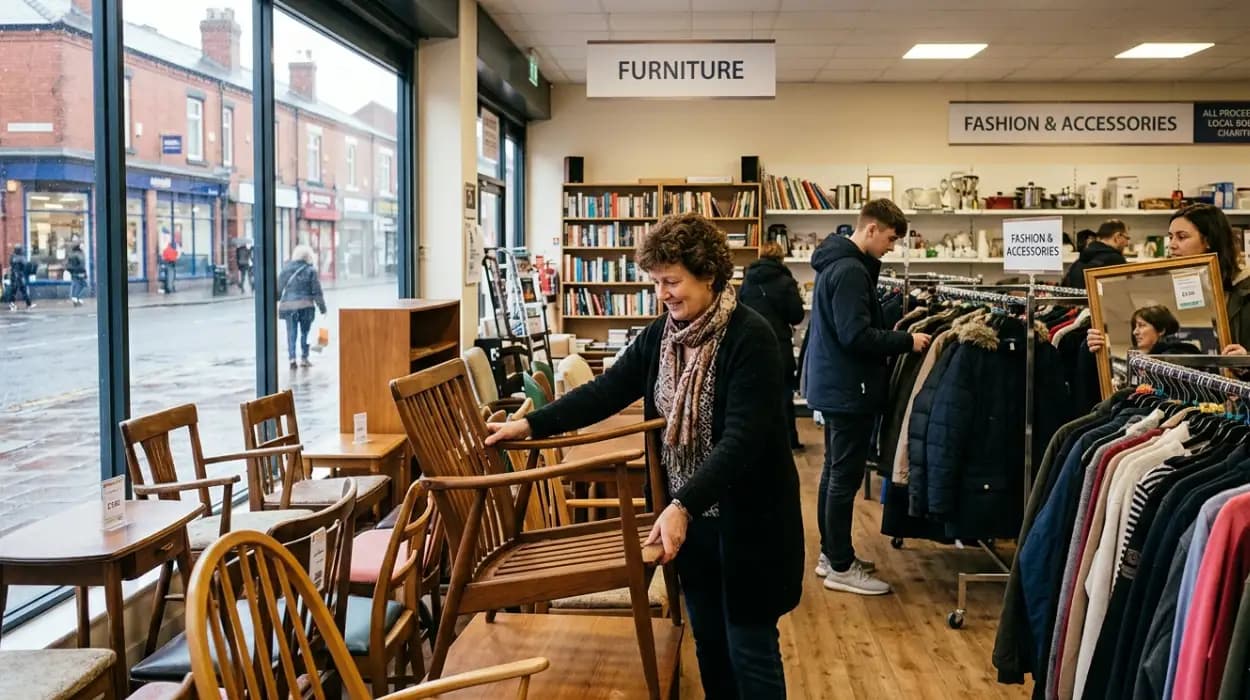
The secondhand retail ecosystem in the Metropolitan Borough of Bolton represents an important intersection of environmental sustainability, localized economic circularity, and community-focused philanthropy. Circular retail operations involve the collection, sorting, and resale of pre-owned commodities to extend consumer product lifespans. By routing inventory away from regional municipal landfills, charity shops function as decentralized waste management solutions while generating capital for health, social care, and community development initiatives.
For residents and visitors looking to acquire high-quality goods, navigating this landscape effectively requires understanding where to find specific categories of items. This publication by Bolton Today serves as an exhaustive guide to the premier charitable retail outlets across the borough, detailing their inventory profiles, distribution mechanics, and societal impacts.
What is the history of charity shopping in Bolton?
Charity shopping in Bolton developed as an institutionalized response to post-Industrial Revolution socioeconomic stratification and the emergence of early twentieth-century humanitarian organizations. Local voluntary groups and municipal health dispensaries established the foundational frameworks for formal secondhand material redistribution networks across Greater Manchester.
The evolution of charitable commerce in Bolton is closely tied to the shifting industrial landscape of Lancashire. Throughout the nineteenth and early twentieth centuries, Bolton functioned as a global center for textile manufacturing. The high concentration of textile mills created a dense working-class population vulnerable to macroeconomic volatility and public health crises. Local voluntary networks, religious institutions, and specialized dispensaries emerged to mitigate these hardships by collecting and redistributing surplus apparel, domestic linens, and functional household furniture to families facing financial adversity.
Following the mid-twentieth century decline of the regional cotton industry, these informal distribution networks underwent a structured commercial transformation. National non-profit organizations and localized healthcare providers, such as Bolton Hospice, established permanent, public-facing brick-and-mortar storefronts in the town center and surrounding townships like Horwich and Farnworth. These modern establishments transitioned charity shopping from a localized emergency aid strategy into an organized retail sector.
Today, these retail spaces serve a dual purpose: they function as viable commercial spaces that support regional environmental targets while raising essential funds for specialized palliative care, medical research, and social assistance programs.
Which Bolton charity shops offer the best furniture selections?
The best charity shops for furniture in Bolton are the Bolton Hospice Furniture Plus store on Manchester Road and the British Heart Foundation Home store on Deansgate. These large facilities specialize in high-volume processing of bulky domestic goods and electrical appliances.
Large-scale furniture redistribution requires substantial square footage for processing and storage, which makes specialized showrooms essential. The Bolton Hospice Furniture Plus facility operates as a centralized hub for large domestic donations, processing incoming items such as complete dining sets, sofas, wardrobes, and solid wood sideboards. This location utilizes a dedicated logistics team to manage multi-item donations, ensuring a steady rotation of furniture options suitable for complete home outfitting.
Concurrently, the British Heart Foundation Home store on Deansgate focuses heavily on standard domestic furniture and certified electrical appliances. This city-center location processes large volumes of inventory, including modern bedroom furniture sets, upholstered seating, and structural storage units.
Because structural integrity and safety are paramount for furniture resale, both organizations maintain strict quality controls. Furniture pieces selected for retail placement undergo detailed inspections to ensure structural stability and aesthetic viability before being cleared for the showroom floor.
How do charity stores ensure the safety of furniture and electrical items?
Charity stores ensure item safety by enforcing strict regulatory compliance assessments, including the verification of British fire safety labels on upholstered furniture and mandatory Portable Appliance Testing (PAT) conducted by qualified technicians on all electrical goods before retail placement.
The sale of pre-owned furniture and domestic appliances is heavily regulated under United Kingdom consumer protection legislation. Upholstered items, including sofas, armchairs, mattresses, and cushioned dining chairs, must comply with the Furniture and Furnishings (Fire) (Safety) Regulations 1988.
Store processing teams inspect incoming donations for permanent, legible manufacturer labels confirming compliance with these fire safety standards. If an upholstered item lacks this verified legal documentation, the store cannot legally resell it, and the piece is rejected or routed to textile and material recycling processors.
For electrical goods, such as lamps, audio equipment, refrigerators, and small kitchen appliances, stores implement a systematic safety verification workflow:
- Visual Inspection: Technicians check the outer casing, plug structural integrity, and power cable insulation for physical defects or exposed wiring.
- Insulation Testing: Specialized testing devices measure electrical resistance to ensure internal insulation prevents current leakage.
- Earth Continuity Testing: Technicians verify that the appliance's grounding path is secure to prevent accidental shocks.
- Documentation: Items that pass are fitted with a visible, dated PAT certificate label, while failing items are immediately decommissioned for component harvesting or electronic waste recycling.
Explore More Things To Do In Bolton
Ironman UK Spectator and Road Closure Guide: Bolton 2026
UK RAF F-35B Stealth Fighter Jets Grounded in Azores 2026
Where are the top locations for fashion and vintage clothing in Bolton?
The top locations for fashion and vintage clothing in Bolton are the clustered charity retail outlets on Deansgate in the town centre and the boutique charity shops located along Winter Hey Lane in the township of Horwich.
The geographical distribution of high-quality apparel donations correlates closely with the demographic profiles of surrounding neighborhoods. The Deansgate retail corridor benefits from high foot traffic and a steady stream of donations, resulting in a diverse inventory of contemporary high-street brands, footwear, and casual clothing. Store managers at these central locations prioritize fast inventory turnover, frequently restocking apparel racks to capture daily commuter and student shoppers.
In contrast, the charity shops along Winter Hey Lane in Horwich offer a more curated shopping experience. These locations receive a high volume of vintage garments, retro knitwear, and premium formalwear.
The inventory strategy here focuses on seasonal merchandising and aesthetic sorting, making it a reliable destination for buyers seeking unique historical fashion eras or high-end label items. This regional variation allows fashion collectors to use targeted sourcing strategies depending on whether they want modern wardrobe basics or distinct vintage pieces.
What kinds of hidden treasures can be found in local shops?
Local charity shops yield rare hidden treasures including out-of-print literature, mid-century ceramic wares, antique silverware, and vintage sports equipment. These items enter the retail ecosystem through estate clear-outs and long-term storage liquidations by local residents.
The category of "hidden treasures" refers to items with historical, collectable, or monetary value that sit outside standard modern consumer classifications. Book sections in older town-centre shops frequently contain first-edition prints, localized historical monographs, and antique maps detailing the industrial layout of early Lancashire. These paper items are evaluated by store specialists to preserve their condition and historical value for collectors.
Additionally, collectibles such as mid-century modern ceramics, art deco glassware, and stamped silver tableware are frequently donated during estate transitions. For example, historical analyses of sports equipment donations within regional outlets have documented unique finds, such as vintage cricket gear and classic sporting apparel, appearing in local shops like the Bolton Hospice retail units (Charter, 2022).
Because these items arrive unpredictably, local shops remain dynamic environments where diligent buyers can find high-value collectibles hidden among everyday household goods.
How do donations support the local Bolton community?
Donations support the local community by generating direct funding for specialized healthcare services, funding regional welfare initiatives, providing low-cost household goods to low-income families, and offering structured vocational volunteer opportunities that build local employment skills.
The financial returns from charitable retail operations are directly reinvested into local public services and community welfare frameworks. Funds raised by organizations like Age UK help run regional support networks, such as specialized benefits advice services that assist older citizens with financial security and healthcare navigation (Beardon, 2016). Similarly, retail profits from local hospice shops directly fund inpatient care, medical supplies, and bereavement support for families across the borough.
Beyond direct financial contributions, the shops provide important socioeconomic support within the borough. They offer affordable access to essential clothing, furniture, and kitchenware, helping low-income households set up stable living spaces without incurring high consumer debt.
Furthermore, these retail spaces rely heavily on local volunteers, providing a structured environment where individuals can gain valuable skills in logistics, customer service, and financial processing, which helps improve local employment opportunities.
What environmental impacts do Bolton's charity shops have?
Charity shops reduce local environmental impact by preventing thousands of tons of consumer goods from entering municipal landfills annually, reducing regional greenhouse gas emissions, and lowering the overall demand for new resource-intensive consumer manufacturing.
The environmental benefits of charity retail operations are measurable through waste diversion metrics and carbon accounting principles. When local residents donate unwanted clothing, books, and furniture instead of discarding them, they extend the lifecycles of those products and keep them out of local landfills. This circular economic cycle reduces methane and carbon emissions generated by decomposing waste in landfill sites, supporting regional municipal carbon reduction targets.
Additionally, extending the lifespan of pre-owned goods directly reduces the demand for new manufacturing. Producing new apparel and furniture requires massive amounts of raw materials, intensive water usage, and chemical processes, all of which contribute to global carbon emissions. By supplying high-quality, pre-owned alternatives, Bolton’s charity shops lower the community's overall ecological footprint and demonstrate how localized retail choices support broader environmental sustainability.
How can shoppers maximize their success when visiting these stores?
Shoppers can maximize their success by establishing consistent weekly visitation schedules, targeting specific neighborhoods based on desired item categories, conducting thorough material inspections, and building positive relationships with store processing staff.
Success in secondhand sourcing relies on understanding commercial logistics rather than random luck. Charity shops receive and process donations daily, with new inventory typically moving from backroom sorting areas to the retail floor during mid-week morning shifts. Shoppers who visit during these off-peak hours gain access to newly displayed items before weekend crowds arrive.
Prospective buyers should also align their shopping trips with the demographic profiles of different neighbourhoods. Affluent residential corridors tend to generate higher frequencies of designer fashion labels and premium furniture donations, while areas with older populations often yield more vintage collectibles and antique homewares.
Finally, buyers should closely inspect all items—checking garment seams, lining integrity, ceramic maker marks, and furniture joints—to ensure that every purchase is durable and functionally sound.
FAQS
What are charity shops?
Charity shops are retail stores that sell donated secondhand goods to raise money for charitable causes. These shops commonly stock clothing, furniture, books, household items, and electrical appliances.