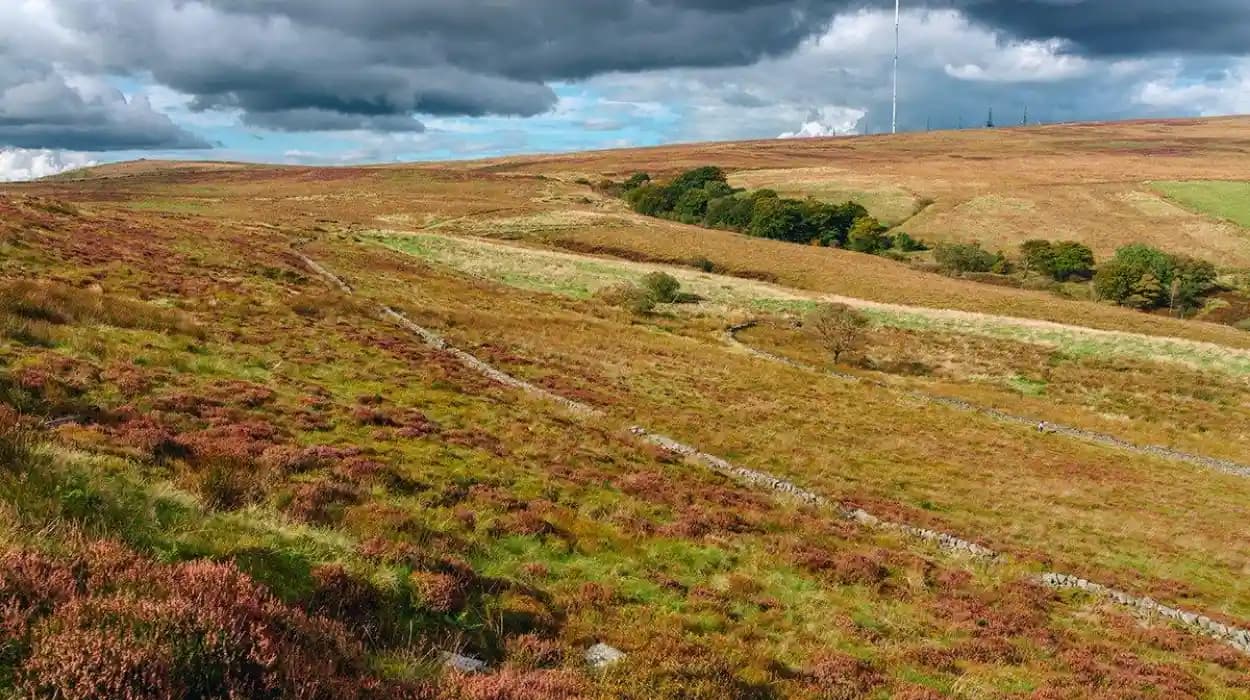
Bolton's history extends far beyond its famous textile mills, market traditions, and Victorian civic buildings. Across the borough are forgotten medieval settlements, abandoned industrial sites, vanished estates, former collieries, lost transport routes, demolished public buildings, and neglected landscapes that influenced the town's economic, political, religious, and social development. Although many of these places have disappeared from the modern streetscape, their legacy continues through archaeological remains, historic maps, surviving structures, place names, archival records, and conservation efforts.
Understanding these forgotten places provides a more complete picture of how Bolton evolved from scattered medieval townships into one of Lancashire's leading industrial centres. Their stories explain patterns of settlement, trade, industry, transport, governance, and urban expansion that shaped modern Bolton.
What are the forgotten places that shaped Bolton's rich history?
Forgotten places that shaped Bolton's rich history include abandoned medieval settlements, former manor houses, lost textile mills, closed collieries, vanished reservoirs, demolished civic buildings, obsolete railway infrastructure, and historic industrial landscapes whose influence remains visible through archaeology, surviving architecture, historical documents, and local place names across the borough today.
Many visitors associate Bolton primarily with the cotton industry. However, the borough's historical development depended upon a much wider network of places that served religious, agricultural, industrial, commercial, and administrative functions across several centuries.
Some locations physically disappeared through redevelopment. Others declined after industries closed or transportation systems changed. Several remain hidden beneath modern housing, roads, retail developments, or public parks.
Historical evidence comes from archaeological excavations, the Historic England National Heritage List, Lancashire Archives, Bolton Library and Museum Services, the Ordnance Survey, historic parish records, census returns, estate documents, and academic studies of Lancashire's industrial development.
Collectively, these forgotten locations demonstrate that Bolton's transformation occurred gradually between the Norman period and the twentieth century rather than during a single era of industrialisation.
Why did many important historic places disappear from Bolton?
Many historically important places disappeared because industrial expansion, urban redevelopment, changing transport networks, economic decline, mining subsidence, public health improvements, and twentieth-century planning policies replaced older landscapes with new housing, commercial districts, roads, and civic infrastructure throughout Bolton.
Bolton experienced continuous physical change for more than 800 years.
Medieval agricultural communities gradually merged into expanding industrial settlements during the eighteenth and nineteenth centuries. Cotton manufacturing required factories, worker housing, canals, reservoirs, warehouses, railways, and engineering works. These developments often replaced earlier farms, manor estates, woodland, commons, and village centres.
The twentieth century introduced additional change.
Large-scale slum clearance programmes after the Second World War removed many Victorian terraces. Road improvement schemes altered historic street patterns. Shopping centres replaced older commercial districts. Industrial closures during the 1970s and 1980s left many factories vacant before demolition.
Mining also reshaped the landscape.
Coal extraction caused ground movement in several districts. Numerous pit heads, spoil heaps, tramways, and engine houses disappeared after the local mining industry contracted.
Despite these losses, documentary evidence allows historians to reconstruct Bolton's changing geography with considerable accuracy.
How did Bolton's medieval settlements influence the modern borough?
Bolton's medieval settlements established the borough's earliest agricultural economy, parish boundaries, transport routes, market functions, and land ownership patterns. Many modern roads, neighbourhoods, property boundaries, and place names directly reflect these early communities despite extensive later urban development.
Before industrialisation, Bolton consisted of numerous rural townships.
Examples include Halliwell, Heaton, Great Lever, Little Lever, Tonge, Breightmet, Sharples, Lostock, Deane, Horwich, Blackrod, and Farnworth.
Each township developed around farms, churches, manorial estates, streams, and local routes connecting surrounding settlements.
Agriculture dominated the medieval economy.
Farmers produced oats, barley, livestock, and wool. Local mills processed grain using water power from streams flowing through the West Pennine landscape.
The Parish Church of Bolton became an important religious and administrative centre during the medieval period. Markets encouraged commercial exchange between surrounding communities.
Many original settlement centres survive only in fragments because nineteenth-century expansion absorbed them into larger urban districts.
Historic maps still reveal ancient field systems, boundary lines, and road alignments beneath the modern urban landscape.
Which lost manor houses and estates played major roles in Bolton's development?
Several manor houses and landed estates directed Bolton's political authority, agricultural management, local justice, and economic organisation for centuries before industrial growth fragmented or redeveloped much of their surrounding land.
The medieval manorial system organised much of Bolton's countryside.
Landowners controlled farming, collected rents, supervised woodland management, regulated common grazing, and influenced parish administration.
Smithills Hall remains one of the borough's finest surviving medieval manor houses, but numerous smaller estates disappeared through redevelopment or subdivision.
Lostock Hall, Hall i' th' Wood's surrounding agricultural landscape, Great Lever Hall's historic estate, and other properties experienced significant changes during industrial expansion.
Estate lands gradually transformed into residential neighbourhoods, factories, schools, parks, and transportation corridors.
Historic estate boundaries frequently determined later road layouts.
Old estate entrances occasionally survive even when the principal house disappeared decades ago.
Researchers use estate maps, probate inventories, land tax assessments, and title deeds to reconstruct these vanished landscapes.
How did forgotten textile mills transform Bolton into an industrial powerhouse?
Forgotten textile mills created employment, attracted migration, expanded housing, stimulated engineering innovation, increased international trade, and established Bolton as one of Britain's most significant cotton manufacturing centres during the Industrial Revolution.
Bolton's industrial identity depended upon hundreds of mills rather than only its best-known surviving examples.
During the nineteenth century, spinning and weaving factories occupied valleys, canal corridors, and railway routes throughout the borough.
Many mills no longer exist.
Demolition followed changing textile markets, overseas competition, economic restructuring, and industrial decline during the twentieth century.
Individual mills specialised in different stages of production.
Examples include spinning mills, weaving sheds, bleach works, dye works, and finishing factories.
Steam engines replaced earlier water-powered production systems.
Large brick chimney stacks dominated the skyline.
Factory complexes required warehouses, engine houses, boilers, reservoirs, railway sidings, and worker housing.
Even where buildings disappeared, archaeological remains continue beneath modern developments.
Former mill ponds, foundations, tunnels, culverts, and machinery bases remain valuable historical evidence.
These forgotten industrial landscapes illustrate how Bolton became internationally recognised for textile manufacturing.
What role did Bolton's abandoned collieries play in local history?
Abandoned collieries supplied the coal that powered homes, factories, railways, steam engines, and manufacturing across Bolton, making mining an essential foundation of the borough's industrial economy despite the disappearance of most mining infrastructure.
Coal mining expanded rapidly alongside textile manufacturing.
Factories required enormous quantities of fuel.
Numerous pits operated across districts including Little Lever, Farnworth, Horwich, Westhoughton, and surrounding communities.
Mining generated employment for thousands of workers.
It also encouraged railway construction, engineering innovation, and urban expansion.
Most visible mining infrastructure disappeared after pit closures.
Examples include winding gear, spoil heaps, tramways, workshops, and engine houses.
Mining also shaped the natural landscape.
Excavation altered drainage patterns, while subsidence affected farmland, roads, and buildings.
Historical records held within mining archives preserve production figures, employment records, engineering plans, accident investigations, and geological surveys that document this overlooked industry.
Why were Bolton's historic transport routes so important?
Historic transport routes connected farms, markets, factories, mines, canals, and railway stations, allowing Bolton to expand economically while reshaping settlement patterns, commercial districts, industrial investment, and regional trade throughout Lancashire.
Transportation determined Bolton's economic success.
Medieval packhorse routes first connected isolated settlements.
Turnpike roads later improved regional travel.
The arrival of the Manchester Bolton & Bury Canal significantly reduced transport costs during the Industrial Revolution.
Coal, cotton, machinery, stone, and agricultural products moved efficiently between Bolton and wider markets.
Railways accelerated growth further.
Numerous sidings, goods yards, engine sheds, branch lines, and freight facilities served local industries.
Many railway structures later disappeared following route closures and redevelopment.
Former track beds frequently became walking routes, public open space, or new roads.
Historic bridges, tunnels, embankments, and station buildings remain important reminders of Bolton's transportation heritage.
To experience this historic landscape in person today, consult our comprehensive [Hidden Gems Every Tourist Should Discover During Their Visit to Bolton Today] for itineraries and visiting parameters.
Which forgotten public buildings shaped civic life in Bolton?
Forgotten public buildings supported education, healthcare, local government, public safety, recreation, commerce, and social welfare before demolition, redevelopment, or institutional change altered Bolton's civic landscape during the twentieth century.
Bolton's expanding population required extensive civic infrastructure.
Schools, workhouses, hospitals, libraries, markets, police stations, fire stations, and assembly halls served growing communities.
Some institutions relocated into modern facilities.
Others disappeared entirely.
Victorian public architecture reflected civic confidence during industrial prosperity.
Buildings frequently featured Gothic Revival, Classical Revival, and Italianate architectural styles.
Urban redevelopment removed many historic structures.
Shopping developments, office buildings, housing projects, and road schemes replaced older civic facilities.
Photographs, planning records, newspapers, and council archives provide valuable evidence documenting these vanished landmarks.
Their disappearance illustrates changing approaches to healthcare, education, governance, and urban planning.
How have archaeology and historical research preserved Bolton's forgotten places?
Archaeological investigation, historic mapping, archival research, building surveys, conservation projects, museum collections, and digital heritage databases preserve knowledge about Bolton's forgotten places even where physical structures have disappeared completely.
Historical preservation extends beyond protecting standing buildings.
Archaeologists recover evidence through excavation before redevelopment.
Examples include medieval pottery, industrial foundations, drainage systems, domestic artefacts, and manufacturing equipment.
Historic England records nationally significant heritage assets.
Lancashire Archives preserve parish registers, estate papers, maps, court records, and business collections.
Bolton Library and Museum Services maintain photographs, oral histories, manuscripts, newspapers, and archaeological collections.
Modern technologies improve historical understanding.
Geographic Information Systems compare historical maps with present-day landscapes.
Laser scanning documents surviving structures.
Digital archives increase public access to historical records.
These research methods allow historians to reconstruct forgotten landscapes with increasing precision.
What reminders of Bolton's forgotten places still survive today?
Many reminders survive through historic churches, surviving mills, conserved manor houses, street names, archaeological remains, boundary walls, bridges, waterways, cemeteries, conservation areas, and preserved industrial structures scattered throughout the borough.
Complete disappearance is uncommon.
Instead, fragments survive across the landscape.
Street names often preserve former farms, collieries, mills, estates, and medieval settlements.
Old boundary walls continue marking historic property divisions.
Former canal alignments remain visible within parks and green corridors.
Industrial chimneys, warehouses, viaducts, and railway bridges continue illustrating Bolton's manufacturing heritage.
Churchyards preserve centuries of local family history.
Historic cemeteries provide valuable genealogical evidence through inscriptions, burial registers, and memorial architecture.
Conservation areas protect surviving historic streetscapes.
These protected environments demonstrate how earlier development shaped the modern borough.
Together, these remnants help connect contemporary Bolton with its historical foundations.
Why do Bolton's forgotten places remain important for future generations?
Bolton's forgotten places provide evidence explaining settlement, industry, governance, architecture, transport, environmental change, and community identity. Preserving their history strengthens education, cultural tourism, heritage conservation, academic research, and public understanding of Britain's wider industrial development.
Historic landscapes explain long-term patterns of change.
They reveal how natural resources, political authority, technological innovation, and economic development interacted across centuries.
Educational institutions increasingly use local history to teach wider national themes.
Examples include the Industrial Revolution, medieval governance, Victorian urbanisation, and post-war redevelopment.
Genealogical researchers depend upon parish records, cemetery evidence, census returns, and historic property records to trace family histories connected with Bolton.
Heritage tourism also benefits.
Visitors increasingly seek authentic historical experiences supported by museums, archives, walking routes, conservation areas, and interpretation projects.
Continued investment in preservation ensures that future generations understand the borough's historical significance beyond its surviving landmark buildings.
Forgotten places therefore remain active historical resources rather than merely vanished locations.
Bolton's rich history cannot be understood solely through its surviving landmarks. Beneath modern housing estates, commercial developments, parks, transport corridors, and regenerated town centres lies the legacy of medieval settlements, vanished manor estates, forgotten textile mills, abandoned collieries, historic transport routes, and demolished civic buildings that collectively shaped the borough over more than eight centuries.
These places established Bolton's agricultural foundations, supported industrial expansion, influenced patterns of migration, transformed the local economy, and created communities whose identities continue today through surviving place names, archaeological evidence, archival collections, conservation projects, and preserved historic structures. Although many physical sites have disappeared, historical research continues to reconstruct their stories with increasing detail.
For historians, educators, genealogists, cultural tourists, and heritage professionals, these forgotten places remain essential evidence explaining how Bolton evolved from scattered Lancashire townships into one of Britain's most important industrial communities. Preserving and studying their legacy ensures that Bolton's complete historical narrative remains accessible for future generations while strengthening appreciation of the borough's enduring contribution to regional and national history.
FAQS
What are the most forgotten historic places in Bolton?
Some of Bolton's forgotten historic places include abandoned textile mills, former collieries, lost manor houses, medieval settlements, demolished civic buildings, old canal routes, and disused railway infrastructure.