Bolton is widely recognised for its industrial heritage, textile mills, and market traditions, but many of its most significant attractions remain overlooked by first-time visitors. Beyond the well-known landmarks lies a network of historic estates, medieval churches, reservoirs, museums, countryside trails, conservation areas, and cultural institutions that collectively explain more than 800 years of Bolton's development. These hidden gems preserve evidence of medieval settlement, the Industrial Revolution, Victorian philanthropy, agricultural traditions, religious history, and modern conservation efforts.
Unlike destinations that focus solely on major tourist attractions, Bolton offers visitors opportunities to explore lesser-known locations that retain strong historical authenticity. These places reveal how natural landscapes, transport networks, local industries, and community organisations shaped the borough over successive centuries. Many remain active public spaces while preserving nationally important architecture, archaeological remains, and protected habitats.
This guide examines Bolton's hidden treasures through their historical origins, cultural significance, architectural value, and present-day importance for visitors seeking a deeper understanding of the borough.
Why does Bolton have so many hidden historical gems?
Bolton possesses numerous hidden historical gems because it developed continuously from a medieval market settlement into one of Britain's largest textile manufacturing centres, preserving religious buildings, estates, reservoirs, villages, parks, museums, and industrial landscapes representing more than eight centuries of local history.
Bolton's geographical position between the West Pennine Moors and the Manchester Plain created ideal conditions for continuous settlement. Archaeological evidence indicates prehistoric activity across the borough, while documented history begins with medieval manorial estates recorded after the Norman Conquest.
During the eighteenth and nineteenth centuries, cotton spinning transformed Bolton into one of Lancashire's leading industrial towns. Wealth generated by textile manufacturing funded churches, libraries, public parks, schools, reservoirs, civic buildings, and philanthropic institutions. Many of these survive despite twentieth-century redevelopment.
Unlike heavily urbanised city centres, Bolton retained surrounding villages including Belmont, Egerton, Blackrod, Horwich, and Westhoughton. These communities preserve historic landscapes that illustrate rural Lancashire before industrialisation.
Natural features also contributed to preservation. The West Pennine Moors prevented unrestricted urban expansion, allowing reservoirs, ancient woodlands, and agricultural landscapes to survive largely intact.
For visitors interested in heritage tourism, Bolton therefore combines industrial archaeology with medieval architecture, Victorian civic development, and protected countryside within a relatively compact area.
Which historic estate best represents Bolton's hidden heritage?
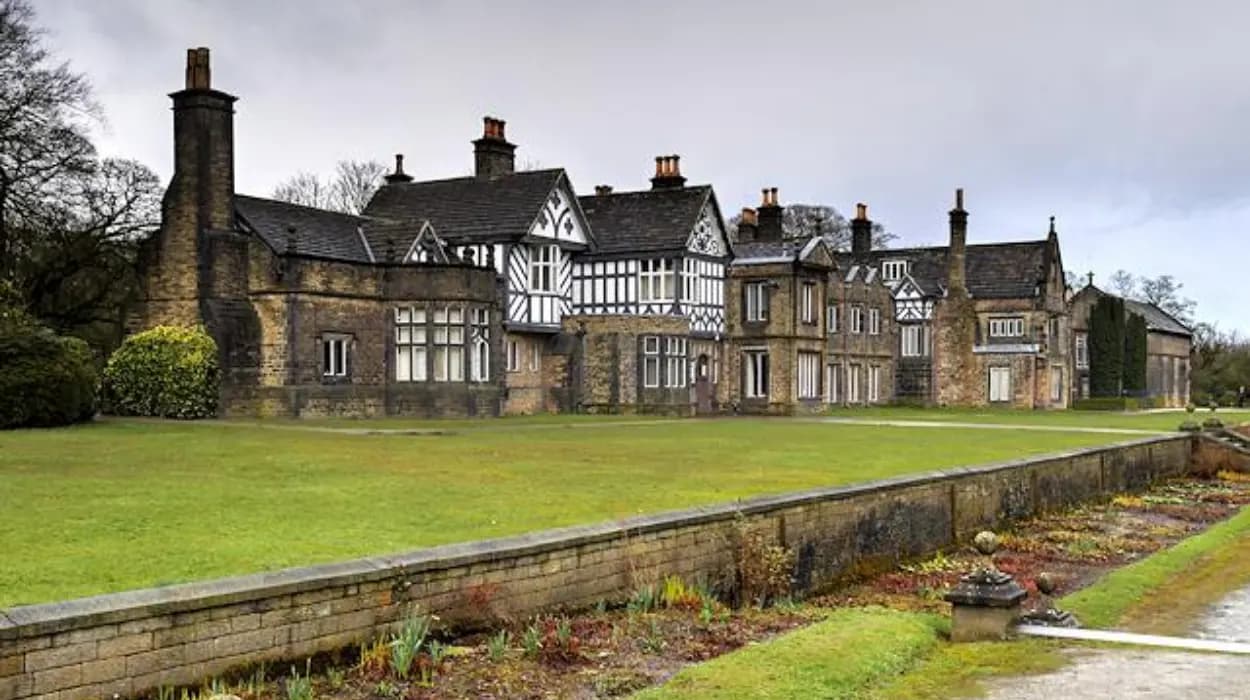
Smithills Hall represents Bolton's finest hidden historic estate because it preserves over 700 years of architectural development through medieval, Tudor, Georgian, and Victorian periods while remaining surrounded by extensive countryside, farms, woodland, and archaeological landscapes.
Smithills Hall stands northwest of Bolton town centre and ranks among Lancashire's most important historic houses.
The manor dates to the fourteenth century, although archaeological evidence suggests earlier occupation. Successive families expanded the estate over several centuries, producing a rare architectural timeline within one building.
Its Great Hall demonstrates medieval construction techniques using timber framing, while later additions reflect Tudor domestic architecture and Victorian restoration practices.
One of the estate's most famous historical associations concerns George Marsh, a Protestant preacher examined at Smithills Hall before being executed during the Marian persecutions in 1555. The "George Marsh Room" remains an important feature interpreting England's religious conflicts during the Reformation.
Today, the surrounding estate includes farmland, woodland, walking trails, heritage farms, and panoramic viewpoints across Greater Manchester.
The estate also demonstrates changing land management practices. Medieval agriculture gradually evolved into landscaped parkland before becoming publicly accessible countryside managed for recreation, biodiversity, and heritage conservation.
To experience this historic landmark in person today, consult our comprehensive [Forgotten Places That Shaped Bolton's Rich History] for itineraries and visiting parameters.
What makes Hall i' th' Wood an overlooked historical treasure?
Hall i' th' Wood preserves one of northern England's finest surviving Tudor merchant houses while documenting Bolton's transition from a rural settlement into a global textile manufacturing centre through domestic architecture, industrial innovation, and local craftsmanship.
Hall i' th' Wood originated as a timber-framed manor house during the sixteenth century before later expansion created its distinctive appearance.
The building became internationally significant through its connection with Samuel Crompton.
Crompton invented the spinning mule during 1779 while living and working in the house. His invention combined features of the spinning jenny and Arkwright's water frame, dramatically improving cotton yarn quality.
The spinning mule revolutionised textile manufacturing across Britain and internationally, accelerating factory production throughout the Industrial Revolution.
Today the museum preserves original period interiors alongside exhibitions explaining domestic life, textile production, engineering innovation, and Bolton's industrial expansion.
Historic furniture, tools, documents, and reconstructed workshops demonstrate how technological breakthroughs emerged within ordinary domestic settings rather than large factories.
Hall i' th' Wood therefore illustrates the relationship between local ingenuity and global industrial transformation.
Why is Bolton Parish Church an essential hidden landmark?
Bolton Parish Church preserves nearly one thousand years of continuous Christian worship while reflecting Norman foundations, medieval rebuilding, Victorian restoration, and the civic identity that developed alongside Bolton's commercial and industrial expansion.
Officially dedicated as St Peter's Church, Bolton Parish Church occupies one of the borough's oldest continuously used sites.
Historical evidence indicates a Norman church existed during the twelfth century. Later rebuilding campaigns expanded the structure as Bolton's population increased.
The present church incorporates Gothic Revival restoration completed during the nineteenth century while retaining earlier architectural elements.
Inside, visitors encounter memorials commemorating local industrialists, civic leaders, military personnel, and prominent families who influenced Bolton's development.
The surrounding churchyard documents changing burial practices and local genealogy across several centuries.
For historians and family researchers, these monuments provide valuable evidence regarding occupations, social status, demographic change, and community organisation.
The church also reflects Bolton's evolution from medieval parish centre into industrial borough, remaining an important civic landmark throughout successive periods of urban growth.
How do Jumbles Country Park and reservoirs reveal Bolton's industrial history?
Jumbles Country Park demonstrates how nineteenth-century engineering projects designed to supply clean water for industrial production later evolved into protected recreational landscapes supporting biodiversity, heritage interpretation, environmental education, and sustainable tourism.
Jumbles Reservoir opened during the 1790s to supply water for the rapidly expanding textile industry.
Reliable water supplies became essential for spinning mills, bleaching operations, steam engines, and growing residential populations.
Reservoir construction transformed local valleys through large-scale engineering involving dams, embankments, channels, and water management systems.
During the twentieth century, industrial demand declined while environmental priorities increased.
The former engineering landscape gradually became Jumbles Country Park.
Today visitors encounter woodland trails, wetland habitats, birdlife, educational facilities, and preserved reservoir infrastructure illustrating early industrial water management.
The park demonstrates adaptive reuse, where historic engineering continues serving public benefit through conservation and recreation rather than manufacturing.
What hidden villages around Bolton preserve traditional Lancashire character?
Historic villages surrounding Bolton preserve pre-industrial Lancashire landscapes through stone cottages, parish churches, agricultural buildings, reservoirs, village greens, and transport routes illustrating rural life before nineteenth-century urban expansion transformed the wider borough.
Several villages retain architectural and historical character that differs markedly from Bolton's urban centre.
Belmont developed around farming, quarrying, and reservoir construction before becoming associated with leisure and outdoor recreation.
Egerton expanded during the nineteenth century through textile manufacturing while preserving attractive stone-built residential streets surrounded by moorland.
Blackrod possesses medieval origins documented in early parish records and later became an important railway community during Victorian industrial expansion.
Horwich evolved from agricultural settlement into engineering centre following construction of the Lancashire and Yorkshire Railway locomotive works during the nineteenth century.
Together these communities illustrate different pathways through which rural Lancashire adapted to industrialisation while retaining distinctive local identities.
Their conservation areas preserve traditional building materials, historic street layouts, and religious architecture increasingly rare elsewhere.
Why is Moss Bank Park considered one of Bolton's overlooked attractions?
Moss Bank Park combines Victorian landscape design with twentieth-century public recreation, preserving extensive woodland, ornamental gardens, sports facilities, historic structures, and ecological habitats within one of Bolton's largest municipal green spaces.
Moss Bank Park originated from nineteenth-century private estates before public acquisition expanded recreational opportunities for local residents.
The park reflects Victorian planning principles emphasising public health, structured landscapes, and accessible green spaces within industrial towns.
Tree-lined avenues, ornamental planting, open lawns, and woodland areas demonstrate municipal landscape design during Britain's urban expansion.
Today the park supports walking, wildlife observation, family recreation, organised events, and environmental education.
Its mature woodland contributes to biodiversity while preserving habitats for native birds, mammals, insects, and woodland flora.
The park also illustrates changing attitudes toward urban planning, where public green spaces became recognised as essential infrastructure rather than decorative luxuries.
How does Bolton Museum preserve the borough's hidden stories?
Bolton Museum preserves archaeological collections, Egyptian antiquities, natural history specimens, industrial artefacts, local archives, and fine art that collectively explain Bolton's evolution from prehistoric settlement into a globally connected industrial town.
Founded during the nineteenth century, Bolton Museum developed alongside expanding civic institutions supporting education and public knowledge.
Its archaeological collections document prehistoric occupation, Roman influences, medieval settlement, and industrial development.
The internationally recognised Egyptology collection reflects Victorian collecting practices and educational ambitions shared by municipal museums throughout Britain.
Local history galleries preserve machinery, textiles, photographs, maps, domestic objects, and business records explaining Bolton's industrial heritage.
Natural history collections demonstrate changing scientific research while supporting environmental education.
Together these collections provide essential evidence supporting academic research, genealogical investigations, school learning, and heritage preservation.
The museum therefore functions as both a visitor attraction and an important archival institution safeguarding Bolton's documentary memory.
What role do the West Pennine Moors play in Bolton's hidden heritage?
The West Pennine Moors preserve ancient landscapes shaped by prehistoric communities, medieval farming, nineteenth-century reservoirs, quarrying, and conservation initiatives, offering visitors exceptional opportunities to understand the long interaction between people and environment.
The West Pennine Moors extend across extensive upland landscapes surrounding Bolton.
Archaeological surveys identify prehistoric burial sites, ancient trackways, and evidence of early farming communities.
During the medieval period, moorland supported grazing economies supplying nearby settlements.
Industrialisation introduced quarrying, reservoirs, transport routes, and recreational development while leaving significant areas environmentally protected.
Today the moors support nationally important habitats including blanket bog, heathland, grassland, and woodland ecosystems.
These habitats sustain diverse wildlife populations while preserving archaeological remains beneath protected landscapes.
Walking routes across the moors connect visitors with centuries of environmental history, illustrating how successive generations adapted natural resources for agriculture, industry, water management, and conservation.
Why are Bolton's markets and independent heritage streets hidden cultural gems?
Bolton's historic market district preserves centuries of commercial tradition by maintaining continuous retail activity, supporting independent businesses, reflecting Victorian urban planning, and sustaining one of northern England's longest-established market cultures.
Markets formed the foundation of Bolton's economic identity long before industrialisation.
The town received market privileges during the medieval period, encouraging trade between surrounding agricultural communities.
Victorian redevelopment modernised commercial facilities while preserving the traditional role of market trading.
Today independent traders continue selling food, clothing, crafts, household goods, and regional produce.
Nearby heritage streets retain historic commercial buildings reflecting architectural styles from Georgian, Victorian, and Edwardian periods.
These streets demonstrate how commercial architecture evolved alongside economic expansion while maintaining human-scale urban environments increasingly uncommon in modern retail districts.
For visitors, they provide authentic insight into everyday local life beyond conventional tourist attractions.
How are Bolton's hidden gems being preserved for future generations?
Bolton's hidden historical sites are protected through conservation policies, listed building legislation, museum collections, environmental management, community organisations, heritage funding, and educational programmes that safeguard architecture, landscapes, archives, and cultural traditions for future generations.
Historic England listing protects numerous buildings throughout the borough based on architectural and historical significance.
Bolton Council manages conservation areas designed to preserve historic streetscapes and important townscapes.
Museums maintain professional conservation programmes protecting documents, textiles, furniture, archaeological finds, paintings, and industrial artefacts.
Environmental organisations restore habitats surrounding reservoirs, parks, rivers, and moorland while balancing public access with biodiversity protection.
Volunteer organisations contribute thousands of hours annually supporting heritage interpretation, archaeological research, guided walks, archive cataloguing, and landscape maintenance.
Educational partnerships involving schools, universities, and local history societies encourage wider public understanding of Bolton's heritage.
Digital archiving projects increasingly preserve historical photographs, newspapers, oral histories, and municipal records, ensuring future researchers retain access to valuable documentary evidence.
These combined efforts demonstrate that heritage preservation extends beyond protecting individual buildings. It involves conserving entire cultural landscapes that explain how communities developed across successive generations.
Bolton's hidden gems collectively present one of Greater Manchester's richest historical landscapes. Medieval manor houses, Tudor residences, parish churches, industrial museums, Victorian parks, reservoirs, historic villages, markets, and upland landscapes illustrate continuous development spanning more than eight centuries.
Rather than existing as isolated attractions, these places form an interconnected heritage network explaining the borough's transformation from rural Lancashire settlement into an internationally recognised industrial centre. Each location contributes unique evidence regarding architecture, religion, engineering, commerce, agriculture, transport, environmental management, and civic development.
For visitors seeking authentic cultural experiences, Bolton offers substantially more than its best-known landmarks. Exploring these lesser-known sites reveals the borough's enduring historical identity while supporting ongoing conservation initiatives that protect these remarkable places for future generations.
FAQS
What are the best hidden gems to visit in Bolton?
Some of Bolton's best hidden gems include Smithills Hall, Hall i' th' Wood Museum, Jumbles Country Park, Moss Bank Park, Bolton Parish Church, the West Pennine Moors, and historic villages such as Belmont and Blackrod.