Key Points
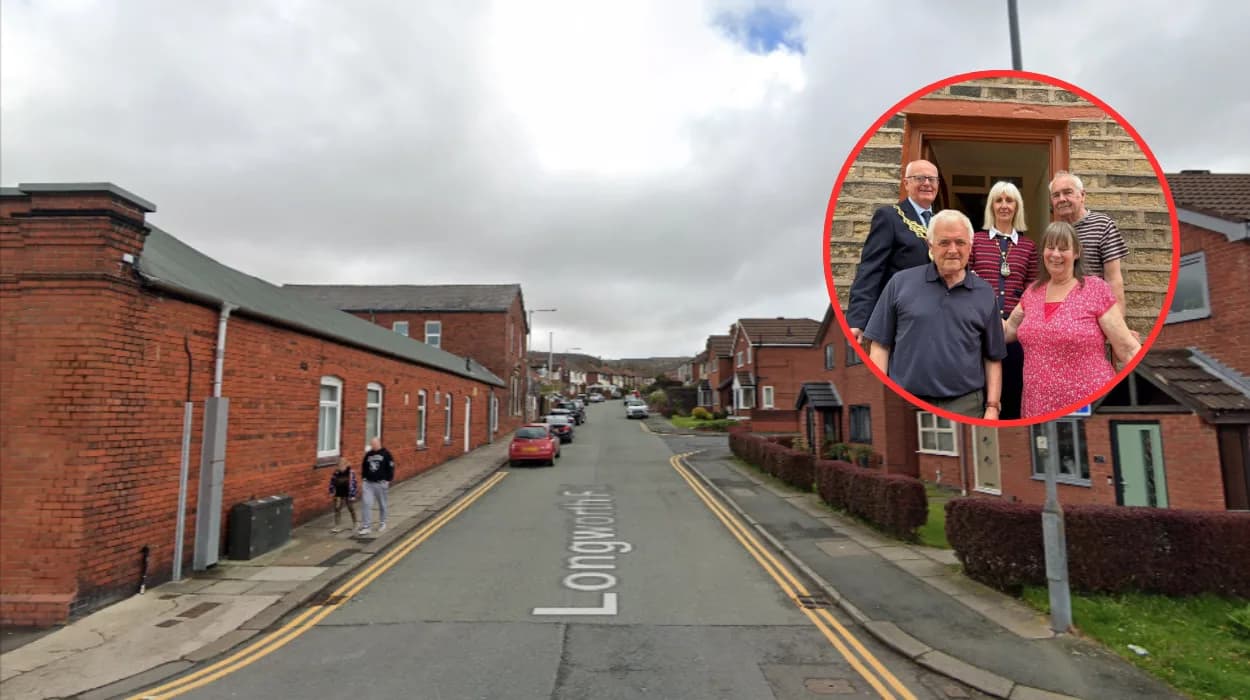
- Civic Commemoration: A brand new civic plaque has been officially unveiled on Church Street to celebrate and record a significant chapter in the industrial heritage of Horwich.
- Worker Housing: The plaque specifically commemorates the historic "Club Houses," which were originally built between 1801 and 1844 to provide housing for the local workforce employed at the nearby Wallsuches Bleachworks.
- Mayoral Unveiling: The official unveiling ceremony was performed by the Mayor of Horwich, Councillor Kevin McKeon, recognizing the structural and historical importance of these preserved buildings.
- Three Historical Transformations: According to historical experts, Horwich has undergone three massive transformations over the centuries: first through the 18th-century bleaching industry, second via the 1880s locomotive railway works, and thirdly through the modern Middlebrook development.
- Surviving the Centuries: The historic cottages are noted for remaining entirely intact for over two hundred years, managing to survive widespread municipal slum clearances and extensive urban remodeling over the generations.
- Entrepreneurial Legacy: The complex and its surrounding infrastructure were originally driven by the pioneering Ridgeway family, who transformed Horwich from a tiny, sparsely populated hamlet into a thriving industrial hub.
Horwich (Bolton Today) July 2, 2026 — A historic chapter in the industrial legacy of Horwich has been formally commemorated with the unveiling of a brand new civic plaque on Church Street. The commemorative installation highlights the architectural and social significance of the town’s famous "Club Houses," marking their original function as purpose-built domestic housing for the nineteenth-century workforce of the nearby Wallsuches Bleachworks. Officially unveiled by the Mayor of Horwich, Councillor Kevin McKeon, the civic plaque serves to preserve the memory of the early textile innovations that laid the foundation for the region's urban growth. As reported by journalist Dan Dougherty of The Bolton News, the newly erected plaque explicitly states: "Cottages built for the workers at Wallsuches Bleachworks 1801–1844." The surviving structures represent an uncommon preservation victory, having remained structurally intact through more than two centuries of local socioeconomic shifts, industrial declines, and municipal clearances.
Why Is the Wallsuches Bleachworks Plaque Significant to Horwich Heritage?
The installation of the plaque on Church Street represents a concerted effort by local authorities and historical societies to anchor the modern identity of Horwich to its pioneering industrial past. For many years, the early textile history of the area risked being overshadowed by subsequent industrial eras, most notably the massive railway manufacturing expansions of the late nineteenth century. By fixing a permanent civic marker to the frontages of the historic Club Houses, the town has formally recognized that its true urban origin story lies in the chemical processes and worker communities of the bleaching industry.
As reported by reporter Dan Dougherty of The Bolton News, Horwich Town Council released an official statement detailing the motivations behind the preservation project, noting that "this latest addition helps preserve and celebrate an important part of Horwich's industrial heritage, recognising the homes built for workers employed at the historic Wallsuches Bleachworks." Local historians emphasize that without these original dwellings, the narrative of how an isolated agrarian landscape transformed into a dense manufacturing center would be lost to time. The preservation of the quirky, historic streets allows modern residents and visiting tourists to visually trace the evolution of early working-class community design.
Who Were the Ridgeway Family and How Did They Change Horwich?
The story of the Club Houses and the wider Wallsuches development is fundamentally tied to the ambitions, commercial acumen, and migration of the Ridgeway family. In the late eighteenth century, the family operated a bleaching business at a site known as Dog Brow. However, after a devastating fire completely destroyed their original facilities in 1777, the entrepreneurial family was forced to scout for a new geographical location that offered both the physical space and the natural water resources necessary to rebuild and expand their operations.
They selected Horwich, a location that at the time was remarkably small and undeveloped. As compiled in the historical coverage by Dan Dougherty of The Bolton News, Stuart Whittle, the esteemed chair of Horwich Heritage, explained the profound demographic shift initiated by the family's arrival. Whittle stated that:
"The first one [transformation] was when the Ridgeway family moved to Horwich in the late 18th century and set up their bleachworks there. Before this, Horwich was a tiny hamlet."
At the time of the family’s arrival, the entire population of Horwich consisted of a mere 365 residents. This sparse population meant there was an immense amount of open space available, which the Ridgeways actively utilized to construct a sprawling, state-of-the-art bleaching complex. The family did not merely build factories; they acted as comprehensive town planners. Stuart Whittle further detailed their expansive paternalistic and entrepreneurial footprint, noting that "the Ridgeways were very entrepreneurial. They built the original complex at the bleachworks, and the church, and the school at the bottom of Chorley Old Road."
Explore More Horwich News
Brinscall Care Submits Children's Home Plans: Horwich 2026
Controversial Victoria Road HMO Scheme Faces Town Hall Vote: Horwich 2026
What Was the Purpose of the 1802 Building Club?
As the Wallsuches Bleachworks expanded into a massive industrial operation, the demand for manual labor grew exponentially. Workers migrated to the area in search of stable employment, quickly overwhelming the limited housing stock of the former hamlet. To resolve this critical labor accommodation crisis, the Ridgeway family devised an innovative financial and architectural solution that was highly advanced for its time.
In the year 1802, the family established a formal "building club." This entity functioned as a subsidized corporate mechanism designed to fund, construct, and manage new residential properties specifically designated for factory workers. Through this club, the construction of the consecutive rows of cottages on Church Street was financed between 1801 and 1844. By subsidizing the creation and subsequent renting of these new homes, the Ridgeways guaranteed a stable, localized, and loyal workforce that lived within walking distance of the primary industrial mill facilities. This structured approach to worker welfare and real estate development set a precedent for industrial communities across the north of England.
How Did the Club Houses Survive Slum Clearances?
One of the most remarkable aspects of the Church Street cottages is their sheer structural survival into the twenty-first century. Throughout the twentieth century, many towns across Greater Manchester and Lancashire engaged in aggressive municipal urban renewal strategies. These initiatives often resulted in widespread "slum clearances," where older, dense, nineteenth-century terraced blocks were completely demolished to make way for modernized housing estates and high-capacity roadway networks.
The Club Houses miraculously evaded these waves of institutional demolition. In the report compiled by journalist Dan Dougherty of The Bolton News, Horwich Heritage chair Stuart Whittle highlighted the exceptional structural persistence of the neighborhood. Whittle observed that:
"What's unique about the clubhouses is that they've remained intact for hundreds of years, despite slum clearances and things like that. The complex has survived with all its quirky little streets and everything else."
Because these buildings managed to escape the wrecking ball, they offer a rare, unfiltered architectural window into the exact layout of early industrial worker communities, preserving unique spatial proportions and historic street alignments that have been wiped out elsewhere.
What Are the Three Historical Transformations of Horwich?
To fully understand the context of the Wallsuches Bleachworks plaque, local historians frame the event within a broader timeline of regional development. The town of Horwich did not experience a singular, slow evolution; rather, it was defined by three sudden, monumental shifts that completely altered its economy, physical landscape, and demographic makeup.
The First Transformation: The Bleaching Era
Initiated by the Ridgeway family following the 1777 fire, this phase marked the transition of Horwich from a quiet, rural hamlet of 365 people into an active industrial village centered around textile processing, chemical bleaching, and localized worker housing projects like the Club Houses.
The Second Transformation: The Locomotive Works
The second major shift occurred in the late nineteenth century and brought an entirely new scale of heavy industry to the region. As reported by Dan Dougherty of The Bolton News, Stuart Whittle described the sheer scale of this second phase, stating:
"The arrival of the loco-works in the 1880s was the second major transformation in Horwich's history. The arrival of the loco works increased the population of Horwich from 3,000 people to 12,000 people in only ten years, so you can imagine what that must have been like."
This rapid industrialization firmly established the town as a vital hub for the British railway network, shifting the primary economic driver away from the old textile mills toward heavy mechanical engineering.
The Third Transformation: The Middlebrook Era
The final transformation identified by local heritage experts is the development of Middlebrook. This modern phase represents the post-industrial rebirth of the region, shifting the local economy away from heavy manufacturing and toward a massive retail, leisure, and business park model that continues to define the modern commercial landscape of the area today.
How Does Local Government Support Heritage Preservation in Horwich?
The unveiling of the Wallsuches Bleachworks worker cottages plaque underscores the active role that the Horwich Town Council plays in supporting historical conservation. Civic leaders emphasize that maintaining a visible connection to industrial roots is essential for fostering community pride and continuity across generations. By dedicating official municipal funding and mayoral presence to these unveiling ceremonies, the local government ensures that private property developments respect the historical narratives embedded within the local architecture. The partnership between the Horwich Town Council and volunteer historical bodies like Horwich Heritage ensures that as the town continues to modernize, its foundational milestones remain clearly legible within the public realm.