Key Points
- Dual Emergency Operations: Bolton Mountain Rescue Team (BMRT) was forced to split its voluntary operational workforce to manage two separate emergency situations concurrently.
- Trail Race Standby Cover: A contingent of 14 volunteer rescue personnel and four specialized emergency vehicles were deployed to support the Horwich RMI trail race on Wednesday evening, 20 May.
- Simultaneous Operational Duties: At the time the secondary emergency unfolded, the leadership of the rescue team was preparing for an administrative meeting, whilst other members were actively conducting an essential training session for new recruits.
- Serious Woodland Injury Callout: The North West Ambulance Service (NWAS) requested urgent assistance from the mountain rescue team just after 7:00 pm following an incident in a wooded area near Hindley.
- Resource Reallocation: Demonstrating operational agility, the team rapidly redeployed 12 volunteer members from their ongoing training and administrative tasks to respond directly to the woodland accident.
- Casualty Treatment and Evacuation: The casualty sustained a severe lower leg injury after slipping on mud. Rescuers administered advanced pain relief, stabilised the limb with a splint, and carried the patient via stretcher through challenging terrain to an ambulance.
- Injuries at the Sporting Event: Concurrently, medical personnel stationed at the Horwich RMI trail race treated two competing runners who sustained minor lacerations and abrasions after tripping near the finish line.
Horwich (Bolton Today) May 22, 2026 - Bolton Mountain Rescue Team found itself tackling emergencies on two fronts after a busy night covering a trail race and responding to a serious woodland injury. As reported by Joe Regent, Trainee Digital Reporter for The Bolton News, the complex series of events began unfolding on the evening of Wednesday 20 May, severely testing the adaptability and resource allocation of the borough’s dedicated volunteer mountain rescue network. The simultaneous nature of the incidents highlighted the unpredictable pressures placed upon voluntary emergency services, who were balancing public event safety, internal operational infrastructure, and urgent regional medical dispatches all within the same multi-hour window.
How Did the Dual Emergencies Unfold for Bolton Mountain Rescue Team?
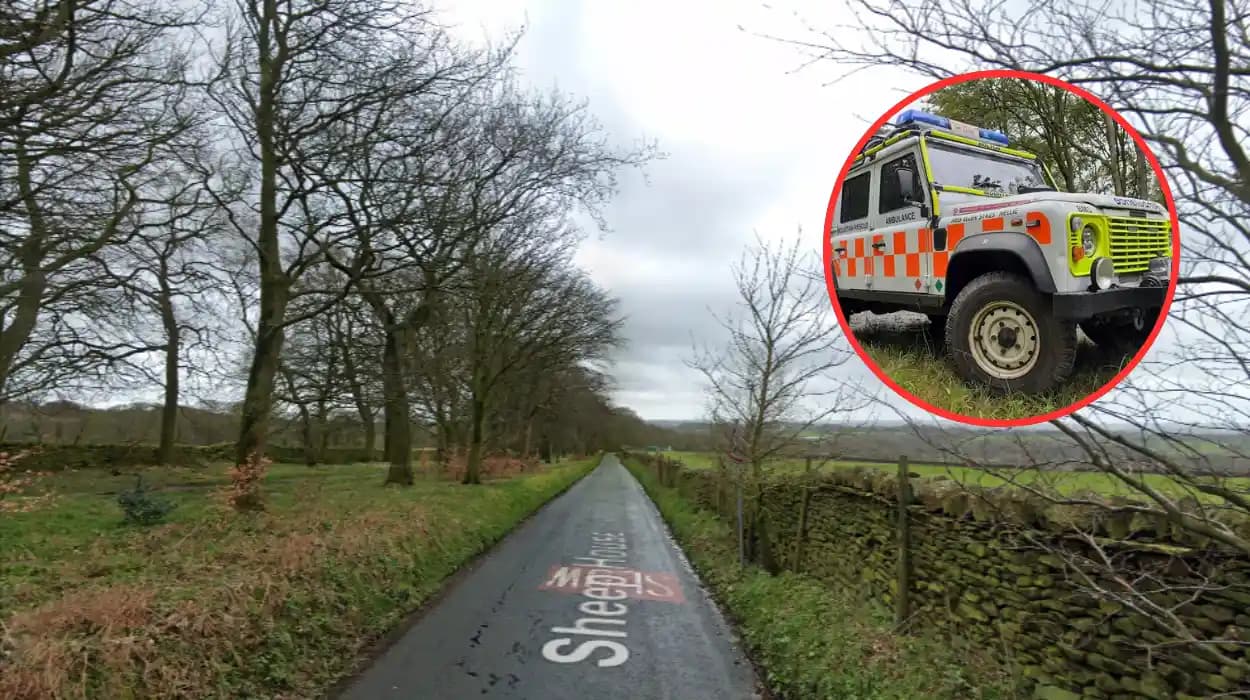
According to details published by Joe Regent of The Bolton News, the rescue organisation was already heavily committed to pre-planned operations on Wednesday evening before the urgent dispatch call arrived. A large portion of the team’s assets, consisting of fourteen highly trained rescue members and four dedicated emergency response vehicles, had been stationed on-site at the Horwich RMI trail race to provide essential standby rescue and medical cover for the competing athletes.
Simultaneously, the organisation’s administrative and educational components were fully engaged. The executive leadership of the Bolton Mountain Rescue Team was convening to hold a scheduled management meeting, while another separate group of experienced volunteers was actively running a critical training session designed to onboard and upskill the team's latest intake of probationary trainees.
The operational baseline shifted dramatically just after 7:00 pm. It was at this juncture that the North West Ambulance Service (NWAS) placed an urgent call to the mountain rescue dispatch desk, requesting immediate technical assistance. Paramedics required specialized support to access, treat, and evacuate a casualty who had suffered a debilitating lower leg injury in an isolated pocket of woodland located near Hindley.
What Specific Action Did the Rescue Team Take in the Woodland?
In the official editorial coverage provided by reporter Joe Regent within The Bolton News, the public statement issued by the Bolton Mountain Rescue Team underscored the high level of adaptability required by their personnel. Representatives from the team noted:
“Wednesday night was a busy one for our team. Fourteen team members and four vehicles were busy providing standby rescue cover for the Horwich RMI trail race, the team's leadership was preparing to meet, and other team members were delivering a training session to our new trainees.”
Faced with a live medical emergency in difficult terrain, the team structure immediately shifted from training and administration to active search and rescue. As documented in the official statement released to The Bolton News, the organisation stated:
“Adaptable as always, we reallocated our resources and 12 team members responded, providing pain relief, splinting the injured limb, and carrying the casualty to the waiting ambulance.”
The casualty had lost footing and slipped on thick mud within the dense Hindley woodland, resulting in a severe, non-weight-bearing injury to the lower extremity. The twelve redeployed mountain rescue volunteers navigated the difficult ground conditions to reach the site of the accident. Upon arrival, they stabilised the patient by administering advanced pre-hospital pain management and utilizing technical splints to immobilize the fractured or dislocated limb. The team then secured the patient into a specialized mountain rescue stretcher, executing an arduous physical carry through the mud and undergrowth to safely hand the casualty over to a waiting North West Ambulance Service crew.
Explore More Horwich News
GMP Appeal to Find Missing Schoolgirl Lucie: Horwich 2026
Bolton Police Seize 4 Vehicles in Horwich Traffic Operation, 2026
What Incidents Occurred at the Horwich RMI Trail Race?
While the acute woodland rescue operation was being executed near Hindley, the remaining contingent of the Bolton Mountain Rescue Team kept their focus on the ongoing athletic event near Sheep House Lane. The Horwich RMI trail race, which traverses demanding local paths, presents inherent physical risks to participants, particularly as fatigue sets in towards the final stages of the course.
As reported by Joe Regent of The Bolton News, the fourteen standby rescue members were called into action to manage casualties among the runners. As the competitors neared the conclusion of the grueling trail route, two athletes suffered sudden stumbles on the rough terrain.
The on-site mountain rescue personnel immediately attended to the fallen athletes. Both runners were evaluated for systemic injuries and were subsequently treated for minor lacerations, cuts, and extensive abrasions caused by the impact of their falls onto the unyielding trail surface. Following the successful resolution of all medical interventions across both geographic sites, the Bolton Mountain Rescue Team concluded their public operational briefing to the media by stating:
“We wish all the casualties a speedy recovery.”
Why Is the Adaptability of Mountain Rescue Volunteers So Vital?
The events of Wednesday evening serve as a clear case study in the operational realities faced by regional search and rescue groups across the United Kingdom. As highlighted by The Bolton News, the Bolton Mountain Rescue Team is comprised entirely of dedicated volunteers who selflessly offer their time and technical expertise to assist primary emergency services, such as the police and ambulance groups, across the wider Greater Manchester and Lancashire regions.
These volunteers are frequently required to operate in remote, hostile, or highly inaccessible environments where standard emergency service vehicles and personnel cannot safely or effectively tread. The dual callouts near Horwich and Hindley emphasize that these teams must maintain a constant state of operational readiness, even when their resources are already split across community event safety, administrative governance, and essential internal training programs.
The successful evacuation of the woodland casualty and the concurrent treatment of the injured trail runners underscore how seamlessly the voluntary service can reallocate its assets on short notice, ensuring that public safety is maintained across the borough regardless of how many incidents occur simultaneously.