Key Points
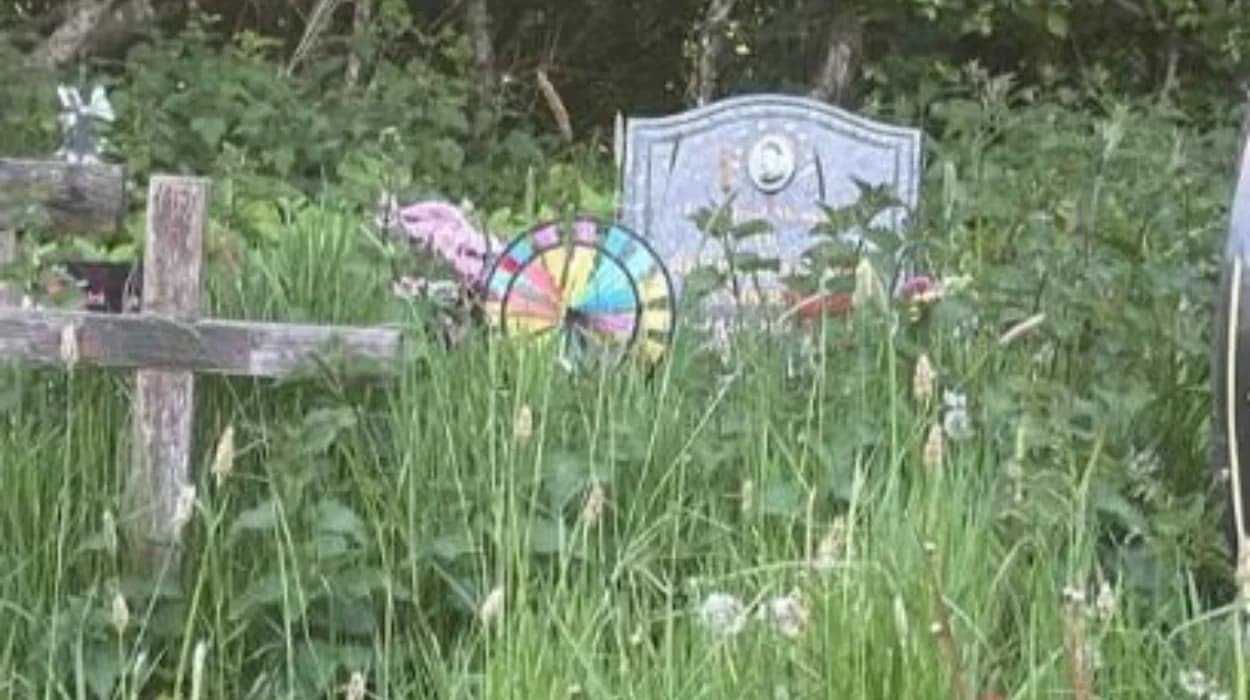
- Public Outrage: Local residents have expressed deep dissatisfaction over the overgrown and unkempt state of Farnworth Cemetery, stating that knee-high grass, dense nettles, holly bushes, and untrimmed vines have left major sections of the grounds largely inaccessible.
- Barriers to Mourning: The severity of the overgrowth has reportedly prevented grieving family members from physically reaching and visiting the gravesites of their deceased loved ones, forcing many individuals away from the municipal site.
- Voluntary Mobilisation: The local volunteer group, Friends of Farnworth Cemetery, has announced plans to potentially reconvene and organise dedicated community "action days" to manually tackle the weeds and cut back the long grass.
- Political Pressure: Ward Councillor Sue Haworth has publicly highlighted the issue, noting that the rapid foliage growth has caused residents to question the local suitability of environmental initiatives such as "No Mow May," while calling for additional municipal staffing.
- Historical Significance Affected: The structural neglect directly impacts an area of significant historical heritage, as Farnworth Cemetery serves as the final resting place for 43 Commonwealth war graves dating from the First and Second World Wars.
- Council Justification: Bolton Council has attributed the rapid deterioration of the cemetery grounds to a combination of unseasonal weather patterns—specifically alternating heavy rain and high temperatures—which accelerated plant growth while simultaneously disrupting their scheduled mechanical grass-cutting operations.
Farnworth (Bolton Today) June 13, 2026 - A severe lack of maintenance at Farnworth Cemetery has sparked widespread anger among local residents, who claim that rampant overgrowth has left substantial portions of the municipal burial grounds entirely inaccessible. The proliferation of knee-high grass, stinging nettles, sprawling holly bushes, and untrimmed wild vines has physically prevented grieving community members from visiting and paying respects at the final resting places of their loved ones. The escalating crisis at the historic burial site, located just off St Peter's Way, has prompted emergency calls for municipal intervention, local political scrutiny over environmental policy, and a proposed remobilisation of community volunteer groups to restore order to the grounds.
As reported by journalist Dan Dougherty of The Bolton News, the visibly deteriorated state of the cemetery has triggered a significant wave of public discontent, with numerous residents taking to various Farnworth social media pages to voice their unhappiness and share photographic evidence of the neglect. The extensive scale of the site has made it increasingly difficult to manage without consistent, heavy-duty municipal intervention. This structural neglect has also drawn attention to the site’s historical heritage, as Farnworth Cemetery holds 43 Commonwealth war graves from both the First and Second World Wars, which are now caught in the middle of the broader maintenance failure.
In response to the mounting public backlash, local authorities have cited adverse environmental conditions as the primary catalyst for the maintenance backlog. A spokesperson representing Bolton Council stated that a recent meteorological combination of heavy rainfall and warm sunshine had created the perfect ecological conditions for grass and weeds to grow at a rate far exceeding normal seasonal patterns. Furthermore, the local authority asserted that the persistent wet weather had severely disrupted and delayed their pre-arranged mechanical grass-cutting schedules across the borough. The council has issued an appeal for public patience, assuring disgruntled residents that maintenance teams are working under increased pressure to clear the backlog and restore the burial grounds to an acceptable standard.
Why Is The Current State Of Farnworth Cemetery Causing Local Distress?
The emotional impact of municipal neglect at burial grounds remains a deeply sensitive issue for families seeking to maintain a physical connection with their deceased relatives. The rapid transition of Farnworth Cemetery from a manicured space of remembrance to a dense, unmanaged thicket has transformed routine acts of mourning into physically challenging ordeals.
According to the comprehensive on-the-ground reporting compiled by Dan Dougherty of The Bolton News, visitors to the municipal site are finding themselves systematically pushed back by dense walls of stinging nettles and unmanaged briars. The height of the grass across multiple burial sections has reached knee-level, completely obscuring smaller headstones, footstones, and lower memorial plaques.
This level of neglect means that individuals, including elderly and mobility-impaired residents, are finding it physically impossible to navigate the footpaths and terrain safely. Sprawling vines and thick holly bushes have been permitted to grow entirely unchecked around established plots, creating dense barriers that obscure family heritage and project an air of institutional abandonment.
How Have Local Volunteers Responded To The Maintenance Crisis?
The vacuum left by the suspension of regular municipal maintenance has frequently forced local civic groups to step in and prevent public spaces from sliding into total disrepair. In the case of Farnworth Cemetery, the community has historically relied on the mobilised efforts of dedicated citizens to supplement local authority operations.
As detailed by Dan Dougherty within his published coverage for The Bolton News, the established civic volunteer group known as the Friends of Farnworth Cemetery has publicly interceded via social media platforms. On June 10, the organisation issued a public statement confirming that they are actively considering a formal reconvening of their membership to directly combat the escalating overgrowth. The group has tentatively proposed an initial community action date of June 18 to begin manual clearing operations.
This is not the first instance where the community has had to take up tools to preserve the dignity of the burial grounds. The Friends of Farnworth Cemetery previously organised major structural "action days" in both 2019 and 2021. During those past interventions, volunteers worked collectively to manually mow large swathes of grass, clear choked pathways, and stem the rampant growth of deep-rooted weeds that mechanical council mowers had failed to eradicate. However, because the cemetery is exceptionally large, representatives acknowledge that relying solely on manual volunteer labour is an unsustainable long-term solution for a site of this scale.
What particular challenges exist for ward councillors and Maintenance Teams?
The logistical realities of maintaining a large-scale civic cemetery involve a complex mix of geographical challenges, machinery limitations, and fluctuating labor allocations, all of which are exacerbated by shifts in local environmental policies.
In an official public statement obtained by Dan Dougherty of The Bolton News, Ward Councillor Sue Haworth provided context on the structural changes affecting the site, stating that:
"Some residents have found that graves of their loved ones, that have had short grass over the years, look like no one has done any maintenance for a good while. We've heard in previous years that wet weather has delayed the grass cutting schedule in the spring, and of course the rain and warmer temperature just makes the grass and foliage grow longer."
Beyond the immediate weather dependencies, Councillor Sue Haworth also shed light on the unique topographical difficulties embedded within the landscape of the St Peter's Way site. She pointed out that one entire side of Farnworth Cemetery features a steep, grassy bank. This specific incline presents a significant health and safety hazard for ground staff, as standard commercial ride-on grass-cutting machines cannot safely operate on such severe gradients without risking tipping or loss of control, requiring slower, more labor-intensive hand-strimming techniques.
Explore More Farnworth News
GMP Seize and Destroy Illegal Sur-Ron Bike in Farnworth 2026
Four-Vehicle Crash at Harper Green Junction: Farnworth 2026
Does Environmental Policy Conflict With Cemetery Upkeep?
The growing institutional adoption of ecological campaigns by UK local authorities has increasingly clashed with the traditional public expectation of neatness in municipal spaces, particularly within properties dedicated to reflection and remembrance.
As recorded in the political analysis provided by reporter Dan Dougherty of The Bolton News, the visible decay of the cemetery has forced a wider public re-evaluation of specific green initiatives. Councillor Sue Haworth noted that the sheer scale of the unkempt foliage has caused many within the community to fundamentally question whether the widely publicised environmental campaign known as "No Mow May"—which encourages councils to cease grass cutting for a month to promote biodiversity and insect populations—can be legitimately supported within the sensitive confines of a working cemetery.
According to Councillor Sue Haworth, local expectations remain fixed on high standards of maintenance, leading residents to demand that Farnworth Cemetery receive its fair share of resources from the local authority’s broader structural spending plans. Councillor Sue Haworth explicitly stated that:
"Everyone expects Farnworth Cemetery to do well out of the council's seven cemeteries improvement scheme, and that includes additional staffing."
What official explanation has the Bolton Council Provided For The Delays?
When public assets fall into visible disrepair, the governing municipal bodies face intense scrutiny regarding their resource distribution, operational efficiency, and contingency planning for seasonal weather variations.
In the official statement published by Dan Dougherty of The Bolton News, an authorized spokesperson for Bolton Council sought to clarify the institutional challenges behind the backlog, explaining that the recent combination of heavy rain and intense sun provided optimal conditions for grass and weeds to grow much faster than normal seasonal averages.
The local authority spokesperson further clarified the operational impact of these weather patterns, stating:
"Plus, the rain has disrupted our scheduled grass cutting operations. Please bear with us, as we're working hard to catch up."
The council’s defense rests on the technical limitations of modern industrial mowing equipment, which cannot effectively or safely cut long grass when the underlying ground is saturated with water, as heavy machinery risks churning the turf, damaging graves, and sinking into the mud.
How Does The Overgrowth Impact The Commonwealth War Graves?
The presence of military heritage sites within municipal cemeteries elevates the issue of ground maintenance from a standard local government dispute to a matter of national heritage and respect for fallen service personnel.
According to the historical and data-driven records integrated into the report by Dan Dougherty of The Bolton News, Farnworth Cemetery serves as the official final resting place for a total of 43 Commonwealth war graves. These dedicated military plots contain the remains of service personnel who died during the global conflicts of both the First World War and the Second World War.
Under standard international protocols, these specific gravesites are meant to be kept in an exemplary state of preservation to honour wartime sacrifices. The fact that these historical markers are currently surrounded by the same knee-high grass, stinging nettles, and untrimmed wild foliage affecting the rest of the site has added an extra layer of urgency to the situation, intensifying demands from both residents and veterans' advocates for immediate municipal action.
What Are The Long-Term Solutions For Managing Large Burial Grounds?
The ongoing maintenance crisis at Farnworth Cemetery highlights a systemic challenge faced by municipal authorities across the country: balancing tight local government budgets with the costly upkeep of aging, expansive public spaces. As cemeteries expand and older sections require ongoing care decades after interments have ceased, the financial and labor requirements accumulate.
Relying on ad-hoc volunteer interventions, while demonstrative of strong community spirit, cannot replace a structured, well-funded municipal strategy. For Farnworth to avoid repeating these seasonal maintenance crises, local stakeholders argue that the council must deliver on the promised "seven cemeteries improvement scheme" outlined by political representatives. This must manifest not just in temporary clear-up operations, but in sustained investment in specialized steep-terrain machinery, robust weather-resilient scheduling, and a permanent increase in dedicated ground maintenance staff who can guarantee that these sacred spaces remain dignified, accessible, and properly preserved for generations to come.