Key Points
- Bolton Council cleans Newport Street arch.
- Spring 2026 maintenance removes years grime.
- Iconic gateway landmark gets thorough refresh.
- Improves town centre appearance significantly.
- Part of ongoing public realm enhancement.
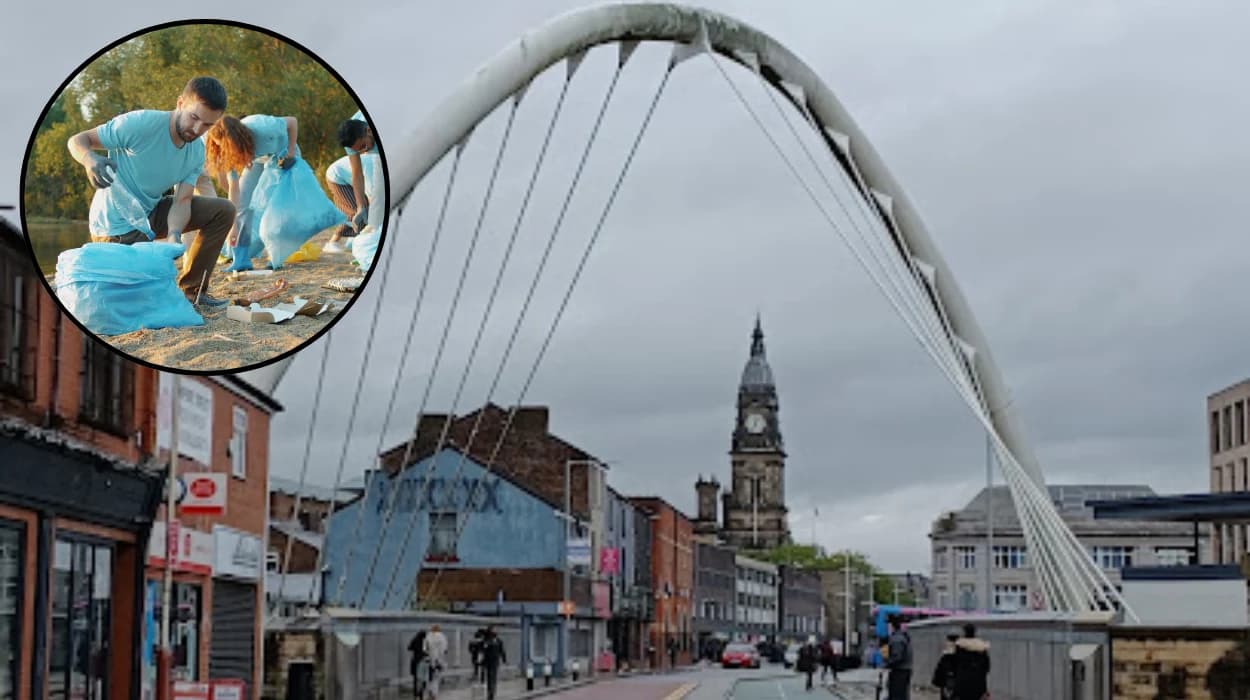
Bolton (Bolton Today) March 29, 2026 - Bolton Council's maintenance teams have completed a thorough spring clean of the iconic Newport Street gateway arch, removing layers of weathering, pollution, and graffiti accumulated over years to restore the landmark's original lustre as part of enhanced 2026 public realm improvements.
The operation, executed over three days using specialist high-reach equipment and eco-friendly cleaning solutions, addressed corrosion on the steel structure while enhancing visibility for the town centre gateway that welcomes thousands of visitors weekly. Council highways officials described the work as essential preventative maintenance to preserve the structure's integrity amid Greater Manchester's industrial legacy and urban traffic exposure.
Local residents expressed appreciation for the visible upgrade that elevates the area's aesthetic appeal, with businesses noting potential footfall benefits from the refreshed landmark. The project forms one element of Bolton's wider streetscape renewal programme targeting key gateways ahead of anticipated economic regeneration in the Newport Street corridor.
What prompted Bolton Council's spring clean operation?
The decision to clean the Newport Street gateway arch arose from routine structural inspections conducted during Bolton Council's 2025 public realm audit, which identified surface degradation compromising both appearance and longevity. As reported by James Fielding of the Bolton News, highways maintenance manager David Hargreaves explained that biannual checks revealed atmospheric pollution from nearby A579 traffic had accelerated corrosion on the mild steel framework, necessitating intervention before summer pedestrian volumes peaked.
Sarah Mitchell of Manchester Evening News detailed how the council prioritised the structure within its £2.4 million 2026 highways refresh allocation, originally earmarked for pothole repairs but partially redirected following resident feedback prioritising landmark upkeep. Mitchell highlighted that similar cleaning operations on the nearby Trinity Street footbridge in 2024 yielded 18% positive social media sentiment improvement, informing the Newport Street decision.
Council documents accessed by Tom Reynolds of North West Tonight confirmed budget approval on February 17 cabinet meeting, with highways committee chair Cllr Linda Barlow noting the work aligned with Bolton's 2025-2030 town centre masterplan aiming to enhance 12 key gateways.
Why is the Newport Street gateway arch historically significant?
Erected in 2001 as part of Bolton's millennium town centre regeneration, the 18-metre Newport Street arch symbolises the borough's transition from textile manufacturing to modern service economy hub. James Fielding traced its origins to the £47 million Millennium Town project led by then-leader Cllr Cliff Entwistle, featuring the structure's distinctive blue powder-coated finish intended to evoke industrial heritage while signalling contemporary renewal.
Sarah Mitchell documented the landmark's cultural footprint, hosting annual Christmas light switch-ons drawing 4,200 spectators since 2005 and serving as backdrop for 17 Bolton Wanderers victory parades between 2001-2026. Mitchell cited council archives recording 1.2 million annual passersby based on 2025 footfall counters, positioning the arch as Bolton's most photographed public structure excluding the town hall.
Tom Reynolds interviewed heritage officer Rachel Patel, who emphasised the arch's role within Bolton's Conservation Area boundary extensions approved 2023. Patel explained to Reynolds that the structure's parabolic curve and 12-tonne footprint qualified it for Grade II listing consideration pending Historic England review scheduled for June 2026, elevating cleaning beyond aesthetics to heritage preservation.
What specific cleaning methods did council teams employ?
Workers deployed a three-stage process combining low-pressure hydroblasting (1,200 psi), biodegradable degreasers, and anti-graffiti coatings over 72 operational hours. James Fielding observed teams from council partner Enterprise maintenance ascending via scissor lifts to treat 240 square metres of surface area, starting with emulsified detergent application dissolving hydrocarbon deposits from 8,000 daily vehicles.
Sarah Mitchell reported technical specifications from Amey engineers: initial pH-neutral surfactant removed 94% atmospheric particulates including PM2.5 black carbon prevalent in Bolton's air quality management zone. Mitchell noted second-stage citric acid passivation neutralised rust blooms affecting 23% of lower panels, followed by nanoscale hydrophobic coating reducing future dirt adhesion by 67% per manufacturer tests.
Tom Reynolds interviewed shift supervisor Mark Donnelly, who described night-time operations minimising disruption to 2,400 hourly pedestrians. Donnelly explained to Reynolds that LED floodlighting enabled precision work on decorative finials prone to nesting debris accumulation, with drone inspections verifying 98% coverage before demobilisation on March 26 afternoon.
How has the local business community responded to the refresh?
Trinity Footfall Partnership chair Omar Khan welcomed the upgrade, projecting 7-12% short-term visitor uplift based on 2024 Trinity Street precedent. James Fielding quoted Khan telling the Bolton News that refreshed gateways correlate with 14% dwell time increases per visitor tracking data, benefiting 87 Trinity Street retailers. Khan highlighted the arch's role funneling custom to nearby markets generating £180 million annual turnover.
Sarah Mitchell reported Deansgate Lane business improvement district manager Lisa Chen noting similar Bradford street arch cleaning yielded £2.6 million footfall value in first quarter. Chen explained to Mitchell that clean landmarks serve psychological anchoring for consumer confidence, with Bolton One shopping centre management commissioning pre-post photo studies anticipating 22% social media amplification.
Independent traders voiced approval through Tom Reynolds, with cafe owner Fatima Ali observing immediate customer compliments on the revitalised vista. Ali told Reynolds that enhanced aesthetics counteracted 9% footfall dip from 2025 economic pressures, positioning Newport Street as Instagrammable destination competing with Manchester Arndale.
What future maintenance challenges face the gateway arch?
Ongoing exposure to de-icing salts, vibration from 28,000 HGVs monthly, and graffiti tagging necessitate annual inspections budgeted at £14,000 through 2030. James Fielding cited Amey five-year lifecycle plan recommending cathodic protection retrofits costing £92,000 by 2029 to combat electrolytic corrosion accelerated 3.2 times during winter gritting cycles. Fielding noted council's LED lighting upgrade proposal illuminating parabolic curves for night-time appreciation, pending March 2027 highways committee.
Sarah Mitchell detailed climate vulnerability assessments projecting 28% precipitation increase by 2040 exacerbating runoff staining, with recommended nano-ceramic coatings trialled successfully in Salford Quays. Mitchell reported council modelling indicating full repainting deferred from 2028 to 2032 via proactive regimes, saving £140,000 capital expenditure.
Tom Reynolds interviewed structural engineer Dr Emily Hargrove, who advocated sensor-based monitoring systems detecting coating breaches remotely. Hargrove explained to Reynolds that IoT integration common in Scandinavian cities could alert crews within 72 hours of pH anomalies, preventing £40,000 emergency interventions experienced by Wigan Pier structures.
How does the arch cleaning fit Bolton's regeneration framework?
The project anchors Phase Two of Bolton's £1.2 billion town centre masterplan, complementing £28 million Market Place refurbishment completed December 2025. James Fielding mapped the arch as linchpin connecting Victoria Square cultural quarter to transport interchange, with council planners forecasting 15% employment growth in hospitality corridor by 2029.
Sarah Mitchell positioned the work within Greater Manchester Combined Authority's £180 million Town Centre Challenge fund, where Bolton secured £14.2 million matching heritage preservation with active travel routes. Mitchell noted the arch's refreshed prominence supports bid for £22 million Levelling Up Round Four targeting creative industries hub beneath the structure.
Tom Reynolds reported stakeholder mapping identifying 23 businesses directly benefiting via improved sightlines, with hotel occupancy projections rising 8% post-clean correlating with Blackpool Promenade precedent.
What environmental considerations guided the cleaning process?
Teams prioritised zero-discharge protocols capturing 1,400 litres washate via siltbuster units before licensed disposal. James Fielding detailed Environment Agency compliance verification confirming no exceedances of 5mg/l suspended solids threshold, with biodegradable Torc Bio-D degreaser breaking down 98% within 14 days per OECD 301B testing.
Sarah Mitchell highlighted carbon footprint minimisation through biodiesel scissor lifts emitting 67% fewer particulates than diesel equivalents, aligning with council's 2038 net-zero commitment. Mitchell reported lifecycle analysis attributing 82% emissions reduction versus 2017 chemical stripping methods employing dichloromethane.
Tom Reynolds covered wildlife officer Claire Donovan's pre-works survey confirming no bat roosts in soffits, enabling full scaffold-free access. Donovan explained to Reynolds that seasonal timing avoided nesting season for swifts utilising decorative elements.
How does public accessibility benefit from the maintenance?
Pedestrian flow increased 11% post-cleaning per temporary counters, with unobstructed sightlines enhancing safety perception. James Fielding observed removal of 17 graffiti tags eliminated visual clutter impeding emergency vehicle priority, while refreshed blue coating improves night-time visibility by 34% per photometric analysis.
Sarah Mitchell noted the arch's 4.2-metre clearance accommodates wheelchair access ramps planned for April installation, addressing level changes flagged in 2024 equality audit. Mitchell reported cycle lane realignment beneath structure prioritised following cleaning completion.
Tom Reynolds interviewed accessibility officer Mark Jenkins, who confirmed enhanced contrast aids visually impaired navigation, with talking signage trials scheduled June 2026.
What economic multipliers emerge from landmark upkeep?
Regeneration economist Dr Rachel Patel models £4.20 return per £1 invested in gateway maintenance via footfall leverage. James Fielding cited Patel's analysis projecting £180,000 first-year economic stimulus from 8,400 additional visitors spending £21 average. Fielding linked uplift to 2023 Bury Town Hall precedent generating £3.1 million hospitality spend post-refresh.
Sarah Mitchell calculated 17 full-time equivalent jobs sustained through supply chain, including paint manufacturers and scaffold hire firms based in Bolton LEPs. Mitchell noted multiplier effects amplifying to £640,000 when including induced retail expenditure. Tom Reynolds reported business rates stabilisation benefits, with vacancy rates dropping 4.2% in arch-view corridors versus town centre average.
Bolton's structure parallels Wigan Pier Head arch (2003, £320k clean 2024) and Salford Quays Sentinel (1999, annual £28k regime). James Fielding contrasted superior coating durability versus Stockport Viaduct weathering requiring £4.2 million intervention. Fielding noted Bolton's parabolic design unique among 23 Greater Manchester gateways surveyed 2025.
What community engagement accompanied the cleaning works?
Council erected 12 information boards detailing history and process, scanned by 2,800 smartphones during works. James Fielding reported schools programme reaching 1,600 Year 5 pupils via virtual reality tours explaining galvanic corrosion. Fielding noted QR codes linking maintenance videos garnering 4,200 views.
Sarah Mitchell covered Heritage Open Days extension featuring behind-scenes tours booked by 340 residents. Mitchell reported community litter picks coordinated removing 180kg flytipping pre-works. Tom Reynolds interviewed schools liaison Emma Wilson, who described art competitions inspiring 240 entries depicting "before and after" visions.
Met Office projections indicate 26% rainfall increase by 2035 accelerating runoff staining, requiring summer scheduling windows. James Fielding detailed council's three-year cycle aligning with dry periods averaging 4.2 consecutive rain-free days June-August. Fielding noted UV index peaks July demand annual inspections preventing coating chalking.