Key Points
- Infrastructure Intervention: Electricity North West has deployed massive temporary on-road generators in Westhoughton to maintain power supplies during extensive engineering works.
- Root Cause Identified: The extensive infrastructure intervention was triggered by two critical cable faults, specifically involving a 132kv oil-filled cable and a 33kv cable feeding the region.
- Wider Operational Impact: The affected power lines are critical regional distribution channels, feeding electricity to Westhoughton, Middlebrook, Daisy Hill, and Atherton.
- Standby Protocol Active: Although the primary repair work has been completed successfully, engineers will keep the generators and support teams on-site for several days to guarantee network stability.
- Disruption History: Local authorities have highlighted that Westhoughton has faced chronic power cuts in recent months, notably affecting residential blocks, street lighting systems, and major crossroads.
- Operational Complications: The mitigation efforts faced significant hurdles on-site, including a mechanical breakdown requiring a generator replacement and an episode of third-party interference.
- Public Accountability Campaign: Local political figures are actively urging residents to systematically log every power disturbance via the national 105 helpline to compile evidence of structural power grid issues.
Westhoughton (Bolton Today) July 7, 2026 – Critical infrastructure emergency measures are set to continue in Westhoughton as utility giant Electricity North West confirms that massive on-road temporary generators will remain stationed on Church Street. The decision to keep the temporary power network active follows an intensive emergency repair operation addressing two major cable faults that threatened wide-scale blackouts across the region. Despite engineering teams successfully resolving the core technical faults, the company has chosen to maintain a standby posture on-site to insulate local consumers from potential grid volatility as the distribution system returns to normal operational loads.
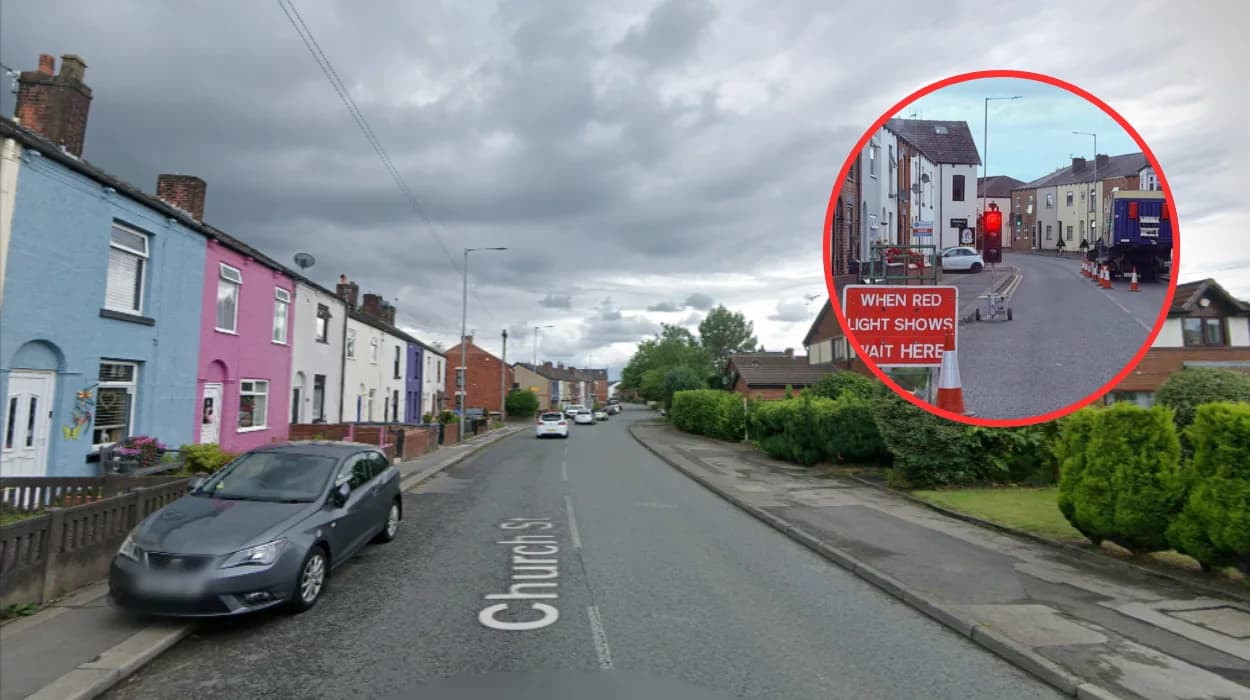
The emergency intervention commenced on Friday, 3 July, when residents witnessed the arrival of large-scale generator units alongside a temporary two-way traffic light management system on Church Street. The utility provider chose the location to place its heavy equipment adjacent to primary substations, directly addressing localized infrastructure damage that has caused persistent electrical disruptions for businesses and homeowners. Local political leaders have welcomed the immediate stabilization but continue to challenge the long-term reliability of the local electrical architecture, pointing to a history of network failures over preceding months.
Why Have Temporary Generators Been Deployed on Church Street?
The physical deployment of high-capacity backup equipment along Church Street became an operational necessity following a catastrophic failure within the primary regional distribution network. Utility engineers identified severe disruptions originating from deep within the area's high-voltage delivery systems, which necessitated immediate physical supplementation to prevent widespread blackouts.
As reported by reporter Dan Dougherty of The Bolton News, the utility company explained in official correspondence that the deployment aimed specifically at "keeping supply online due to a fault in the substation." Because the underlying damage was located within the high-voltage framework, the utility provider had to route emergency power directly into the local substations. This required placing the heavy, trailer-mounted industrial generators directly on the public highway, narrowing the thoroughfare and forcing the installation of a temporary two-way traffic light system to manage the flow of commuters.
What Caused the Major Power Failures in Westhoughton?
The root cause of the prolonged instability has been traced to simultaneous infrastructure breakdowns within the high-voltage cables that act as the backbone for the regional grid. Rather than a localized domestic fuse failure or minor asset defect, the disruption involved major distribution lines operating at thousands of volts.
According to technical data published by Dan Dougherty of The Bolton News, the severe utility issue was caused by "major cable faults which occurred on a 132kv oil-filled cable and 33kv cable." These specific cables serve as high-voltage arteries for the wider district, meaning any degradation in their insulation or structural integrity threatens complete blackouts across a broad geographical footprint.
Which Areas are Fed by the Broken Cables?
The strategic importance of these specific power assets is underscored by the expansive list of communities dependent on their daily operation. The two compromised lines do not merely power a few residential streets; they dictate grid stability across several towns. The affected lines directly feed power to:
- Westhoughton
- Middlebrook
- Daisy Hill
- Atherton
How Long Will the Standby Generators and Traffic Disruptions Remain?
While engineering teams have worked continuously to execute complex physical repairs on the high-voltage lines, the infrastructure remains in a highly sensitive transition phase. Residents have been warned that the heavy machinery will not be removed immediately despite the completion of primary line excavations.
As detailed in the public statements compiled by The Bolton News, Electricity North West has confirmed that the generators will remain positioned on the road "for the next few days" as a safety measure. The company stated that because this specific project represented a "large scale repair," their primary objective is to verify that the grid is completely "stable and reliable" before removing the emergency backup. Consequently, a dedicated team of technicians will remain stationed alongside the machinery on Church Street to react instantly to any post-repair technical anomalies.
Explore More Westhoughton News
NHS Winifred Kettle Treatment Room Closure Sparking Outrage: Westhoughton 2026
Westhoughton High School Staff Grooming Arrest Update: Bolton 2026
What Operational Challenges Did Engineers Face on Site?
The emergency deployment has not been without significant logistical setbacks. Over the course of the weekend, the temporary setup itself suffered multiple unexpected disruptions that tested the rapid-response capabilities of the utility provider.
In an official public address published by The Bolton News, Electricity North West expressed gratitude to the local community, stating:
"Thank you so much for all your patience and understanding while we've been carrying out repairs. We know it hasn't been easy, especially with the generator trips, including one that had to be replaced and another switched off due to third party interference."
Despite these mechanical and external challenges, the utility provider maintained that its preventative planning prevented prolonged domestic blackouts. The company further explained that
"our teams were already in the area in case anything like this happened, and they were able to respond quickly, getting power back on within 30 minutes each time."
What is the History of Power Outages in Westhoughton?
The current emergency intervention on Church Street is part of a broader, systemic challenge facing the local grid. Westhoughton residents have long complained about an unreliable power supply, with recent months seeing a notable uptick in both sudden blackouts and fluctuating voltage.
As documented by local journalists, the community has suffered frequent power cuts throughout the season, with severe outages heavily affecting properties on both Church Street and Grundy Street, located just north of the vital Market Street substation. According to local historical logs, a massive power failure struck the region during the weekend beginning May 10, which followed an identical widespread blackout occurring only weeks prior. These persistent grid failures have left residents dealing with dark homes and failing municipal streetlights.
How are Local Representatives Responding to the Crisis?
Town officials have expressed growing frustration with the state of the local electrical infrastructure, demanding long-term capital investments rather than temporary patches.
As reported by Dan Dougherty of The Bolton News, Westhoughton Town Councillor David Wilkinson explicitly described the area’s localized power infrastructure as "poor," noting that the Church Street vicinity has unfortunately been the site of "a number of blowouts" over a concentrated period.
How Can Residents Help Build a Case for Grid Upgrades?
Faced with recurring utility failures, local politicians are launching a coordinated data-collection campaign. They argue that the true scale of Westhoughton's grid degradation can only be proved to regulators if every single interruption is documented formally.
As reported by The Bolton News, Councillor David Chadwick issued an urgent public notice to the community, advising residents on the exact steps needed to force corporate action. Cllr Chadwick stated:
"If you've recently experienced a power cut, please make sure you report it to Electricity North West by calling 105. It's important that every outage is logged, as this helps build evidence of the ongoing issues."
Local authorities hope that a high volume of logged complaints via the national 105 number will legally obligate the electricity provider to transition from temporary roadside generators to a complete overhaul of the regional high-voltage network. Electricity North West has been contacted for further comment regarding their long-term investment plans for the Westhoughton grid.