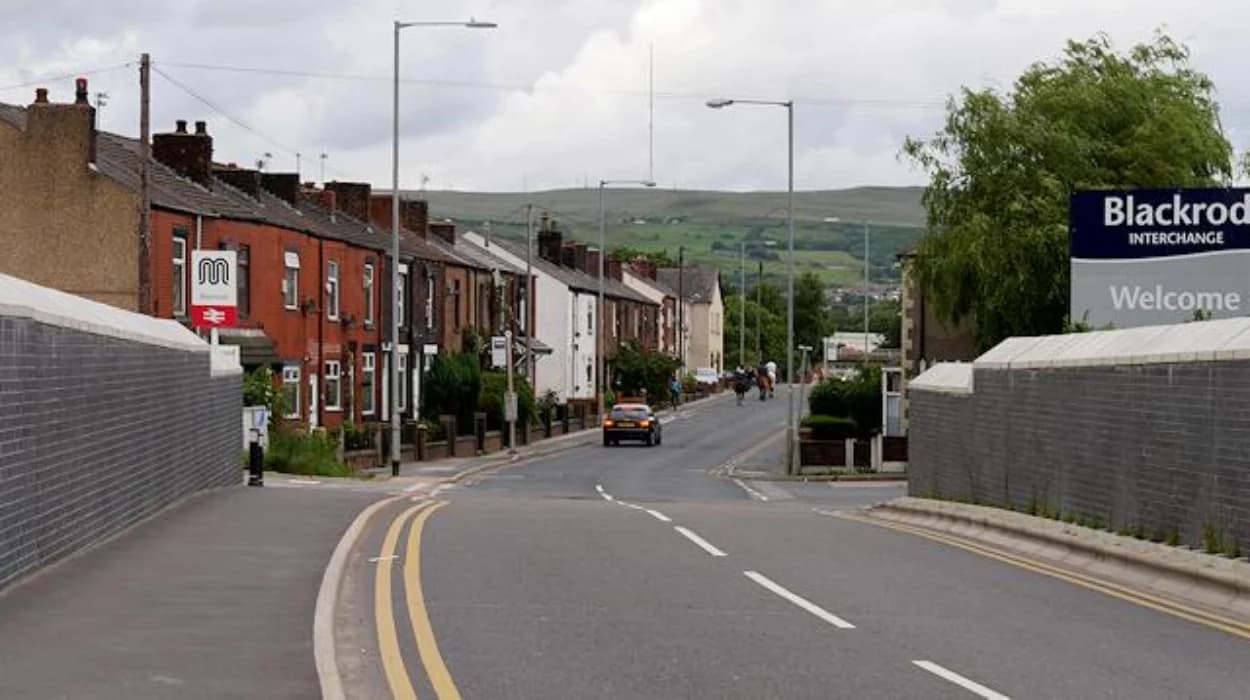
Blackrod stands among the oldest continuously inhabited settlements in the historic county of Lancashire. Long before it became part of the Metropolitan Borough of Bolton in 1974, the community developed through centuries of agricultural growth, medieval administration, transport innovation, industrial expansion, and local governance. Its history reflects broader transformations across north-west England while maintaining a distinctive identity shaped by landscape, faith, commerce, and community institutions.
Understanding Blackrod before modern Bolton reveals how rural settlements evolved into industrial communities without losing their historical character. Archaeological discoveries, medieval documents, parish records, transport infrastructure, and surviving buildings provide evidence of continuous occupation spanning nearly two millennia.
What made Blackrod historically significant before it became part of modern Bolton?
Blackrod developed as an independent historic township with Roman connections, medieval governance, agricultural prosperity, industrial enterprise, and transport innovation centuries before its inclusion within the Metropolitan Borough of Bolton in 1974, creating a distinctive heritage that survives through landscapes, buildings, and historical records today.
Blackrod occupies elevated ground between Bolton and Wigan in what was historically the county of Lancashire. Its position along important communication routes encouraged settlement from prehistoric periods onward. Archaeological evidence, documentary records, and surviving landscape features collectively demonstrate continuous human activity extending across multiple historical eras.
The settlement's significance derives from its remarkable continuity. Rather than emerging during industrialisation alone, Blackrod experienced successive phases of development that included Roman influence, medieval manorial administration, Tudor agricultural expansion, eighteenth-century transport improvements, nineteenth-century industrial growth, and twentieth-century municipal reform.
Its name reflects early medieval origins. Linguists generally interpret "Blackrod" as deriving from Old English elements describing a dark or wooded clearing, illustrating how Anglo-Saxon settlers identified landscape features when establishing communities throughout north-west England.
Unlike rapidly planned industrial towns, Blackrod evolved gradually. Every historical period contributed new institutions while preserving earlier patterns of settlement, road networks, and agricultural land use.
How did the earliest settlements shape Blackrod's development?
Prehistoric occupation, Roman transport networks, and Anglo-Saxon settlement established Blackrod's geographical importance by connecting elevated farmland with regional communication routes, creating foundations for continuous habitation that influenced medieval, industrial, and modern development across successive historical periods.
Evidence of prehistoric activity exists throughout the wider West Pennine landscape. Archaeologists have identified Bronze Age remains across the surrounding uplands, including burial sites, stone tools, and agricultural evidence. These discoveries indicate that communities exploited the area's fertile soils and elevated terrain thousands of years before recorded history.
During the Roman occupation of Britain between AD 43 and approximately AD 410, north-west England experienced significant infrastructure development. Roman roads connected military forts, civilian settlements, and administrative centres throughout Lancashire.
Although Blackrod never became a major Roman town, its location near important Roman transport corridors positioned it within regional trading and communication networks. Archaeological finds from surrounding districts demonstrate sustained Roman influence across the landscape.
Following the Roman withdrawal, Anglo-Saxon communities established agricultural settlements throughout Lancashire. Place-name evidence strongly supports Blackrod's emergence during this period. Farming, woodland management, and livestock production became central economic activities.
The settlement expanded gradually rather than through rapid colonisation. Families cultivated surrounding fields while maintaining connections with neighbouring communities through trackways that later evolved into established roads.
These early developments established enduring characteristics that remained visible throughout the medieval period.
How was Blackrod governed during the medieval period?
Medieval Blackrod operated through manorial administration, ecclesiastical authority, customary law, and agricultural organisation, integrating local governance with wider Lancashire institutions while supporting farming communities whose economic stability sustained settlement expansion for several centuries after the Norman Conquest.
Following the Norman Conquest of 1066, England underwent extensive administrative restructuring. Land ownership became organised through feudal tenures recorded in royal surveys and later legal documents.
Blackrod formed part of the historic Hundred of Salford within Lancashire. Hundreds served administrative functions including taxation, justice, and military organisation.
Local governance centred upon the manor. A manor functioned as both an economic estate and a judicial institution where customary disputes, land transfers, and agricultural obligations received formal oversight.
Agriculture dominated everyday life. Farmers cultivated cereals including oats, barley, and wheat while maintaining livestock such as sheep, cattle, and pigs. Woodland supplied construction timber, firewood, and grazing opportunities.
The importance of medieval religion
Religion formed another central institution.
The establishment of Blackrod's parish church strengthened community identity while integrating local residents into broader ecclesiastical structures. Churches provided religious services, recorded baptisms, marriages, and burials, and offered charitable support during periods of hardship.
Church records now provide invaluable evidence for genealogists and historians reconstructing local family histories across successive generations.
Medieval governance therefore combined secular administration with ecclesiastical authority, producing stable institutions that endured for centuries.
Why did agriculture remain central to Blackrod for centuries?
Agriculture sustained Blackrod's economy through crop cultivation, livestock management, common grazing, and rural markets, providing employment, food production, and economic resilience that supported population growth before industrial manufacturing transformed the wider Lancashire region during the eighteenth century.
Before industrialisation, farming represented the dominant economic activity.
The surrounding countryside contained productive farmland suited to mixed agriculture. Farmers diversified production to reduce risk while supplying nearby settlements with grain, meat, dairy products, wool, and fuel.
Open-field systems characterised medieval agriculture before gradual enclosure transformed land ownership. Enclosure reorganised communal farmland into individually managed holdings, increasing efficiency while altering rural landscapes.
Seasonal agricultural labour structured community life. Planting, harvesting, sheep shearing, and livestock management determined annual rhythms shared by households throughout the township.
Local markets connected Blackrod with neighbouring communities including Bolton, Wigan, Chorley, and Preston. Agricultural surplus supported regional trade while encouraging modest commercial growth.
Agricultural prosperity also financed improvements in housing, religious buildings, and transport infrastructure.
Even after industrial employment expanded, farming continued alongside manufacturing, preserving Blackrod's mixed economic character.
How did transport transform Blackrod before the Industrial Revolution?
Improved roads, turnpike trusts, coaching routes, and regional transport investment connected Blackrod with expanding markets, accelerating commercial exchange while preparing the settlement for industrial growth during the eighteenth and nineteenth centuries through improved accessibility and economic integration.
Transport improvements fundamentally altered Blackrod's economic prospects.
Before engineered roads, movement relied upon ancient trackways that became difficult during poor weather. Transport limitations restricted commercial expansion despite productive agriculture.
The eighteenth century witnessed the establishment of turnpike trusts across Britain. Turnpike roads collected tolls that financed construction, maintenance, and engineering improvements.
Blackrod benefited from these regional investments because important east-west and north-south routes passed nearby, improving connections between Lancashire's growing commercial centres.
Improved roads reduced travel times, encouraged coaching services, expanded livestock markets, and supported increasing movement of manufactured goods.
Merchants accessed broader markets while residents experienced greater economic integration with neighbouring towns.
Transport improvements also influenced settlement patterns as commercial activity increasingly concentrated around accessible routes.
These developments created conditions that enabled later industrial expansion.
What impact did the Industrial Revolution have on Blackrod?
Industrialisation diversified Blackrod's economy through coal mining, textile production, engineering, and railway development, increasing population, expanding employment, reshaping settlement patterns, and integrating the township into Lancashire's internationally significant manufacturing economy during the nineteenth century.
Industrialisation transformed Lancashire more profoundly than almost any previous historical process.
Blackrod participated in this transformation while retaining important aspects of its rural heritage.
Coal mining expanded significantly because accessible coal reserves supported domestic heating, steam engines, and industrial manufacturing.
Mining generated employment while stimulating associated engineering industries.
Textile manufacturing also influenced local development. Lancashire became the world's leading cotton-producing region during the nineteenth century, and Blackrod contributed labour, transport links, and supporting industries to this internationally connected economy.
Railways and industrial expansion
The arrival of railway infrastructure represented another decisive milestone.
Rail connections dramatically accelerated passenger travel and freight movement. Manufacturers transported raw materials and finished products more efficiently while residents gained improved access to employment throughout Lancashire.
Industrial growth encouraged new housing construction, educational institutions, commercial premises, and civic improvements.
Despite these changes, agriculture remained active alongside manufacturing, distinguishing Blackrod from entirely industrial settlements.
How did education, religion, and civic institutions shape community life?
Schools, churches, voluntary organisations, and local government strengthened Blackrod's social cohesion by promoting literacy, religious practice, public welfare, and civic participation, creating institutions that supported residents through periods of industrial and demographic transformation across the nineteenth century.
Social institutions evolved alongside economic change.
Education expanded considerably following nineteenth-century educational reforms. Increasing literacy improved employment opportunities while strengthening civic participation.
Schools taught reading, writing, arithmetic, geography, history, and religious instruction.
Churches remained influential community centres beyond religious worship.
Congregations organised charitable activities, supported poorer households, established youth organisations, and promoted public health initiatives.
Friendly societies also emerged during industrialisation.
These voluntary associations assisted members during illness, unemployment, or bereavement before comprehensive national welfare systems developed.
Local government responsibilities expanded throughout the nineteenth century.
Authorities gradually assumed greater responsibility for sanitation, road maintenance, housing regulation, and public health.
These institutional developments improved everyday living conditions while strengthening community resilience.
How did Blackrod's governance change before joining modern Bolton?
Administrative reforms progressively reorganised Blackrod through evolving township, parish, district, and county structures before local government reorganisation placed it within the Metropolitan Borough of Bolton in Greater Manchester during 1974 while preserving its historic identity.
Administrative history forms an essential part of understanding Blackrod's evolution.
Originally functioning within Lancashire's historic administrative framework, Blackrod experienced successive reforms reflecting changing national approaches to local government.
Nineteenth-century legislation modernised municipal administration throughout England.
Responsibilities increasingly transferred from traditional parish structures to elected local authorities capable of managing sanitation, highways, housing, and education.
Blackrod later formed part of the Blackrod Urban District, providing locally focused administration while cooperating with county authorities.
The most significant modern transition occurred under the Local Government Act 1972.
Implemented on 1 April 1974, this legislation reorganised local government across England.
Blackrod became part of the newly established Metropolitan Borough of Bolton within Greater Manchester.
Although administrative boundaries changed, Blackrod retained its historical identity, architectural heritage, and longstanding community traditions developed over previous centuries.
What historic buildings and surviving landmarks preserve Blackrod's earlier history?
Historic churches, traditional cottages, transport infrastructure, agricultural landscapes, cemeteries, and surviving industrial features preserve Blackrod's historical development, providing physical evidence of medieval origins, industrial expansion, and community continuity across multiple centuries of local evolution.
Blackrod retains numerous physical reminders of earlier historical periods.
Historic churches remain among the most important surviving landmarks because they preserve architectural features spanning different centuries while continuing their original religious function.
Traditional stone cottages illustrate vernacular building techniques adapted to local materials and climate.
Former farmsteads demonstrate the settlement's agricultural foundations even where surrounding landscapes have evolved.
Historic road alignments preserve routes established centuries before modern highways.
Railway infrastructure represents nineteenth-century engineering achievements that transformed regional mobility.
Cemeteries contain memorials documenting generations of local families, occupations, military service, and demographic change.
Industrial remnants including former mining sites and associated structures illustrate Blackrod's participation in Lancashire's manufacturing economy.
To experience these historic landmarks in person today, consult our comprehensive [Blackrod Before Modern Bolton: A Journey Through Centuries of Change] for itineraries and visiting parameters.
Collectively, these surviving features create a landscape where multiple historical periods remain visible.
Why is Blackrod's history important for researchers and future generations?
Blackrod's historical records, archaeological evidence, architectural heritage, and preserved landscapes provide valuable resources for historians, genealogists, educators, conservation specialists, and cultural visitors seeking to understand long-term community development across north-west England through documented local experience.
Historical research depends upon surviving evidence.
Blackrod benefits from an unusually diverse collection of historical sources including parish registers, census returns, taxation records, maps, estate documents, newspapers, archaeological discoveries, and listed buildings.
Genealogical researchers frequently consult these materials when tracing Lancashire family histories across several centuries.
Educational institutions use local history to explain broader national developments including medieval governance, agricultural change, industrialisation, railway expansion, and administrative reform.
Historic England has designated several structures for statutory protection because of their architectural or historical significance.
Conservation policies help preserve these assets for future generations while supporting heritage tourism and public education.
Archaeological investigations continue refining understanding of earlier settlement patterns through scientific analysis, landscape surveys, and documentary comparison.
Digital archives have further expanded access to historical materials, allowing researchers worldwide to examine records previously available only within specialist repositories.
Blackrod, therefore, represents more than a former township.
It provides a documented case study demonstrating how English communities adapted continuously across changing political systems, economic transformations, technological innovation, and administrative reform without losing their local identity.
Blackrod's history stretches across prehistoric settlement, Roman influence, Anglo-Saxon community formation, medieval governance, agricultural prosperity, industrial expansion, railway development, and twentieth-century administrative reform. Each era contributed lasting institutions, landscapes, and buildings that remain visible today.
Long before becoming part of modern Bolton, Blackrod functioned as an independent and evolving community shaped by geography, agriculture, religion, commerce, transport, and industry. Its development reflects wider historical changes across Lancashire while preserving distinctive local traditions rooted in centuries of continuous occupation.
Today, historic churches, traditional buildings, transport infrastructure, archival records, and archaeological evidence continue to preserve this remarkable heritage. Together, they demonstrate that Blackrod's story is not simply a chapter within Bolton's history but an enduring record of community resilience and adaptation across nearly two thousand years of documented change.
FAQS
How old is the village of Blackrod?
Evidence suggests that people lived in the Blackrod area from prehistoric times, while the village itself has documented medieval origins dating back several centuries. Its name is derived from Old English, indicating Anglo-Saxon settlement.