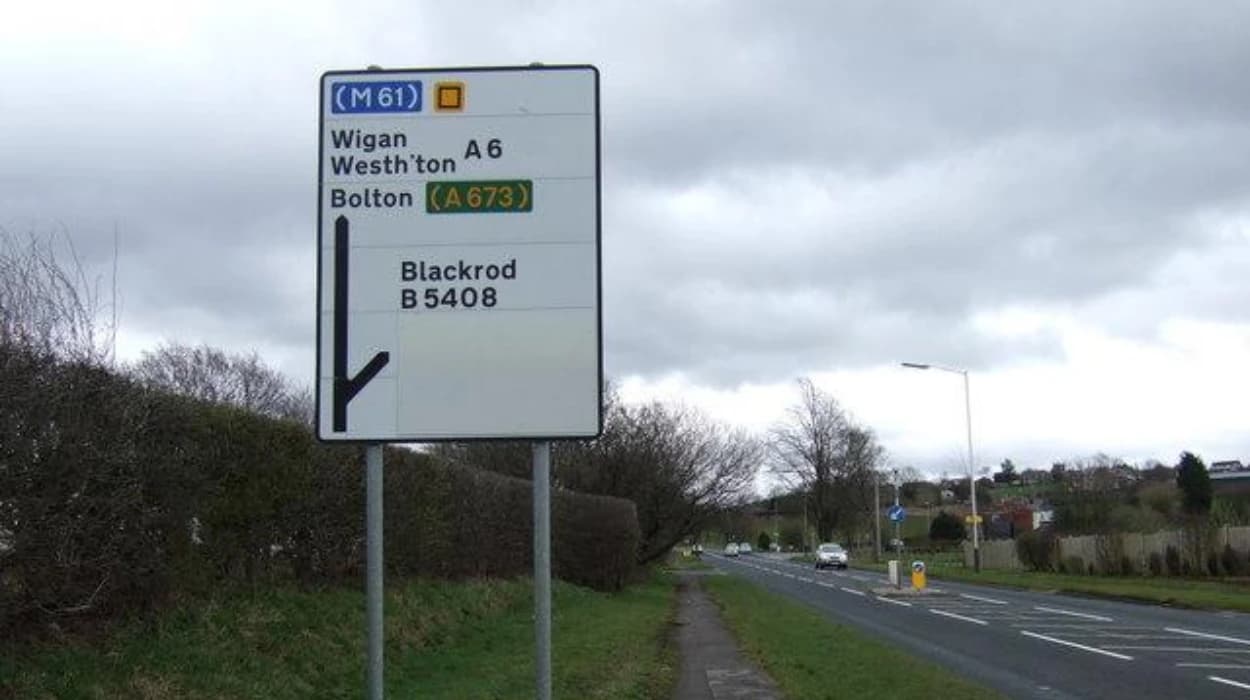
Blackrod, a historic settlement on the western edge of the present-day Metropolitan Borough of Bolton in Greater Manchester, England, possesses a history that extends far beyond its incorporation into modern local government. Long before becoming part of contemporary Bolton, Blackrod developed through successive phases of prehistoric activity, medieval administration, agricultural production, industrial expansion, transport innovation, and municipal reform. Its evolution reflects broader changes that shaped north-west England over nearly two thousand years while preserving a distinct local identity rooted in landscape, community institutions, and regional commerce.
Understanding Blackrod before modern Bolton requires examining how geography, governance, religion, industry, infrastructure, and population interacted across different historical periods. This historical development explains why the village retains numerous heritage features despite centuries of economic and administrative transformation.
Why is Blackrod historically significant before becoming part of modern Bolton?
Blackrod developed as an independent historic township with documented medieval administration, strategic transport connections, industrial enterprise, and agricultural traditions for several centuries before joining the Metropolitan Borough of Bolton in 1974, making it an important example of Lancashire's historical development.
Blackrod occupies elevated ground overlooking the Douglas Valley in historic Lancashire. Its location between the uplands of the West Pennine Moors and the productive agricultural lowlands created favourable conditions for early settlement, farming, and later transport infrastructure.
The village historically formed part of the ancient parish of Bolton le Moors within the Salford Hundred, one of Lancashire's principal medieval administrative divisions. Hundreds served as judicial and taxation districts established during the Anglo-Saxon and Norman periods, providing local governance before the development of modern counties and boroughs.
Unlike settlements that emerged exclusively through industrialisation, Blackrod evolved gradually across multiple historical periods. Archaeological evidence, documentary records, and surviving buildings collectively demonstrate continuous occupation and adaptation over many centuries.
Its significance also derives from its position along important regional communication routes connecting Manchester, Wigan, Chorley, and Preston. These transport corridors encouraged trade, movement, and economic diversification well before the railway age.
How did Blackrod originate during the earliest periods of settlement?
Blackrod originated through early agricultural settlement supported by favourable topography, reliable water sources, and transport routes. Archaeological discoveries indicate prehistoric and Roman-period activity, while documentary evidence confirms an established medieval community before the twelfth century.
The surrounding landscape shows evidence of human occupation dating back thousands of years. Elevated ridges provided defensive advantages and well-drained ground suitable for farming, while nearby streams supplied freshwater for domestic and agricultural purposes.
Although Blackrod lacks the extensive Roman remains found elsewhere in north-west England, the wider region formed part of an interconnected Roman transport network linking military installations across Lancashire and Cheshire. Roman influence introduced improved road systems that later influenced medieval route development.
The village's name has linguistic importance. Scholars generally interpret "Blackrod" as deriving from Old English elements referring to a dark woodland clearing or woodland track. Place-name studies conducted by the English Place-Name Society demonstrate how early English settlers described landscapes using physical characteristics, providing valuable evidence for settlement history.
Following the Norman Conquest of 1066, Lancashire experienced administrative reorganisation under Norman rule. Land ownership became formally recorded through feudal systems, although Blackrod itself appears more prominently in medieval records produced after the Domesday survey.
By the High Middle Ages, Blackrod had developed into a recognisable rural township supporting farming families, craftsmen, and local landholders.
How did medieval governance shape Blackrod's development?
Blackrod's medieval governance established legal, agricultural, and religious institutions that regulated daily life. The township operated within Lancashire's manorial and parish systems, creating administrative structures that influenced local society for several centuries.
Medieval England organised communities through overlapping jurisdictions. Blackrod belonged to the ancient parish of Bolton le Moors while simultaneously operating within local manorial authority.
The manor represented an economic and legal institution where the lord exercised rights over agricultural land, tenant obligations, and local courts. Manorial courts resolved disputes involving property boundaries, inheritance, tenancy agreements, and agricultural responsibilities.
Agriculture formed the foundation of the medieval economy. Farmers cultivated open fields while sharing common pasture, woodland, and meadow resources under customary regulations. Livestock grazing included 3 principal animals: cattle, sheep, and pigs.
Religious administration centred upon parish organisation. Although Blackrod later acquired its own parish church, medieval inhabitants depended upon ecclesiastical institutions for baptisms, marriages, burials, education, and poor relief.
Taxation records from the fourteenth and fifteenth centuries demonstrate that Blackrod contributed to regional revenues alongside neighbouring Lancashire settlements, indicating an established and functioning rural economy.
How did religion influence Blackrod before the modern era?
Religion shaped Blackrod's social organisation through parish life, education, charitable activity, and community identity. Churches functioned as religious institutions, administrative centres, and repositories of local historical records for several centuries.
Christianity influenced virtually every aspect of medieval and early modern life. Parish churches maintained registers documenting baptisms, marriages, and burials that now provide essential evidence for genealogists and historians.
The religious transformations initiated during the English Reformation in the sixteenth century affected Blackrod alongside communities throughout England. The dissolution of monasteries, establishment of the Church of England, and later religious reforms altered ecclesiastical governance while maintaining parish structures.
Church buildings also reflected changing architectural styles. Medieval stone construction, later repairs, Victorian restoration campaigns, and twentieth-century conservation efforts collectively illustrate evolving attitudes toward religious heritage.
Religious festivals structured the agricultural calendar. Harvest celebrations, feast days, and seasonal observances reinforced communal identity while marking significant moments in rural production cycles.
Church records remain among the most valuable historical sources for tracing Blackrod families across successive generations.
How did agriculture support Blackrod's economy before industrialisation?
Agriculture sustained Blackrod's economy through mixed farming, livestock production, and local markets. Farming remained the dominant occupation until industrial growth diversified employment during the eighteenth and nineteenth centuries.
The surrounding countryside consisted of enclosed fields, meadows, woodland, and grazing land suitable for diversified agricultural production.
Farmers cultivated cereals alongside root crops and maintained livestock adapted to Lancashire's climate. Agricultural practices gradually improved through enclosure, crop rotation, drainage, and selective breeding introduced during the Agricultural Revolution.
The village participated in regional market networks supplying nearby towns including Bolton, Wigan, Chorley, and Preston.
Agricultural employment extended beyond landowners. Rural occupations included 4 specialist roles: blacksmiths, millers, wheelwrights, and carpenters supporting farming communities through essential services.
The agricultural economy also encouraged cottage industries. Families supplemented farm income through spinning, weaving, and textile preparation before mechanised factory production transformed Lancashire.
Many historic field boundaries visible today preserve patterns established during earlier agricultural development.
How did the Industrial Revolution transform Blackrod?
The Industrial Revolution fundamentally changed Blackrod through coal mining, textile manufacturing, engineering, and railway development. Population growth, urban expansion, and industrial employment reshaped the village during the eighteenth and nineteenth centuries.
Industrialisation accelerated rapidly after the late eighteenth century across Lancashire.
Coal deposits beneath the surrounding landscape supported mining operations supplying domestic heating, steam engines, and manufacturing industries.
Textile production expanded alongside Lancashire's cotton industry. Mechanisation increased productivity while creating employment opportunities beyond traditional agriculture.
Industrial growth stimulated population expansion. Census records demonstrate substantial increases during the nineteenth century as workers settled near mines, mills, and transport routes.
Housing construction reflected changing employment patterns. Workers' cottages, terraces, and associated public facilities expanded the historic village beyond its medieval core.
Industrial development also altered the environment through quarrying, mining, transport infrastructure, and factory construction. Despite these changes, parts of the older settlement survived, preserving evidence of pre-industrial Blackrod.
Why were transport networks essential to Blackrod's historical growth?
Transport networks connected Blackrod with regional markets, industrial centres, and neighbouring communities. Turnpike roads and railways increased commercial activity while integrating the village into Lancashire's expanding economic landscape.
Before improved roads, movement depended upon local tracks linking farms, villages, and parish centres.
The eighteenth-century Turnpike Trust system transformed road maintenance by introducing toll-funded improvements. Better roads reduced travel times and facilitated movement of coal, agricultural products, manufactured goods, and passengers.
The arrival of the railway during the nineteenth century represented another major milestone.
Blackrod railway station connected residents with Manchester, Wigan, Preston, and other industrial centres, encouraging commuting, commercial exchange, and wider regional integration.
Improved transport also influenced social mobility. Residents gained greater access to employment, education, markets, and administrative services throughout Lancashire.
To experience this historic transport landscape and surrounding heritage today, consult our comprehensive [Family-Friendly Things to Do in Blackrod and the Surrounding Area] for itineraries and visiting parameters.
How did education and local institutions develop before modern Bolton?
Education expanded gradually through church schools, charitable foundations, and nineteenth-century reforms. Local institutions strengthened literacy, civic participation, and community organisation before municipal restructuring created modern administrative systems.
Early education primarily depended upon religious institutions.
Church schools instructed children in reading, writing, arithmetic, and religious doctrine. Literacy improved steadily throughout the eighteenth and nineteenth centuries as educational opportunities expanded.
The Elementary Education Act 1870 established a national framework for schooling across England. School boards increased educational provision where voluntary schools proved insufficient.
Local government responsibilities also evolved.
Public health reforms introduced improved sanitation, drainage, water supplies, and disease prevention measures responding to industrial population growth.
Libraries, reading rooms, mechanics' institutes, and voluntary societies encouraged lifelong learning and civic engagement.
These institutions reflected broader Victorian efforts to improve education, health, and public administration throughout industrial Lancashire.
What architectural heritage survives from Blackrod's earlier history?
Blackrod preserves architectural evidence from several historical periods through churches, farmhouses, cottages, transport infrastructure, and listed buildings that illustrate centuries of continuous settlement and community development.
Historic architecture provides tangible evidence of Blackrod's evolution.
Stone-built farmhouses demonstrate traditional Lancashire construction methods using locally available materials.
Religious buildings preserve medieval foundations alongside later additions reflecting changing architectural styles.
Industrial heritage survives through former railway infrastructure, workers' housing, and surviving elements associated with mining and manufacturing.
Historic street patterns also reveal earlier phases of development. Narrow lanes frequently follow medieval or even earlier route alignments.
Conservation efforts recognise the importance of preserving both individual buildings and the wider historic character of the village.
England's statutory listing system protects structures possessing special architectural or historic interest, ensuring continued preservation for future generations.
How did Blackrod become part of modern Bolton?
Blackrod became part of the Metropolitan Borough of Bolton following local government reorganisation implemented under the Local Government Act 1972, which took effect on 1 April 1974 and reorganised administrative boundaries throughout England.
Before 1974, Blackrod formed part of Lancashire's historic local government structure.
The Local Government Act 1972 represented one of England's largest administrative reforms during the twentieth century. The legislation replaced many existing county boroughs, urban districts, municipal boroughs, and rural districts with larger metropolitan and non-metropolitan authorities.
On 1 April 1974, Blackrod joined the newly established Metropolitan Borough of Bolton within Greater Manchester.
Administrative integration altered governance rather than historical identity.
Historic Lancashire traditions, local heritage, parish records, listed buildings, and community institutions continued preserving Blackrod's distinct historical character despite changes in administrative boundaries.
Modern heritage organisations actively document, conserve, and interpret these historical resources through archives, publications, archaeological investigations, and conservation initiatives.
Why does Blackrod's pre-Bolton history remain important today?
Blackrod's earlier history explains the village's surviving landscape, architecture, institutions, and community identity. Historical research supports conservation, education, genealogy, archaeology, and sustainable heritage tourism while preserving centuries of local development.
Historical understanding provides context for present-day planning and conservation.
Genealogical researchers rely upon parish registers, census records, probate documents, land deeds, and electoral registers to reconstruct family histories connected with Blackrod.
Archaeological investigations continue expanding knowledge of settlement patterns, agricultural systems, and industrial activity.
Historic England, local archives, museums, and university researchers collaborate to preserve documentary and physical evidence relating to the village's development.
The continuity visible across Blackrod demonstrates how settlements evolve without entirely replacing earlier landscapes. Medieval field boundaries, nineteenth-century transport routes, historic churches, traditional buildings, and surviving industrial remains collectively document successive historical layers spanning many centuries.
For educators, Blackrod offers a valuable case study illustrating national historical themes—including medieval governance, agricultural change, industrialisation, transport development, religious reform, and twentieth-century administrative restructuring—within a single local landscape.
As interest in local history, cultural tourism, and family research continues growing, Blackrod's historical record remains an important resource for understanding both Lancashire's regional development and England's wider historical transformation. Preserving this heritage ensures future generations can study the processes that shaped communities long before the creation of modern Bolton.
FAQS
Was Blackrod always part of Bolton?
No. Blackrod was an independent historic township in Lancashire for centuries before becoming part of the Metropolitan Borough of Bolton on 1 April 1974 following the implementation of the Local Government Act 1972.