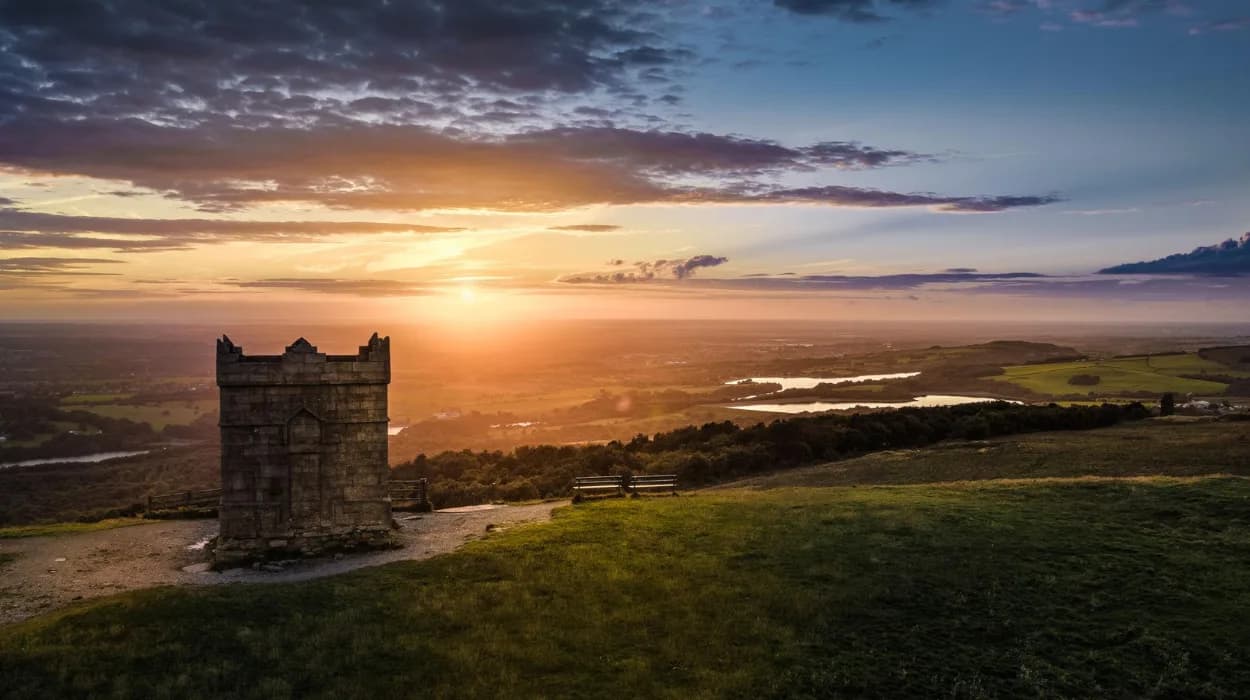
Sunset views around Bolton combine natural landscapes, industrial heritage, historic landmarks, and elevated viewpoints that reveal the changing character of the borough. Located in Greater Manchester, Bolton is surrounded by moorland, reservoirs, wooded valleys, country parks, and historic villages that provide exceptional evening scenery throughout the year. These locations reflect centuries of environmental history, agricultural development, industrial expansion, and modern conservation, making them valuable destinations for both sightseeing and understanding the region's heritage.
Today, Bolton's sunset viewpoints attract walkers, photographers, historians, families, and visitors seeking panoramic landscapes that illustrate how geography shaped local communities. Hills that once served prehistoric settlers, reservoirs built during the Industrial Revolution, and country parks reclaimed from former industrial land now provide some of northwest England's most memorable evening vistas.
Why do Bolton's landscapes create outstanding sunset views?
Bolton's elevated moorlands, reservoirs, valleys, country parks, and historic hills create dramatic sunset scenery because their western orientation, varied topography, open skylines, and preserved natural landscapes provide uninterrupted evening views across Greater Manchester, Lancashire, and the West Pennine Moors throughout every season.
Bolton occupies a transition zone between the urban centres of Greater Manchester and the uplands of the West Pennine Moors. This geographical position creates a varied landscape where hills rise above densely populated valleys, allowing extensive views toward the setting sun.
The borough covers approximately 140 square kilometres and includes high moorland, farmland, reservoirs, woodland, and historic settlements. Elevations range from around 80 metres in central Bolton to more than 450 metres on surrounding moors. This difference in altitude creates numerous natural viewing locations.
The borough's western horizons remain comparatively open. During clear evenings, visitors can observe distant landscapes stretching towards Lancashire while the lower valleys become illuminated by the golden light of sunset.
Seasonal weather patterns also influence sunset quality. Autumn frequently offers crisp visibility after passing weather fronts, while spring and summer produce extended twilight because of Britain's northern latitude. Winter sunsets occur earlier, allowing visitors to enjoy evening scenery without late-night travel.
Many of today's viewpoints exist because historic land uses prevented large-scale urban development on surrounding hills. Farming, water collection, quarrying, and protected moorland helped preserve open landscapes that now benefit recreational visitors.
Which historic hills provide Bolton's finest sunset panoramas?
Historic hills surrounding Bolton offer exceptional sunset panoramas because they combine archaeological significance, elevated viewpoints, extensive public access, and centuries of cultural importance. Their landscapes connect prehistoric settlement, medieval agriculture, industrial history, and modern conservation within a single evening experience.
Winter Hill stands as Bolton's best-known elevated viewpoint. Rising to approximately 456 metres above sea level, it dominates the surrounding landscape and has served as a landmark for thousands of years.
Archaeological evidence indicates prehistoric activity across the hill and surrounding moorland. Bronze Age burial monuments demonstrate that early communities recognised the strategic and ceremonial importance of these elevated landscapes. The summit later became important for navigation, farming boundaries, and modern telecommunications.
Evening visitors enjoy panoramic views extending across Greater Manchester, Lancashire, Merseyside, North Wales, and, under exceptional atmospheric conditions, distant mountains in the Lake District.
Rivington Pike also provides one of the region's classic sunset locations. Although technically within neighbouring Chorley, its close relationship with Bolton makes it a popular destination for local residents. The hill became an important recreational site during the Victorian era when industrial workers sought healthier outdoor environments.
Nearby Great Hill offers quieter surroundings with expansive views across the West Pennine Moors. The area illustrates how upland farming landscapes have remained remarkably consistent despite centuries of social and economic change.
Two Lads Cairn represents another historically significant viewpoint. This ancient stone monument occupies an elevated position overlooking Bolton and continues to attract walkers interested in both archaeology and scenic landscapes.
These historic hills demonstrate how natural geography influenced human settlement, communication, transport, and cultural identity throughout north-west England.
How do Bolton's reservoirs enhance evening sightseeing?
Bolton's historic reservoirs enhance evening sightseeing by combining reflective water surfaces, Victorian engineering, protected wildlife habitats, surrounding woodland, and open landscapes that intensify sunset colours while preserving nationally significant examples of nineteenth-century public water infrastructure.
Reservoirs transformed Bolton during the nineteenth century as industrial growth increased demand for clean water. Engineers constructed extensive water collection systems throughout the surrounding uplands, permanently reshaping the landscape.
Jumbles Reservoir combines woodland, walking trails, and calm water that reflects evening skies. Originally constructed to support local industry and communities, the reservoir now forms part of a popular country park where visitors experience tranquil sunset scenes.
Wayoh Reservoir represents another important example of Victorian civil engineering. Built during the late nineteenth century, it became a vital component of Bolton's expanding water supply network. Today, mature woodland surrounds the reservoir, creating attractive foreground scenery for evening photography.
Turton and Entwistle Reservoir extends across the northern edge of the borough. The surrounding forests, open water, and gently rising hills create layered landscapes that become particularly striking during sunset.
The reservoirs also support diverse wildlife. Waterfowl, woodland birds, and seasonal migratory species contribute to the area's ecological importance while enhancing the visitor experience.
Evening light reflects across calm water surfaces, producing vivid colours that differ significantly from hilltop viewpoints. This combination of engineering heritage and natural beauty makes Bolton's reservoirs distinctive destinations for sunset sightseeing.
Which country parks offer the best sunset experiences?
Bolton's country parks preserve historic landscapes while providing accessible sunset viewpoints through restored woodland, open meadows, lakes, reservoirs, and elevated walking routes that showcase successful environmental conservation across former agricultural and industrial landscapes.
Moses Gate Country Park demonstrates how environmental restoration transformed former industrial land into an important recreational landscape. Once influenced by mining and manufacturing, the park now contains lakes, woodland, grassland, and riverside habitats.
Its elevated paths offer wide evening views across southern Bolton while maintaining easy access for families and casual walkers.
Jumbles Country Park combines reservoir scenery with ancient woodland and maintained walking routes. Visitors experience changing seasonal colours throughout the year, from spring blossoms to autumn foliage illuminated by evening sunlight.
Smithills Estate provides another outstanding sunset destination. Covering thousands of acres of countryside, the estate includes farmland, woodland, moorland, streams, and historic buildings managed for conservation and public access.
The estate's higher footpaths reveal expansive western views while connecting visitors with centuries of agricultural history. Dry stone walls, traditional grazing landscapes, and historic farmsteads remain visible throughout the surrounding countryside.
Seven Acres Country Park illustrates modern landscape restoration following industrial decline. Wetlands, lakes, and woodland now occupy areas previously associated with extraction industries, demonstrating long-term environmental recovery.
To experience these scenic landscapes in person today, consult our comprehensive [How Bolton's Landscape Evolved Through Centuries] for itineraries and visiting parameters.
What role did the West Pennine Moors play in shaping Bolton's evening landscapes?
The West Pennine Moors shaped Bolton's evening landscapes by preserving extensive upland environments, influencing settlement patterns, supplying water resources, supporting agriculture, and protecting uninterrupted western horizons that continue to define the borough's most celebrated sunset viewpoints today.
The West Pennine Moors extend across approximately 90 square kilometres and form one of northwest England's most distinctive upland landscapes.
These moors consist primarily of gritstone geology created during the Carboniferous Period around 320 million years ago. Over millions of years, erosion produced broad plateaus, valleys, escarpments, and distinctive hilltops visible throughout Bolton.
Human activity gradually altered the landscape. Prehistoric communities cleared woodland for grazing, while medieval farmers expanded sheep farming across the uplands. Later centuries introduced quarrying, reservoirs, roads, and recreational footpaths.
Despite these changes, large areas remained undeveloped because steep terrain limited urban expansion. This preservation now benefits visitors seeking open sunset views.
Heather moorland dominates many higher elevations. During late summer, flowering heather creates purple landscapes that contrast dramatically with orange and red evening skies.
Protected conservation policies now safeguard much of the moorland's ecological and archaeological importance. Visitors therefore experience landscapes that closely resemble those observed by generations of earlier inhabitants.
How has Bolton's industrial history influenced modern sunset viewpoints?
Bolton's industrial history created many modern sunset viewpoints through reservoirs, restored quarries, reclaimed industrial land, transport routes, and preserved open spaces that now combine heritage interpretation with exceptional panoramic evening scenery across the borough.
Industrialisation transformed Bolton between the late eighteenth and early twentieth centuries. Cotton manufacturing, engineering, coal mining, and stone quarrying reshaped valleys while simultaneously preserving surrounding uplands.
Reservoir construction remains one of the most visible industrial legacies. Massive engineering projects created water bodies that today serve both environmental and recreational purposes.
Former quarry sites evolved into accessible viewpoints after extraction ended. Restoration programmes stabilised landscapes, encouraged natural vegetation, and improved public access.
Disused railway corridors became walking and cycling routes connecting many scenic areas. These transport corridors allow visitors to explore multiple viewpoints without relying entirely on road access.
Historic mills concentrated development within valley floors rather than surrounding hills. As industry declined during the twentieth century, redevelopment focused primarily on urban areas, leaving many elevated landscapes comparatively untouched.
Modern conservation initiatives converted former industrial sites into parks, nature reserves, and heritage attractions. This transformation illustrates how environmental restoration can preserve historical identity while improving public recreation.
Evening visitors therefore experience landscapes shaped by both natural processes and industrial heritage.
Which villages provide historic settings for sunset sightseeing?
Historic villages surrounding Bolton combine traditional architecture, elevated landscapes, conservation areas, and centuries of continuous settlement that create distinctive sunset experiences connecting rural heritage with scenic evening views across the surrounding countryside.
Belmont occupies one of the borough's highest villages and offers exceptional western views toward surrounding moorland. The village developed during the nineteenth century around reservoirs, farming, and textile industries.
Its elevated location makes evening walks particularly rewarding as sunlight gradually illuminates the surrounding hills before fading across the valleys below.
Egerton developed around historic mills and agricultural communities. Nearby woodland, reservoirs, and open countryside provide attractive sunset viewpoints within easy reach of the village centre.
Turton preserves significant historic character through traditional buildings, churches, and surrounding farmland. Evening light highlights stone architecture while revealing extensive countryside beyond the settlement.
Horwich combines industrial heritage with immediate access to the West Pennine Moors. Visitors can explore historic streets before climbing nearby hills for panoramic sunset views.
These villages demonstrate how rural communities adapted to changing economic conditions while maintaining close relationships with the surrounding landscape.
How do the seasons change Bolton's sunset landscapes?
Seasonal changes transform Bolton's sunset landscapes through shifting daylight hours, changing vegetation, atmospheric conditions, wildlife activity, and weather patterns that create distinct visual experiences during spring, summer, autumn, and winter every year.
Spring introduces longer evenings and fresh vegetation. Woodland gradually fills with green foliage while flowering plants add colour throughout country parks and valley landscapes.
Summer offers the longest daylight hours. Extended twilight allows visitors additional time to reach elevated viewpoints and observe gradual colour changes across expansive landscapes.
Autumn produces some of Bolton's most dramatic sunset scenery. Deciduous woodland changes colour, creating combinations of gold, orange, and crimson that complement evening skies. Cooler air frequently improves long-distance visibility.
Winter provides the earliest sunsets and often the clearest atmospheric conditions after passing cold fronts. Snow occasionally covers higher ground, increasing contrast between illuminated landscapes and darkening skies.
Wildlife also changes seasonally. Migratory birds, grazing livestock, flowering plants, and woodland ecosystems contribute different visual characteristics throughout the calendar year.
These predictable seasonal variations ensure Bolton's sunset viewpoints remain attractive destinations regardless of the month.
Why do Bolton's sunset viewpoints remain historically and environmentally significant?
Bolton's sunset viewpoints remain historically and environmentally significant because they preserve archaeological sites, industrial heritage, protected habitats, traditional landscapes, and public access that together illustrate thousands of years of human interaction with the natural environment.
Many viewpoints contain evidence of continuous human activity extending from prehistoric communities to the present day.
Archaeological remains include burial monuments, ancient pathways, field systems, and early settlements that demonstrate long-term occupation of surrounding uplands.
Historic reservoirs illustrate Victorian engineering achievements that supported Bolton's industrial prosperity while continuing to provide essential public water supplies.
Protected landscapes support biodiversity through peatland restoration, woodland conservation, and habitat management programmes. Healthy peat soils also contribute to carbon storage and water management across the wider region.
National organisations, local authorities, conservation charities, and volunteer groups work together to maintain public footpaths, preserve archaeological features, restore habitats, and improve visitor facilities.
Educational institutions frequently use these landscapes for geography, ecology, archaeology, and local history studies. Students gain direct experience of environmental processes alongside historical development.
The continued popularity of Bolton's scenic viewpoints demonstrates growing public appreciation for landscapes that combine natural beauty with historical significance.
Bolton's finest sunset viewpoints represent far more than attractive evening destinations. They preserve a landscape shaped by geological processes, prehistoric settlement, medieval farming, Victorian engineering, industrial expansion, and modern conservation. Hills including Winter Hill, reservoirs such as Jumbles and Wayoh, country parks including Moses Gate and Smithills Estate, and historic villages together illustrate how the borough's physical geography influenced every stage of its development.
These locations remain accessible because generations protected upland landscapes, restored industrial sites, conserved historic environments, and expanded public rights of way. Visitors today therefore experience panoramic scenery that reflects thousands of years of continuous interaction between people and place.
For historians, educators, photographers, and cultural tourists alike, Bolton's evening landscapes provide valuable opportunities to understand both the borough's environmental heritage and its enduring connection with the surrounding West Pennine countryside. Their combination of history, conservation, and natural beauty ensures they remain among Greater Manchester's most rewarding destinations for sunset sightseeing adventures.
FAQS
Where can you watch the best sunset in Bolton?
Some of the best sunset locations around Bolton include Winter Hill, Rivington Pike, Jumbles Reservoir, Wayoh Reservoir, Smithills Estate, Moses Gate Country Park, and Great Hill, all offering panoramic evening views across Greater Manchester and the West Pennine Moors.