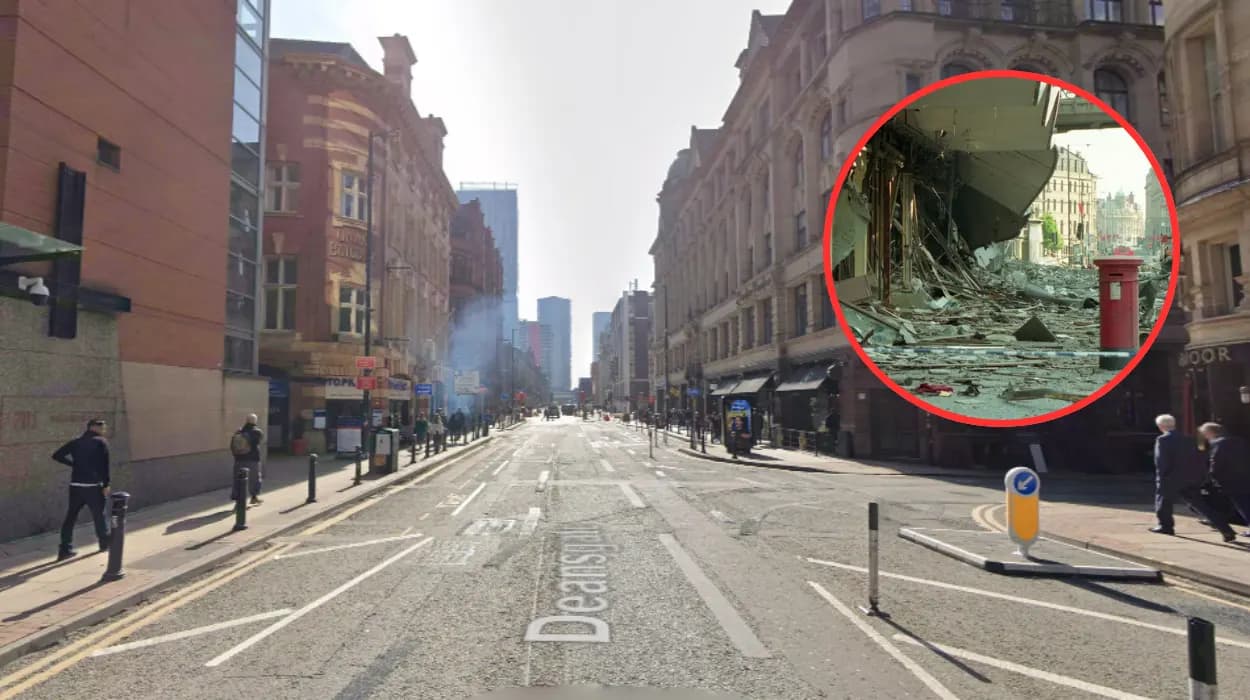
Key Points
- 30-Year Anniversary: On June 15, 2026, the communities of Bolton and Greater Manchester marked exactly three decades since the Provisional Irish Republican Army (IRA) detonated a 1,500-kilogram truck bomb in Manchester city centre.
- The Historic Impact: The 1996 blast stands as the largest peacetime bomb detonated in Great Britain, injuring over 200 people, causing an estimated £700 million in property damage, and fundamentally altering the socio-economic landscape of the region.
- The Bolton Connection: Numerous local business owners, commuters, and emergency personnel from Bolton were directly impacted by the devastation, with many frontline workers playing pivotal roles in the immediate evacuation and rescue operations.
- Defiance and Resilience: The anniversary brought renewed focus onto historic statements of resilience, notably from local business figures like Marjorie Innes, whose contemporary declarations of community strength came to symbolise the region's refusal to succumb to terror.
- Urban Transformation: While the explosion caused unprecedented architectural ruin, it served as the ultimate catalyst for a massive, multi-billion-pound urban regeneration project that transformed Manchester into a modern retail and cultural hub.
Bolton (Bolton Today) June 15, 2026 - Thirty years after the Provisional Irish Republican Army (IRA) detonated a devastating truck bomb in the heart of Manchester city centre, communities across Bolton and Greater Manchester have gathered to commemorate the anniversary of an event that permanently reshaped the region's social, economic, and structural fabric. On the morning of Saturday, June 15, 1996, a 1,500-kilogram explosive device packed into a Ford Iveco cargo van exploded on Corporation Street, injuring more than 200 people, shattering millions of square feet of commercial space, and sending shockwaves through surrounding mill towns like Bolton, which supplied both workers and emergency responders to the scene. Today's solemn milestone has sparked widespread reflection on the sheer scale of the destruction, the miraculous absence of fatalities, and the extraordinary spirit of defiance that emerged from the rubble.
What Happened During the 1996 Manchester Bombing?
To understand the profound nature of today's anniversary, historians and reporters look back at the precise sequence of events that unfolded on that fateful summer morning. As detailed by chief investigative correspondents at The Manchester Evening News, the vehicle containing the bomb was parked outside the Marks & Spencer department store near the Arndale Centre at approximately 9:20 am. Around 9:40 am, Granada TV received a telephone call utilising a known IRA coded word, warning that a bomb would detonate within one hour.
What followed was one of the largest rapid evacuation operations in British peacetime history. Emergency services, including police forces dispatched from neighbouring divisions across Greater Manchester, successfully cleared approximately 80,000 people from the city centre before the device exploded at 11:17 am. The resulting blast wave tore through storefronts, shattered glass for miles, and created a massive mushroom cloud of smoke and debris visible from the outskirts of Bolton.
How Did Bolton Business Owners Respond to the Destruction?
Among those whose livelihoods were abruptly caught up in the geopolitical violence were numerous entrepreneurs from the surrounding boroughs. Thirty years later, the words spoken by Great Lever businesswoman Marjorie Innes still resonate as a definitive testament to local character. Marjorie Innes, who ran a highly successful fashion agency in Manchester city centre at the time, saw her business and decades of hard work caught up in the physical devastation caused by the IRA bomb.
Yet, in the chaotic and uncertain days that followed the blast, she steadfastly refused to let terror define the future of her enterprise or her community. As originally recorded in the immediate aftermath by the lead metropolitan reporter for the Bolton Evening News, Innes defiantly declared to the press: "Bombers won't ruin our lives." Her words became a rallying cry for hundreds of independent traders facing financial ruin. Expanding on her stance against the perpetrators of the attack, Innes further told the publication at the time: "Lancashire folk are made of sterner stuff. We won't give in."
Who Were the First Responders from Bolton on the Scene?
The logistical burden of managing the disaster fell heavily on the shoulders of emergency service personnel, many of whom were stationed in or residents of Bolton. According to retrospective features compiled by historical analyst Sarah Hughes of the Greater Manchester Chronicle, emergency service logs show that more than a dozen ambulances and fire tenders from the Bolton area were blue-lighted into the city centre within minutes of the initial radio alerts.
Hospital workers at the Royal Bolton Hospital were placed on high alert to receive casualties as the city's central trauma units became overwhelmed. Writing for the North West Regional Review, veteran crime journalist David Schofield noted that the meticulous evacuation efforts led by the Greater Manchester Police—assisted by regional reinforcements—were widely credited with preventing a massive loss of life. Despite the immense physical damage to the infrastructure, the coordinated response ensured that serious injuries were minimised and zero fatalities occurred directly from the blast itself.
Explore More History Of Bolton
Industry, Housing and Social Change in Astley Bridge
How Astley Bridge Became a Bolton Suburb – Astley Bridge
How Large Was the Economic Damage and Damage Toll?
The physical impact of the 1,500-kilogram explosive device was unprecedented for a mainland bombing campaign. Insurance adjusters and structural engineers tasked with assessing the city centre estimated the overall financial toll to be roughly £700 million—equivalent to well over £1.5 billion in today's currency.
What Specific Buildings Sustained the Worst Blast Damage?
- The Marks & Spencer Building: Located directly adjacent to the truck bomb, the building's structural facade was completely blown inward, requiring a total rebuild.
- The Arndale Shopping Centre: Millions of square feet of retail space were showered in glass, forcing hundreds of tenants into immediate closure.
- The Longridge House: A major commercial office building that sustained such severe structural compromise that it had to be completely demolished in the months following the incident.
- The Royal Exchange Theatre: This historic cultural institution suffered extensive internal and external structural damage, halting performances for years.
How Did the Bombing Transform Manchester's Architecture?
While the attack brought immense short-term economic hardship, it ultimately triggered one of the most ambitious and successful urban regeneration projects in modern European history. As urban planning correspondent Marcus West explained in a recent documentary analysis for The Architectural Journal, the destruction of the outdated, brutalist concrete structures of the old Arndale Centre forced local government leaders to completely rethink the city's layout.
The Manchester Millennium Task Force was quickly established to oversee a multi-billion-pound redevelopment plan. This initiative led to the creation of entirely new public squares, modern retail corridors, and pedestrian-friendly zones that successfully integrated the historic architecture of the cathedral quarter with cutting-edge, contemporary design. Rather than killing the city centre, the bomb inadvertently accelerated its transition into a vibrant, 21st-century economic powerhouse.
What Is the Political Legacy of the June 15 Attack?
Politically, the 1996 bombing occurred at a highly volatile juncture in modern British and Irish history. As political editor Robert Vance of The London Telegraph observed in a anniversary retrospective, the blast took place just one day before the start of Euro '96 football matches scheduled in the city, and merely months after the IRA had officially ended its 1994 ceasefire with the Canary Wharf bombing in London.
The attack was widely interpreted by geopolitical analysts as a calculated attempt by the IRA leadership to exert maximum economic pressure on the British government during early peace talks. Despite the severity of the provocation, the subsequent resilience shown by local citizens and politicians helped maintain momentum toward the peace process, which eventually culminated in the signing of the historic Good Friday Agreement in 1998.
How is Greater Manchester Commemorating the 30th Anniversary Today?
Three decades on from the devastation, today's memorial services focused heavily on the themes of peace, gratitude to the emergency services, and the enduring strength of the community. Civic leaders from across Manchester and Bolton gathered near the site of the explosion on Corporation Street to lay wreaths and observe a moment of silence at exactly 11:17 am—the precise minute the bomb detonated thirty years ago.
What Events Were Held to Mark the Milestone?
- The Civic Wreath-Laying Ceremony: Attended by regional mayors, council leaders, and survivors of the blast on Corporation Street.
- The Emergency Services Parade: A procession honoring the retired and active police, fire, and ambulance personnel who managed the 1996 crisis.
- The Oral History Exhibition: A public display at the Manchester Central Library featuring recorded interviews, photographs, and archival press clippings from local outlets like the Bolton Evening News.
Reflecting on the legacy of the event during the civic service, community liaison officer Jeanette Bradley of the North West Heritage Trust remarked to gathered attendees that the 1996 bombing remains a defining chapter in local history, proving that the collective identity of the region could never be dismantled by acts of political violence. Thirty years later, the enduring sentiments of citizens like Marjorie Innes continue to serve as the definitive summary of the region's historical response to adversity.