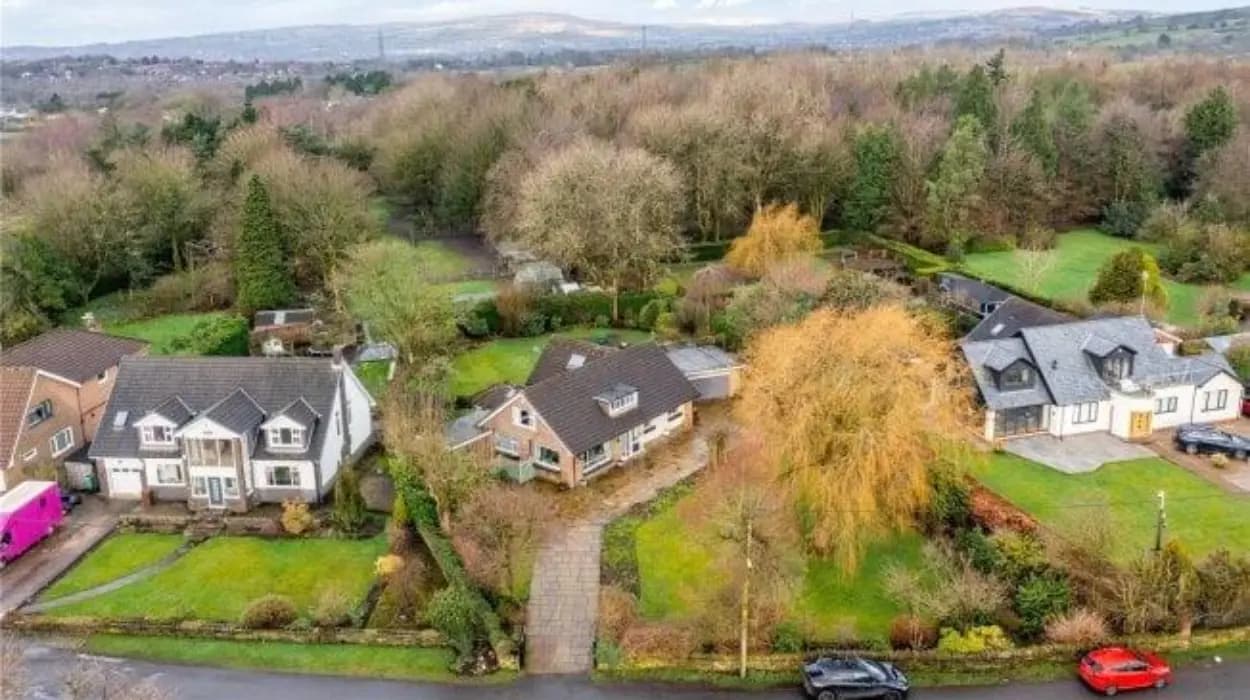
Astley Bridge is one of the most historically significant districts in Bolton, Greater Manchester. Today it forms an established suburban community on the northern edge of Bolton, but its origins lie in a rural landscape of farms, streams, woodland, and scattered dwellings. The transformation of Astley Bridge from countryside into an urban suburb reflects broader economic, industrial, demographic, and infrastructural changes that shaped Lancashire between the eighteenth and twentieth centuries.
Understanding how Astley Bridge evolved provides insight into the growth of Bolton itself, the development of the textile industry, and the expansion of residential communities during the Industrial Revolution. The area's surviving historic buildings, transport routes, and community institutions continue to illustrate this remarkable transition.
What was Astley Bridge before it became a suburb of Bolton?
Astley Bridge began as a rural settlement consisting of agricultural land, small farms, watercourses, and isolated dwellings. Before industrialisation transformed Bolton, the area functioned primarily as countryside within the historic township of Astley Bridge, supporting farming and local trade activities.
Prior to the eighteenth century, Astley Bridge formed part of a largely agricultural landscape north of Bolton. The area occupied elevated ground surrounding the valley of the River Astley and several smaller streams that flowed toward the River Croal.
The name "Astley" derives from Old English elements associated with eastern woodland clearings or settlements. Historical records indicate that the district contained dispersed farmsteads rather than a concentrated village centre. Agriculture dominated local economic activity, with residents cultivating crops and raising livestock suitable for Lancashire's climate and terrain.
The wider region remained connected through ancient routes linking Bolton to neighbouring settlements. These routes facilitated movement of agricultural goods and people but did not support large-scale urban development.
The landscape contained fields enclosed through traditional farming practices. Woodland areas provided timber, fuel, and construction materials. Water sources supplied farms and later became important for industrial activity.
In common with many Lancashire settlements, Astley Bridge remained relatively unchanged for centuries. Population levels stayed low, and settlement patterns reflected the demands of rural life rather than urban commerce.
Why did industrialisation change Astley Bridge?
Industrialisation transformed Astley Bridge because nearby textile manufacturing created demand for labour, housing, transport infrastructure, and commercial services. Economic growth in Bolton during the Industrial Revolution expanded development beyond the historic town centre and into surrounding rural districts.
The Industrial Revolution dramatically altered Lancashire after the late eighteenth century. Bolton emerged as one of Britain's major textile-producing towns, specialising in cotton spinning and weaving.
Steam-powered machinery increased production capacity. Textile mills required large workforces, encouraging migration into the region. As Bolton's population expanded, development pressures extended into surrounding rural areas including Astley Bridge.
Water initially played an important role in industrial growth. Streams and rivers provided power sources before widespread adoption of steam technology. Although Astley Bridge never developed the same concentration of mills as central Bolton, its proximity to industrial employment centres made it attractive for residential expansion.
The population of Bolton grew rapidly during the nineteenth century. Census data illustrates this transformation. Bolton's population increased from approximately 17,000 residents in 1801 to more than 180,000 by the beginning of the twentieth century. This extraordinary growth created demand for new housing districts.
Industrialisation also generated wealth. Business owners, managers, skilled workers, and merchants sought residences beyond the crowded industrial core. Astley Bridge increasingly became a desirable location because it offered cleaner air, elevated terrain, and access to employment opportunities.
The expansion of industry therefore acted as the primary mechanism that converted agricultural land into residential and commercial development.
How did transport improvements accelerate Astley Bridge's growth?
Transport improvements connected Astley Bridge more closely to Bolton and neighbouring communities. Better roads, tram services, and regional railway networks reduced travel times, encouraged residential development, and integrated the area into the expanding urban economy of Greater Lancashire.
Transport infrastructure played a critical role in suburban development across Britain during the nineteenth century.
Historically, movement relied upon local roads that were often difficult to navigate in poor weather conditions. During the industrial era, road improvements enhanced connectivity between Bolton and surrounding settlements.
The Bolton region benefited from turnpike roads that facilitated commercial transportation. Improved routes enabled workers, traders, and residents to travel more efficiently.
Railway expansion transformed Lancashire during the nineteenth century. Although Astley Bridge itself did not become a major railway hub, nearby connections linked Bolton with Manchester, Blackburn, Preston, Liverpool, and other industrial centres.
The emergence of tram services further increased accessibility. Electric trams enabled suburban residents to commute into Bolton while living outside the densely populated urban centre.
Transport developments encouraged speculative housing construction. Builders recognised that workers and middle-class residents could live farther from their workplaces while maintaining convenient access to employment and services.
This pattern mirrored suburban growth across industrial Britain, where transportation technology reshaped settlement geography.
How did housing development transform the rural landscape?
Housing construction replaced large areas of agricultural land with streets, terraces, semi-detached homes, and community facilities. The gradual conversion of farmland into residential neighbourhoods fundamentally altered Astley Bridge's physical appearance and social structure during the nineteenth and twentieth centuries.
Residential development represented the most visible aspect of Astley Bridge's transformation.
During the nineteenth century, builders constructed housing to accommodate Bolton's expanding population. New streets emerged where fields had previously dominated the landscape.
Working-class housing developed alongside accommodation for skilled workers and middle-class families. This created a socially diverse district connected to Bolton's industrial economy.
Victorian development introduced characteristic architectural forms that remain visible today. Examples include red-brick terraces, stone-built houses, and larger detached residences constructed along key routes.
Housing growth required supporting infrastructure. Schools, churches, shops, and public services followed residential expansion. These institutions helped establish Astley Bridge as a distinct community rather than merely an extension of Bolton.
The development process occurred gradually over several decades. Unlike planned modern suburbs, Astley Bridge evolved incrementally in response to economic conditions and demographic pressures.
Maps from different historical periods reveal the progressive disappearance of farmland and the emergence of urban streetscapes. This transformation demonstrates how industrial-era growth reshaped Lancashire's rural environments.
What role did local institutions play in creating a suburban community?
Local institutions provided education, religion, commerce, and social organisation. Churches, schools, civic facilities, and businesses helped establish community identity, transforming Astley Bridge from a collection of houses into a functioning suburban neighbourhood with shared social structures.
Successful suburban development required more than housing.
Religious institutions played a central role in nineteenth-century community formation. Churches served as places of worship, education, charity, and social interaction. They often became landmarks around which neighbourhoods developed.
Schools reflected increasing public investment in education. Following educational reforms of the nineteenth century, communities across Lancashire established facilities to serve growing populations.
Commercial activity expanded alongside residential development. Local shops supplied everyday necessities and reduced dependence on Bolton town centre. Retail districts emerged along principal roads serving residents and visitors.
Community organisations contributed to civic life. Examples include social clubs, charitable groups, educational societies, and recreational associations. These institutions strengthened local identity and encouraged participation in community affairs.
Public health improvements also influenced development. Better sanitation, water supply systems, and municipal services enhanced living conditions and supported sustained population growth.
Together, these institutions transformed Astley Bridge into a coherent suburban community with its own character and social networks.
How did Astley Bridge become connected to Bolton's textile economy?
Astley Bridge became linked to Bolton's textile economy through employment, residential expansion, commerce, and infrastructure. Residents worked in mills, factories, and associated industries, while local businesses supported the broader economic system that defined industrial Lancashire.
Bolton's textile industry exerted enormous influence on surrounding districts.
Cotton manufacturing dominated the local economy throughout much of the nineteenth century. Mills required workers with diverse skills, including machine operators, engineers, clerks, labourers, and managers.
Many Astley Bridge residents depended directly or indirectly on textile employment. Workers commuted to mills within Bolton and neighbouring industrial areas.
Supporting industries also generated employment opportunities. Examples included engineering firms, transport companies, construction businesses, and commercial enterprises supplying industrial operations.
The textile economy influenced housing patterns. Prosperity generated demand for improved accommodation, while economic downturns affected development rates and employment prospects.
Global trade networks connected local industry to international markets. Raw cotton arrived from overseas producers, while finished goods reached consumers around the world. Although Astley Bridge remained primarily residential, it participated in this broader economic system through its workforce and commercial activity.
The area's growth therefore reflected both local development and global industrial processes.
Which historic landmarks reveal Astley Bridge's evolution today?
Historic landmarks preserve evidence of Astley Bridge's transition from countryside to suburb. Surviving churches, schools, residential buildings, roads, and civic structures illustrate different phases of development and provide valuable insight into the area's historical transformation.
Several historic features continue to demonstrate Astley Bridge's evolution.
Victorian and Edwardian residential architecture remains among the most visible evidence. Streets lined with historic housing reveal patterns of suburban growth that occurred during industrial expansion.
Religious buildings provide important historical reference points. Many were constructed during periods of population growth and continue serving community functions today.
Educational institutions also reflect demographic change. Historic school buildings illustrate increasing demand for public services as the population expanded.
Road networks preserve traces of earlier movement corridors. Some modern routes follow pathways established long before suburban development occurred.
Open spaces and remnants of historic landscapes offer additional evidence of the area's rural origins. These locations help historians understand how agricultural land was gradually incorporated into the urban environment.
To experience this historic landscape in person today, consult our comprehensive The Best Outdoor Activities Around Astley Bridge Throughout the Year for itineraries and visiting parameters.
Preservation efforts ensure that significant structures remain visible reminders of the district's historical development.
How did twentieth-century changes shape modern Astley Bridge?
Twentieth-century developments diversified Astley Bridge beyond its industrial-era foundations. Economic restructuring, suburban expansion, improved public services, and changing housing patterns created the modern community while retaining important links to its historical origins.
The twentieth century introduced significant economic and social changes.
The decline of Britain's textile industry affected Bolton and surrounding districts. Manufacturing employment decreased, altering local economic structures.
Despite industrial contraction, Astley Bridge continued growing as a residential area. Improved transportation enabled residents to work in a wider range of occupations and locations.
Municipal planning influenced development throughout the century. Housing initiatives, infrastructure projects, and public services reshaped parts of the community while preserving established neighbourhoods.
Population characteristics evolved as employment opportunities diversified. Residents increasingly worked in service industries, education, healthcare, retail, and professional sectors.
Architectural styles expanded beyond Victorian and Edwardian forms. New housing developments reflected changing design preferences and planning approaches.
Modern Astley Bridge therefore emerged through adaptation rather than replacement. Historical foundations remained visible even as economic and social conditions changed.
Why is Astley Bridge's transformation historically significant?
Astley Bridge's transformation demonstrates how industrialisation reshaped rural Britain. The area's evolution from agricultural settlement to suburban community illustrates wider patterns of economic growth, population movement, urban expansion, and social change that influenced Lancashire and the United Kingdom.
Historians regard suburban development as a key aspect of Britain's modernisation.
Astley Bridge provides a local example of processes that occurred throughout industrial regions. Agricultural landscapes became residential districts as economic activity concentrated in growing urban centres.
The area's history highlights relationships between industry, transport, housing, and community institutions. These interconnected factors drove long-term transformation across Lancashire.
For genealogical researchers, Astley Bridge offers valuable evidence regarding migration, employment, and family settlement patterns. Census records, parish registers, and municipal archives document changing population characteristics over time.
For educators, the district illustrates major historical themes including industrialisation, urbanisation, technological change, and social development.
For heritage preservationists, surviving landmarks provide tangible connections to earlier generations and contribute to community identity.
The continuing presence of historic buildings, road networks, and institutional structures ensures that Astley Bridge's evolution remains visible within the modern landscape.
What does Astley Bridge's history reveal about the future of local heritage?
Astley Bridge's history demonstrates the importance of preserving historic environments while accommodating contemporary needs. Conservation efforts, community engagement, and historical research ensure that evidence of the area's rural and industrial past remains accessible for future generations.
Heritage preservation plays an increasingly important role in understanding local history.
Historic buildings provide physical evidence that complements documentary records. Their conservation supports educational initiatives, tourism activity, and community identity.
Local archives preserve maps, photographs, census materials, and municipal records that document the district's development. These resources enable researchers to reconstruct historical change with increasing accuracy.
Community organisations continue promoting awareness of local heritage through exhibitions, publications, and educational projects.
The history of Astley Bridge demonstrates that suburban communities possess complex historical narratives extending far beyond modern urban boundaries. Its journey from farmland to suburb reflects centuries of economic adaptation, population growth, and social development.
Today, Astley Bridge remains a living example of how rural landscapes evolved during Britain's industrial age. The roads, buildings, institutions, and neighbourhoods that define the area continue to preserve evidence of one of Lancashire's most significant historical transformations. Through ongoing preservation and research, that story remains accessible to residents, visitors, historians, and future generations alike.
FAQS
How did Astley Bridge get its name?
The name Astley is believed to derive from Old English words associated with an eastern woodland clearing or settlement, reflecting the area's early rural landscape.