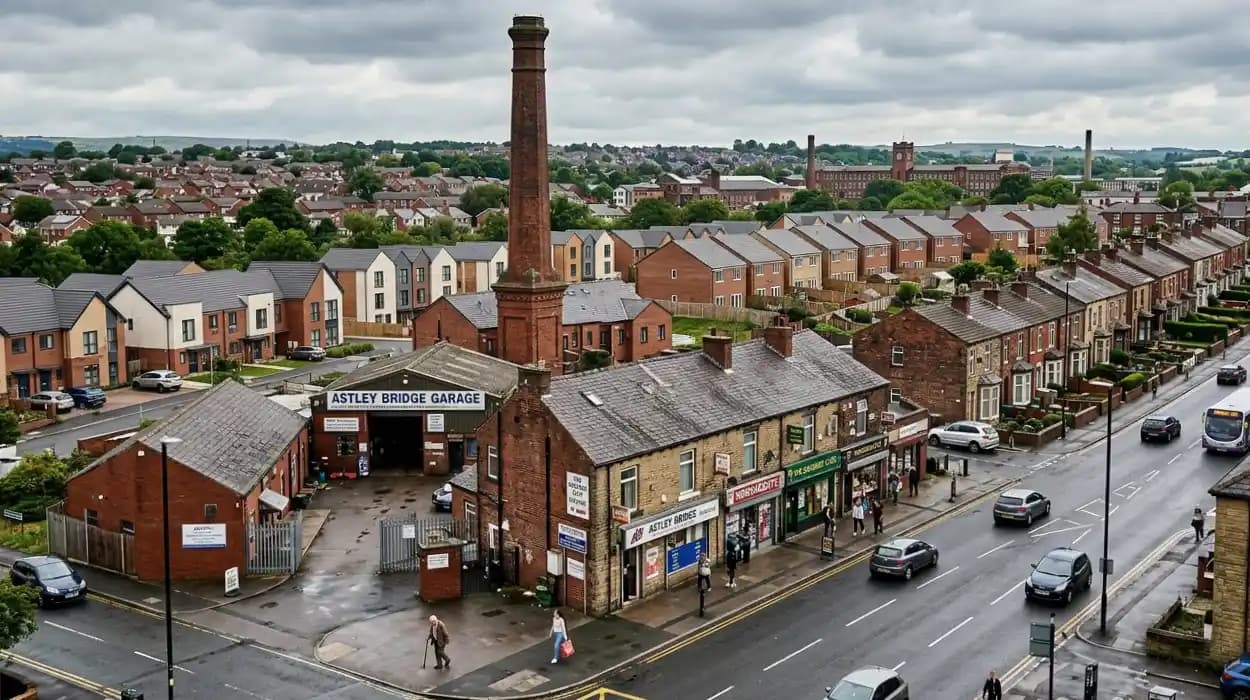
Astley Bridge is one of the most historically significant districts in Bolton, Greater Manchester. Located north of Bolton town centre, the area developed from a rural landscape into an important industrial and residential community during the nineteenth and twentieth centuries. Its history reflects broader changes in British society, including industrialisation, urban expansion, housing reform, public health improvement, and community development.
Today, Astley Bridge remains a distinctive part of Bolton's urban landscape. Historic mills, Victorian housing, religious institutions, schools, and public spaces continue to demonstrate how economic and social forces shaped the district over more than two centuries. Understanding the story of Astley Bridge provides insight into the wider development of Bolton and Lancashire during the Industrial Revolution and beyond.
What was Astley Bridge before industrialisation?
Before industrialisation, Astley Bridge consisted primarily of rural farmland, scattered cottages, small agricultural holdings, and transport routes connecting Bolton with surrounding settlements. Its landscape was shaped by agriculture, local watercourses, and the traditional township structure that characterised Lancashire before rapid urban growth.
Prior to the late eighteenth century, Astley Bridge formed part of the historic township of Bolton-le-Moors. The area contained agricultural land used for grazing livestock and cultivating crops that supplied local markets.
The district derived its name from a bridge crossing Astley Brook, a tributary that later became important for industrial development. Watercourses throughout Lancashire frequently influenced settlement patterns because they provided power sources for early industry and practical crossing points for transport networks.
During this period, Bolton itself remained a market town rather than a major industrial centre. Local residents worked primarily in agriculture and domestic textile production. Many households participated in the cottage industry system, producing textiles within homes before factory-based manufacturing transformed the economy.
Road improvements during the eighteenth century gradually strengthened connections between Bolton and neighbouring communities. These transport links later encouraged industrial investors to establish mills and factories in areas such as Astley Bridge.
How did the Industrial Revolution transform Astley Bridge?
The Industrial Revolution fundamentally changed Astley Bridge through textile manufacturing, mill construction, population growth, transport improvements, and urban expansion. Between the late eighteenth century and early twentieth century, the district evolved from agricultural land into a densely populated industrial community.
Bolton became one of Britain's leading cotton-spinning centres during the Industrial Revolution. Entrepreneurs invested heavily in mechanised textile production, particularly after advances in steam power and spinning technology increased manufacturing efficiency.
Astley Bridge benefited directly from this transformation. Land that had previously supported agricultural activity became attractive for industrial development. Textile mills emerged across the area as investors sought locations close to labour supplies and transport routes.
By the mid-nineteenth century, Lancashire had become the world's largest cotton manufacturing region. Bolton contributed significantly to this industrial dominance. Census data demonstrates substantial population growth across the borough as workers migrated from rural districts seeking employment opportunities.
Industrialisation altered the physical environment. Factory chimneys became prominent features of the skyline. Housing developments expanded around workplaces. New roads and supporting infrastructure connected industrial sites with markets and railway networks.
The district's development mirrored broader national trends. Across Britain, industrial centres experienced rapid urbanisation, changing patterns of employment, family life, and community organisation.
Why did textile mills become important in Astley Bridge?
Textile mills became important because they provided employment, stimulated economic growth, attracted population increases, and integrated Astley Bridge into the global cotton industry. Their influence extended beyond manufacturing and shaped housing, education, transport, and local governance.
Cotton manufacturing dominated Bolton's economy throughout much of the nineteenth century. Mills employed large numbers of workers, including men, women, and young people. Factory employment created stable wage-based labour systems that differed substantially from earlier domestic production methods.
Industrial prosperity encouraged investment in supporting facilities. Businesses, shops, schools, churches, and civic institutions emerged to serve growing communities.
The success of Lancashire's textile sector depended upon international trade networks. Raw cotton arrived through British ports before being processed in manufacturing centres such as Bolton. Finished products were exported worldwide, connecting districts like Astley Bridge to global economic systems.
Industrial employment also contributed to social mobility for some families. Skilled occupations in engineering, management, and manufacturing offered opportunities that had not existed within the earlier agricultural economy.
However, industrial growth also generated challenges. Factory pollution, overcrowded housing, and public health concerns became significant issues throughout nineteenth-century urban Britain.
How did housing develop in Astley Bridge during the nineteenth century?
Housing expanded rapidly in response to industrial employment and population growth. Terraced streets, workers' housing, and later suburban developments transformed Astley Bridge into a residential district capable of supporting thousands of industrial workers and their families.
The rapid expansion of Bolton's textile economy created substantial demand for housing. Developers constructed large numbers of terraced houses near workplaces, allowing workers to live within walking distance of mills and factories.
Victorian terraced housing became a defining feature of many Lancashire communities. These developments reflected practical responses to increasing urban populations and limited land availability.
Housing construction often occurred in phases. Early developments prioritised proximity to employment centres. Later projects incorporated improved sanitation, wider streets, and enhanced public amenities.
Public health reforms introduced during the nineteenth century gradually improved living conditions. Legislation encouraged better drainage systems, cleaner water supplies, and more effective waste management.
The evolution of housing in Astley Bridge reflects broader changes in urban planning. Residential environments increasingly became subjects of municipal regulation and social reform efforts.
Many surviving Victorian properties continue to contribute to the district's architectural character today.
What social changes accompanied industrial growth in Astley Bridge?
Industrial growth transformed social structures by creating new working-class communities, expanding educational opportunities, encouraging civic participation, and increasing demands for public services. Economic development reshaped daily life, family structures, and community identities throughout the district.
Industrialisation created concentrated urban populations with shared experiences of factory employment. New neighbourhoods developed around common workplaces, contributing to strong local identities.
Religious institutions played important roles in community life. Churches provided spiritual guidance while also supporting education, charity, and social activities.
Educational provision expanded significantly during the nineteenth century. National reforms increased access to schooling, helping improve literacy rates and workforce skills.
Trade unions emerged as important institutions within industrial communities. Workers organised collectively to advocate for improved wages, safer conditions, and political representation.
Social reform movements addressed challenges associated with rapid urbanisation. Campaigns focused on housing quality, sanitation, health services, and labour protections.
These developments reflected broader transformations occurring throughout industrial Britain. Astley Bridge became part of a national process of social modernisation that influenced subsequent generations.
How did transport influence the development of Astley Bridge?
Transport improvements accelerated economic growth, supported industrial expansion, and connected Astley Bridge with regional and national markets. Roads, railways, and later public transport systems enhanced mobility for workers, businesses, and residents.
Efficient transportation was essential for industrial success. Raw materials needed reliable delivery systems, while finished goods required access to domestic and international markets.
Road improvements during the eighteenth and nineteenth centuries strengthened connections between Bolton and neighbouring settlements. Turnpike routes facilitated commercial activity and regional integration.
The arrival of railway infrastructure transformed economic geography across Lancashire. Rail transport reduced costs, increased speed, and expanded market access for manufacturers.
Workers also benefited from improved mobility. Transport networks enabled commuting and supported residential expansion beyond immediate factory districts.
During the twentieth century, buses and motor vehicles further altered movement patterns. Improved accessibility encouraged suburban development and strengthened connections with the wider Greater Manchester region.
Transport infrastructure remains an important factor in Astley Bridge's continued development and integration within Bolton's urban framework.
How did public institutions shape community life in Astley Bridge?
Public institutions helped establish social stability by providing education, healthcare, religious services, recreation, and civic administration. Their development reflected increasing recognition that urban communities required organised support systems beyond industrial employment alone.
As populations increased, demand grew for institutions capable of supporting community needs. Schools became central to educational advancement and social mobility.
Religious organisations remained influential throughout the nineteenth and twentieth centuries. Churches, chapels, and associated charities offered practical assistance alongside spiritual services.
Healthcare provision evolved significantly. Public health initiatives addressed infectious diseases, sanitation challenges, and overcrowded living conditions.
Municipal authorities increasingly assumed responsibility for urban management. Local government oversaw infrastructure projects, public services, and regulatory frameworks designed to improve quality of life.
Recreational facilities also became important. Parks and community spaces provided opportunities for leisure, exercise, and social interaction.
These institutions contributed to the formation of stable communities capable of adapting to economic and demographic change.
What happened to Astley Bridge during the twentieth century?
The twentieth century brought industrial decline, housing modernisation, welfare-state expansion, and economic diversification. Astley Bridge adapted to changing national circumstances while retaining many physical and cultural connections to its industrial heritage.
The early twentieth century witnessed significant disruption caused by global conflicts. The First World War and Second World War affected local industries, employment patterns, and community life.
Britain's cotton industry experienced long-term decline during the twentieth century due to international competition, technological changes, and shifts in global trade.
Many mills closed or were repurposed. Industrial landscapes gradually changed as manufacturing activity decreased across Lancashire.
Housing improvements became major policy priorities. Local authorities supported redevelopment projects aimed at replacing outdated accommodation and improving living standards.
The expansion of the welfare state after 1945 transformed access to healthcare, education, and social services. These developments influenced everyday life throughout communities such as Astley Bridge.
Economic activity diversified beyond textiles. Retail, services, education, and healthcare sectors assumed greater importance within Bolton's economy.
Despite these changes, many historical features survived, preserving connections with earlier periods of development.
Which historic landmarks and surviving features reveal Astley Bridge's past?
Historic buildings, former industrial sites, religious institutions, housing developments, and transport routes provide tangible evidence of Astley Bridge's evolution. These surviving features help historians, educators, and visitors understand the district's industrial and social heritage.
The built environment remains one of the most important historical resources within Astley Bridge. Victorian housing streets continue to illustrate nineteenth-century urban expansion.
Former mill sites demonstrate the scale of industrial investment that once characterised the area. Even where original structures no longer survive, their locations reveal historical patterns of development.
Religious buildings preserve evidence of community organisation and demographic growth. Many churches established during the industrial era remain important landmarks.
Historic transport corridors illustrate how movement and commerce influenced urban development. Road alignments often reflect routes established generations earlier.
Public buildings, schools, and civic structures provide additional insight into changing social priorities throughout the nineteenth and twentieth centuries.
To experience this historic landscape in person today, consult our comprehensive A Local’s Guide to Astley Bridge: Parks, Cafes, and Community Spaces for itineraries and visiting parameters.
The preservation of these assets contributes to local identity while supporting educational and cultural engagement.
Why does Astley Bridge remain historically significant today?
Astley Bridge remains historically significant because it demonstrates how industrialisation, housing development, social reform, and economic change shaped modern Britain. The district offers valuable evidence of local experiences within broader national and international historical processes.
Historians study places such as Astley Bridge because local communities provide detailed perspectives on large-scale historical transformations. Industrialisation, urbanisation, and social reform become more understandable when examined through specific locations.
The district reflects several major themes in British history. These include the growth of textile manufacturing, the expansion of urban housing, the evolution of public health systems, and the transition from industrial to post-industrial economies.
Educational institutions use local history to help students understand wider historical developments. Heritage organisations support preservation efforts that protect important cultural resources for future generations.
Genealogical researchers frequently investigate communities such as Astley Bridge because industrial districts attracted migrants from surrounding regions. Census records, parish registers, employment records, and municipal archives provide valuable information about family histories.
The continued preservation of historic buildings and community memory ensures that Astley Bridge remains an important part of Bolton's cultural heritage.
How does the history of Astley Bridge help explain the development of modern Bolton?
The history of Astley Bridge explains modern Bolton by illustrating how industrial growth, housing expansion, public services, and social change created the foundations of the contemporary borough. The district serves as a microcosm of Bolton's wider historical development.
Modern Bolton emerged through centuries of economic and social transformation. Astley Bridge demonstrates how individual districts contributed to this broader process.
Industrial investment generated employment and population growth. Housing developments accommodated expanding communities. Public institutions improved living conditions and strengthened civic life.
The decline of traditional manufacturing required adaptation and diversification. Communities responded by embracing new economic activities while preserving important elements of their historical identity.
Today, Astley Bridge combines historic character with modern residential, commercial, and community functions. Its streets, buildings, and public spaces reveal layers of development spanning more than two centuries.
The district's story remains relevant because it highlights enduring relationships between industry, housing, infrastructure, governance, and community life. These factors continue to shape urban development throughout Britain.
As a result, Astley Bridge occupies an important place within Bolton's historical narrative and provides a valuable case study for understanding the social and economic forces that transformed industrial Britain.
FAQS
How did Astley Bridge get its name?
Astley Bridge takes its name from a historic bridge crossing Astley Brook, a local watercourse that influenced early settlement patterns and later industrial development in the area.