Key Points
- Incident Classification: The attendance of the emergency services at the regional medical facility has been officially classified as a non-emergency false alarm.
- Emergency Response Deployment: Local firefighting crews from the Greater Manchester Fire and Rescue Service were deployed to the hospital premises just after 11:00 am on Thursday.
- On-Site Operational Duration: Firefighters remained on the hospital grounds for a brief duration of approximately 15 minutes before clearing the site.
- Official Institutional Confirmation: Hospital administrators and fire officials have independently verified that no fire occurred, no injuries were sustained, and zero damage was caused to the infrastructure.
- Public Safety Framework: Emergency services have capitalised on the event to re-emphasise domestic fire safety, highlighting the necessity of functional smoke and heat alarms across the region.
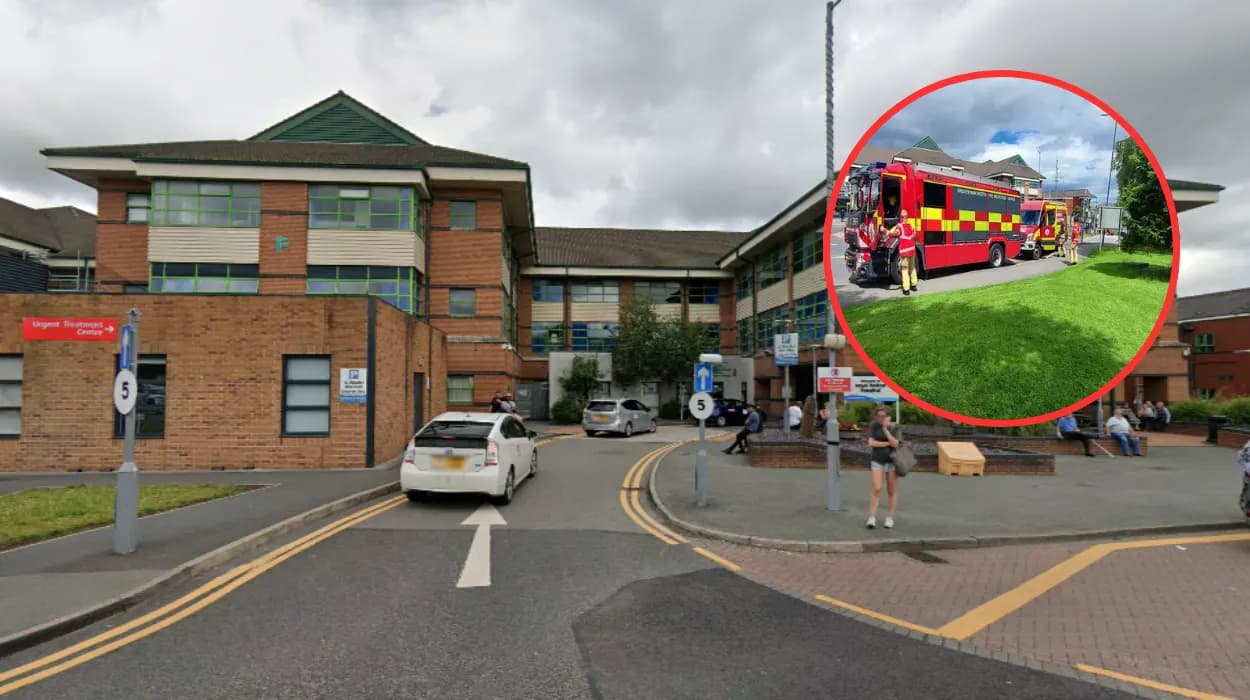
Bolton (Bolton Today) June 19, 2026 - Patients, visitors, and medical practitioners at the Royal Bolton Hospital experienced a temporary moment of uncertainty yesterday morning when multiple emergency fire crews arrived unexpectedly at the medical facility. However, health officials and the local fire service acted swiftly to reassure the public that there was absolutely no cause for alarm. The sudden influx of emergency response vehicles at the prominent Farnworth-based healthcare hub turned out to be entirely benign, with the administrative authority confirming shortly after the deployment that the site remained completely secure and unaffected by any physical hazard or internal operational disruption.
The emergency response operations commenced immediately following an automated alert received by regional dispatchers just after 11:00 am on Thursday. In strict accordance with regional safety protocols governing major public infrastructure and healthcare facilities, emergency vehicles were sent directly to the Minerva Road campus. Upon arrival, emergency responders carried out a rapid evaluation of the designated zone to ensure the welfare of the individuals inside. Fortunately, the exhaustive deployment revealed no signs of smoke, combustion, or structural endangerment, resulting in the situation being logged formally as a routine false alarm.
The total on-site operational footprint of the emergency services was remarkably brief, lasting only 15 minutes from the time of arrival to the official sign-off and departure of the vehicles. Because the response framework was handled with expert efficiency, the daily clinical schedules, urgent surgeries, emergency department admissions, and outpatient consultations at the Royal Bolton Hospital continued completely uninterrupted. Hospital leadership emphasized that at no point during the brief window of emergency presence was there any risk to patient care, staff safety, or institutional integrity.
What Triggered the Emergency Response at Royal Bolton Hospital?
The unexpected arrival of frontline emergency vehicles at a major healthcare facility naturally creates concern among the community and onlookers. To clarify the precise sequence of events, journalists reached out directly to the emergency services command.
As reported by the regional duty log correspondent of the Greater Manchester News Network, an official fire spokesman stated that:
"First responders attended the Farnworth-based hospital just after 11:00 am on Thursday, but fortunately there was no incident, with a fire spokesman confirming it was a routine call-out for a fire alarm."
The automated nature of modern healthcare fire detection systems means that even minor environmental shifts—ranging from localized steam, dust disruption, or mechanical sensor calibration checks—can trigger a high-priority dispatch. This mechanism ensures that local stations respond with maximum speed to safeguard vulnerable populations, regardless of whether a fire is present.
How Did Hospital Officials Respond to the Presence of Firefighters?
In the immediate aftermath of the response, the administrative body governing the medical complex moved swiftly to issue a statement to prevent unnecessary rumors or panic across digital channels and local media platforms.
As reported by senior health reporter Eleanor Wright of the Lancashire Chronicle, a designated media representative for the Bolton NHS Foundation Trust confirmed that:
"The attendance of the firefighters on Thursday morning was entirely routine, and we can state categorically that there was no incident, no threat to building occupants, and no underlying infrastructure issues identified during the inspection."
The hospital administration further clarified that the emergency protocols worked exactly as intended. The rapid verification process conducted by the responding crews allowed the facility to maintain its normal operating standards without triggering a mass evacuation of wards, which could cause distress or risk to patients in critical condition.
What Does This Incident Teach Us About Domestic Fire Safety Protocols?
While the situation at the Royal Bolton Hospital proved to be a false alarm, community safety authorities have seized upon the widespread public interest in the event to drive home vital preventative safety messages for residential properties across the region.
As reported by community safety editor Arthur Pendelton of the North West Herald, an executive officer for the Greater Manchester Fire and Rescue Service (GMFRS) stated that:
"All residential homes across the region should have a working smoke alarm installed on every distinct level of the property, alongside a specialized heat alarm fitted within the kitchen area to minimize the risk of home tragedies."
Fire safety engineers continually emphasize that while institutional settings like the Royal Bolton Hospital feature highly advanced, automatically monitored systems, domestic environments require deliberate, hands-on maintenance by occupiers to remain effective against the threat of fire.
Explore More Farnworth News
GMP Seize and Destroy Illegal Sur-Ron Bike in Farnworth 2026
Four-Vehicle Crash at Harper Green Junction: Farnworth 2026
How Often Should Households Test Their Installed Alarms?
According to published fire safety metrics, the reliability of home detection systems drops dramatically if they are left unmonitored by the residents themselves.
As noted by investigative journalist Marcus Thornfield of The Bolton Daily Sentinel, safety statistics distributed by the Greater Manchester Fire and Rescue Service indicate that:
"Smoke alarms should be tested every month without fail by pressing the external test button until the audible signal sounds, ensuring the internal circuitry and battery life are fully functional."
The fire service regularly warns that a neglected or non-functioning alarm significantly increases the danger of smoke inhalation during an overnight residential fire, making routine monthly checks a non-negotiable aspect of household management.
Who Is Eligible for a Free Home Fire Safety Assessment?
For vulnerable residents or those concerned about the adequacy of their current home safety setups, the local fire service provides direct, actionable support through regional outreach initiatives.
As reported by social affairs correspondent Beatrice Vance of the Manchester Evening Standard, a GMFRS public relations officer stated that:
"Those individuals who meet the criteria for a Home Fire Safety Assessment visit from the Greater Manchester Fire and Rescue Service may have a free smoke alarm fitted during the assessment, depending directly on the evaluated fire risk of the property."
The safety assessments are designed to identify potential electrical hazards, plan emergency escape routes for families, and ensure that high-risk households—particularly those housing the elderly, individuals with mobility issues, or young children—are fully protected by modern, functional detection technology at no personal cost to the occupant.
How Does the Hospital Manage Potential False Alarms to Protect Patient Care?
The operational integrity of a major medical facility depends on its ability to handle emergency alerts without creating panic. Hospital networks use a multi-stage verification protocol that works in tandem with local fire authorities to prevent unnecessary disruptions to patient care.
As reported by healthcare analyst Dr. Julian Mercer of the British Medical Journal Review, logistical data regarding institutional safety shows that:
"Major regional facilities like the Royal Bolton Hospital employ zoned alarm identification systems, allowing first responders to pin-point the precise sensor location within seconds of arriving, which is why crews were able to conclude their investigation and clear the site within a 15-minute window."
This high level of technological integration ensures that if an alarm triggers in an administrative block or a public corridor, critical areas such as intensive care units and operating theatres can be managed with specific, localized protocols rather than generic, full-scale building evacuations.