Key Points
- Exponential Revenue Growth: Financial receipts generated through municipal bus lane penalty notices in Bolton have escalated dramatically within a three-year period following the implementation of specialized surveillance technologies.
- Massive Year-on-Year Escalation: According to internal local government documents, penalty distributions rose from 837 in the initial trial year of 2023 to 4,149 verified infractions throughout 2024.
- Significant Financial Impact: Total revenue collections climbed from £32,654.64 during the opening phase to £163,249.30 by the close of the subsequent reporting year, representing an expansion of nearly 400 per cent.
- Systemic Route Expansion: The local authority extended its camera-monitored restrictions from the single baseline location of St Helens Road to multiple central corridors, including St Georges Road, Deane Road, and Deansgate.
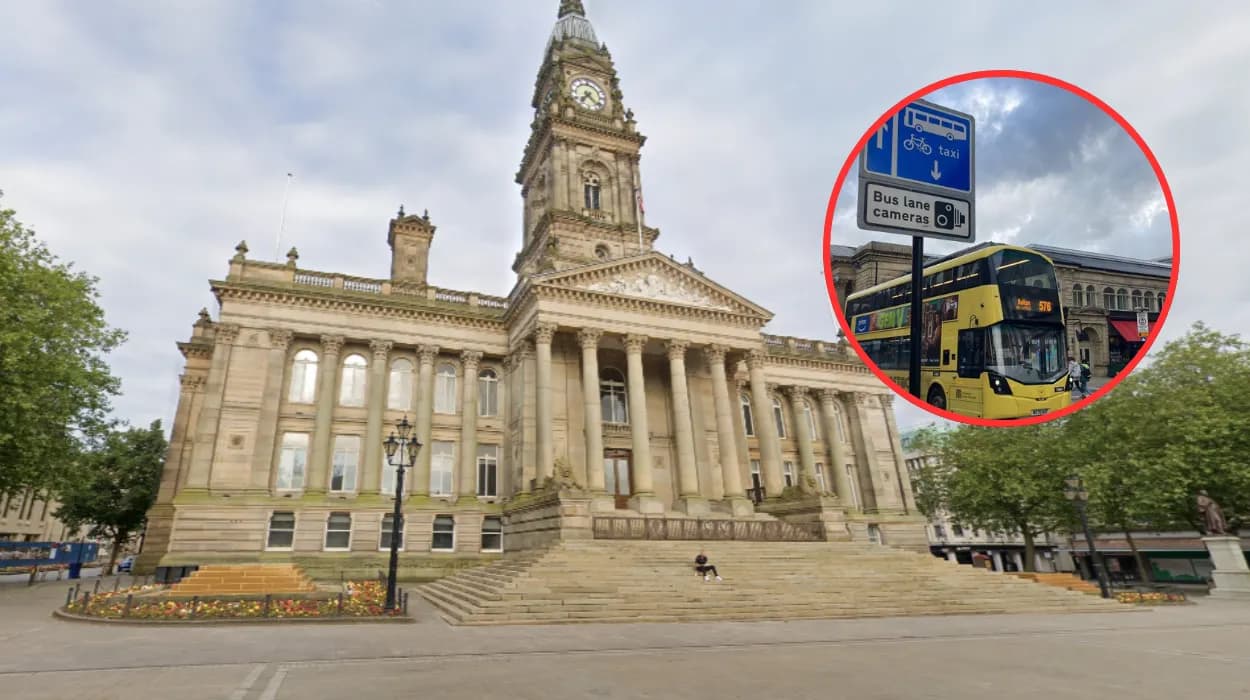
- Advanced Technology Deployment: Enforcement relies on Automatic Number Plate Recognition (ANPR) systems introduced progressively to capture high-definition vehicular profiles navigating restricted lanes.
- Strict Penalty Framework: Motorists face statutory baseline fines of £70 per incident, though a localized mitigation mechanism reduces the fiscal liability to £35 if cleared within 21 days.
- Reinvestment Commitments: Public officials assert that all surplus funding accrued through civil driving penalties is structurally ring-fenced for redistribution into borough transport networks and safety initiatives.
- Safety and Advocacy Consensus: Transport safety bodies have backed the regulations as standard Highway Code requirements, arguing that strict enforcement is essential to alleviate urban congestion and protect emergency responses.
Bolton (Bolton Today) July 6, 2026 - Financial receipts generated by Bolton Council from issuing civil penalties to motorists driving within restricted bus lanes have soared over a three-year monitoring window, local data reveals. Figures obtained via a Freedom of Information inquiry submitted by The Bolton News show that local authority collections surged by nearly 400 per cent after camera enforcement moved from an isolated trial scheme to a comprehensive town-centre network. Total penalty issuance ballooned from fewer than 900 individual infractions when automated tracking commenced in late 2023 to more than 4,100 unique violations across the subsequent calendar year. This aggressive operational scaling has generated hundreds of thousands of pounds in local authority revenue, prompting a sharp local debate over urban traffic priorities, driver awareness, and the structural reinvestment of motorist-derived funds.
Why Have Bus Lane Fines Increased So Significantly in Bolton?
The primary driver behind the rapid inflation of fine collections across the metropolitan borough is the transition from manual, discretionary policing to automated, continuous surveillance. As reported by journalist Eoin McCaul of The Bolton News, the local authority initiated its technological enforcement regime on a phased, regional basis commencing on October 9, 2023. The scheme originally utilized fixed Automatic Number Plate Recognition (ANPR) camera systems focused on a single key transport corridor: St Helens Road.
During that initial 2023 rollout window, the council recorded 837 separate instances of motorists unlawfully entering the restricted public transport lane. This generated a baseline annual revenue stream of £32,654.64. However, as the local authority completed its planned expansion throughout the following year, the volume of automated penalties grew exponentially.
By scaling up infrastructure across 2024, the council added heavy-traffic central thoroughfares to its active ANPR monitoring matrix. These newly monitored sectors included:
- St Georges Road
- Deane Road
- Deansgate
Consequently, the number of individuals caught by the automated camera systems increased significantly. Across the twelve months of 2024, the total pool of penalized motorists expanded to 4,149 individuals. This multi-lane approach pushed the council's gross revenue from bus lane infractions to £163,249.30 for that calendar year alone, marking an unprecedented leap in municipal collections.
What Financial Consequences Do Drivers Face in the Restricted Zones?
The financial framework governing bus lane non-compliance within the borough of Bolton is tied directly to national guidelines for civil parking and traffic enforcement outside Greater London. Motorists captured by the council's network of ANPR cameras are issued an automated Penalty Charge Notice (PCN) sent directly to the registered keeper of the vehicle.
Under the current statutory tariff, the baseline fine for entering an active bus lane is set at £70 per infraction. To incentivize swift administrative resolution and minimize protracted appeals, the council operates a standard discount window. If a motorist settles the penalty charge within 21 days of the official date of notice issuance, the financial liability is reduced by 50 per cent, bringing the total cost down to £35.
Conversely, if the penalty remains unpaid after the initial 28-day statutory period, the council reserves the right to issue a Charge Certificate, which increases the original penalty fee by 50 per cent to £105. Prolonged non-payment can ultimately lead to registration of the debt at the Traffic Enforcement Centre, escalating the matter to civil enforcement baliffs.
Explore More Bolton Council News
John Scoble Wins Horwich North Council Seat: Horwich 2026
Bolton Box Junction Enforcement: Drivers Warned of Fines | Bolton 2026
How Does the Local Authority Justify the Surge in Penalties?
Town hall officials have consistently defended the rapid expansion of the ANPR enforcement network, framing the policy as an essential strategy for public transit efficiency rather than a corporate revenue-raising exercise. Addressing the sudden shift in enforcement outcomes, Councillor Hamid Khurram, the Executive Cabinet Member for Highways at Bolton Council, stated that the substantial rise in documented fines was a necessary prerequisite to ensure the town's transport lanes function as designed.
As documented by Eoin McCaul of The Bolton News, Councillor Hamid Khurram explained:
"Bus lanes are designed to improve public transport efficiency and encourage more residents to use buses, reducing congestion and promoting a greener, more sustainable approach to travel in our borough."
The executive member further emphasized that the increased revenue collection does not disappear into a general-purpose local authority reserve fund. Instead, the council is legally required to tie these funds to specific transport projects. Councillor Khurram added:
"We are committed to ensuring that our roads work for everyone, and I encourage all motorists to be mindful of bus lane regulations. These measures are in place to protect bus users and ensure that we can provide an efficient public transport system that benefits all residents in Bolton."
A separate official statement issued by a spokesperson for Bolton Council echoed this regulatory perspective, clarifying the legal baseline of the program. The spokesperson noted:
"Bus lanes are utilised to prioritise our network for public transport and those fined have illegally used the bus lane."
What Do Advanced Motoring Experts Say About the Enforcement Strategy?
Public reaction to the sharp increase in civil traffic penalties has drawn mixed feedback from transport groups and local stakeholders. Representatives from professional driving networks have broadly supported the council's legal position, noting that clear signage removes any valid defense for non-compliance.
As reported by The Bolton News, Barry Sloan, an expert representative from the regional division of Bolton Advanced Motorists, observed that the implementation of automated bus lane enforcement is part of a wider, long-term national shift in traffic management. Commenting on the local data, Barry Sloan stated:
"The bottom line is, if they're clearly marked, you will get fined if you decide to do that. It doesn't just happen in Bolton – it happens nationally. If it's a breach of the highway code, it's a breach of the highway code, it's not particularly contentious."
Sloan further argued that public transit priorities are crucial for mitigating wider structural issues facing transport networks across Greater London and the North West. He added:
"You only need to look at the congestion in Manchester. With buses that are supposed to run every ten minutes, you can get a lot of people in and out of Manchester."
How Should Appeals and Special Circumstances Be Handled?
A common concern raised by motorists is whether the automated ANPR systems can distinguish between flagrant traffic violations and necessary, emergency lane maneuvers. Drivers often worry about receiving an unfair PCN if they enter a bus lane to clear a path for an approaching emergency vehicle.
Addressing this specific operational friction point, Barry Sloan of Bolton Advanced Motorists urged affected individuals to rely on the established statutory appeals process. He noted that while historical edge-cases exist, administrative common sense generally guides the review process:
"In the past, there have been cases where someone has been at traffic lights when an emergency vehicle has come and this has caused them to go through the red light, and they've been sent a fine. But if you appeal it, usually common sense will decide."
Where Does the Money Go?
The allocation of surpluses generated through civil traffic enforcement is strictly governed by Section 55 of the Road Traffic Regulation Act 1984. Local authorities are legally prohibited from utilizing bus lane fine surpluses to balance general municipal budgets or fund unrelated public services.
Structural Self-Funding and Administrative Staffing
Prior to the full rollout of the ANPR network, Bolton Council laid out a clear administrative plan funded directly by the projected fine revenues. Historical reporting from The Bolton News indicates that town hall chiefs anticipated a substantial increase in customer inquiries, formal appeals, and representations following the launch of automated enforcement.
To manage this operational workload without placing an additional burden on local taxpayers, the council allocated more than £40,000 from projected fine surpluses to create dedicated internal administrative roles. This funding specifically backed the recruitment of a Customer Services Officer at an initial cost of £27,000, alongside an Apprentice Customer Services Officer position budgeted at £21,000.
A council administrative report detailing the structural logic of the plan stated:
"The increase in traffic penalties already being experienced and the anticipated surplus from Bus Lane Enforcement will provide the funding for the two proposed posts within the business plan for Parking Services."
The internal report further explained the long-term strategic benefits of using fine revenues to cover these back-office costs:
"Non-compliance with traffic regulations and the issuing of penalty charges has increased across the board by around 21 per cent in the years 2015 to 2019. With a greater emphasis on managing congestion across the GM network, civil enforcement is a key tool to achieve this... Any surplus from enforcement can only be used to pay for the parking service and limited highway duties – and this is what will pay for the two new posts."
Reinvestment in Public Infrastructure
Once basic administrative and operational costs are fully covered, any remaining surplus generated by the ANPR cameras must be directed toward transport infrastructure. As outlined in regional data compiled by the Manchester Evening News, Greater Manchester councils use a specialized Bus Lane Enforcement Reserve to hold these specific surpluses.
The funds are earmarked for projects aimed at improving local travel options, such as:
- Strategic road safety improvements and traffic calming measures
- Financial support for vulnerable, subsidised bus routes
- Highway repair, pothole maintenance, and corridor optimizations
- Technological integration with Transport for Greater Manchester's (TfGM) wider Bee Network infrastructure
How Does Bolton Compare to the Wider Greater Manchester Region?
While Bolton's sudden increase from zero automated bus lane fines in early 2023 to over £163,000 in 2024 marks a massive shift for local drivers, the borough's overall collections remain modest when compared to neighboring metropolitan areas.
As reported by journalists Claire Miller and Adam Maidment of the Manchester Evening News, regional councils have generated substantial revenues from automated bus lane enforcement over a much longer period. For context, Manchester City Council brought in a gross revenue of £14.1 million within a single financial year during their historical operational ramp-up. Similarly, nearby Stockport Council recorded 62,110 individual bus lane infractions over a twelve-month period, generating over £1.42 million in motorist penalties.
For several years, specific boroughs within Greater Manchester—including Wigan, Trafford, and Rochdale—reported zero annual income from bus lane PCNs simply because they had not yet adopted automated ANPR enforcement programs. Bolton belonged to this non-enforcing group until its pivotal policy shift in late 2023.
The introduction of these cameras aligns Bolton with broader regional goals, supporting the rollout of the unified "Bee Network" public transport system across Greater Manchester. With enforcement now active across multiple major corridors, local drivers must adjust to a permanent shift toward automated road monitoring.