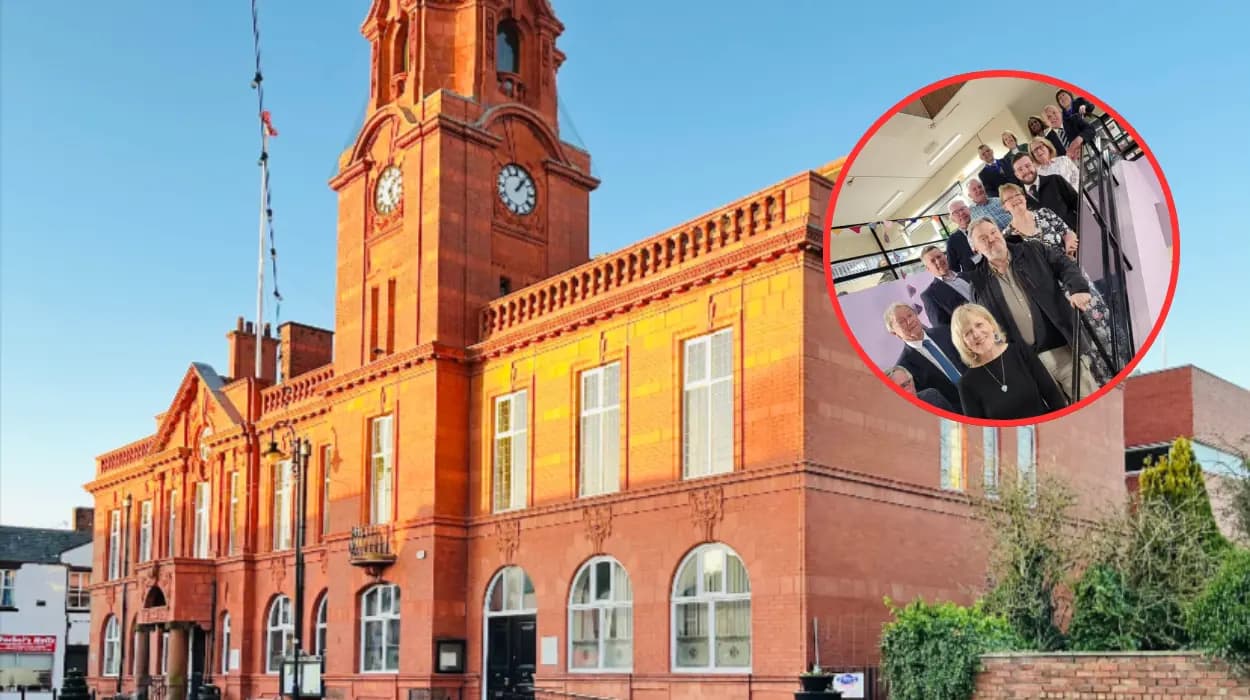
Key Points
- New Task Force Formed: Westhoughton Town Council has officially resolved to create a dedicated working group to address the rapid pace of housing development in the area.
- Bipartisan Support: The motion was brought forward by Liberal Democrat Councillor David Wilkinson and received unanimous support across party lines.
- Infrastructure Strain: Local representatives highlighted that the town’s infrastructure—including roads, schools, and GP surgeries—is failing to keep pace with the influx of new residents.
- Strategic Oversight: The group aims to scrutinise planning applications more rigorously and provide a cohesive voice for the community in discussions with Bolton Council.
- Historical Context: Westhoughton has seen thousands of new homes built over the last decade, leading to significant congestion on key arterial routes like the A58.
Westhoughton (Bolton Today) May 14, 2026 — Westhoughton Town Council has taken a decisive step towards regaining control over the local landscape by voting to establish a formal "overdevelopment working group." The move, sanctioned during a recent full council meeting, is designed to provide a robust, unified response to the relentless wave of planning applications that have transformed the former mill town into one of the region's most densely developed areas. By forming this body, councillors hope to exert greater influence over Bolton Council’s planning decisions and ensure that any future growth is matched by essential upgrades to local services and infrastructure.
Why was the Westhoughton overdevelopment working group created?
As reported by Richard Mulligan of The Bolton News, the proposal was spearheaded by Councillor David Wilkinson, a long-standing representative for Westhoughton South. The primary catalyst for the group is the perceived "imbalance" between the number of houses being built and the capacity of the town to support them.
For years, residents have voiced frustrations regarding "urban sprawl." According to statements captured by local reporters, the town has become a "building site," with green spaces being depleted in favour of high-density housing estates. The working group is intended to act as a technical and strategic shield, allowing the Town Council to analyse the cumulative impact of developments rather than viewing each application in isolation.
What did Councillor David Wilkinson say about the motion?
During the council proceedings, Councillor David Wilkinson was vocal about the necessity of this initiative. As noted by the parliamentary and local government reporting staff at The Bolton News, Wilkinson emphasised that the town is reaching a "breaking point."
As reported by the local press, Councillor Wilkinson stated:
“We have seen massive amounts of development in Westhoughton over the last 15 to 20 years. The infrastructure has not followed, and we are now in a position where the town is struggling to cope with the volume of traffic and the demand on services.”
He further argued that while the Town Council is a statutory consultee, its objections are often ignored by the higher-tier Bolton Council. By forming a dedicated working group, Wilkinson believes the town can produce more "technically sound" objections that are harder for planning officers to dismiss.
How will the working group influence future planning applications?
Will the group have the power to block developments?
It is important to clarify the legal standing of the new body. As a town-level initiative, the working group does not have the legal authority to summarily reject planning applications; that power remains with Bolton Council. However, as highlighted by various local political commentators, the group's strength lies in its ability to gather evidence.
The group will likely focus on:
- Traffic Impact Assessments: Commissioning or reviewing independent data on road congestion.
- Environmental Protection: Identifying threats to local biodiversity and "green lungs."
- Infrastructure Auditing: Tracking the availability of school places and healthcare appointments.
Who will sit on the Westhoughton working group?
The council agreed that the group should be cross-party to ensure neutrality and a broad range of perspectives. This includes representatives from the Liberal Democrats, Labour, and the Conservatives. The inclusion of all major parties is seen as a way to present a "United Westhoughton" front when dealing with developers and the borough council.
Explore More Westhoughton News
Westhoughton Hibbert's Butchers Auctioned After 80 Years, 2026
Westhoughton's New Cow Yeds Statues Celebrate Legend - Westhoughton 2026
What are the primary concerns regarding Westhoughton’s infrastructure?
The debate surrounding overdevelopment is inextricably linked to the town's failing infrastructure. Reporters from The Bolton News have documented several key areas where the town is under pressure.
Is traffic congestion becoming unmanageable?
One of the most significant issues raised during the council meeting was the state of the A58 and the Park Road corridor. As reported by the news team at The Bolton News, councillors pointed out that commuters are often stuck in "gridlock" for significant portions of the day. The working group intends to highlight how adding 100 or 200 more homes to a specific site creates a "domino effect" on the wider road network.
Are school places and GP surgeries overstretched?
Public services are a second major pillar of the group's focus. Local journalists have frequently cited reports from parents who struggle to secure places at Westhoughton’s primary schools. Similarly, waiting times for local doctors have become a point of contention. The working group will aim to ensure that Section 106 money—funds provided by developers for community projects—is actually spent within Westhoughton to alleviate these specific pressures, rather than being absorbed into general borough-wide funds.
How have other councillors responded to the proposal?
The motion was met with a rare show of total unity. While political bickering is common in local government, the issue of overdevelopment appears to be the "great unifier" in Westhoughton.
As reported by the local government correspondent for The Bolton News, Labour councillors also voiced their support for the measure. The consensus among the chamber was that the town’s character is at risk of being lost. Statements made during the meeting suggested that while "sustainable growth" is acceptable, the current "predatory" nature of development—where developers target greenfield sites—must be challenged more effectively.
What is the historical context of development in Westhoughton?
To understand why this working group is necessary now, one must look at the last decade of growth. Westhoughton has been a primary target for developers due to its attractive location between Manchester and Preston and its proximity to the M61.
Journalist Richard Mulligan notes that large-scale projects, such as those at Lee Hall and the surrounding areas, have seen hundreds of acres of former agricultural land converted into residential estates. Residents have long felt that Westhoughton is being "dumped on" to meet Bolton’s housing targets because it is easier to build on "green" fields than to decontaminate "brownfield" sites in the town centre.
What are the next steps for the Westhoughton Town Council?
Now that the motion has passed, the Town Council will move to formalise the group's Terms of Reference. This will involve:
- Setting meeting schedules: The group is expected to meet ahead of major planning committee dates.
- Consulting with residents: There are plans to allow community groups and "Save Our Green Space" activists to provide input to the working group.
- Liaising with Bolton Council: The group will seek a formal channel of communication with Bolton’s planning department to ensure their reports are given "due weight" in the decision-making process.
Can this model be used by other towns?
The creation of an overdevelopment working group is being watched closely by neighbouring areas like Horwich and Blackrod, which face similar pressures. If Westhoughton’s group proves successful in stalling or modifying inappropriate developments, it could provide a blueprint for localism across Greater Manchester.
As reported by The Bolton News, the sentiment in the town hall was one of cautious optimism. The working group represents a move away from "passive objection" toward "active resistance" based on data and planning policy.
The formation of the overdevelopment working group marks a significant shift in the local political landscape of Westhoughton. By moving beyond mere rhetoric and establishing a formal body to scrutinise the impact of housing growth, the Town Council is attempting to protect the town’s future viability.
As stated by Councillor David Wilkinson and recorded by The Bolton News, the goal is not to stop all building, but to ensure that Westhoughton remains a "liveable" town with the roads, schools, and services its residents deserve. Whether this new task force can truly influence the "Goliath" of regional planning remains to be seen, but for now, the people of Westhoughton have a dedicated team of advocates fighting their corner.