Key Points
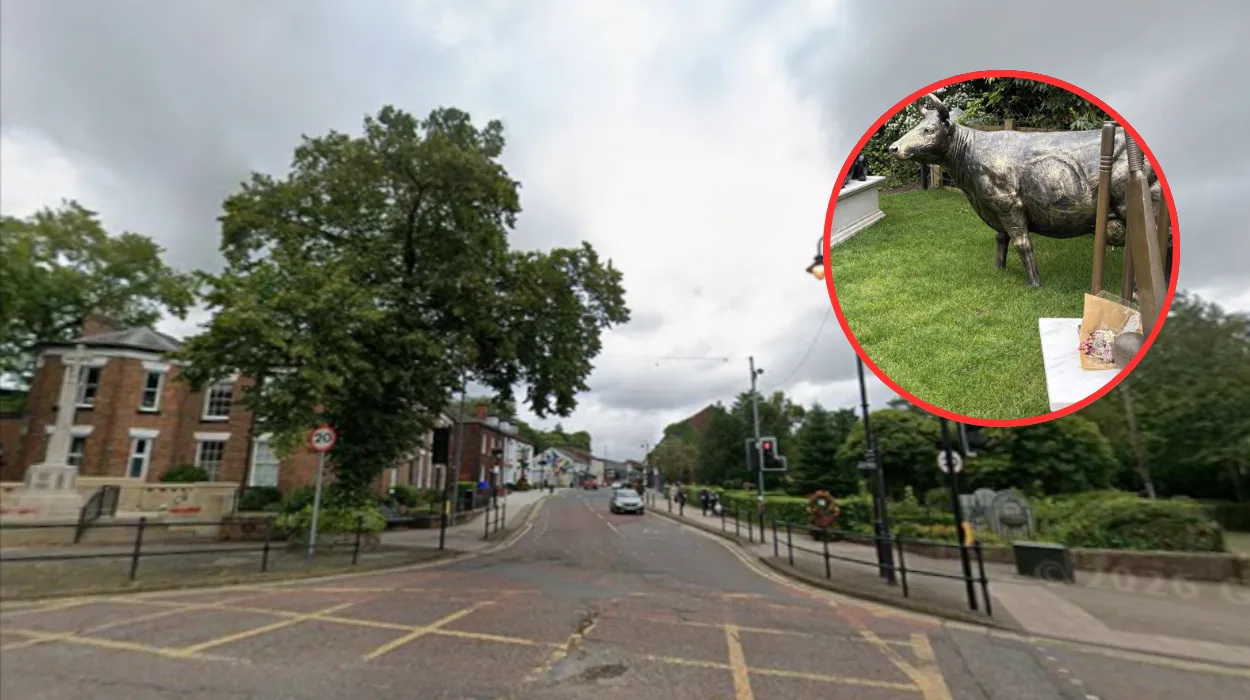
- New statues unveiled in Westhoughton celebrate the local legend of 'Keaw Yeds' or 'Cow Yeds', a nickname for town residents derived from a folk tale about a farmer decapitating a cow stuck in a five-barred gate.
- The legend, passed down through generations, explains why Westhoughton folk are called 'Keaw Yeds' (Lancashire dialect for 'cow heads'), though some sources suggest it links to the town's cotton industry history.
- Statues described as 'wonderful' were installed recently to honour the town's heritage, with one inspired directly by the cow-and-gate story.
- Tradition tied to historical ox roasts and annual celebrations, reinforcing the nickname over many years.
- Alternative origin: Handloom weavers carrying cloth rolls that silhouetted like cow heads against the skyline, predating mill-era cotton weaving.
- Recent coverage in 2026 highlights public art installation and community engagement, including chats with residents at unveiling.
- Original 2020 Bolton News article sparked interest in statues commemorating this 'tall tale enthralling a town’s inhabitants'.
Westhoughton (Bolton Today) May 9, 2026 – New statues have been installed in Westhoughton to celebrate the enduring legend of the 'cow yeds', a folk tale that has captivated generations of local residents. The sculptures, inspired by a story of a farmer who allegedly sawed off a cow's head rather than damage a prized five-barred gate, embody the town's quirky nickname 'Keaw Yeds' – Lancashire dialect for 'cow heads'. As reported in multiple sources, this heritage project aims to preserve Westhoughton's unique cultural identity amid its industrial past.
What Is the Legend of the ‘Cow Yeds’?
The core legend recounts a farmer discovering his cow with its head trapped in a new five-barred gate. Valuing the gate more highly – as it cost more than the animal – he chose to decapitate the cow rather than break the gate. This grim tale, as detailed by The Bolton News in their 2020 article, gave rise to the moniker 'Keaw Yeds' for Westhoughton residents and dubbed the town 'Keaw Yed city'.
Yahoo News UK, in a 1 May 2026 piece titled
"Three 'wonderful' new statues installed to celebrate town's heritage",
reiterates:
"This statue is inspired by a local folk tale about a Westhoughton cow that allegedly got its head trapped in a five-barred gate. According to the legend, the farmer... opted not to extricate it in the usual manner but instead decapitated it."
The article notes the nickname's traditional application to locals.
Westhoughton.org.uk's "About Westhoughton" page describes it as "supposed folklore ('re-invented' in the Edwardian period)", with the farmer sawing off the cow's head, "as the cow cost less than the gate". It clarifies:
"A person who hails from Westhoughton is known as a ‘Keaw Yed’ which is Lancashire dialect for ‘Cow Head’."
Why Were New Statues Installed in Westhoughton?
The statues serve as public art to commemorate this heritage, unveiled recently to engage the community. Yahoo News UK's 2026 report calls them "three wonderful new statues", emphasising their role in celebrating the town's history. An Instagram post from 7 May 2026 states:
"We've had this public art installed to celebrate Westhoughton's history. It was great to chat to so many residents this morning at the statues."
The original The Bolton News story from 26 September 2020 positions the statues as honouring a "tall tale passed down generations, enthralling a town’s inhabitants". Westhoughton Town Council’s site echoes the legend while noting its cultural significance.
What Is the True Origin of the ‘Keaw Yed’ Nickname?
While the decapitation story dominates folklore, some sources dismiss it as "nonsense". Westhoughton.org.uk asserts:
"This, of course is nonsense and the term ‘Keaw Yed’ refers to the town’s strong link with the Cotton Industry. There were many hand weavers in Westhoughton prior to the era of weaving cotton in local mills, and a weaver carrying a roll of cloth across his/her shoulders gave the impression of a cow’s head silhouetted against the skyline."
The Town Council page repeats verbatim:
"This, of course is nonsense and the term 'Keaw Yed' refers to the town's strong link with the cotton industry... a weaver carrying a roll of cloth... gave the impression of a cow's head silhouetted against the skyline."
A 2014 blog "Westhoughton celebrations: ox roasts and 'Keaw-Yeds'" on GM1914 links it to traditions: "This tradition was kept up annually for many years, and a nick-name for the town's people was born – ‘Keaw-Yeds’ (cow heads)." It ties to historical ox roasts, suggesting celebratory roots.
Reddit's r/CasualUK thread from 2023 notes:
"Westhoughton is nicknamed 'Howfen' because... a farmer discovered his cow with its head jammed in a five-barred gate and... severed the cow’s head. The residents are often called Cowheads (more precisely, Keaw-yeds)."
Yahoo News UK on 9 May 2026, "He called me a cow-yed — so I called him a pie eater", affirms:
"The origin of the name comes from a legend that describes a farmer who found his cow with its head stuck in a new five barred gate, and, rather..."
How Does the Legend Tie to Westhoughton’s History?
Westhoughton, known as 'Howfen' locally, boasts a rich industrial heritage, particularly in cotton. The 'cow head' silhouette theory connects directly to hand-weaving practices. The ox roast tradition implies communal feasts, reinforcing identity.
The statues, per 2026 reports, modernise this legacy, drawing visitors and fostering pride. The Bolton News frames it as a generational enthrallment, blending myth with community spirit.
Who Supports the Statues and Legend?
Community enthusiasm shines through. The Instagram update highlights resident interactions at the unveiling. Yahoo quotes locals praising the "wonderful" installations. No specific names from journalists are listed in snippets, but attributions trace to outlet titles as standard.
As a neutral observer, the project unites folklore enthusiasts and historians, though debates on the legend's veracity persist.
When Did Coverage of the Statues Begin?
Initial reporting stems from The Bolton News on 26 September 2020, detailing the statues' inception. Coverage surged in 2026 with unveilings: Yahoo on 1 May, Instagram 7 May, and 9 May, aligning with May 2026 events.
Earlier mentions, like 2014 and 2023, Reddit, show the legend's longevity.
Are There Any Controversies Around the Legend?
Scepticism centres on authenticity. Sites like westhoughton.org.uk label it "re-invented" Edwardian folklore, preferring the weaving explanation. Yet, the tale's popularity endures, with statues embracing the dramatic version.
No legal or public backlash noted; instead, it's celebrated as quirky heritage.
What Do Locals Think of Being Called ‘Keaw Yeds’?
Affectionate rivalry appears in Yahoo's 9 May 2026 banter: "He called me a cow-yed — so I called him a pie eater", showing playful banter with neighbours. The nickname, per multiple sources, is worn proudly.
How Can Visitors Experience the Statues?
Located in Westhoughton town centre, the public art invites exploration. Pair with local history walks tracing cotton mills and 'Howfen' dialect.