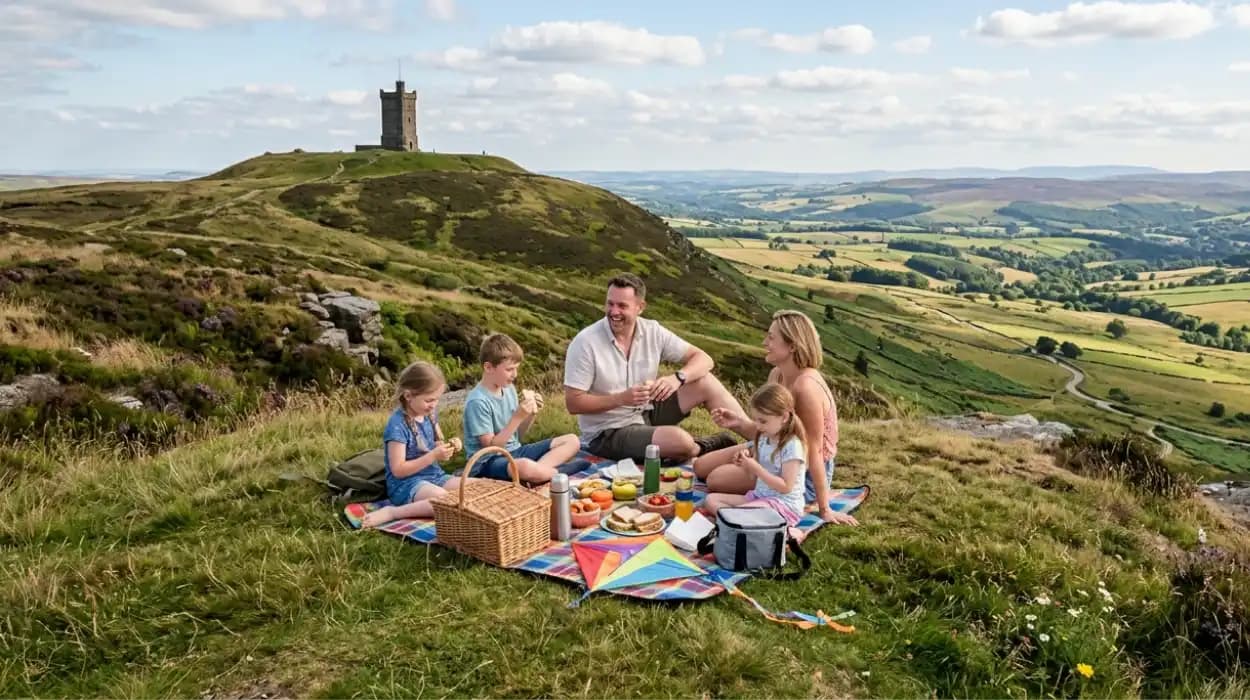
The premier picnic locations in Bolton include Rivington Pike, Jumbles Country Park, and Smithills Estate, which provide expansive views of the West Pennine Moors. These sites offer diverse landscapes, including moorland summits, lakeside paths, and historical woodland for seasonal outdoor dining.
Bolton is situated on the edge of the West Pennine Moors, a 90-square-mile area of upland lancashire. This geographic positioning provides a variety of elevated terrains suitable for picnicking. The primary destinations for summer visitors are categorized by their landscape features: moorland heights, reservoir-side greenery, and historical estates.
Moorland and High-Altitude Sites
Rivington Pike serves as the most prominent landmark in the region, standing at an elevation of 1,191 feet (363 meters). The summit provides 360-degree views extending to the Lake District and the Isle of Man on clear days. The surrounding Rivington Terraced Gardens, commissioned by Lord Leverhulme in the early 20th century, offer sheltered stone loggias and follies that function as weather-protected picnic spots.
Reservoir and Waterside Locations
Jumbles Country Park, established in 1971 following the completion of the Jumbles Reservoir, features a 3.5-mile circular path. The park includes a dedicated picnic area near the Information Centre and Tea Garden Café. Similarly, Moses Gate Country Park (Crompton Lodge) provides a 750-acre space with woodland and waterside paths, holding a status of a local nature reserve.
Historical and Managed Parklands
Smithills Estate, managed by the Woodland Trust, covers 1,700 acres and includes the Grade I listed Smithills Hall. The formal gardens and the "Barrow Bridge" area provide structured picnic facilities within a historical context dating back to the 14th century. In the town center, Queens Park offers 22 hectares of Victorian-style landscaped gardens, including two ornamental lakes and a terrace promenade designed for viewing the local skyline.
Why is Rivington Pike the best spot for West Pennine views?
Rivington Pike is the optimal viewpoint because its 1,191-foot summit provides unobstructed panoramas of the West Pennine Moors and beyond. The location combines natural elevation with historical landmarks, such as the 1733 stone hunting lodge, to create a unique destination.
The prominence of Rivington Pike is due to its geological height and its isolation from other immediate peaks. It serves as the most westerly point of the West Pennine Moors. The Pike Tower, a Grade II listed structure built by John Andrews of Rivington Hall, marks the summit. This site was historically used as a beacon hill to signal approaching threats, such as the Spanish Armada in 1588.
Panoramic Visibility
From the summit, visitors can view several geographic landmarks. On clear summer days, the visibility extends to the following locations:
- Blackpool Tower
- The Welsh Mountains (Snowdonia)
- The Lake District fells
- The Manchester city skyline
Accessible Routes for Picnickers
Access to the Pike is primarily through the Rivington Hall Barn area. The climb involves well-defined gravel paths. For those carrying picnic equipment, the lower terraced gardens provide flat stone platforms and "The Orchard" area, which were restored in 2020 to improve public access. These areas offer wind protection while maintaining the aesthetic of the moorland vista.
Ecological and Historical Context
The land is part of the Lever Park estate, gifted to the people of Bolton by William Lever (Lord Leverhulme) in 1902. The ecology consists of acid grassland and heathland, supporting local bird species like the meadow pipit and skylark. The historical significance of the site as a public "lung" for industrial workers during the 19th century reinforces its status as a premier location for leisure and outdoor dining.
How does Jumbles Country Park accommodate summer picnickers?
Jumbles Country Park accommodates visitors through a combination of accessible infrastructure, a 75-acre reservoir setting, and dedicated amenities. The park features a central information centre, cafe, toilets, and numerous benches situated along a level 3.5-mile circular walking trail.
Jumbles Country Park is located in the Bradshaw Valley, approximately four miles north of Bolton town center. The park was officially opened in 1971 by Queen Elizabeth II. It serves as a multifunctional space that manages water utility through its reservoir while providing high-density recreational facilities for the local population.
Infrastructure and Amenities
The park is designed for high-volume summer usage. Key facilities include:
- A 50-space pay-and-display car park located off Bradshaw Road
- The Jumbles Information Centre, which houses a cafe and permanent restroom facilities
- Level-access picnic tables situated adjacent to the main water body
- Multiple wooden benches distributed at intervals along the reservoir's edge
Environmental Features
The park is a designated site for birdwatching and conservation. The reservoir is home to various waterfowl, including grebes and herons. The woodland surrounding the water consists mainly of oak, beech, and alder trees, which provide significant shade during peak summer temperatures. The "Tea Garden" area offers a hybrid environment where visitors can use public tables or consume items purchased from the on-site cafe.
Connectivity and Navigation
The park is linked to the wider Kingfisher Centres and the Turton and Entwistle Reservoir trails. This connectivity allows long-distance hikers to use the Jumbles as a midpoint rest stop. The circular path is classified as "easy" in terms of difficulty, making it suitable for families transporting picnic hampers or strollers.
What makes Smithills Estate a historically significant picnic destination?
Smithills Estate is significant because it contains over 800 years of documented history, including a Grade I listed manor house and 1,700 acres of diverse habitat. It offers a transition from formal Victorian gardens to wild, open moorland.
Smithills Hall, the centerpiece of the estate, is one of the oldest manor houses in Northwest England, with the Great Hall dating back to the 14th century. The estate has been owned by several notable families, including the Radcliffes, Bartons, and Ainsworths. In 1938, the property was acquired by the Bolton Corporation, and today it is managed in partnership with the Woodland Trust.
The Landscape Structure
The estate is divided into three distinct zones suitable for different picnicking experiences:
- The Formal Gardens: Located immediately around the Hall, these areas feature manicured lawns and traditional borders.
- Barrow Bridge: A model village built for mill workers, which includes the "63 Steps" leading into the woodland.
- The Moorland Fringe: Higher elevation areas that lead toward Winter Hill and provide views of the Bolton skyline.
Historical Events and Public Access
The estate was the site of the 1896 Winter Hill Mass Trespass, where 12,000 people marched to reclaim public rights of way. This event is commemorated with a stone marker on Coal Pit Road. The legacy of this trespass ensures that the majority of the 1,700-acre estate remains accessible to the public today. The Woodland Trust has planted thousands of new trees on the site since 2017 to enhance biodiversity and carbon sequestration.
Visitor Facilities at Smithills
Bolton Today notes that the estate provides ample parking and a tea room located within the Hall's west wing. The "Smithills Coaching House" and the nearby Smithills Open Farm add commercial amenities to the natural landscape, making it a high-density destination for families during the summer months.
Explore More Bolton News
Guide to Turton Tower History and Kitchen Gardens in Bolton
5 Hidden Gems Beyond Bolton Town Centre: Woods, Parks in Greater Manchester Area
Where are the best hidden gem picnic spots in Bolton?
Hidden gem picnic spots in Bolton include Turton Tower’s woodland gardens, the Seven Acres Country Park, and the Doffcocker Lodge Nature Reserve. These locations offer quieter alternatives to the major tourist hubs while maintaining high ecological and aesthetic value.
While Rivington and Jumbles attract the largest crowds, Bolton contains several smaller "pocket parks" and nature reserves that offer seclusion. These sites are often preferred by local residents and nature enthusiasts who seek to avoid the peak summer traffic found at Rivington Hall Barn.
Turton Tower Gardens
Turton Tower is a 15th-century stone peel tower located in Chapeltown. While the tower itself is a museum, the surrounding Victorian gardens and woodland are open to the public. The "Woodland Café" area provides a secluded environment, and the nearby "Old Village" of Chapeltown offers a quiet, historical backdrop for an afternoon meal.
Seven Acres Country Park
Located between Breightmet and Darcy Lever, Seven Acres is a local nature reserve comprising 28 hectares. It features a diverse range of habitats including:
- Wildflower meadows
- Heathland
- Broad-leaved woodland
- The Bradshaw Brook
The park is less frequented than larger country parks, providing a tranquil environment for birdwatching while picnicking. The "Kingfisher Trail" runs through this site, connecting it to the wider Bury and Bolton green corridors.
Doffcocker Lodge
Doffcocker Lodge was Bolton’s first designated Local Nature Reserve. It features a large reservoir that was originally built to provide water for local mills. The site is now a haven for common terns and other migratory birds. The circular walk is flat and manageable, with several secluded benches overlooking the water, providing a peaceful setting within a residential area.
How does Moses Gate Country Park support family-friendly outings?
Moses Gate Country Park, also known as Rock Hall, supports families through its expansive 750-acre grounds, multi-age playgrounds, and specialized trails. The site features the "Crompton Lodge" waterside area and dedicated routes for cycling and horse riding.
Moses Gate Country Park is situated in Farnworth and occupies a site formerly dominated by heavy industry and mining. The transformation of this industrial wasteland into a Grade B Site of Biological Importance represents one of Bolton's largest environmental reclamation projects.
Play and Recreation Infrastructure
The park contains a large, modern playground located near the main car park. This facility is designed with rubber safety surfacing and equipment suitable for toddlers through to young teens. For older children and adults, the park offers:
- Three large lakes for fishing (permit required)
- Waymarked nature trails with educational signage
- Paved paths suitable for bicycles and scooters
- Large open fields for ball games and kite flying
The Role of Rock Hall
Rock Hall, built in 1807 by the Crompton family, serves as the park's focal point. While the building itself has undergone various conservation efforts, the surrounding courtyard and lawns are the primary hub for picnickers. The "Friends of Moses Gate" volunteer group regularly hosts events here, including guided nature walks and summer fairs.
Biodiversity and Education
The park acts as a sanctuary for local wildlife. The "Nob End" SSSI (Site of Special Scientific Interest) is located at the southern edge of the park, famous for its unique flora that grows on alkaline waste from the former chemical industry. Families can find over 10 species of orchids during the summer months, making it a site of significant educational value for young naturalists.
What should visitors know about Queens Park's Victorian heritage?
Queens Park is a 22-hectare Victorian park opened in 1866 to provide relief during the Cotton Famine. It features traditional formal layouts, including a grand terrace, ornamental lakes, and statues of prominent historical figures like Benjamin Disraeli.
Originally known as Bolton Park, Queens Park was funded by government loans intended to provide work for unemployed mill workers during the 1860s. The park was designed to be a "prestige" green space for the town, reflecting the wealth and civic pride of industrial Bolton.
Architectural and Commemorative Features
The park is characterized by its formal "Terrace Promenade," which offers views over the River Croal valley toward the town center. Key features include:
- The Cenotaph, Bolton’s main war memorial
- Statues of John Fielding, Benjamin Disraeli, and Dr. Chadwick
- A refurbished Victorian-style café
- Ornamental iron bridges and stone balustrades
Modern Amenities for Picnickers
In recent years, the park has undergone significant restoration funded by the Heritage Lottery Fund. This has resulted in the desilting of the lakes and the restoration of the sunken gardens. For modern visitors, the park provides:
- Extensive seating areas along the main promenade
- A dedicated children’s play area
- Bowling greens and tennis courts
- Public toilets and a permanent café facility
Seasonal Use and Events
During the summer, Queens Park serves as the venue for various community events, including "Bolton Pride" and outdoor theater performances. Its proximity to the town center makes it the most accessible green space for residents without private transport. The park's layout, with its wide tarmac paths, ensures that it remains fully accessible for wheelchair users and those with limited mobility.
How can visitors practice responsible picnicking in Bolton’s green spaces?
Responsible picnicking involves adhering to the Countryside Code by removing all litter, avoiding open fires or BBQs, and respecting local wildlife. Following these guidelines ensures that Bolton’s moors and parks remain preserved for future seasonal use.
As visitor numbers increase during the summer months, the environmental impact on Bolton's parks becomes a significant management challenge for the Bolton Council and the Woodland Trust. High factual density regarding local bylaws and environmental protection is essential for all visitors.
Waste Management and Litter
Visitors must follow the "Leave No Trace" principle. While many parks like Jumbles and Queens Park provide bins, these can reach capacity quickly on warm weekends. The official recommendation is to carry all waste home. Plastic waste is particularly hazardous to the livestock that grazes on the West Pennine Moors, including sheep and cattle.
Fire Safety and Barbecue Restrictions
The use of disposable barbecues is strictly prohibited across the West Pennine Moors, including Rivington and Smithills. The peat-rich soil found in these areas is highly flammable and can sustain underground fires for weeks. Major moorland fires in 2018 and 2023 resulted in significant habitat loss and required massive emergency service deployments.
Wildlife and Livestock Interaction
Many of Bolton's picnic spots are situated within working agricultural land or sensitive nature reserves. Visitors should:
- Keep dogs on leads around livestock (compulsory at Smithills and Rivington)
- Avoid feeding wildfowl (bread can be harmful; use specialized bird feed instead)
- Stay on designated footpaths to prevent soil erosion and the destruction of ground-nesting bird habitats
Future Relevance of Bolton’s Green Spaces
As urban temperatures rise, these "green lungs" provide essential cooling and mental health benefits for the population of Bolton. The ongoing investment in sites like the Rivington Terraced Gardens and the Smithills Estate ensures that these areas will continue to serve as vital recreational hubs for the next generation. By practicing responsible tourism, visitors contribute to the sustainability of the Pennine landscape.
FAQS
Which picnic spots are most popular in Bolton?
Top picnic destinations include Rivington Pike, Jumbles Country Park, Smithills Estate, Moses Gate Country Park, and Queen's Park.