Key Points
- Surge in Community Support: Hundreds of residents gathered at the Gibfield Preservation Group's stall during the recent Howfen Wakes event in Westhoughton and the Atherton Carnival to voice strong opposition to proposed commercial and residential developments.
- Massive Development Scope: Developer Peel Land has proposed a 173-acre mixed-use development at Gibfield Park, comprising up to 490,000 square feet of industrial and warehouse space, alongside up to 500 residential homes (with 25 per cent designated as affordable housing).
- Concerns Over 'Astley Warehouses' Parallel: Local residents have expressed severe anxieties that the open green space between Westhoughton, Daisy Hill, and Atherton could be transformed into heavy industrial logistics hubs, damaging road capacity, air quality, and local quality of life.
- Developer Perspective: Peel Land maintains that the scheme aligns with Greater Manchester’s Places for Everyone spatial plan, promising economic growth, employment space, and a dedicated 71-acre country park to preserve accessible green areas.
- Environmental and Infrastructure Threats: Environmental assessments and official documentation indicate potential loss of natural habitats and ponds, impacting local wildlife such as bee orchids and protected species. Furthermore, residents warn of severe traffic bottlenecks on surrounding road networks, including Wigan Road and Chequerbent Roundabout.
- Political Backing and Action Deadline: The campaign has garnered support from elected officials, including Leigh MP Jo Platt and local ward councillors. Campaigners are urging all concerned residents to submit formal objections before the public consultation on the masterplan closes on September 1.
Westhoughton (Bolton Today) August 4, 2026 – Public opposition to a proposed major industrial and residential development on green space between Westhoughton, Daisy Hill, and Atherton has reached a critical peak, with hundreds of local residents formally backing the Gibfield Preservation Group during community gatherings at Howfen Wakes and the Atherton Carnival. Campaigners fighting to protect the 173-acre site argue that plans by developer Peel Land to construct nearly 500,000 square feet of warehouse space and up to 500 homes will fundamentally alter the semi-rural character of the area, burden existing road networks, and destroy crucial natural habitats. With the formal masterplan consultation deadline approaching on September 1, community members, local councillors, and parliamentary representatives are mobilizing to ensure residents' voices are heard in the statutory decision-making process.
What Is the Proposed Gibfield Park Development in Westhoughton and Atherton?
The scheme at the center of the dispute involves a major mixed-use allocation situated on 173 acres of land positioned strategically between Atherton and Westhoughton, bounded by the Southport-to-Manchester railway line and Wigan Road.
As reported by journalist Dan Whelan of Place North West, property developer Peel Land launched a public consultation outlining a masterplan that includes up to 500 new residential units alongside 490,000 square feet of employment and logistics space. Under the proposal, approximately 25 per cent of the residential properties would be allocated as affordable housing. The housing footprints are planned in two distinct sectors to the north and south of the allocation, while the industrial and warehousing core would occupy the southern section, requiring an extension of Gibfield Park Way northwards.
The site forms part of the controversial Places for Everyone joint spatial plan for Greater Manchester, which identifies strategic land across nine boroughs to meet long-term economic and housing targets. Peel Land has highlighted that 71 acres of the total site area would be set aside to form a managed country park, intended to retain substantial public green space for community use.
However, the sheer magnitude of the proposed footprint has generated widespread apprehension among neighboring communities in Westhoughton, Atherton, and Daisy Hill, who view the project as an intrusive urban expansion that threatens the distinct identities of their settlements.
Why Are Local Residents and Campaigners Opposing the Gibfield Industrial Scheme?
Opposition to the project has consolidated under the banner of the Gibfield Preservation Group, a grassroots organisation established to safeguard the area's remaining countryside. The primary driver of public resistance is the cumulative strain that industrial units and housing would place on already stretched local services, transport networks, and environment.
As reported by reporter Dan Dougherty and the editorial team at The Bolton News, residents attending local information stalls repeatedly raised concerns regarding the scale of logistics buildings. A dominant theme among attendees was the fear that the green fields surrounding Gibfield could be converted into high-density commercial hubs similar to other recent industrial developments across Greater Manchester.
Residents argue that substituting natural landscape with large concrete warehouse blocks, distribution yards, and round-the-clock commercial transport will generate persistent light pollution, noise, and airborne particulates. Moreover, local communities point out that the continuous loss of open space erodes the buffer zones separating distinct towns, leading to unchecked urban sprawl across the borough boundaries of Wigan and Bolton.
What Did Amanda Coleman and Campaigners Say at Howfen Wakes and Atherton Carnival?
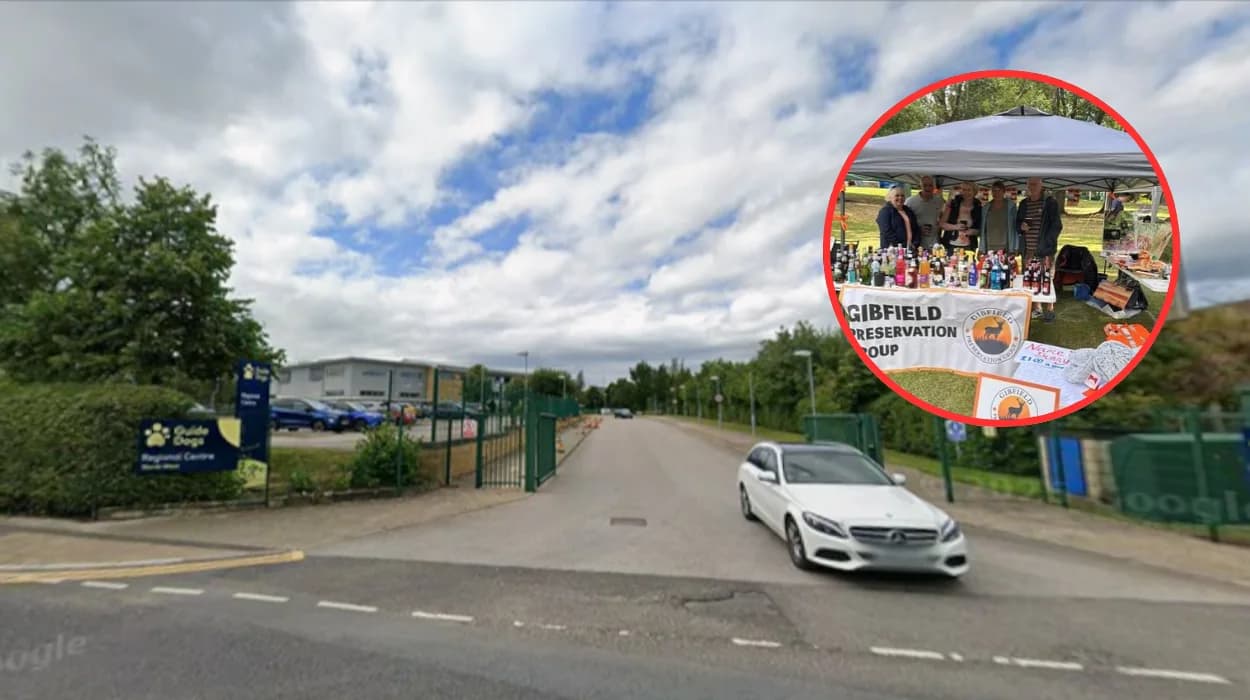
Community engagement during summer public events demonstrated the depth of local resistance. Volunteers from the Gibfield Preservation Group set up information stands at both the Howfen Wakes festival in Westhoughton and the Atherton Carnival to inform the public and gather backing for their campaign.
As reported by The Bolton News, Amanda Coleman, Chair of the Gibfield Preservation Group, described the response from the public as overwhelming. Speaking on the reaction at Howfen Wakes, Amanda Coleman stated:
"We were overwhelmed by the support shown by local residents at Howfen Wakes. Hundreds of people came to speak to us throughout the day, and it was clear that there is significant concern about the future of Gibfield."
Highlighting specific worries communicated by attendees, Amanda Coleman added:
"One of the comments we heard time and again was that local people do not want Gibfield to become 'the next Astley Warehouses'. Residents have seen the scale of warehousing development elsewhere and are concerned about what a similar model could mean for nearby communities, roads, air quality and quality of life."
Reflecting on the overarching purpose of the campaign during statements covered by The Bolton News, Amanda Coleman emphasized the long-term stakes for the community:
"Today's event demonstrated just how much local people value Gibfield and the surrounding green space. The strength of feeling, level of engagement and willingness of residents to get involved was overwhelming. Our campaign is about ensuring local people are fully informed and have a meaningful voice in decisions that could permanently change the area for generations to come."
At the earlier Atherton Carnival, where group volunteers including Debi Yates, Helen, David, Claire, Jade, Dennis, Diane, and Ted the dog raised funds and distributed information, Amanda Coleman similarly appealed to authorities, stating:
"We were thrilled to be part of such a fantastic community event. The level of support we received was incredibly encouraging. It's clear that people care deeply about protecting our green spaces and want to preserve it for the wildlife and future generations. We continue to appeal to developers and the council to rethink these plans."
What Is Peel Land's Stance and Vision for the Gibfield Park Site?
In response to community objections, project developers contend that the Gibfield Park proposal represents a balanced, sustainable plan that addresses both economic and social necessities in the region.
As detailed by journalist Dan Whelan in Place North West, Annabel Baker, Associate Director of Development Planning at Peel Land, outlined the developer's position during the launch of the public consultation. Annabel Baker stated:
"We're delighted to bring forward our masterplan for Gibfield Park, progressing the long-term aspirations for this strategic site in line with its allocation in the Places for Everyone Plan. Delivering new homes and employment space alongside the creation of a new country park for the community will create a sustainable community in Atherton. We'd like to encourage local residents and businesses to view the virtual consultation and let us know what they think about the proposals."
Peel Land maintains that the 490,000-square-foot commercial expansion will create vital local employment opportunities, attract corporate investment, and bolster the local economy. Furthermore, the inclusion of 500 homes is framed as a crucial contribution toward meeting regional housing targets, particularly regarding affordable housing provision. Developers also emphasize that by setting aside 71 acres for a dedicated country park, the project preserves significant accessible green infrastructure rather than covering the entirety of the parcel in concrete.
Explore More Westhoughton News
Westhoughton High School Plans New Safety Entrance: Westhoughton 2026
Westhoughton Council Rejects 310 Homes on Green Belt, Westhoughton 2026
How Could the Development Impact Local Traffic, Infrastructure, and Air Quality?
A primary point of contention for nearby residents is the infrastructure capacity surrounding Daisy Hill, Atherton, and Westhoughton. Traffic congestion on key corridors—including Wigan Road, Leigh Road, and connections toward the M61 motorway—is already a recognized daily challenge for commuters.
Local residents participating in public discussions hosted by Place North West pointed out that inserting up to 500 residential properties and substantial commercial warehousing could introduce thousands of additional vehicle movements every day. Heavy goods vehicles (HGVs) servicing distribution centers operate continuously, raising major fears regarding diesel emissions, localized air pollution, and road safety near residential neighborhoods and school routes.
Concerns also extend to critical junctions such as Chequerbent Roundabout, where heavy peak-hour queueing is already frequent. Opponents argue that minor access road extensions, such as lengthening Gibfield Park Way, will prove insufficient to absorb the added transport demands of both Gibfield Park and other nearby approved housing developments across the area.
What Environmental Risks and Wildlife Concerns Have Been Identified in Official Reports?
Beyond transport concerns, environmentalists and ecological campaigners stress that the Gibfield site represents an important sanctuary for local flora and fauna. The area contains established grassland, ponds, and species such as the native bee orchid.
As reported by The Bolton News, official statutory documentation associated with the regional framework openly acknowledges ecological disruptions. Excerpts from the Greater Manchester Places for Everyone allocation report explicitly state that under the proposed development:
"habitats and features of the natural environment will be lost, including ponds or will be otherwise affected with adverse consequences for protected species and other wildlife."
Campaigners argue that mitigation measures proposed by developers—such as artificial replacement habitats within the planned country park—cannot replicate the complex, mature ecosystems currently thriving across the undeveloped fields. The loss of natural drainage capacity provided by open grassland also prompts concerns regarding increased surface water runoff and localized flooding risks during periods of heavy rainfall.
Which Political Figures and Community Leaders Are Supporting the Preservation Group?
The campaign to protect Gibfield has attracted notable cross-party political support and engagement from regional figures.
As reported in The Bolton News, Jo Platt, the Member of Parliament for Leigh, along with several local ward councillors, visited the Gibfield Preservation Group stand during public outreach events to offer their backing to the campaign. Representatives met with volunteers to discuss statutory planning frameworks, environmental safeguards, and community representation.
The presence of parliamentary and council leadership has provided momentum to the preservation group as it prepares formal technical objections for submission to local planning authorities. Campaigners noted that cross-boundary cooperation between representatives in Bolton and Wigan will be essential, given that the development sit on border areas affecting residents under multiple administrative jurisdictions.
How Can Residents Participate and Submit Objections Before the September 1 Consultation Deadline?
With the formal masterplan consultation phase actively underway, the Gibfield Preservation Group is urging all community members to record their positions before the window closes.
As reported by The Bolton News, the consultation period on the Gibfield Park masterplan will officially close on September 1. The preservation group is conducting public guidance sessions and sharing resources across digital platforms to help residents submit effective, legally grounded objections to the planning portal.
Campaign organizers stress that public participation during the masterplan consultation is crucial. Submissions detailing specific concerns regarding transport capacity, environmental impacts, noise, air quality, and infrastructure strain will form part of the official administrative record evaluated by planning inspectors and local authorities before any final planning permissions are determined.
Residents seeking further details on how to register formal comments or join local campaigning efforts are being directed to the Gibfield Preservation Group's official community channels prior to the September 1 deadline.