Key Points
- Lack of Transparency: Westhoughton residents are vocalising intense frustration regarding a perceived deficiency in open communication from the new leisure centre management operators.
- Threat to Squash Courts: Users have expressed significant concern following individual notifications indicating that the facility's squash courts are permanently earmarked for closure.
- Community Health Impact: Regular attendees, including local yoga students, argue that reducing specialised recreational spaces actively compromises local wellness and group exercise provisions.
- Call for Clarity: Community stakeholders are demanding formal operational statements to reconcile conflicting information regarding the long-term survival of the centre's amenities.
Westhoughton (Bolton Today) June 11, 2026 - A swelling wave of localized discontent has emerged across the Westhoughton community as service users demand answers from the newly appointed commercial operators of Westhoughton Leisure Centre over the imminent closure and modification of cherished community sports facilities. The core of the public dispute centers on an ongoing, systemic lack of communication regarding structural adjustments within the hub, with multiple long-term members reporting that key recreational zones—most notably the local squash courts—are quietly being targeted for permanent removal without prior public consultation or democratic oversight.
Why Are Westhoughton Residents Angry With Leisure Centre Management?
The conflict escalated after several club members received unexpected, piecemeal notifications from staff members indicating that the structural footprint of the community hub was due for a dramatic re-evaluation. For a town heavily reliant on centralized health networks, the quiet dismantling of dedicated sports spaces represents a broader threat to communal physical well-being.
As reported by Dan Dougherty, a seasoned local government and community reporter for The Bolton News, residents feel systematically excluded from the decision-making pipeline. The regional publication highlighted that the transition to the current operational model has left a clear informational vacuum, leaving paying members to piece together the future of their local facility from informal staff warnings and sudden schedule adjustments rather than official corporate press releases.
The anxiety is not limited to squash players alone. The structural reorganization of multi-use studios has caused a knock-on effect across a variety of low-impact exercise disciplines. Regular facility users argue that by compressing multi-functional spaces or repurposing specialized courts, the management is actively pricing out or squeezing out vulnerable demographics who depend on these specific environments for therapeutic and social exercise.
What Do Local Service Users Say About The Lack Of Transparency?
To understand the human cost of these operational shifts, it is necessary to examine the testimony of the individuals who utilize the facility on a weekly basis. The lack of proactive notice from the executive board has forced community groups to organize independent campaigns to extract basic operational timelines from the building's management team.
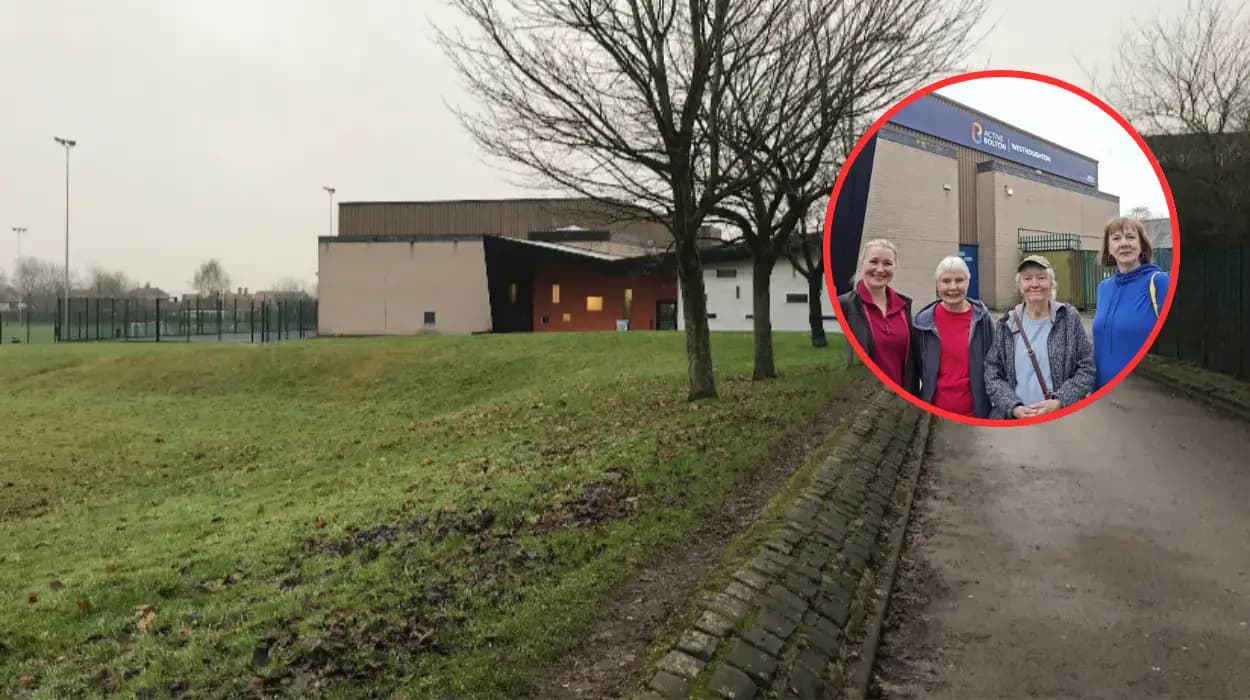
As documented within the primary investigative coverage compiled by reporter Dan Dougherty of The Bolton News, localized yoga practitioners have become central figures in documenting the spreading institutional dissatisfaction. Local yoga students Lindsay Roughley, Linda Roughley, Janet Stott, and photographic chronicler Julie Downing have collectively stepped forward to voice their shared anxieties regarding how the administrative ambiguity impacts long-term health initiatives in Westhoughton.
According to statements gathered from the group, the overriding sentiment is one of deep disappointment regarding how a public asset is being managed behind closed doors. Service users argue that a leisure centre funded by public interest should operate with a baseline of democratic accountability. Instead, individuals booking courts or attending holistic fitness classes are encountering an unsettling wall of silence when requesting definitive confirmations regarding structural alterations, fee structures, and timetable security.
Explore More Westhoughton News
Westhoughton Town Hall Repair Delays and Rising Costs: Westhoughton 2026
Vandals Target Historic Carnival Revival Council Notices: Westhoughton 2026
How Will The Closure Of Squash Courts Affect The Westhoughton Community?
Squash courts in municipal hubs often serve as multi-generational gathering points that cannot be easily simulated by standard fitness suite expansions or additional rows of cardiovascular machinery. Local sports advocates point out that the removal of these courts fundamentally changes the variety of athletic outlets available within the township, forcing competitive players to travel outside the district boundaries to access suitable facilities.
Beyond the competitive element, the physical layout of squash courts often makes them ideal spaces for alternative community adaptations when not in use for racquet sports. By permanently decommissioning these zones, the operators limit the overall capacity of the building to host concurrent group sessions, thereby escalating the scheduling tension between high-intensity athletic clubs and gentle, low-impact wellness groups like the yoga classes championed by Lindsay Roughley and her peers.
The financial calculation made by modern leisure trusts often favors high-density gym floors over specialized court spaces. However, the counter-argument raised by Westhoughton residents emphasizes that public health cannot be measured solely through the prism of membership volume per square meter. The specialized nature of squash, combined with its historical footprint in the Bolton borough, means its elimination erases a distinct piece of the local sporting subculture.
Who Is Responsible For Operating Westhoughton Leisure Centre?
The administrative background of the facility involves complex partnerships between local authorities and third-party leisure management providers. Historically, facilities within the wider region have operated under the umbrella of the Bolton Community Leisure Trust, an organization tasked with maintaining a diverse range of sporting facilities and community activities, including swimming pools, fitness suites, sports halls, and outdoor floodlit pitches.
When management contracts change hands or undergo internal corporate restructuring, friction frequently develops between centralized budgetary targets and the localized expectations of the populace. In instances where commercial operators assume control of public provisions, conflict often arises if the incoming management prioritizes high-revenue streams at the expense of traditional, lower-yielding community provisions like squash or specialized group therapy spaces.
The current friction highlights a growing structural disconnect across the borough. Residents are increasingly calling upon local ward councillors and Bolton Council cabinet representatives to intervene, urging them to enforce the transparency clauses embedded within public service contracts to ensure that private operators remain accountable to the taxpayers who rely on the infrastructure.
What Are The Next Steps For Distressed Residents?
Faced with a persistent lack of clear information from official channels, community members are mobilizing to formalise their opposition to the facility reductions. Plans are circulating among user groups to launch formal petitions and coordinate appearances at upcoming local area forum meetings to directly confront representatives regarding the operational mandates governing the site.
The immediate goal for activists like Linda Roughley and Janet Stott remains the acquisition of a binding, transparent declaration from the operators detailing exactly which facilities are safe and which are scheduled for decommissioning. Until such documentation is made public, the atmosphere at the Westhoughton site remains one of profound skepticism, with community members viewing every unannounced maintenance closure or schedule change as a potential precursor to further structural losses.
Journalistic inquiries directed toward the corporate administrative offices have sought to clarify whether alternative provisions will be offered to displaced athletes, or if the decision to close the squash courts can be suspended pending a comprehensive public consultation process. As the situation develops, the focus remains firmly fixed on whether public pressure can compel a corporate pivot toward authentic community engagement.