Blackrod is one of the oldest settlements within the Metropolitan Borough of Bolton, Greater Manchester. Positioned between Bolton and Wigan on elevated ground overlooking the West Pennine landscape, the village combines centuries of history with accessible countryside, traditional hospitality, and heritage landmarks. Its compact size allows visitors to experience medieval origins, Industrial Revolution heritage, local food venues, scenic walking routes, and historic architecture within a single weekend.
Unlike destinations dominated by one attraction, Blackrod offers an interconnected heritage landscape. Ancient parish churches, former collieries, reservoirs, canals, public footpaths, conservation areas, and independent businesses together create an authentic Lancashire experience. The village remains closely connected to surrounding countryside while benefiting from direct rail and road connections.
This guide explains how to plan a rewarding weekend in Blackrod by combining history, walking, dining, and local exploration.
Why is Blackrod an excellent destination for a weekend break?
Blackrod combines more than 800 years of documented history, accessible countryside, traditional pubs, heritage buildings, scenic walking routes, and excellent transport links. Visitors experience authentic Lancashire culture within a compact area while exploring landscapes shaped by agriculture, industry, religion, and modern conservation.
Blackrod developed long before becoming part of the Metropolitan Borough of Bolton in 1974 under the Local Government Act 1972. Archaeological evidence and medieval documentation demonstrate continuous settlement across several centuries. The village expanded from an agricultural community into an industrial settlement during the eighteenth and nineteenth centuries before evolving into today's residential and heritage destination.
Its location offers a practical advantage for visitors. Blackrod railway station provides direct connections across Greater Manchester, while the nearby M61 motorway enables convenient road access from Bolton, Manchester, Preston, and Wigan.
The surrounding landscape remains one of the settlement's greatest strengths. Elevated viewpoints reveal the West Pennine Moors, agricultural fields, reservoirs, historic transport corridors, and neighbouring villages. Many original rights of way remain accessible, preserving routes used by farmers, traders, industrial workers, and local communities.
Modern visitors benefit from this layered history because many heritage assets remain concentrated within walking distance of one another.
To experience these historic landmarks in person today, consult our comprehensive [The Making of Blackrod: Industry, Religion, and Rural Heritage in Bolton] for itineraries and visiting parameters.
What historic landmarks should visitors explore during a weekend in Blackrod?
Blackrod preserves important heritage landmarks including St Katharine's Church, historic cottages, former industrial sites, conservation areas, and traditional village streets. Together they illustrate medieval settlement, Victorian expansion, religious continuity, and Lancashire's industrial transformation across several centuries.
The centre of Blackrod reflects gradual development rather than planned urban expansion. Historic stone buildings line sections of the village, demonstrating architectural styles that evolved between the seventeenth and nineteenth centuries.
St Katharine's Church
St Katharine's Church forms the historic heart of the community. The church has medieval origins, although much of the existing structure reflects later rebuilding and restoration. Parish churches historically served religious, educational, legal, and social functions. Baptisms, marriages, burials, and parish administration were centred here for generations.
The churchyard provides valuable evidence for local genealogy and family history research. Gravestones record local surnames, occupations, military service, and demographic changes over several centuries.
Historic Village Streets
Many traditional stone cottages survive around the village centre. Their construction reflects locally available sandstone, practical layouts, and adaptations made during industrial expansion.
Architectural details include:
- Stone lintels
- Slate roofing
- Traditional sash windows
- Historic boundary walls
- Narrow village lanes
Together these features preserve the appearance of a historic Lancashire settlement while remaining part of a living community.
Industrial Heritage
Coal mining shaped Blackrod's economy throughout the Industrial Revolution. Although many collieries have disappeared, surviving landscape features reveal former industrial activity through altered landforms, transport routes, and historic documentation.
Former railway alignments, mineral transport corridors, and nearby industrial infrastructure demonstrate how Blackrod participated in Lancashire's nationally significant coal industry.
Where are the best walking routes around Blackrod?
Blackrod offers diverse walking opportunities across reservoirs, canals, woodland, farmland, and historic rights of way. Routes combine natural scenery with industrial archaeology and heritage landmarks, allowing visitors to understand how geography influenced settlement, agriculture, transport, and economic development.
Walking provides the most effective way to appreciate Blackrod's landscape because the village developed around interconnected transport routes rather than isolated attractions.
Rivington and the West Pennine Landscape
The nearby Rivington area contains extensive footpaths through woodland, open moorland, reservoirs, and historic estate landscapes.
Reservoir construction transformed the local environment during the nineteenth century to supply clean water for expanding industrial towns. Engineering works permanently altered valleys while creating today's recreational landscapes.
Walkers encounter:
- Historic reservoirs
- Stone bridges
- Woodland trails
- Elevated viewpoints
- Dry stone walls
These features illustrate both natural geography and Victorian engineering.
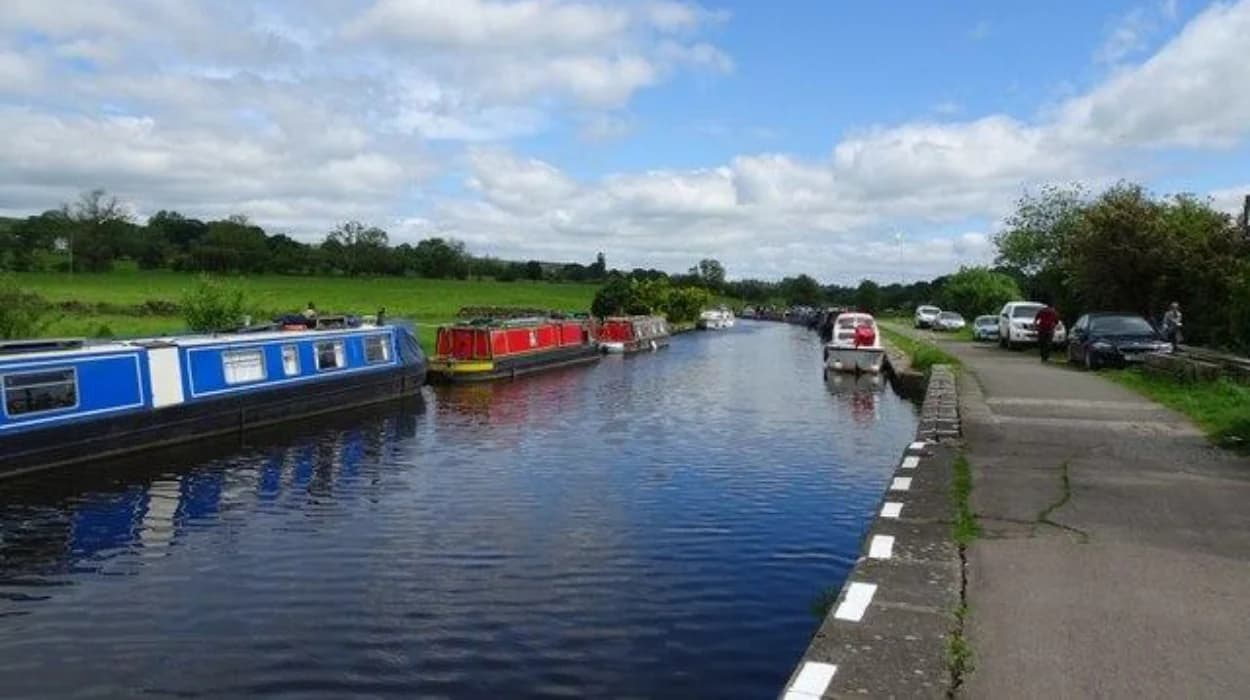
Leeds and Liverpool Canal
The nearby Leeds and Liverpool Canal represents one of Britain's most significant transport engineering projects.
Completed in stages between the eighteenth and nineteenth centuries, the canal enabled coal, textiles, agricultural products, limestone, and manufactured goods to move efficiently across northern England.
Towpaths now provide peaceful walking routes where visitors observe locks, bridges, wildlife habitats, and surviving industrial infrastructure.
Public Rights of Way
Blackrod retains numerous historic footpaths crossing agricultural land and open countryside.
Many originated as medieval routes linking farms, churches, neighbouring settlements, and local markets. Their continued legal protection preserves centuries-old patterns of movement across Lancashire's rural landscape.
Seasonal variation creates changing experiences throughout the year, with spring wildflowers, summer greenery, autumn colours, and expansive winter views each revealing different characteristics of the landscape.
Where can visitors enjoy local food and traditional hospitality?
Blackrod offers traditional pubs, cafés, independent food businesses, and nearby restaurants that reflect Lancashire's longstanding hospitality culture. Many occupy historic buildings or serve communities established during agricultural and industrial expansion, providing authentic local dining experiences throughout the weekend.
Food forms an important part of Lancashire's cultural identity.
Traditional public houses historically served as meeting places for farmers, miners, railway workers, travellers, and local organisations. They hosted commercial transactions, community gatherings, sporting clubs, and social events.
Several historic pubs around Blackrod continue this tradition while adapting to modern hospitality standards.
Visitors commonly find menus featuring regional favourites including:
- Lancashire hotpot
- Steak and ale pie
- Fish and chips
- Sunday roast dinners
- Traditional puddings
These dishes reflect ingredients historically produced or consumed throughout Lancashire.
Independent cafés provide lighter meals and refreshments suitable before or after countryside walks. Local bakeries continue traditions established during the nineteenth century when industrial workers required affordable daily food.
Nearby Bolton and Horwich also expand dining options for visitors wishing to combine Blackrod exploration with wider regional experiences.
How did Blackrod's industrial history shape today's visitor experience?
Coal mining, textile manufacturing, railways, canals, and agricultural change transformed Blackrod between the eighteenth and twentieth centuries. Modern visitors continue to experience landscapes, transport routes, settlement patterns, and surviving architecture created during industrialisation.
Before industrialisation, Blackrod functioned primarily as an agricultural settlement.
The Industrial Revolution fundamentally altered this pattern.
Coal extraction expanded because Lancashire required enormous quantities of fuel for textile mills, steam engines, domestic heating, and manufacturing.
Industrial development produced several long-term changes.
Expansion of Transport
Railways connected Blackrod with larger urban markets.
Improved transport encouraged population growth while enabling workers and goods to travel more efficiently.
Today's railway station continues this historic transport function.
Housing Development
Industrial employment increased demand for housing.
Rows of workers' cottages expanded the settlement beyond its medieval core.
Many remain occupied today, demonstrating durable nineteenth-century construction techniques.
Community Institutions
Industrial prosperity supported schools, churches, chapels, public houses, and community organisations.
These institutions strengthened civic identity while improving education and public welfare.
Although industries declined during the twentieth century, their physical legacy continues shaping the village's appearance and visitor experience.
What natural landscapes surround Blackrod?
Blackrod sits within an environmentally diverse landscape of farmland, woodland, reservoirs, canals, moorland, and wildlife habitats. These environments preserve important ecological resources while illustrating centuries of interaction between natural geography and human settlement.
The village occupies elevated terrain overlooking broad sections of Greater Manchester and Lancashire.
This topography influenced settlement because higher ground provided improved drainage, defensive visibility, and agricultural opportunities.
Surrounding farmland remains an important component of the local landscape.
Agricultural practices evolved from medieval mixed farming to increasingly specialised production following improvements in drainage, machinery, and transport.
Dry stone walls define many field boundaries. These structures represent centuries of agricultural investment and local craftsmanship.
Woodland areas preserve native tree species while supporting birds, mammals, insects, and seasonal wildflowers.
Nearby reservoirs contribute additional ecological diversity by supporting aquatic habitats and migratory birds.
The interaction between industrial heritage and environmental recovery provides an important conservation success story.
Former industrial landscapes increasingly support biodiversity following restoration and habitat management.
How has Blackrod preserved its historic character?
Historic buildings, conservation policies, archaeological research, community organisations, and continued residential use have preserved Blackrod's historic identity. Conservation balances protection of significant heritage assets with the practical needs of a modern village community.
Historic preservation depends upon multiple organisations rather than a single authority.
Local government planning controls protect designated heritage assets.
Historic England provides national expertise regarding listed buildings and conservation standards.
Local historical societies document buildings, photographs, oral histories, and archival records that preserve community knowledge.
Residential occupation also contributes to preservation.
Historic buildings maintained as homes generally receive regular maintenance, extending their lifespan across generations.
Conservation extends beyond architecture.
Historic street layouts, parish boundaries, archaeological sites, traditional footpaths, and cultural traditions together form Blackrod's wider historic landscape.
Genealogical researchers particularly benefit from preserved parish records, cemetery inscriptions, census returns, and archival collections documenting local families across multiple centuries.
These sources help reconstruct migration patterns, occupations, household structures, and demographic change throughout Lancashire.
What makes Blackrod valuable for heritage tourism?
Blackrod offers authentic heritage tourism because historical landscapes remain integrated within everyday village life. Visitors experience genuine historic environments instead of reconstructed attractions, creating educational opportunities supported by surviving architecture, archaeology, landscapes, and documented local history.
Heritage tourism increasingly emphasises authenticity.
Blackrod exemplifies this approach because visitors encounter functioning churches, occupied historic houses, active public rights of way, traditional hospitality venues, and preserved countryside rather than purpose-built heritage complexes.
Educational groups benefit from observing multiple historical themes within one location.
Examples include:
- Medieval parish development
- Agricultural history
- Industrial Revolution landscapes
- Victorian engineering
- Railway expansion
- Environmental conservation
Together these subjects demonstrate long-term historical continuity across approximately eight centuries.
Researchers studying family history also benefit from surviving documentary evidence preserved through parish archives, census records, electoral registers, and local government collections.
The village therefore supports recreational tourism, educational fieldwork, historical research, and cultural appreciation simultaneously.
How can visitors make the most of a weekend in Blackrod?
A balanced weekend combines heritage exploration, countryside walking, local dining, historic architecture, and nearby attractions. This approach provides a complete understanding of Blackrod's historical development, environmental setting, and enduring contribution to Lancashire's cultural heritage.
Beginning in the historic village centre establishes the settlement's medieval foundations before expanding outward into surrounding landscapes.
Walking routes reveal how geography influenced farming, transport, religion, and industry throughout successive historical periods.
Historic churches and traditional streets explain community development, while nearby canals, reservoirs, and former industrial landscapes demonstrate technological and economic transformation during Britain's Industrial Revolution.
Local cafés and traditional pubs complement this historical exploration by continuing longstanding traditions of Lancashire hospitality.
Visitors with additional time can explore neighbouring heritage destinations around Bolton, Horwich, Adlington, Haigh, and Rivington, each contributing further context to the wider history of the region.
Blackrod's greatest strength lies in the relationship between its surviving heritage and its modern community. Rather than functioning as an open-air museum, the village continues to evolve while preserving important evidence of its medieval origins, agricultural economy, industrial expansion, and environmental recovery.
FAQS
What are the best things to do in Blackrod?
Popular activities include exploring St Katharine's Church, walking along the Leeds and Liverpool Canal, discovering historic village streets, enjoying countryside footpaths, and visiting nearby Rivington.