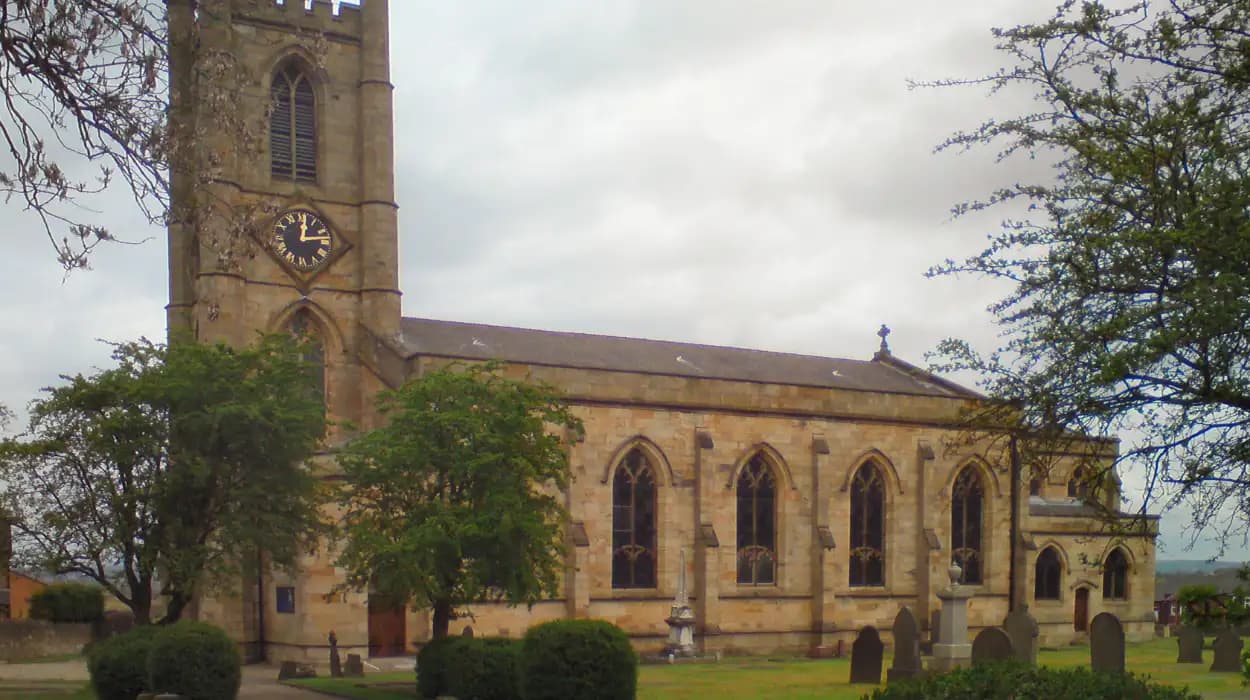
Farnworth is a historic town in the Metropolitan Borough of Bolton, Greater Manchester, with a past shaped by agriculture, coal mining, textile production, canals, railways, religion, and industrial expansion. Although it receives less attention than central Bolton, Farnworth contains a concentrated collection of historic places that explain how a rural settlement became an important industrial community.
The town sits south of Bolton and forms part of the wider historic landscape of Lancashire. Its location between Bolton, Kearsley, Little Lever, and the wider Irwell Valley placed it within important transport and industrial networks. Today, its streets, churches, former industrial sites, parks, and surviving buildings provide evidence of social and economic change across several centuries.
For visitors interested in local history, Farnworth offers a different experience from major tourist centres. Its hidden gems are not concentrated around a single monumental attraction. Instead, its heritage is distributed across the town, where ordinary streets and surviving structures reveal the development of working-class communities, industrial employment, religious institutions, transport infrastructure, and Victorian urban life.
Understanding Farnworth requires looking beyond individual buildings. The town's history is a connected story involving land ownership, parish organisation, industrialisation, population growth, transportation, and twentieth-century redevelopment. These forces created the Farnworth that visitors encounter today.
What makes Farnworth historically important?
Farnworth is historically important because it preserves evidence of Lancashire's transition from rural settlement to industrial town, including medieval parish history, coal mining, textile manufacturing, railway development, religious architecture, and Victorian urban growth.
The earliest history of Farnworth is associated with the development of settlements across the historic county of Lancashire. The place-name itself reflects the landscape of the area, while the surrounding region contained agricultural communities before industrialisation transformed the local economy.
For centuries, Farnworth's population depended largely on farming and small-scale rural activity. Land was divided between farms, cottages, fields, and estates. The settlement's early development was influenced by its position within the historic parish and administrative structures of Lancashire.
The Industrial Revolution transformed this pattern. From the late eighteenth century and throughout the nineteenth century, Lancashire became one of the world's most important centres of cotton manufacturing. Farnworth was drawn into this economic system because of its proximity to Bolton and the expanding industrial districts of south Lancashire.
Coal also played an important role. Coal deposits across the wider Bolton and Lancashire region supported domestic fuel supplies and industrial processes. Mining activity changed employment patterns, created new communities, and contributed to the development of transport infrastructure.
Farnworth's historic significance therefore comes from its role as a representative industrial settlement. It demonstrates how local communities were reshaped by mechanised production, improved transport, population growth, and the expansion of Victorian civic institutions.
The town also provides valuable evidence for genealogical research. Census returns, parish registers, electoral records, cemetery records, and local newspapers help researchers trace families who lived and worked in Farnworth during periods of rapid population growth.
How did Farnworth develop from a rural settlement into an industrial town?
Farnworth developed through gradual industrialisation that replaced a predominantly agricultural economy with employment connected to coal, cotton, engineering, transport, construction, retail, and other industries serving the expanding population of nineteenth-century Lancashire.
The transformation was part of a much wider process. Lancashire's agricultural settlements experienced major economic changes as factories, mines, workshops, and transport networks expanded.
The growth of Bolton was particularly important. Bolton became a major centre of cotton spinning and textile manufacturing, creating demand for labour throughout neighbouring settlements. Farnworth's proximity to Bolton allowed its population to participate in this expanding industrial economy without becoming entirely absorbed into Bolton itself.
Textile production became one of the defining industries of the region. Cotton mills required large numbers of workers, including spinners, weavers, engineers, labourers, warehouse employees, and transport workers. The concentration of industrial employment encouraged migration and natural population growth.
Coal mining also shaped the local landscape. Mining required roads, workers' housing, drainage systems, and transport connections. Former mining areas often survive as altered landscapes rather than intact industrial structures, making historical research essential for understanding their original function.
The nineteenth century brought substantial demographic change. Families moved into industrial Lancashire from surrounding rural districts and other parts of Britain and Ireland. Farnworth became increasingly urban in character as houses, shops, schools, chapels, churches, and public facilities expanded.
This transformation explains why Farnworth contains layers of architectural history. A visitor can encounter older buildings associated with the pre-industrial settlement alongside Victorian terraces and twentieth-century developments.
Where can visitors find Farnworth's most important historic buildings?
Farnworth's most important historic buildings are concentrated around its historic centre, religious institutions, older residential streets, civic buildings, and surviving structures associated with industrial expansion, creating a layered record of local architectural development.
The town centre provides an important starting point for understanding Farnworth's built environment. Commercial streets developed as the population increased, serving workers and families who needed food, clothing, household goods, financial services, and other necessities.
Older residential streets are equally significant. Victorian and Edwardian housing often reveals the social structure of industrial towns. Terraced houses were built close to workplaces and transport routes, reducing travel distances for industrial workers.
The architectural character of these areas reflects practical construction. Brick became a dominant material because it was durable, widely available, and suitable for large-scale urban development. Repeated house designs created efficient accommodation for growing working-class populations.
Religious buildings provide another important layer. Churches and chapels served as places of worship, education, community organisation, and social support. Their records also provide valuable historical evidence for researchers studying local families.
Civic buildings represent another stage of development. As urban populations increased, communities required schools, libraries, administrative offices, public halls, and other institutions.
Farnworth's architectural heritage should therefore be understood as a network rather than a collection of isolated monuments. Streets, buildings, and public spaces collectively demonstrate how the town functioned.
For visitors, walking through the historic parts of Farnworth provides an opportunity to observe the relationship between industrial employment, housing, worship, education, and commerce.
Why is Farnworth Parish Church significant to local history?
Farnworth Parish Church is significant because its religious history reflects the development of the local community, while its surrounding landscape provides evidence of changing patterns of worship, settlement, burial, education, and social organisation across centuries.
The parish church tradition is central to understanding historic Farnworth. Before modern administrative boundaries developed, parish institutions played major roles in recording births, marriages, deaths, and community responsibilities.
Churches also functioned as centres of local identity. Their influence extended beyond religious services into education, charity, burial practices, and community organisation.
The church and its associated records are particularly valuable for genealogists. Parish registers preserve information about families who lived in the area before the introduction of modern civil registration in England and Wales in 1837.
For historical researchers, the distinction between a church building and the wider parish is important. A parish represented an administrative and social unit, while the church served as its principal religious institution.
Visitors interested in architectural history should examine how religious buildings changed over time. Repairs, extensions, restorations, and alterations often reflect changing population levels and religious needs.
The surrounding historic landscape also provides context. Older burial grounds, boundary patterns, paths, and neighbouring buildings can reveal relationships between religious institutions and the communities they served.
Farnworth's religious heritage therefore provides evidence extending beyond architecture. It connects the town to family history, social history, education, and the development of local government.
What can visitors learn from Farnworth's industrial heritage?
Farnworth's industrial heritage explains how coal, cotton, engineering, transport, and manufacturing created employment, expanded the population, influenced housing design, and permanently changed the economic and physical landscape of the town.
Industrial heritage is not limited to surviving mills or mine buildings. It includes roads, canals, railway lines, terraces, workshops, warehouses, schools, churches, and commercial premises created because industrial employment increased.
Cotton manufacturing was central to the regional economy. Bolton and surrounding communities became internationally connected through the production and export of cotton textiles.
Farnworth participated in this regional system through employment, housing, transportation, and supporting trades. Industrial workers needed places to live, shop, worship, educate their children, and socialise.
Coal mining added another economic dimension. Lancashire's coalfields supplied fuel for industry and households. Mining communities developed distinct social structures and occupational identities.
Industrialisation also changed working conditions. Factory employment introduced fixed working hours and disciplined production systems. Industrial workers faced occupational risks, long working days, and periods of economic instability.
The growth of trade unions and political organisations formed part of this wider industrial society. Working-class communities increasingly participated in local and national political life as voting rights expanded during the nineteenth and early twentieth centuries.
Farnworth's industrial history is therefore important because it connects local events with national transformations. The town reflects the wider history of Britain's Industrial Revolution.
How did railways and transport change Farnworth?
Railways and improved transport changed Farnworth by connecting residents with industrial workplaces, markets, neighbouring towns, and wider regional networks, accelerating population growth and strengthening the town's role within Greater Manchester's developing urban economy.
Transport infrastructure was one of the most important forces behind industrial growth. Factories and businesses required reliable movement of raw materials, finished goods, workers, and fuel.
The railway age transformed Lancashire during the nineteenth century. Railway lines connected industrial towns with regional and national markets, reducing travel times and increasing economic integration.
Farnworth's transport connections supported the movement of people between the town and surrounding industrial centres. This allowed residents to work across a wider geographical area and strengthened links between neighbouring communities.
Road transport remained equally important. Local roads connected Farnworth with Bolton, Kearsley, Little Lever, and other settlements. These routes supported commerce and everyday travel.
Canal infrastructure in the wider region also contributed to industrial development. The Manchester Bolton & Bury Canal, constructed during the late eighteenth and early nineteenth centuries, formed part of the transport network that connected industrial Lancashire with wider waterways.
Although not every historic transport structure survives in its original form, former routes remain important to heritage researchers. Their alignment helps explain why factories, warehouses, housing, and commercial centres developed where they did.
Transport history also provides a useful way to understand modern Farnworth. Contemporary roads and rail services continue to connect the town with the wider Greater Manchester economy.
Which hidden green spaces reveal Farnworth's historical landscape?
Farnworth's green spaces preserve elements of the landscape that existed before intensive urbanisation, while parks, open areas, former industrial land, and surviving mature vegetation demonstrate how residents adapted historic land for recreation and community use.
Urban parks became increasingly important during the nineteenth century. Industrial towns experienced dense housing and environmental pressures, creating demand for accessible recreational spaces.
Green spaces provided opportunities for exercise, relaxation, children's recreation, and organised community activities. They also represented changing ideas about public health and urban planning.
In Farnworth and surrounding communities, open land often occupies spaces that once had agricultural, industrial, or transport-related functions. Understanding these historical layers helps visitors interpret today's landscape.
Former industrial sites are particularly valuable for research. Some have been redeveloped, while others have become open spaces or areas of modern infrastructure. Their present appearance can conceal their industrial origins.
Trees and mature vegetation can also provide clues. Long-established trees near older properties, boundaries, and former estates sometimes indicate earlier land divisions.
For educators, these landscapes offer practical opportunities to teach industrialisation and urban change. Students can compare historical maps with modern geography to identify changes in land use.
Green spaces are therefore not simply recreational assets. They are part of Farnworth's historical record and demonstrate the long-term relationship between settlement, industry, and environmental change.
How did Victorian Farnworth shape modern community life?
Victorian Farnworth established many institutions and urban patterns that continue to influence modern community life, including terraced housing, schools, churches, commercial streets, transport routes, civic organisations, and neighbourhood identities.
The Victorian period was a decisive phase in Farnworth's development. Britain experienced rapid industrial expansion, population growth, and political reform between 1837 and 1901.
Local government structures became increasingly important as towns expanded. Communities required organised systems for sanitation, education, roads, public health, and administration.
Education was particularly significant. The expansion of elementary schooling created new opportunities for working-class children and helped establish literacy as a central part of modern society.
Housing also changed. Terraced streets provided accommodation for industrial workers and their families. These properties were designed for dense urban settlement and remain a distinctive feature of many Lancashire towns.
Commercial streets expanded alongside housing. Local shops served everyday needs and created social centres within neighbourhoods.
Religious institutions continued to provide community services. Churches and chapels frequently supported schools, charitable activities, and social organisations.
These Victorian foundations influenced Farnworth long after industrial employment declined. Modern neighbourhoods still reflect nineteenth-century street layouts and building patterns.
The survival of these structures gives historians evidence about the relationship between economic change and everyday life.
What role did Farnworth's churches and chapels play in working-class communities?
Churches and chapels played major roles in Farnworth's working-class communities by providing worship, education, charity, social activities, burial facilities, and community networks that extended far beyond formal religious services.
Industrialisation created communities that needed institutions capable of supporting large populations. Religious organisations often filled this role.
Churches provided formal worship and maintained parish records. Chapels associated with Nonconformist traditions offered alternative forms of religious organisation and often developed strong community identities.
Religious buildings also supported education. Sunday schools and other educational programmes helped children develop literacy and religious knowledge.
Charitable work was another major function. Congregations organised assistance for families experiencing poverty, illness, unemployment, or bereavement.
The records generated by religious institutions remain important historical sources. Baptism, marriage, and burial registers help researchers reconstruct family networks and population movements.
For genealogists tracing Farnworth families, religious records are especially valuable when combined with census returns and civil registration documents.
The architecture of churches and chapels also reflects changing religious communities. Building size, decorative features, extensions, and memorials provide evidence about wealth, membership, and local identity.
These institutions therefore form an essential part of Farnworth's social history.
How can visitors use Farnworth's historic streets to understand the town's past?
Farnworth's historic streets reveal the relationship between industrial employment and urban life through their housing patterns, building materials, commercial premises, religious institutions, transport routes, and surviving architectural details from the nineteenth and twentieth centuries.
Walking through older neighbourhoods allows visitors to study historical geography directly.
Terraced houses reveal how industrial workers were accommodated. Their repeated layouts demonstrate the need for efficient housing construction during periods of population growth.
Corner shops and former commercial premises show how local economies operated. Many businesses were positioned within walking distance of residential areas.
Religious buildings often occupy prominent sites because they served large communities. Their locations can indicate the historical importance of particular neighbourhoods.
Street patterns also reveal transport priorities. Roads connecting industrial areas with housing districts often developed in response to employment and movement.
Architectural details provide additional evidence. Brickwork, window design, roof forms, boundary walls, and building scale can help identify periods of construction.
Historic maps are particularly useful. Comparing nineteenth-century maps with modern mapping reveals changes in industrial sites, railway lines, roads, housing, and open land.
This approach turns an ordinary walk into a form of historical research. It allows visitors to understand how physical geography records economic and social change.
To experience this historic landscape in person today, consult our comprehensive [Forgotten Stories and Historic Landmarks That Shaped Farnworth] for itineraries and visiting parameters.
What is Farnworth's lasting historical significance?
Farnworth's lasting historical significance lies in its surviving combination of rural origins, industrial transformation, religious heritage, working-class communities, transport connections, historic housing, and documentary records that collectively explain the making of modern Greater Manchester.
Farnworth demonstrates that important history does not depend on grand monuments alone. Historic significance often survives in ordinary buildings, street plans, parish records, former industrial landscapes, and community institutions.
The town's development reflects several major historical processes. Agricultural society gave way to industrial employment. Coal and cotton reshaped the economy. Railways connected communities. Population growth transformed settlement patterns. Victorian institutions established modern civic life.
These changes affected families directly. Workers moved into the area, children attended new schools, religious communities expanded, and businesses developed around growing neighbourhoods.
The evidence remains valuable for historians, educators, genealogists, and visitors. Historic records allow researchers to reconstruct individual lives, while buildings and landscapes reveal the physical environment in which those lives unfolded.
Farnworth's future heritage value depends on recognising these connections. Protecting historic evidence does not mean freezing the town in the past. It means ensuring that regeneration and modern development retain an understanding of the area's origins.
For tourists, the town offers a distinctive form of heritage exploration. Its hidden gems are found through careful observation of churches, streets, architecture, parks, transport routes, and surviving industrial traces.
For history enthusiasts, Farnworth provides a compact study of Lancashire's transformation.
For educators, it offers a practical case study in industrialisation and urban growth.
For genealogists, its archival records provide pathways into family history.
For cultural tourists, its historic landscape demonstrates how a modern Greater Manchester community emerged from centuries of economic and social change.
Farnworth's greatest historical value is therefore its completeness as a local story. Its heritage connects the rural past with the industrial revolution, the Victorian town with the modern urban community, and individual family histories with the wider development of Greater Manchester.
That layered history makes Farnworth a destination worth exploring carefully. Its hidden gems are not simply isolated attractions. Together, they form a historical record of how people lived, worked, worshipped, travelled, built communities, and adapted to economic change across generations.
FAQS
What is Farnworth famous for?
Farnworth is known for its industrial heritage, historic churches, Victorian architecture, coal mining history, textile connections, transport links, and proximity to Bolton and the wider Greater Manchester region.