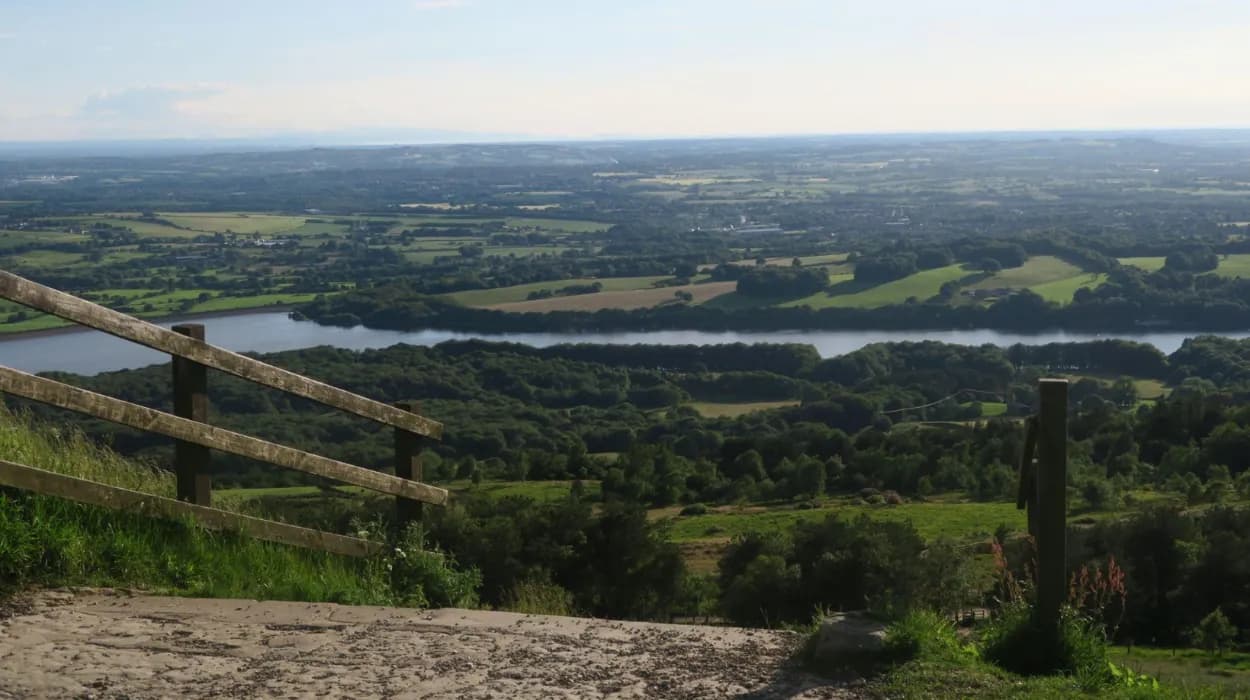
Blackrod is a historic town in the western part of the Metropolitan Borough of Bolton, Greater Manchester. Positioned between Bolton, Wigan, and Horwich, it combines centuries of local history with accessible countryside, heritage landmarks, and everyday community spaces. Visitors searching for walking routes, historical attractions, and authentic local experiences find a settlement that preserves traces of medieval Lancashire while remaining a functioning modern community.
Why is Blackrod worth visiting today?
Blackrod offers a combination of historic landmarks, rural walking routes, industrial heritage, and community spaces within a compact area. Visitors can explore medieval origins, historic transport corridors, local churches, countryside paths, and surviving evidence of Lancashire’s industrial development in a single visit.
Located approximately six miles west of Bolton town centre, Blackrod occupies an important position along historic routes connecting Lancashire with neighboring counties. The settlement developed around agriculture, trade, transport, and later textile manufacturing. Unlike larger urban destinations, Blackrod provides an opportunity to experience heritage within a landscape that still retains significant rural character.
The town sits near the western edge of the former historic county of Lancashire. Its elevated position offers views toward the West Pennine Moors and surrounding countryside. This geographic setting shaped local development for centuries, influencing farming, transportation, settlement patterns, and later industrial expansion.
Today, visitors encounter a place where medieval, Georgian, Victorian, and modern elements coexist. Historic buildings stand near residential neighborhoods, while old transport routes continue to influence movement through the area.
For visitors interested in heritage tourism, Blackrod represents a valuable example of how smaller Lancashire settlements evolved through successive historical periods without losing their local identity.
What is the historical significance of Blackrod?
Blackrod possesses historical significance because it developed from a medieval settlement into an industrial community while maintaining continuity of occupation. Documentary records, transport links, religious institutions, and surviving historic structures reveal more than eight centuries of local development.
The name Blackrod is generally believed to derive from Old English linguistic elements associated with a dark or wooded clearing. Settlement activity existed in the area long before the modern town emerged, but documentary references become clearer during the medieval period.
By the 12th and 13th centuries, Blackrod formed part of the feudal landscape of Lancashire. Agricultural production dominated daily life. Farms, fields, and local tenancies supported the population, while regional trade connected residents with nearby market centres.
The town later benefited from improvements in transport infrastructure. Historic roads linking Lancashire communities passed through the area, making Blackrod a useful stopping point for travellers and traders.
The Industrial Revolution transformed the settlement. Textile manufacturing expanded throughout Lancashire during the 18th and 19th centuries, and Blackrod participated in these broader economic changes. Coal mining and related industries also influenced employment patterns.
Population growth during the Victorian period led to additional housing, schools, churches, and civic facilities. Many surviving buildings from this era continue to define the character of the town today.
Blackrod therefore serves as an example of how a rural medieval settlement adapted to industrialization while retaining visible connections to earlier periods.
Which historic landmarks should visitors explore in Blackrod?
Visitors should explore Blackrod’s parish church, historic streets, traditional stone buildings, former industrial sites, and surviving transport-related features. These landmarks illustrate the town’s medieval roots, Victorian expansion, and industrial heritage while remaining accessible within a walkable geographic area.
Historic landmarks in Blackrod are distributed throughout the settlement rather than concentrated within a single heritage district. This creates opportunities for self-guided exploration.
St Katharine’s Church
Among the most significant historic structures is St Katharine’s Church. The church occupies a central place in Blackrod’s historical development and religious life.
Although parts of the current structure reflect later rebuilding and restoration campaigns, the site itself has longstanding religious importance. Churches historically functioned as religious, social, administrative, and community centres throughout Lancashire villages.
The churchyard contains memorials that document generations of local residents. These inscriptions provide valuable evidence for genealogical researchers studying family histories connected to Blackrod and surrounding communities.
Historic Town Centre Streets
Several streets preserve elements of Blackrod’s historical layout. Traditional stone buildings and older commercial properties illustrate architectural styles associated with Lancashire towns during the 18th and 19th centuries.
The arrangement of roads and buildings reflects centuries of adaptation rather than a single planned development. This gradual evolution is typical of settlements with medieval origins.
Industrial Heritage Remnants
Although many industrial structures disappeared during the 20th century, evidence of Blackrod’s manufacturing past remains visible in building forms, street patterns, and former mill-related locations.
These remnants demonstrate how textile production and associated industries shaped local employment and urban growth.
Historic landmarks therefore provide physical evidence of Blackrod’s transformation across multiple eras, including medieval examples, Victorian examples, and modern preservation efforts.
Where are the best walks in and around Blackrod?
The best walks around Blackrod combine countryside scenery, historic routes, local landmarks, and connections to wider regional trails. Walkers can experience agricultural landscapes, former transport corridors, elevated viewpoints, and heritage sites within relatively short distances.
Walking remains one of the most effective ways to understand Blackrod’s geography and history.
The surrounding landscape reflects centuries of agricultural activity. Fields, hedgerows, stone boundaries, and rural pathways preserve elements of traditional Lancashire land use.
Blackrod to Rivington Area Walks
Many visitors choose routes connecting Blackrod with nearby Rivington. These walks pass through landscapes shaped by farming, reservoir construction, and estate management.
The area includes significant views toward the West Pennine Moors. Elevated sections reveal the relationship between settlements and surrounding countryside.
Local Public Footpaths
Public rights of way provide access to fields, woodland sections, and historic routes. These paths often follow alignments established long before modern road systems emerged.
Walking these routes helps visitors appreciate how movement through the region occurred before railways and motor vehicles transformed transportation.
Countryside Circular Routes
Several circular walks allow visitors to begin and end within Blackrod itself. These routes combine heritage exploration with rural scenery and provide insight into the settlement’s historical relationship with its agricultural hinterland.
To experience these historic landscapes in person today, consult our comprehensive [The History of Blackrod: From Ancient Lancashire Village to Modern Bolton Community] for itineraries and visiting parameters.
Walking routes therefore connect visitors with both natural and historical dimensions of the Blackrod landscape.
How did transport shape the development of Blackrod?
Transport transformed Blackrod from an agricultural settlement into a connected industrial community. Historic roads, turnpike improvements, railway infrastructure, and regional transport networks increased trade, mobility, employment opportunities, and population growth across successive centuries.
Transport history forms a central theme in understanding Blackrod.
Before industrialization, movement depended largely upon local roads and packhorse routes. Agricultural goods, livestock, and commercial products travelled through the area toward regional markets.
The improvement of turnpike roads during the 18th century increased efficiency and reduced travel times. Better road connections encouraged trade and economic development.
The arrival of rail transport represented a major turning point. Railway infrastructure linked Blackrod more directly with industrial centres throughout Lancashire and beyond.
Improved transportation enabled workers to commute, businesses to expand, and goods to reach larger markets. Population growth followed these developments.
Transport networks also influenced housing construction. Residential development frequently occurred near routes that offered access to employment opportunities.
Modern visitors can still identify evidence of transport history through route alignments, railway infrastructure, and settlement patterns established during earlier centuries.
What architectural features define Blackrod’s character?
Blackrod’s architectural character is defined by stone-built structures, Victorian housing, religious buildings, traditional commercial premises, and remnants of industrial development. Together these features illustrate how local materials and economic change influenced construction across multiple historical periods.
Architecture provides a visible record of historical development.
Local stone appears prominently throughout older sections of Blackrod. Builders utilized readily available materials to construct homes, boundary walls, churches, and commercial properties.
Victorian expansion introduced new architectural forms. Terraced housing accommodated industrial workers, while public buildings reflected growing civic confidence.
Religious Architecture
Church buildings remain among the most architecturally significant structures in the town.
Religious institutions often represented major investments by local communities and therefore display higher levels of craftsmanship and decorative detail.
Residential Architecture
Housing illustrates changing living standards and economic conditions.
Examples include farmhouses, cottages, terraced properties, and later suburban developments. Each housing type reflects a distinct phase in local history.
Commercial Buildings
Historic shops and business premises demonstrate how commerce operated within a growing Lancashire community.
Although some functions changed over time, many structures continue contributing to the historic character of Blackrod.
The architectural landscape therefore serves as an open-air record of local social and economic development.
What hidden gems can visitors discover in everyday Blackrod?
Blackrod’s hidden gems include lesser-known heritage features, quiet green spaces, historic viewpoints, traditional streetscapes, and community landmarks that often receive less attention than major attractions but reveal important aspects of local identity and history.
Hidden gems frequently provide the most authentic understanding of a place.
Small architectural details such as historic boundary stones, older property inscriptions, and traditional building features reveal information about earlier generations.
Quiet residential streets preserve historical character often absent from larger tourist destinations.
Community spaces also deserve attention. Parks, recreation grounds, and local gathering places demonstrate how public life evolved throughout the 20th century.
Historic viewpoints around the edges of the settlement offer perspectives that explain Blackrod’s relationship with surrounding landscapes.
For genealogists, churchyards and memorial inscriptions represent valuable resources. These sites preserve connections between present-day communities and earlier residents.
Hidden gems therefore contribute significantly to understanding everyday life in Blackrod across different periods.
How does Blackrod connect to the wider history of Bolton and Lancashire?
Blackrod connects closely to the broader history of Bolton and Lancashire through agriculture, textile production, transportation networks, religious institutions, and local government development. Its history reflects many of the economic and social processes that shaped northwest England.
The town’s development cannot be separated from regional history.
Lancashire became one of Britain’s most important industrial regions during the 18th and 19th centuries. Textile manufacturing transformed communities throughout the county.
Blackrod participated in these changes while retaining aspects of its rural heritage.
Connections with Bolton strengthened through commerce, employment, transportation, and administrative relationships. Residents increasingly travelled between settlements as transport improved.
Regional coal mining also influenced economic development. Mining supported industrial growth and provided employment for many Lancashire communities.
Educational institutions, religious organizations, and local governance structures further connected Blackrod with neighboring towns.
These relationships demonstrate how local history and regional history developed together rather than independently.
Why does Blackrod’s heritage remain important today?
Blackrod’s heritage remains important because historic buildings, landscapes, records, and community traditions preserve evidence of social, economic, and cultural change. These resources support education, tourism, research, conservation, and public understanding of local identity.
Heritage preservation helps maintain connections between past and present.
Historic structures provide tangible evidence of earlier ways of life. Without preservation, important information about settlement development disappears.
Educational institutions use local heritage to teach broader themes in British history. Students can examine industrialization, transportation, architecture, and community development through local examples.
Genealogical researchers benefit from surviving records, memorials, and historic landscapes. These sources assist investigations into family histories linked to Lancashire.
Heritage tourism also contributes economic value. Visitors interested in local history support businesses while increasing awareness of cultural assets.
Conservation initiatives ensure that future generations can access authentic historical environments rather than relying solely on documentary sources.
Blackrod’s continued preservation therefore serves educational, cultural, and community purposes.
What makes Blackrod an enduring destination for visitors?
Blackrod remains an enduring destination because it combines historical depth, accessible countryside, architectural heritage, and everyday local character. Visitors gain insight into Lancashire’s past while experiencing a living community that continues to evolve without losing its historical foundations.
Unlike destinations focused on a single attraction, Blackrod offers a layered historical landscape. Medieval origins, industrial development, religious heritage, transport history, and rural surroundings coexist within a compact geographic area.
Visitors can walk historic routes, explore significant buildings, study architectural changes, and observe how the settlement adapted to centuries of economic and social transformation.
The town’s value lies not only in major landmarks but also in its surviving streetscapes, community spaces, and cultural continuity. Together these elements provide a comprehensive picture of local history in northwest England.
For residents, researchers, educators, and cultural tourists, Blackrod represents an important example of Lancashire’s enduring heritage. Its preserved landscapes, historical landmarks, and everyday hidden gems continue to connect the present with more than eight centuries of documented history.
FAQS
What is Blackrod famous for?
Blackrod is famous for its long history as a Lancashire settlement, its medieval origins, historic church, countryside surroundings, and connections to the Industrial Revolution. The town reflects centuries of agricultural, transport, and industrial development.