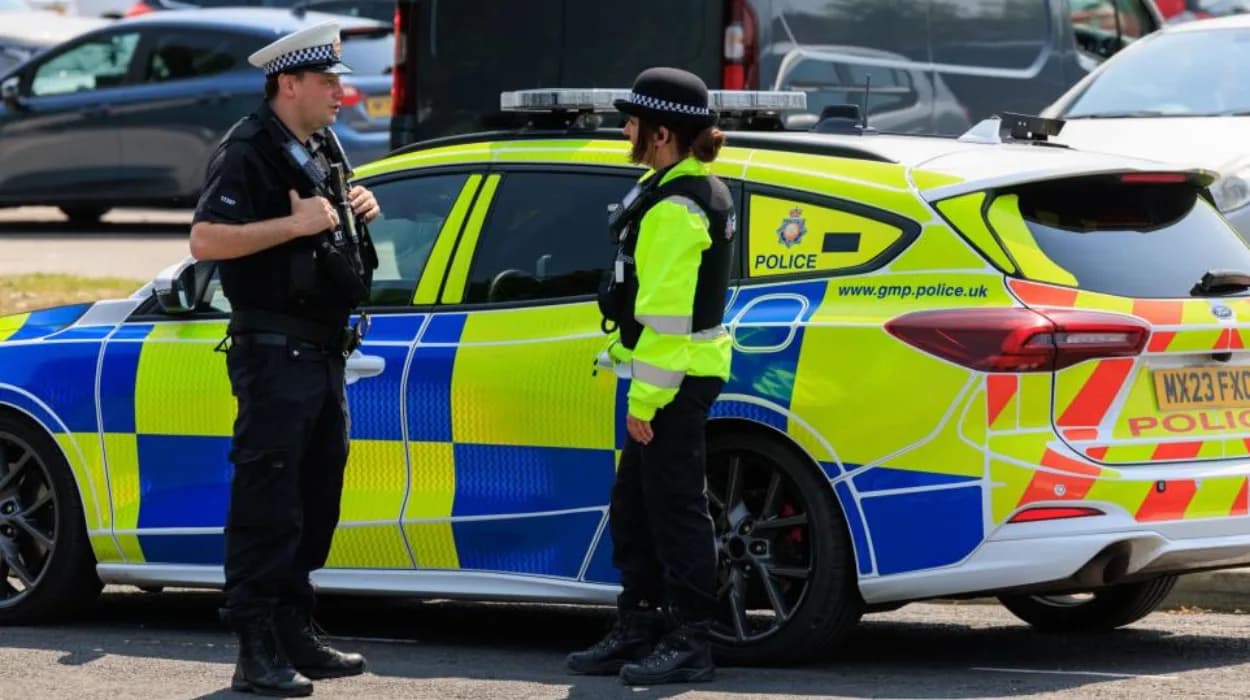
Key Points
- Event Launch: The Neighbourhood Policing Week of Action 2026 has officially commenced in Bolton to highlight the localized efforts of neighborhood officers and foster community engagement.
- Targeted Operations: Greater Manchester Police (GMP) officers are focusing on severe community concerns, including drug dealing, shoplifting, and anti-social behavior linked to e-bikes.
- Crime Reduction Metrics: Neighborhood crime has fallen by 15 per cent across every borough in Greater Manchester over the past twelve months.
- Five-Year Achievements: Force-wide data reveals a quarter-reduction in vehicle crime, 600 fewer burglary victims each month, and a doubling of total arrests to 72,509 under Chief Constable Sir Stephen Watson’s leadership.
- Proactive Tactics: Operational activities throughout the week feature execution of dozens of warrants, targeted hotspot patrolling, and structural problem-solving.
- Public Engagement: The initiative balances law enforcement with community integration, utilizing school visits, Police and Community Together (PACT) drop-in sessions, open days, and business partnerships.
- Force Expansion: Senior leadership has confirmed each local sector now features a designated, named officer alongside a broader uplift in structural neighborhood policing roles.
Bolton (Bolton Today) June 17, 2026 — The structural deployment of localised law enforcement has taken centre stage across Greater Manchester as the Neighbourhood Policing Week of Action 2026 officially commenced, aiming to directly showcase the daily efforts of local bobbies and establish face-to-face dialogue between suburban communities and their dedicated officers.
Organized by Greater Manchester Police (GMP), the week-long initiative is designed to demonstrate how hyper-local law enforcement teams confront persistent town-level infractions while simultaneously executing a wider strategy to rebuild public trust. Throughout the metropolitan borough of Bolton, residents are being met with an elevated, highly visible police presence, with officers dynamically deployed across targeted sectors to handle long-standing civic grievances.
What is the Purpose of Neighbourhood Policing Week in Bolton?
The primary objective of the initiative is to bridge the gap between abstract regional policing strategies and the visible, daily realities of residents living in suburban communities. As reported by Saiqa Chaudhari, the Audience and Content Editor of The Bolton News, officers across the Bolton borough work every single day to systematically tackle specialized issues of immediate concern to local people. These localized problems range from the disruptive rise of anti-social electronic bikes (e-bikes) navigating pedestrian zones to entrenched street-level drug dealing, widespread retail shoplifting, and general public disorder.
Rather than relying solely on reactive emergency responses, the week of action shifts the focus onto structural visibility. By placing named officers directly onto the pavements of Bolton's distinct neighborhoods, the force aims to humanize the uniform and encourage open, ongoing dialogues regarding localized safety concerns.
How Much Has Crime Fallen Across Greater Manchester?
Statistical assessments released by law enforcement authorities alongside the launch of the event indicate a notable downward trajectory in localized criminal activity over the past year. Writing for The Bolton News, journalist Saiqa Chaudhari confirmed that neighborhood crime has been reduced by 15 per cent across the entirety of Greater Manchester. Crucially, this double-digit percentage decline was not isolated to select urban centers but was recorded uniformly across every single borough within the force's regional jurisdiction, including Bolton.
This localized reduction is being treated by police analysts as an validation of geographically focused, intelligence-led deployment. By stabilizing neighborhoods through consistent, visible monitoring, officers have managed to suppress opportunistic thefts and public disturbances that frequently erode civic confidence.
What Are the Long-Term Trends Under Chief Constable Sir Stephen Watson?
The statistical progress highlighted during the 2026 week of action aligns with broader institutional transformations tracking back half a decade. According to data compiled and verified by The Bolton News editorial team, the five years since Sir Stephen Watson joined GMP as Chief Constable have yielded a dramatic turnaround in macro-level performance metrics for the historically challenged force.
Chief among these long-term institutional gains is a substantial impact on domestic property crimes. As reported by Saiqa Chaudhari of The Bolton News, police figures state that the region now experiences 600 fewer burglary victims each calendar month compared to the baseline trends observed prior to Sir Stephen’s appointment.
Furthermore, property-related offences linked to transit have seen a parallel decline, with vehicle-related crime reduced by a full quarter across the metropolitan region. These systemic reductions have been heavily driven by an aggressive shift toward proactive prosecution and localized deterrent strategies.
Explore More Bolton Police News
Illegal E-Bike Seized and 75 Vehicles Checked in Bolton, 2026
Police Appeal for Missing 19-Year-Old Wade from Royal Bolton Hospital, Bolton 2026
How Many Arrests Are Greater Manchester Police Making?
The decline in overall neighborhood crime has occurred in tandem with an unprecedented surge in active law enforcement intervention and custody processing. Data published by The Bolton News reveals that across the entirety of the force, the absolute volume of formal arrests has doubled over the five-year tracking window.
Specifically, in the single operational year leading up to April 2026, Greater Manchester Police executed a total of 72,509 legal arrests. Institutional spokespeople have explicitly noted that proactive neighborhood work contributes greatly to this overall figure. This continuous enforcement cycle relies heavily on neighborhood teams feeding street-level intelligence upward into specialized divisions, resulting in the execution of dozens of highly targeted search and arrest warrants across the force each month.
What Activities Can Bolton Residents Expect This Week?
While the broader data sets capture regional trends, the immediate reality for Bolton residents involves an array of local, operational deployments. According to The Bolton News reporting, the week will continue to see a dedicated spotlight directed at all distinct manners of neighborhood policing workflows.
Operationally, the strategy is split between enforcement and civic preventative measures, utilizing a mix of:
- High-intensity hotspot patrolling in areas historically prone to theft and anti-social behavior.
- Rapid, problem-solving community actions to address immediate localized complaints.
- Targeted multi-agency sweeps to address persistent anti-social behavior.
Institutional planners emphasize that while securing formal arrests and investigating active criminality will always take place where legally necessary, deep engagement work within communities is viewed as equally vital. This balancing act is designed to simultaneously improve public confidence and tackle the underlying root causes of generational crime before it escalates into severe societal harm.
How Can the Local Community Meet Their Officers?
For residents seeking to voice concerns or engage with law enforcement, the week features a structured schedule of localized community touchpoints. As reported by Saiqa Chaudhari of The Bolton News, this public integration takes the functional form of community drop-in sessions, most notably the structured Police and Community Together (PACT) meetings.
Beyond these formal civic forums, the neighborhood teams are actively executing:
- Comprehensive school visits to engage with local youth and educate on the dangers of anti-social behavior.
- Public station open days designed to demystify police operations for families.
- Targeted business visits to help local shopkeepers implement effective anti-shoplifting protocols.
- Collaborative charity partnership programs addressing vulnerability and homelessness.
Throughout the remaining course of the week, Bolton residents are told to expect an increased, highly visible police presence on the streets. Officers deployed in these roles are under explicit directives to remain accessible, open, and more than willing to discuss any specific safety issues or systemic neighborhood grievances brought forward by members of the public.
What Does Leadership Say About the Future of Local Policing?
The structural value of this decentralized framework was heavily reinforced by senior command during the operational launch. As reported by Saiqa Chaudhari of The Bolton News, Assistant Chief Constable Matt Boyle, Greater Manchester Police’s organizational lead for Local Policing, stated that:
"Neighbourhood policing is a core component of our output across Greater Manchester. These are the officers who know their communities best, know the issues that face people, and are best-placed to tackle those problems in the most efficient way."
Addressing the force's internal structural reorganizations, Assistant Chief Constable Matt Boyle further explained to The Bolton News that:
"As a force priority, we have delivered on ensuring each area has a named officer, while also securing an uplift of neighbourhood roles across our city-region. Plenty more will be completed in the coming months as we continue to invest in neighbourhood policing and preventative measures."
Commenting directly on the long-term sustainability of the current deployment model, Assistant Chief Constable Matt Boyle concluded his statement to The Bolton News by clarifying:
"This week shines a light on the fantastic work that they do – from the dedication and determination of problem-solving teams to acts of individual brilliance by officers in the thick of it. While this is just one week, this is by no means a one-off. It is something that officers do day in, day out, not just here in Greater Manchester, but across the entirety of the UK."
This executive outlook underscores an institutional consensus within GMP that temporary public relations exercises are insufficient. Instead, the force is positioning the 2026 Neighbourhood Policing Week of Action as a transparent status report on a permanent, structurally funded return to traditional, localized British policing.