Key Points
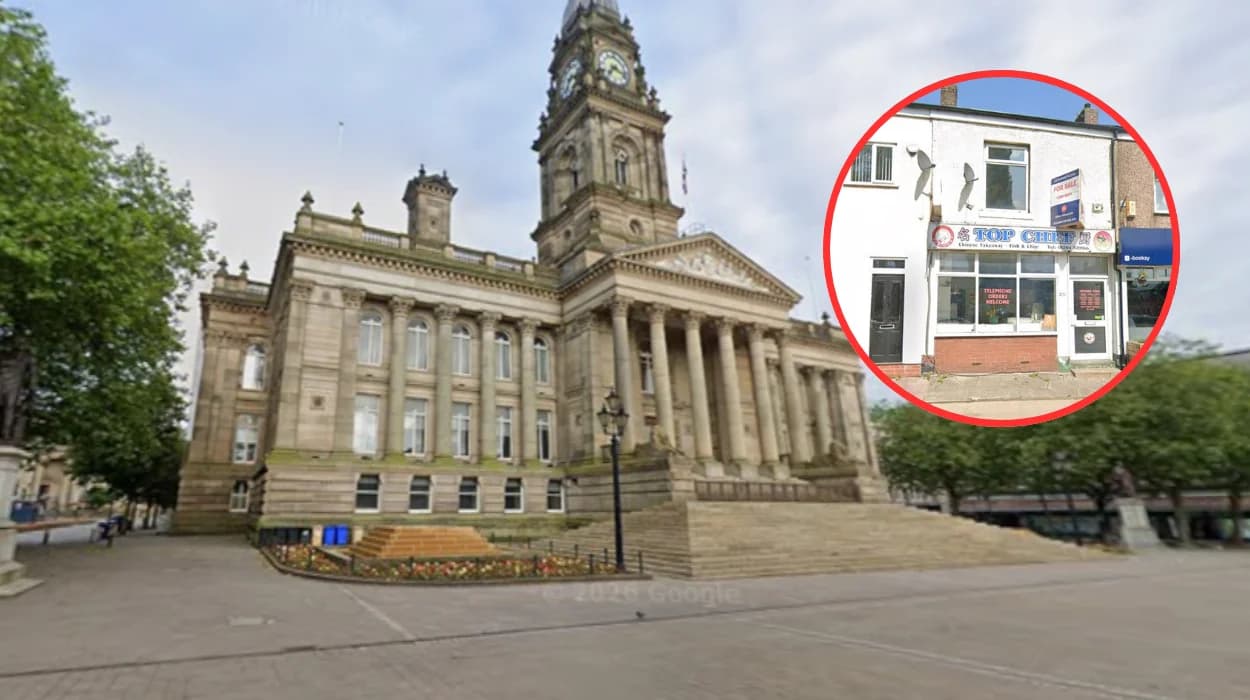
- Bolton Council has refused plans to convert a former Chinese takeaway in Kearsley into a five-bedroom house in multiple occupation.
- The property involved is Top Chef, at 211 Manchester Road.
- The proposal would have created accommodation for five people.
- Plans also included a rear dormer extension.
- Nine objections were submitted by neighbours during the application process.
Kearsley (Bolton Today) July 11, 2026 - Bolton Council has rejected a scheme to turn a former Chinese takeaway in Kearsley into a five-bedroom house in multiple occupation, bringing an end to plans that would have changed the use of the Top Chef building at 211 Manchester Road. The proposal, which also included a rear dormer extension, was opposed by neighbours and ultimately refused by the local authority.
Why was the application refused?
The council’s decision means the owners cannot proceed with the conversion under the submitted plans. The application sought permission to transform the former takeaway into accommodation for five people, a type of housing commonly known as an HMO. According to the report, the property in question was the former Top Chef takeaway on Manchester Road.
Nine objections were lodged by nearby residents during the consultation period, showing that the proposal had drawn concern locally. The objections formed part of the planning process considered by Bolton Council before its final decision.
What was the proposal?
The scheme centred on adapting the former takeaway premises into shared housing. In practical terms, that would have meant reconfiguring the building to provide bedrooms and associated living accommodation for five occupants. The application also included plans for a rear dormer extension, which would have altered the building’s roofline and increased usable space.
HMOs often attract close scrutiny from planning authorities because they can raise issues around parking, waste, noise, and the balance of housing types in an area. In this case, the local objections suggest neighbours were unhappy about how the conversion might have affected the character or day-to-day conditions of the street.
What did the neighbours say?
The available report says only that nine objections were submitted, and it does not set out each complaint in detail. Even so, that level of response indicates the plan triggered notable local concern during the application stage. In planning cases such as this, neighbour objections can influence how a council weighs the impact of a proposal against planning policy.
Without a published breakdown of the objections in the supplied report, it is not possible to attribute specific concerns to individual residents. What is clear is that the application did not pass the council’s assessment, and the refusal closes off the proposed change for now.
Explore More Kearsley News
Former Kearsley Pupils Hold Historic School Reunion in Bolton 2026
Local Chef Launches Family-Run Deli-licious Bakery in Kearsley 2026
What happens next?
The refusal means the applicant would need to revise the plans and submit a fresh application if they still want to pursue a conversion. A revised scheme could potentially address the issues that led to objections or to the council’s decision. The report does not say whether the applicant intends to appeal or return with amended plans.
For the moment, Top Chef at 211 Manchester Road remains a former takeaway rather than a five-bedroom HMO. The council’s decision leaves the building’s future use unresolved, but it cannot proceed as proposed under the refused application.
Why does this matter locally?
Small planning decisions like this can shape how neighbourhoods evolve over time, especially where older commercial premises are being reused for housing. In places such as Kearsley, conversions of former shops and takeaways into residential accommodation can become flashpoints between housing need and local amenity concerns. This case reflects that wider tension, with the council siding against the proposal after receiving objections.
The refusal also shows how planning decisions are not only about the physical building, but about how a new use may fit with the surrounding area. Where neighbours raise objections, councils often have to balance development opportunities with the likely effect on existing residents.
What is an HMO?
An HMO is a house in multiple occupation, meaning a property shared by several unrelated people who usually rent individual rooms while sharing facilities such as kitchens or bathrooms. These properties are common in urban housing markets and are often used to provide lower-cost accommodation.
Because HMOs can affect parking demand, refuse storage, and neighbourhood character, planning permission is sometimes required when a building is converted into this type of use. The Kearsley application was one such case, and Bolton Council decided not to approve it.
What does the report not say?
The supplied report does not include the council’s full reasoning, the applicant’s comments, or any direct quotes from councillors, officers, or residents. It also does not name the journalist attached to the article in the source text provided here. For that reason, this account is limited to the facts clearly stated in the report itself.
It is therefore not appropriate to add claims about policy breaches, enforcement action, or appeal intentions unless they are explicitly confirmed. The confirmed facts are limited to the address, the proposed use, the dormer extension, the neighbour objections, and the refusal by Bolton Council.