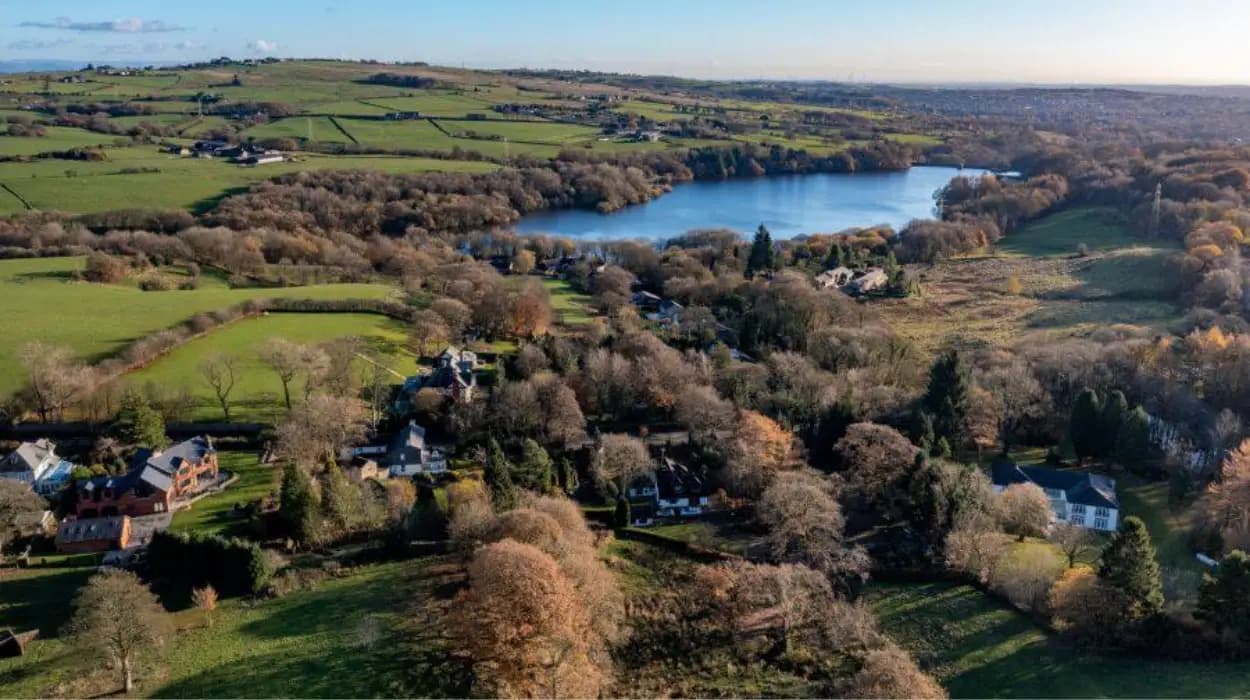
Bolton's parks and green spaces represent more than recreational landscapes. They document the borough's transformation from medieval farmland into one of Britain's most significant industrial centres before evolving into a modern community that values conservation, public health, and heritage. Woodlands, reservoirs, country estates, formal Victorian parks, moorland, and protected nature reserves collectively preserve centuries of environmental, social, and architectural history.
During the Industrial Revolution, Bolton experienced rapid urban growth driven by textile manufacturing and coal mining. Expanding residential districts increased pressure on public health, leading local authorities, philanthropists, and estate owners to establish accessible green spaces for recreation and cleaner air. Many of today's parks originated from private estates, medieval hunting grounds, reservoirs built for industry, or municipal improvement projects undertaken during the nineteenth and twentieth centuries.
These landscapes continue to protect biodiversity, preserve historic monuments, support education, and connect residents with Bolton's cultural heritage. Their historical significance extends beyond leisure because they illustrate changing attitudes toward public welfare, environmental management, landscape architecture, and urban planning.
Why are Bolton's parks and green spaces historically important?
Bolton's parks and green spaces preserve evidence of medieval agriculture, Victorian public health reforms, industrial expansion, landed estates, and modern conservation. Together they illustrate more than eight centuries of landscape evolution while protecting significant ecological habitats, historic buildings, archaeological remains, and community heritage.
The history of Bolton's green landscape begins long before formal public parks existed. During the medieval period, much of the borough consisted of agricultural land divided among manorial estates, open fields, commons, woodland, and grazing areas. These landscapes supported farming communities while supplying timber, fuel, livestock pasture, and fresh water.
The Industrial Revolution fundamentally reshaped Bolton between the late eighteenth and nineteenth centuries. Cotton spinning, weaving, engineering, bleaching, and coal mining transformed open countryside into expanding urban neighbourhoods. Population growth increased demand for healthier living conditions, prompting campaigns for public parks similar to those established throughout Victorian Britain.
Victorian reformers regarded parks as essential public infrastructure. Green spaces improved sanitation, encouraged physical exercise, reduced overcrowding, and provided structured recreation for working families. Their development reflected national public health legislation, municipal investment, and philanthropic donations.
Twentieth-century conservation expanded the purpose of parks beyond recreation. Nature reserves, woodland restoration, heritage protection, and environmental education became central objectives. Bolton's modern green network therefore reflects continuous adaptation across multiple historical periods rather than a single phase of development.
How did Bolton develop its public parks?
Bolton developed its public parks through municipal investment, philanthropic land donations, estate acquisitions, and landscape preservation from the nineteenth century onward. Former private estates, reservoirs, farmland, and industrial landscapes gradually became publicly accessible recreational and conservation areas across the borough.
Public parks emerged as part of Britain's wider urban improvement movement during the nineteenth century. Industrial towns increasingly recognised that dense housing and factory pollution required accessible open space.
Local authorities began purchasing land specifically for recreation. Wealthy landowners also donated estates for public benefit. Former aristocratic grounds frequently retained mature woodland, ornamental lakes, historic buildings, and carefully designed landscapes.
The Public Health Acts strengthened municipal responsibility for environmental wellbeing. Local councils gained greater authority to acquire and maintain public parks, gardens, and recreational grounds.
Throughout the twentieth century, further acquisitions expanded Bolton's park system. Former country estates entered public ownership, while reservoirs, moorland, and woodland received additional legal protection through conservation policies and planning legislation.
This gradual expansion created a diverse collection of landscapes rather than a uniform network. Urban gardens, woodland parks, country estates, reservoirs, sports grounds, and protected habitats each reflect different historical circumstances.
Which historic estates shaped Bolton's green landscape?
Historic landed estates formed the foundation of several modern parks by preserving woodland, lakes, gardens, and historic buildings before transferring into public ownership. These estates demonstrate changing patterns of aristocratic residence, landscape design, and public access from the seventeenth century onward.
Many of Bolton's largest parks originated as private country estates belonging to influential families.
Smithills Hall provides one of the borough's oldest surviving estate landscapes. The manor has medieval origins, while later owners expanded surrounding woodland, farmland, and parkland over several centuries. Today the estate preserves extensive woodland, historic agricultural features, and walking routes alongside the medieval hall itself.
Queens Park represents Victorian municipal park design rather than aristocratic ownership. Opened in 1866, it commemorated Queen Victoria and became Bolton's first public park. Formal gardens, ornamental lakes, tree-lined avenues, and recreational facilities reflected nineteenth-century landscape architecture focused on civic pride and public wellbeing.
Leverhulme Park illustrates twentieth-century philanthropy. William Hesketh Lever, later Lord Leverhulme, donated land for recreation and sport, reinforcing the connection between industrial wealth and public benefit.
These examples demonstrate different origins while collectively illustrating how private landscapes evolved into public heritage assets.
How did the Industrial Revolution change Bolton's natural environment?
Industrialisation transformed Bolton from predominantly agricultural countryside into a manufacturing town through textile production, mining, transport infrastructure, and urban expansion. Parks later balanced environmental loss by preserving surviving woodland, reservoirs, farmland, and open recreational landscapes within an industrial borough.
Before industrialisation, farming dominated the local economy. Small villages surrounded Bolton, while woodland covered parts of nearby valleys and hillsides.
Industrial development accelerated after improvements in steam power, textile machinery, and transport infrastructure. Cotton mills multiplied rapidly throughout the nineteenth century.
Coal mining supported factory expansion by supplying fuel. Railways, canals, reservoirs, roads, and housing developments altered natural drainage patterns and fragmented agricultural land.
Smoke pollution from thousands of industrial chimneys affected air quality throughout Victorian Bolton.
Municipal parks responded directly to these environmental pressures. They introduced cleaner air, tree planting, ornamental planting schemes, and recreational opportunities into densely populated districts.
The creation of protected countryside surrounding Bolton later prevented unrestricted urban expansion while preserving important ecological landscapes.
What role did reservoirs play in Bolton's environmental history?
Reservoirs secured reliable water supplies for domestic consumption and industrial production while creating lasting landscapes that later gained recreational, ecological, and heritage significance. Their construction reflects nineteenth-century engineering achievements and expanding urban infrastructure throughout Greater Manchester.
Water availability determined industrial success during the nineteenth century.
Textile mills required substantial quantities of clean water for spinning, bleaching, dyeing, and finishing cotton products. Expanding populations also increased domestic demand.
Reservoirs such as Jumbles Reservoir originated primarily as engineering infrastructure rather than recreational landscapes. Engineers constructed dams, spillways, channels, and embankments to regulate water supplies efficiently.
Over time, these artificial lakes became valuable wildlife habitats supporting birds, aquatic vegetation, amphibians, and woodland ecosystems.
Modern visitors often experience reservoirs as peaceful walking destinations, although their original purpose remained industrial water management.
Their continued preservation demonstrates how infrastructure can evolve into cultural and environmental heritage.
Why is Smithills Estate central to Bolton's landscape history?
Smithills Estate preserves medieval manorial history, agricultural heritage, ancient woodland, and historic parkland within one interconnected landscape. Its surviving buildings, farmland, footpaths, and conservation areas provide one of Bolton's most complete historical environments spanning several centuries.
Smithills Estate extends across thousands of acres on Bolton's western edge near the West Pennine Moors.
The medieval manor house remains among Greater Manchester's most significant historic buildings. Surrounding farmland demonstrates traditional agricultural land management that existed before industrialisation transformed the region.
Ancient woodland contains mature oak, beech, ash, and mixed native species that support diverse wildlife populations.
Estate boundaries, historic walls, farm buildings, and long-established rights of way preserve evidence of changing land ownership and rural life.
Educational programmes now interpret farming practices, woodland ecology, medieval history, and conservation management for visitors and schools.
To experience this historic landscape in person today, consult our comprehensive [Best Picnic Spots in Bolton for Relaxing Outdoor Family Experiences Together] for itineraries and visiting parameters.
How did Victorian parks improve public health in Bolton?
Victorian parks improved public health by providing cleaner air, organised recreation, tree planting, exercise opportunities, and landscaped environments within industrial neighbourhoods. Their design reflected nineteenth-century public health reforms addressing overcrowding, pollution, and rapidly expanding urban populations.
Industrial Bolton experienced severe overcrowding during the nineteenth century.
Housing frequently developed close to mills and factories. Limited sanitation increased disease transmission, while smoke pollution reduced air quality.
Public parks addressed these conditions through carefully planned landscapes. Designers incorporated wide walking paths, ornamental lakes, lawns, flower gardens, tree-lined avenues, sports grounds, and seating areas.
Municipal authorities encouraged walking, organised sporting events, and outdoor recreation to improve physical and mental wellbeing.
These principles reflected wider Victorian beliefs that attractive public environments encouraged healthier lifestyles and stronger civic identity.
Many original design features remain visible today despite later adaptations.
How have Bolton's woodlands and moorlands been preserved?
Woodlands and moorlands have been preserved through conservation designations, sustainable management, public ownership, habitat restoration, and environmental education. These landscapes protect biodiversity while preserving geological, archaeological, and historical evidence across the borough's upland environments.
Bolton borders the West Pennine Moors, creating a distinctive transition between urban development and upland countryside.
Historic woodland survived because steep valleys limited industrial construction in certain areas.
Conservation organisations, local authorities, and community volunteers now manage woodland through selective planting, invasive species control, habitat restoration, and public access improvements.
Moorland preserves peat deposits that record thousands of years of environmental change through pollen analysis and archaeological research.
Protected habitats support birds, mammals, insects, fungi, and native vegetation.
Long-distance footpaths connect these landscapes while encouraging appreciation of both natural and cultural heritage.
What architectural and landscape features define Bolton's historic parks?
Historic parks combine ornamental landscaping, Victorian engineering, estate architecture, mature trees, monuments, lakes, bridges, and recreational facilities. These features demonstrate changing approaches to landscape architecture, public recreation, civic identity, and environmental management over successive historical periods.
Landscape design evolved significantly between the eighteenth and twentieth centuries.
Country estates emphasised picturesque scenery, carefully positioned woodland, lakes, and sweeping parkland intended to complement manor houses.
Victorian municipal parks introduced more formal layouts. Geometric flower beds, decorative railings, bandstands, fountains, boating lakes, and promenades reflected civic ambition and contemporary landscape architecture.
Twentieth-century parks increasingly incorporated sports pitches, playgrounds, visitor centres, and educational facilities alongside traditional ornamental elements.
Historic stone bridges, estate walls, gatehouses, and mature tree collections remain valuable architectural features throughout Bolton's park network.
These surviving elements provide physical evidence of changing recreational priorities across different generations.
How do Bolton's parks support biodiversity and conservation today?
Bolton's parks protect habitats for birds, mammals, insects, amphibians, and native plants through habitat restoration, woodland management, wetland conservation, and ecological monitoring. Their environmental importance complements their historical value by preserving landscapes shaped across multiple centuries.
Modern conservation extends beyond preserving attractive scenery.
Ecologists actively manage woodland, grassland, wetlands, ponds, reservoirs, and moorland habitats.
Native tree planting increases ecological resilience while supporting long-term woodland succession.
Wetland management improves water quality and benefits amphibians, dragonflies, waterfowl, and aquatic vegetation.
Grassland restoration encourages pollinating insects that contribute to wider ecosystem health.
Environmental education introduces visitors to sustainable land management while strengthening appreciation of historical landscapes.
Climate resilience has become an increasingly important objective because mature woodland stores carbon, reduces flooding, and moderates urban temperatures.
Why do Bolton's parks remain significant for future generations?
Bolton's parks remain significant because they preserve historical landscapes, strengthen biodiversity, support education, improve public health, and protect cultural heritage. Their continued management ensures future generations understand the borough's agricultural origins, industrial transformation, and environmental recovery through authentic historic environments.
Historic landscapes provide irreplaceable educational resources.
Students examine changing land ownership, industrialisation, conservation, landscape architecture, ecology, archaeology, and local government through real-world examples rather than abstract concepts.
Genealogical researchers use parish boundaries, estate records, historic maps, and cemetery landscapes to understand family histories connected with Bolton.
Heritage conservation also supports sustainable tourism. Visitors experience authentic historic environments while contributing to the local economy through responsible recreation.
Future management priorities increasingly include biodiversity restoration, climate adaptation, woodland expansion, accessible pathways, historic structure conservation, and environmental education.
Together these objectives ensure Bolton's parks continue serving both cultural heritage and ecological resilience.
Bolton's parks and green spaces represent one continuous historical landscape rather than isolated recreational sites. Medieval farmland, aristocratic estates, Victorian public parks, industrial reservoirs, woodland, and protected moorland collectively document the borough's evolution across more than eight centuries.
Industrialisation transformed Bolton into one of Britain's leading manufacturing centres, yet it also created the conditions that inspired investment in healthier public environments. Municipal authorities, philanthropists, conservation organisations, and local communities subsequently preserved landscapes that continue benefiting residents and visitors alike.
Today these parks safeguard biodiversity, historic architecture, archaeological evidence, and environmental knowledge while maintaining strong connections to Bolton's agricultural and industrial past. Their enduring importance demonstrates that green spaces are not simply places for recreation. They are living historical records that explain how landscapes, communities, and public priorities have evolved together over generations.
For historians, educators, cultural tourists, genealogists, and heritage enthusiasts, Bolton's parks remain among the borough's most valuable historical assets, preserving the environmental legacy that continues shaping its identity in the twenty-first century.
FAQS
What is the oldest public park in Bolton?
Queen's Park is widely recognised as Bolton's oldest public park, officially opening in 1866 during the Victorian era as part of public health reforms designed to provide green space for the town's growing industrial population.