Bolton's most photographed landmarks combine medieval heritage, industrial architecture, Victorian civic design, and natural landscapes. Together they document more than 1,000 years of local history while providing visually distinctive settings that attract visitors, historians, educators, and photographers throughout every season.
Historic landmarks become iconic photo locations because they preserve authentic architectural character while reflecting important periods in Bolton's development. Every landmark represents a different chapter of the town's evolution, from medieval religious foundations to textile manufacturing, municipal expansion, public parks, and country estates.
Bolton developed from a medieval market settlement into one of Britain's leading cotton manufacturing centres during the Industrial Revolution. This transformation produced churches, mills, town halls, schools, bridges, reservoirs, public parks, and country houses that remain visually recognisable today.
Photography also benefits from Bolton's varied landscape. Gothic towers rise above Victorian streets, reservoirs reflect surrounding moorland, and preserved estates combine woodland, lakes, and historic buildings within accessible public spaces. These features create strong visual compositions that continue attracting heritage photographers and cultural tourists.
Unlike temporary attractions, historic landmarks retain permanent historical significance. They represent documented architectural styles, local craftsmanship, civic ambition, religious history, and industrial innovation, making them valuable subjects for educational research as well as tourism.
Which historic landmark has become Bolton's best-known photographic symbol?
Bolton Town Hall remains the town's most recognisable photographic landmark because its Victorian architecture, civic importance, elaborate stonework, and prominent location have defined Bolton's visual identity since its completion during the nineteenth century.
Completed in 1873, Bolton Town Hall stands on Victoria Square as one of Lancashire's finest examples of Victorian civic architecture. Designed by architect William Hill, the building reflects the prosperity generated by Bolton's textile industry.
Constructed primarily from local sandstone, the Town Hall features classical architectural elements including Corinthian columns, ornate pediments, sculptural decoration, and an impressive central clock tower. These architectural features create symmetrical compositions that appeal to photographers.
The building symbolised municipal confidence during Britain's industrial expansion. Bolton received its municipal borough status in 1838, and the new Town Hall represented the authority and ambitions of an expanding industrial community.
Victoria Square enhances the building's photographic value through its open public space, monuments, and surrounding historic streetscape. Seasonal events, commemorations, and civic ceremonies continue to reinforce the Town Hall's importance as Bolton's ceremonial centre.
Historic images demonstrate how the Town Hall has remained visually dominant despite modern development around the town centre. Its preservation ensures continuity between Victorian Bolton and the modern borough.
To experience this historic landmark in person today, consult our comprehensive [Most Instagrammable Places in Bolton Every Travel Photographer Should Visit This Year] for itineraries and visiting parameters.
How does Bolton Parish Church contribute to the town's historic photographic heritage?
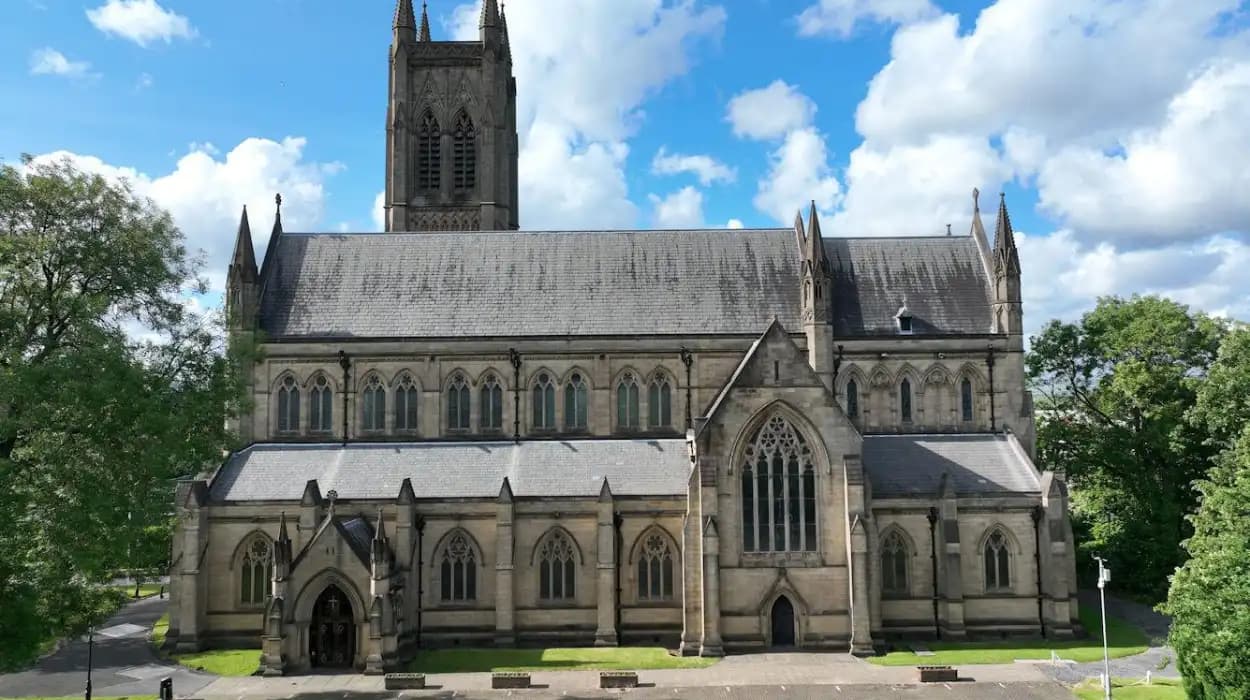
Bolton Parish Church preserves more than six centuries of religious history through medieval foundations, Gothic architecture, and continuous community use, making it one of Bolton's oldest and most historically significant photographic landmarks.
Officially dedicated as the Church of St Peter, Bolton Parish Church occupies one of the oldest continuously used religious sites in the town.
Historical records indicate a church existed on the site by the thirteenth century, although the present structure largely reflects rebuilding undertaken during the fifteenth century and later Victorian restoration projects.
The church demonstrates Perpendicular Gothic architecture through pointed arches, stone tracery, buttresses, stained-glass windows, and a prominent square tower. These architectural characteristics produce dramatic photographic perspectives throughout the year.
Bolton Parish Church survived periods of rapid industrialisation that transformed surrounding neighbourhoods into dense manufacturing districts. As textile mills expanded, the church remained the spiritual and civic centre of the community.
Inside, memorials commemorate prominent industrialists, clergy, military personnel, and local families whose contributions shaped Bolton's economic and social development.
The surrounding churchyard also preserves historical monuments and burial records that support genealogical research. Parish registers remain valuable sources for historians studying Lancashire families before national civil registration began in 1837.
Today, photographers value the contrast between medieval stone architecture and the evolving urban skyline that surrounds the church.
What makes Smithills Hall one of Bolton's most historically important photography locations?
Smithills Hall represents over six centuries of architectural evolution through its medieval manor house, Tudor additions, Victorian restoration, and preserved estate landscape, providing exceptional visual evidence of Lancashire's changing social and political history.
Smithills Hall originated during the fourteenth century as a medieval manor house serving influential Lancashire landowners.
Successive owners expanded the property across several centuries. Medieval, Tudor, Jacobean, Georgian, and Victorian architectural elements coexist within the same building, illustrating changing construction methods and domestic lifestyles.
The hall became associated with George Marsh, a Protestant preacher executed during the Marian persecutions in 1555. Local tradition links the building to Marsh's final examination before his execution, adding national religious significance.
Stone mullioned windows, timber framing, decorative chimneys, courtyards, gardens, and surrounding woodland provide varied photographic opportunities.
Smithills Estate extends beyond the hall itself. Managed as public countryside, the estate includes historic farm buildings, woodland paths, reservoirs, agricultural landscapes, and panoramic viewpoints across the West Pennine Moors.
Conservation programmes preserve original architectural features while allowing public access, ensuring the site's educational value continues for future generations.
Why is Le Mans Crescent considered one of Bolton's finest architectural photography settings?
Le Mans Crescent combines eighteenth-century Georgian planning with nineteenth-century civic expansion, creating one of Britain's most complete curved urban architectural ensembles and an internationally recognised historic streetscape.
Le Mans Crescent forms a sweeping semicircular terrace inspired by classical Georgian urban planning principles.
Construction began during the 1820s under architect George Webster. The crescent originally reflected Bolton's increasing commercial prosperity as wealthy merchants sought prestigious premises near the expanding town centre.
The buildings display symmetrical façades, ashlar stone construction, sash windows, decorative cornices, and consistent proportions associated with Georgian architecture.
Today the crescent accommodates cultural institutions including Bolton Library and Museum. These functions ensure continued public access while preserving the architectural character of the historic buildings.
The wide open space before the crescent enables photographers to capture uninterrupted views of the entire façade. Morning and evening sunlight further emphasise the building's classical symmetry.
Its designation within Bolton's conservation framework protects the architectural integrity of one of northern England's most distinguished Georgian civic landscapes.
How did the Industrial Revolution create Bolton's most iconic photographic landmarks?
The Industrial Revolution transformed Bolton into a globally significant cotton manufacturing centre, producing mills, chimneys, warehouses, canals, railways, and workers' housing that continue defining many of the town's historic photographic landscapes.
Between approximately 1780 and 1914, Bolton experienced extraordinary industrial growth centred on cotton spinning, weaving, bleaching, engineering, and textile machinery manufacturing.
Steam-powered mills replaced earlier water-powered production methods. Large brick factory complexes became dominant visual features throughout the borough.
Industrial architecture prioritised durability, efficiency, and fire resistance. Tall chimneys, repetitive windows, cast-iron structural elements, and substantial engine houses created distinctive skylines that remain identifiable today.
Railway expansion strengthened Bolton's manufacturing economy by connecting factories with Liverpool docks, Manchester markets, and international export routes.
Although many mills disappeared during twentieth-century redevelopment, surviving examples preserve important evidence of Britain's industrial heritage.
Former mill buildings increasingly accommodate residential apartments, business centres, educational facilities, and cultural venues. Adaptive reuse enables preservation while supporting contemporary economic activity.
Industrial archaeology continues documenting surviving machinery foundations, engine houses, mill ponds, and transportation infrastructure across the borough.
Why do Queens Park and Bolton's Victorian parks remain popular photography destinations?
Victorian public parks combined recreation, landscape design, public health, and civic pride. Their preserved lakes, monuments, gardens, bridges, and mature trees continue providing historically authentic environments for heritage photography throughout Bolton.
Queens Park opened in 1866 during a national movement promoting public parks as essential urban amenities.
Landscape designers incorporated ornamental lakes, winding pathways, formal gardens, fountains, bridges, and carefully selected tree collections.
Victorian municipal leaders viewed parks as investments in public health, education, and civic improvement. Industrial workers gained access to open green spaces away from crowded residential districts.
Many original landscape features survive despite modern improvements. Historic entrances, stone structures, memorials, and mature planting schemes preserve nineteenth-century design principles.
Seasonal variation contributes significantly to photographic appeal. Spring flowering displays, summer greenery, autumn foliage, and winter frost each reveal different aspects of the park's historic landscape design.
The park continues functioning as both a recreational space and an important example of Victorian municipal planning.
What historical importance do Bolton's reservoirs and surrounding landscapes hold?
Bolton's reservoirs reflect nineteenth-century engineering achievements that supplied clean water for expanding industries and growing populations while creating scenic landscapes that have become celebrated photographic destinations across the West Pennine Moors.
Industrial expansion dramatically increased water demand throughout Lancashire.
Reservoir construction formed part of large-scale civil engineering projects designed to provide reliable supplies for factories, households, and public sanitation.
Sites including Jumbles Reservoir, Belmont Reservoir, and surrounding water systems illustrate Victorian engineering expertise.
Stone dams, overflow structures, embankments, and associated infrastructure demonstrate practical engineering combined with durable construction techniques.
Beyond their engineering significance, reservoirs reshaped local landscapes by creating reflective water surfaces surrounded by woodland, farmland, and upland moorland.
Wildlife habitats developed around these water bodies, increasing ecological importance alongside historical value.
Today these landscapes attract walkers, photographers, environmental researchers, and historians studying Britain's nineteenth-century infrastructure development.
How have Bolton's historic landmarks been preserved for future generations?
Historic preservation in Bolton combines statutory protection, conservation planning, restoration projects, museum management, and community engagement to safeguard nationally and locally significant buildings, monuments, landscapes, and archaeological remains.
Historic England lists numerous Bolton buildings because of their architectural or historical significance.
Listed status protects important structures against inappropriate alteration or demolition while encouraging sensitive restoration.
Bolton Council manages conservation areas that preserve the wider character of historically significant neighbourhoods rather than individual buildings alone.
Museums, archives, heritage organisations, and volunteer groups contribute to ongoing documentation, interpretation, and educational programmes.
Restoration projects increasingly balance historical authenticity with modern accessibility, environmental sustainability, and practical long-term maintenance.
Digital archives, laser scanning, photographic recording, and archaeological surveys further support conservation by creating permanent records of historic structures.
Educational partnerships encourage schools and universities to use Bolton's built heritage as a resource for teaching architecture, history, geography, engineering, and local studies.
Why do Bolton's historic photo locations remain culturally significant today?
Bolton's historic landmarks connect contemporary communities with medieval origins, industrial achievement, Victorian civic development, and environmental heritage, ensuring their continued importance for education, tourism, historical research, cultural identity, and photographic documentation.
Historic landmarks provide tangible evidence of Bolton's long development from medieval settlement to internationally recognised industrial town.
They preserve craftsmanship that modern construction techniques rarely replicate. Stone carving, stained glass, wrought iron, timber framing, masonry, and traditional roofing demonstrate historic building skills developed across successive centuries.
These locations also strengthen cultural tourism. Visitors interested in architecture, industrial heritage, genealogy, and landscape photography contribute to Bolton's local economy while supporting museums, heritage organisations, hospitality businesses, and conservation initiatives.
For educators, landmarks function as open-air classrooms where historical events become visible through surviving buildings and landscapes rather than abstract descriptions alone. Students studying Britain's medieval period, Industrial Revolution, Victorian municipal government, religious history, and architectural development gain direct access to authentic historical environments.
Genealogical researchers also benefit because churches, cemeteries, civic buildings, and historic neighbourhoods preserve connections to families who lived and worked in Bolton during different historical periods. Parish registers, municipal archives, census records, and surviving industrial sites provide valuable evidence for tracing Lancashire ancestry.
Modern photography plays an important role in preservation. Contemporary images document the condition of buildings, landscapes, monuments, and streetscapes, creating visual records that support conservation planning and historical comparison. Heritage organisations increasingly use photographic surveys to monitor structural change and restoration work over time.
Public appreciation further strengthens preservation efforts. Communities that understand the historical importance of local landmarks are more likely to support conservation funding, adaptive reuse projects, educational initiatives, and responsible tourism.
Bolton's best-known photographic landmarks therefore represent more than attractive scenery. They form an interconnected historical landscape illustrating over a millennium of architectural evolution, industrial innovation, civic ambition, religious continuity, and environmental stewardship. Together they explain how a medieval Lancashire settlement developed into one of Britain's defining industrial towns while preserving enduring monuments that continue educating, inspiring, and attracting visitors from around the world.
FAQS
What are Bolton's most famous historic landmarks?
Bolton's best-known historic landmarks include Bolton Town Hall, Smithills Hall, Bolton Parish Church (St Peter's), Le Mans Crescent, Hall i' th' Wood Museum, Turton Tower, Queens Park, and several historic reservoirs across the borough.