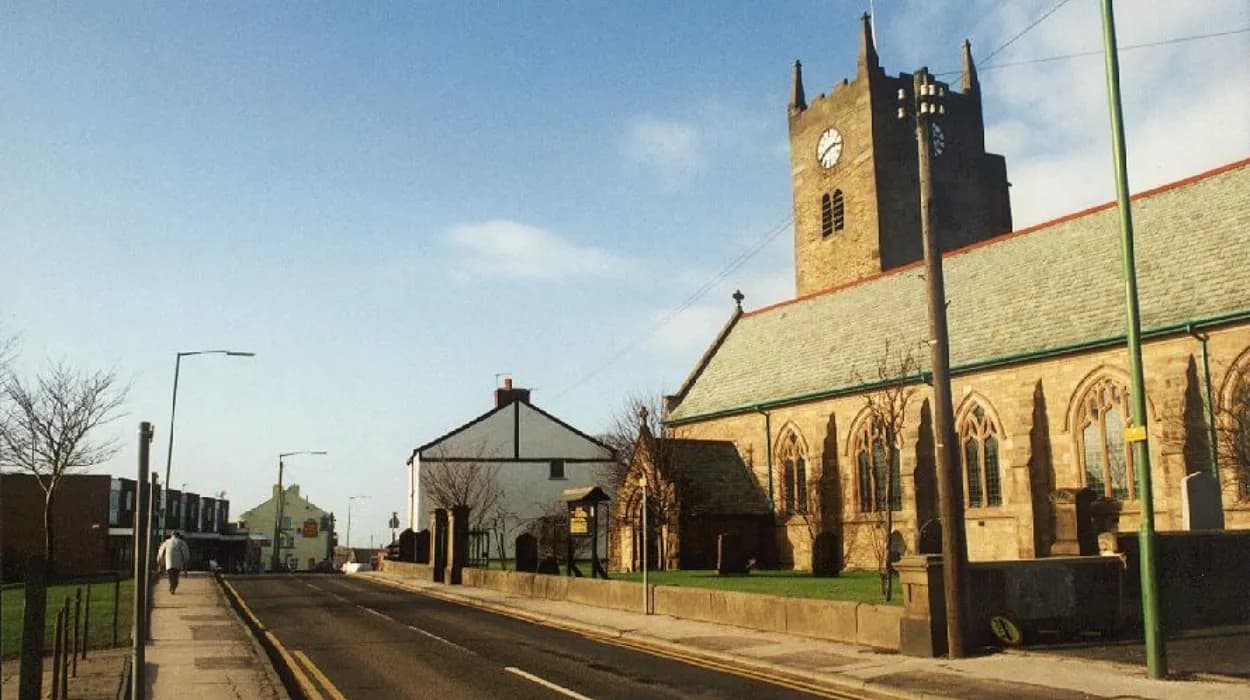
Blackrod, situated on the western edge of the Metropolitan Borough of Bolton in Greater Manchester, possesses a history that extends far beyond its modern appearance as a commuter village. For centuries, it occupied a strategically important position between Lancashire's agricultural lands, industrial settlements, and transport corridors. Despite its modest size, Blackrod influenced regional trade, industry, transportation, religion, governance, and community development across northern Bolton.
Its historical significance emerges through successive phases of medieval settlement, agricultural production, coal mining, textile manufacturing, canal construction, railway expansion, and twentieth-century urban transformation. These interconnected developments illustrate how relatively small communities contributed substantially to the economic and social evolution of northern England.
Today, many physical reminders of this heritage survive in listed buildings, ancient routes, former industrial landscapes, churches, and conservation areas. Together they provide valuable evidence of the village's long-term development and its continuing role within Bolton's historical identity.
Why is Blackrod historically important within northern Bolton?
Blackrod developed as an agricultural, industrial, transport, and religious centre whose economic activity, strategic location, and community institutions contributed significantly to the historical growth of northern Bolton from the medieval period through the Industrial Revolution and into the modern era.
Blackrod's importance stems primarily from geography. Positioned between Wigan, Chorley and Bolton, the settlement occupied elevated ground overlooking historic communication routes across western Lancashire. This location encouraged continuous occupation for centuries while supporting movement of goods, livestock, coal, textiles and people.
Historical evidence indicates settlement in the area during the medieval period, although archaeological discoveries suggest much earlier human activity across surrounding uplands. The village formed part of the ancient parish system and later became integrated into Lancashire's administrative structure.
Throughout the Middle Ages, Blackrod functioned primarily as an agricultural settlement. Farmers cultivated cereals, maintained pasture for livestock and supported neighbouring market towns through local food production. Agricultural prosperity established the economic foundation that later enabled industrial expansion.
The village subsequently evolved into an important industrial community during Britain's Industrial Revolution. Coal extraction, textile production and engineering enterprises transformed employment patterns while attracting workers from surrounding districts. Unlike larger industrial towns, Blackrod retained many aspects of its rural landscape alongside expanding industry.
Its historical development therefore reflects broader changes that shaped northern England, making Blackrod an important case study for understanding regional economic and social evolution.
How did Blackrod originate and develop during the medieval period?
Blackrod originated as a medieval agricultural settlement where farming, local governance, parish institutions, and regional trade established the foundations that supported later industrial expansion and long-term population growth throughout northern Lancashire.
The earliest documented references to Blackrod appear during the medieval era when Lancashire's manorial system organised land ownership and agricultural production. The village formed part of wider estates controlled by local landholders who managed farming, rents and legal administration.
Agriculture dominated everyday life. Families cultivated oats, barley and wheat while maintaining cattle, sheep and horses across surrounding fields. Woodland supplied timber, fuel and building materials essential for domestic and agricultural purposes.
The medieval road network strengthened Blackrod's regional importance. Routes connecting Bolton with Wigan and Chorley passed near the settlement, encouraging commercial exchange between villages and emerging market centres.
Religious institutions also influenced village development. Parish churches served as centres of worship, education, taxation and record-keeping. Baptisms, marriages and burials documented within parish registers now provide valuable resources for genealogical researchers tracing family histories across Lancashire.
Medieval governance relied upon local courts, manorial customs and ecclesiastical authority. These institutions regulated land tenure, inheritance disputes, farming obligations and communal responsibilities, ensuring long-term stability within the settlement.
Although medieval Blackrod remained relatively small, its institutional foundations created the framework that supported centuries of continuous occupation.
How did coal mining transform Blackrod's economy?
Coal mining fundamentally reshaped Blackrod by creating employment, attracting investment, expanding infrastructure, supporting regional industries, and integrating the village into Lancashire's rapidly industrialising economy during the eighteenth and nineteenth centuries.
Coal deposits beneath Blackrod became increasingly valuable as industrial demand accelerated during the eighteenth century. Improved mining techniques enabled deeper extraction while expanding markets created sustained commercial opportunities.
Mining generated employment for hundreds of local workers. Families often depended on multiple generations employed within collieries, creating strong occupational traditions that defined village life for decades.
Coal powered textile mills, steam engines, ironworks and domestic heating throughout Lancashire. Blackrod therefore supplied an essential resource supporting industrial production far beyond village boundaries.
Industrial employers invested in transport improvements that facilitated movement of extracted coal to regional markets. Roads, canals and later railways significantly reduced transportation costs while expanding commercial reach.
Mining also altered settlement patterns. New housing accommodated growing workforces, while shops, schools and public buildings emerged to support expanding communities.
Industrial employment carried considerable risks. Underground explosions, flooding, roof collapses and respiratory diseases affected mining communities throughout Lancashire. Safety legislation gradually improved working conditions during the nineteenth century, although hazardous labour remained common.
Former mining landscapes continue influencing Blackrod today through altered topography, reclaimed land and surviving industrial archaeology.
What role did textile manufacturing play in Blackrod's industrial growth?
Textile manufacturing diversified Blackrod's economy by creating skilled employment, encouraging technological innovation, supporting export industries, and linking the village directly with Lancashire's internationally significant cotton and weaving sectors.
Lancashire became the world's leading cotton-producing region during the Industrial Revolution. Blackrod participated within this wider manufacturing network through spinning, weaving and associated engineering activities.
Early textile production relied upon domestic weaving undertaken within cottages. Families combined farming with seasonal textile work, producing cloth for regional merchants before factory production expanded.
Mechanisation transformed manufacturing during the late eighteenth and nineteenth centuries. Steam-powered machinery increased production capacity while reducing reliance upon manual processes.
Textile mills stimulated local economic growth by generating employment opportunities for men, women and children. Factory work altered daily routines, household structures and educational patterns throughout industrial communities.
Supporting industries also expanded. Engineering workshops manufactured machinery components, while transport businesses distributed finished textiles to domestic and international markets.
The village's industrial economy became increasingly interconnected with nearby centres including Bolton, Chorley and Wigan. Raw materials, machinery, skilled workers and commercial investment moved continuously between these communities.
The gradual decline of Britain's textile industry during the twentieth century ended this period of industrial dominance, yet surviving mill buildings and historic records continue documenting Blackrod's manufacturing heritage.
Why did transport routes make Blackrod strategically significant?
Blackrod's position along historic roads, canals, and railways established the village as an important transport corridor connecting industrial Lancashire while supporting commercial distribution, workforce mobility, and regional economic integration for more than two centuries.
Geography consistently influenced Blackrod's historical development. The village occupied an advantageous position between several important Lancashire towns, encouraging investment in transport infrastructure.
Early roads connected agricultural producers with regional markets. Farmers transported livestock, grain and other goods using horse-drawn vehicles that travelled across established routes linking neighbouring settlements.
The construction of nearby canal networks during Britain's canal age transformed commercial transportation. Waterways enabled efficient movement of heavy industrial materials including coal, stone and manufactured goods.
Railway expansion produced another major transformation during the nineteenth century. Blackrod railway connections improved passenger travel while enabling rapid freight movement across Lancashire and beyond.
Transport infrastructure encouraged residential expansion because improved accessibility enabled commuting between industrial centres. Businesses benefited from reliable supply chains while workers gained greater employment opportunities.
Infrastructure improvements also strengthened regional integration. Blackrod increasingly functioned within wider economic networks extending across northern England rather than remaining an isolated rural settlement.
Many historic transport corridors continue serving modern communities, illustrating the enduring influence of nineteenth-century infrastructure planning.
How did religion and education influence community life in Blackrod?
Religious institutions and educational development shaped Blackrod by providing spiritual leadership, literacy, charitable support, social organisation, and community identity throughout successive periods of historical change from medieval times onwards.
Churches occupied central positions within Blackrod's historical development. Beyond religious worship, they administered parish records, supported charitable activities and encouraged community cohesion.
Parish registers documenting baptisms, marriages and burials remain indispensable historical resources. Historians and genealogists use these records to reconstruct demographic patterns and family relationships extending across centuries.
Religious organisations established schools before widespread government education reforms. Early instruction focused upon literacy, numeracy and religious knowledge, preparing children for agricultural, industrial and domestic occupations.
The nineteenth century witnessed substantial educational expansion following national reforms. School buildings reflected increasing recognition that literacy and technical knowledge supported industrial prosperity.
Community organisations frequently emerged from religious institutions. Choirs, charitable societies, youth groups and educational associations strengthened local participation while encouraging civic responsibility.
Church architecture also illustrates changing historical periods. Building styles, restoration projects and memorials provide valuable evidence regarding population growth, economic prosperity and local craftsmanship.
These institutions therefore influenced both spiritual life and practical community development throughout Blackrod's history.
How did Blackrod change during the twentieth century?
Twentieth-century Blackrod experienced industrial decline, residential expansion, improved public services, conservation initiatives, and economic diversification while preserving important elements of its historical landscape and community identity.
The twentieth century introduced significant structural changes affecting communities throughout northern England. Traditional industries including coal mining and textile manufacturing experienced prolonged decline due to international competition, technological change and shifting economic priorities.
Industrial closures reduced employment opportunities while encouraging workforce diversification. Increasing numbers of residents found employment within service industries, education, healthcare and neighbouring urban centres.
Housing development expanded considerably after the Second World War. Improved transportation enabled commuting, transforming Blackrod into an attractive residential community while maintaining historic village characteristics.
Public investment improved infrastructure through expanded schools, healthcare facilities, utilities and road networks. These developments supported population growth while enhancing living standards.
Heritage conservation became increasingly important during the later twentieth century. Listed buildings, historic churches and archaeological sites received greater protection through national planning legislation and local preservation initiatives.
Community organisations promoted awareness of local history through exhibitions, publications and educational programmes. These activities strengthened appreciation for Blackrod's distinctive historical identity.
To experience these historic landmarks in person today, consult our comprehensive [Discovering Blackrod: A Visitor’s Guide to Green Spaces and Village Life] for itineraries and visiting parameters.
Modern Blackrod therefore represents a successful balance between continued development and heritage preservation.
Which historic landmarks preserve Blackrod's past today?
Historic churches, traditional buildings, transport infrastructure, former industrial sites, conservation areas, and surviving landscape features collectively preserve Blackrod's historical development while providing valuable educational and archaeological evidence for future generations.
Blackrod retains numerous physical reminders of its historical evolution despite extensive modern development.
Historic churches remain among the village's most recognisable heritage assets. Their architecture reflects successive periods of construction, restoration and community investment while preserving centuries of memorial inscriptions and parish history.
Traditional stone cottages illustrate domestic architecture associated with agricultural and early industrial communities. Construction methods demonstrate the use of locally available building materials adapted to Lancashire's climate.
Former industrial landscapes provide evidence of mining and manufacturing activities. Although many original facilities disappeared, earthworks, foundations and reclaimed sites continue documenting industrial transformation.
Historic road alignments and railway infrastructure illustrate changing transportation systems that integrated Blackrod within regional commercial networks.
Conservation areas protect important streetscapes that preserve the village's historical character. Planning controls encourage sympathetic maintenance while safeguarding architectural heritage.
Local cemeteries contribute valuable historical information through gravestones recording occupations, family relationships and demographic patterns across successive generations.
Together these surviving landmarks create an accessible historical landscape supporting education, tourism and heritage conservation.
What evidence supports Blackrod's historical significance?
Historical significance is supported through archaeological discoveries, parish registers, census records, industrial documentation, listed buildings, historical mapping, academic research, and preserved landscapes that collectively demonstrate continuous settlement and regional influence across several centuries.
Modern understanding of Blackrod depends upon multiple complementary evidence sources.
Archaeological investigations identify settlement patterns, agricultural activity and industrial remains preserved beneath modern landscapes. Excavated artefacts help establish chronological sequences extending across different historical periods.
Parish registers provide continuous demographic information documenting births, marriages and deaths. These records enable reconstruction of population growth and family history over several centuries.
National census records introduced during the nineteenth century reveal occupational structures, household composition and changing employment patterns associated with industrialisation.
Historic Ordnance Survey mapping documents landscape transformation with remarkable accuracy. Comparisons between successive editions illustrate expanding housing, transport infrastructure and industrial facilities.
Listed building surveys preserve detailed architectural descriptions supporting conservation and historical research.
Academic studies examining Lancashire's industrial development frequently reference communities including Blackrod when analysing broader regional economic change.
Municipal archives preserve planning documents, council records, education reports and infrastructure projects illustrating twentieth-century development.
Collectively these diverse sources establish Blackrod as a historically significant settlement whose development reflects major national economic and social transformations.
How does Blackrod continue shaping Bolton's historical identity?
Blackrod continues shaping Bolton's historical identity through preserved heritage, educational research, cultural tourism, conservation initiatives, community engagement, and surviving historical landscapes that connect modern residents with centuries of regional development and industrial achievement.
Historical significance extends beyond preserved buildings. Blackrod contributes to wider understanding of how smaller settlements supported Britain's industrialisation while maintaining distinctive local identities.
Educational institutions increasingly incorporate local history into curriculum activities, encouraging students to understand relationships between national events and community development.
Genealogical research continues expanding as digitised parish records, census data and archival collections become more accessible. Researchers tracing Lancashire families frequently encounter Blackrod within historical documentation.
Heritage tourism contributes to regional economic activity while encouraging preservation of historic environments. Visitors interested in industrial archaeology, architecture and local history gain valuable insights through exploring surviving landmarks.
Conservation initiatives protect historically important landscapes for future generations. Careful planning ensures development respects archaeological evidence and architectural character.
Blackrod also demonstrates how rural communities adapted repeatedly to changing economic conditions. Agricultural production, industrial expansion, transport innovation and residential growth each reshaped the village while preserving important elements of its historical identity.
This continuity explains why Blackrod occupies an enduring place within the history of northern Bolton. Its development illustrates broader themes of medieval settlement, Industrial Revolution transformation, community resilience and heritage preservation. As historians, educators and visitors continue examining its landscape and archival record, Blackrod remains an essential example of how smaller villages influenced the economic, cultural and social evolution of Greater Manchester and historic Lancashire.
FAQS
Why is Blackrod historically significant?
Blackrod is historically significant because of its medieval origins, strategic location, coal mining industry, textile production, and transport connections. These factors helped shape the economic and social development of northern Bolton and the wider Lancashire region.