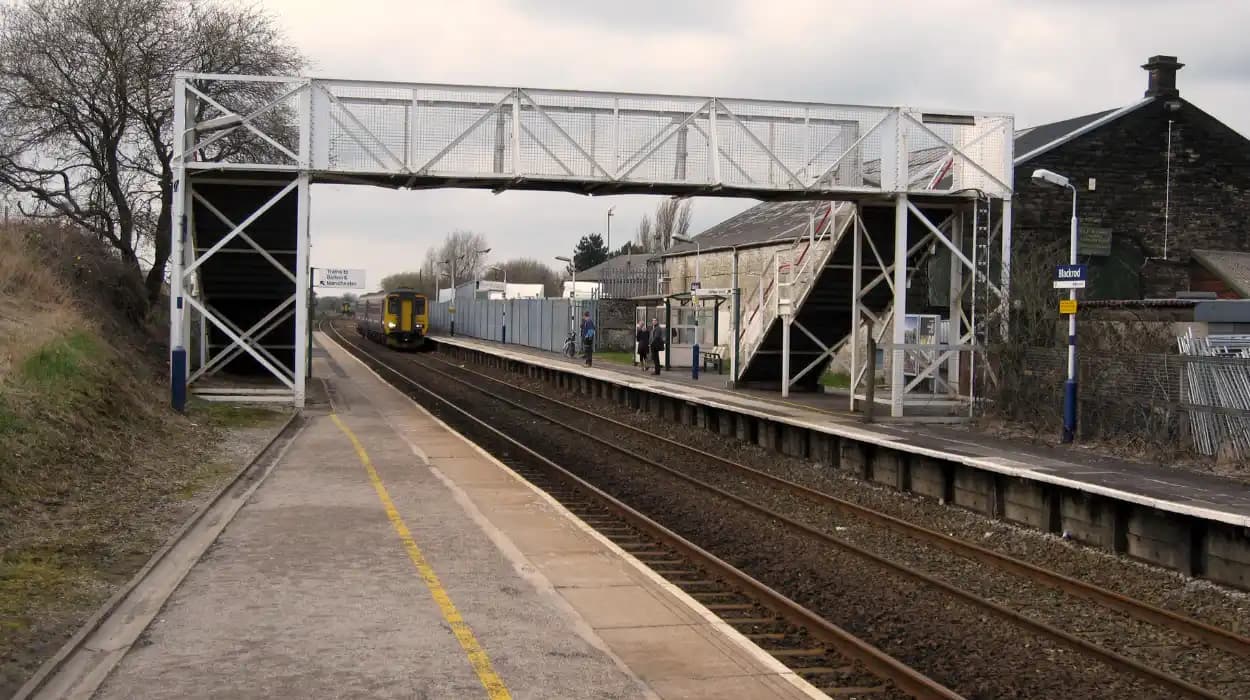
Blackrod is one of the oldest settlements in the Borough of Bolton. Located on the western edge of Greater Manchester, the community developed from a medieval agricultural village into an industrial-era railway settlement that became closely connected to regional and national transport networks. Its history reflects broader patterns of economic, social, and technological change that transformed northern England between the medieval period and the modern era.
Today, Blackrod retains evidence of its agricultural origins, industrial expansion, and railway heritage. Historic buildings, former transport routes, and surviving landscape features provide insight into centuries of development. Understanding Blackrod’s evolution reveals how small Lancashire communities adapted to changing economic conditions while preserving elements of their historic identity.
What are the earliest known origins of Blackrod?
Blackrod originated as a medieval agricultural settlement in historic Lancashire. Archaeological evidence, place-name studies, and historical records indicate that farming activity shaped the area for centuries before industrialisation. Its location on elevated land supported agriculture, livestock grazing, and local trade networks.
The name Blackrod is generally believed to derive from Old English linguistic elements associated with dark woodland clearings or rough terrain. Like many settlements in Lancashire, its origins predate formal written records.
The earliest documented references appear during the medieval period when the area formed part of the wider manor system that governed much of north-west England. Agriculture dominated economic life. Local residents cultivated crops, raised livestock, and managed common land.
Blackrod's elevated position near the West Pennine Moors influenced settlement patterns. The surrounding landscape provided grazing opportunities for sheep and cattle. Farming families established dispersed holdings connected by tracks that later evolved into roads.
The medieval economy depended on self-sufficiency. Most residents worked directly on the land. Agricultural production supported local markets while surplus goods contributed to regional trade.
Historical studies of Lancashire settlements indicate that communities such as Blackrod remained relatively small throughout the Middle Ages. Population growth occurred gradually as farming methods improved and local commerce expanded.
How did medieval society shape Blackrod's development?
Medieval social structures determined land ownership, economic activity, and settlement growth in Blackrod. Manorial governance, agricultural obligations, and parish organisation influenced daily life. These systems established patterns that remained visible for centuries after the medieval era ended.
The medieval manorial system formed the foundation of local governance. Landowners exercised authority over agricultural production, legal matters, and tenancy arrangements.
Most residents worked as tenant farmers or agricultural labourers. Their livelihoods depended on access to arable land, grazing areas, and seasonal employment opportunities. Agricultural production included cereal cultivation, livestock husbandry, and wool-related activities.
Religion also played a central role in community life. Parish structures connected residents to wider ecclesiastical networks. Churches served not only as places of worship but also as centres of administration and social interaction.
Transportation remained limited during this period. Travel occurred primarily along local tracks and routes connecting nearby settlements. The movement of goods depended on packhorses and carts.
Economic activity expanded gradually through local markets and regional trade connections. Lancashire's growing textile economy created opportunities for supplementary income among farming households.
These medieval foundations influenced Blackrod's settlement pattern long after the Middle Ages concluded. Road alignments, field boundaries, and property divisions often reflected earlier land-use arrangements.
Why was agriculture important to Blackrod for so long?
Agriculture remained Blackrod’s dominant economic activity for several centuries because the surrounding landscape supported livestock farming and crop cultivation. Farming provided employment, food production, and economic stability, shaping local society before industrialisation transformed the regional economy.
The physical geography of Blackrod favoured mixed farming practices. Farmers adapted cultivation methods to local soil conditions and topography.
Livestock played a particularly important role. Sheep supported wool production, while cattle contributed to dairy and meat supplies. Agricultural records from Lancashire demonstrate the significance of animal husbandry across rural communities.
The agricultural calendar structured everyday life. Seasonal activities included ploughing, sowing, harvesting, and livestock management. Families relied on collective labour to complete essential tasks.
Technological improvements gradually increased productivity. Better tools, drainage methods, and farming techniques allowed greater efficiency. However, significant mechanisation did not occur until much later.
Agriculture also influenced settlement growth. Farmsteads, cottages, and supporting infrastructure developed around productive land. Small clusters of housing emerged near transportation routes and agricultural holdings.
The persistence of farming explains why Blackrod retained a rural character even as industrial development accelerated elsewhere in Lancashire during the eighteenth century.
How did the Industrial Revolution affect Blackrod?
The Industrial Revolution altered Blackrod’s economy, population, and infrastructure. Expanding industries across Lancashire increased demand for labour, transportation, and housing. Although Blackrod remained smaller than major manufacturing centres, industrial growth significantly influenced local development patterns.
The Industrial Revolution transformed northern England between the late eighteenth and nineteenth centuries. Lancashire emerged as a global centre of textile manufacturing and industrial production.
Blackrod experienced indirect and direct effects from these changes. Nearby industrial centres created employment opportunities that attracted workers and encouraged population growth.
Improved transportation networks increased access to regional markets. Agricultural producers benefited from stronger commercial connections, while local businesses served expanding communities.
Industrialisation also encouraged the development of supporting infrastructure. Roads improved, trade expanded, and construction activity increased.
Population growth created demand for housing. New residential areas emerged to accommodate workers and their families. These developments altered the traditional appearance of the settlement.
Industrial-era census records reveal broader demographic changes affecting communities throughout Lancashire. Increased mobility enabled residents to pursue employment beyond purely agricultural occupations.
Although Blackrod never developed into a major industrial city, the community became increasingly integrated into the economic systems that defined nineteenth-century Britain.
Why did the railway become so important to Blackrod?
The arrival of the railway transformed Blackrod into a connected transport community. Rail infrastructure improved mobility, expanded economic opportunities, and linked residents to regional industrial centres. Railway development became one of the most significant milestones in the settlement’s historical evolution.
Railways revolutionised transportation during the nineteenth century. Across Britain, rail networks reduced travel times and facilitated large-scale movement of people and goods.
Blackrod benefited from its position along important transport corridors connecting Lancashire with neighbouring regions. Railway access strengthened commercial links and encouraged development.
The opening of local railway facilities provided residents with new opportunities for employment and travel. Goods could reach markets more efficiently, supporting economic growth.
Rail transport reduced dependence on slower road-based methods. Agricultural products, industrial materials, and consumer goods moved more quickly and reliably.
The railway also influenced settlement expansion. Housing construction increased near transport facilities, and businesses developed to serve growing demand.
This transformation marked Blackrod’s transition from a predominantly agricultural village to a railway-connected community integrated into wider economic networks.
How did Blackrod railway infrastructure influence local life?
Railway infrastructure reshaped daily life by improving accessibility, employment opportunities, and communication. The railway connected residents to surrounding towns and cities, making Blackrod part of an increasingly mobile and interconnected nineteenth-century society.
Railway employment provided new career opportunities. Workers participated in station operations, maintenance, logistics, and associated services.
Improved mobility enabled residents to travel for work, commerce, and social purposes. Journeys that previously required considerable time became more practical and predictable.
Commercial activity expanded alongside transport improvements. Retail businesses benefited from increased movement of goods and customers.
The railway also encouraged population growth. Enhanced connectivity made Blackrod an attractive location for residents seeking access to employment centres while remaining outside densely industrialised urban districts.
Educational and cultural exchanges increased as transportation barriers declined. Residents gained easier access to institutions, events, and services in neighbouring communities.
The social impact extended beyond economics. Railways altered perceptions of distance and strengthened connections between local communities and the wider nation.
To experience this historic transport heritage in person today, consult our comprehensive [How to Spend a Day in Blackrod: Parks, Walks, and Local Favourites] for itineraries and visiting parameters.
What historic buildings and landmarks reflect Blackrod’s past?
Blackrod retains historic buildings, transport features, and landscape elements that illustrate its agricultural and railway heritage. These surviving structures provide evidence of centuries of social, economic, and architectural development within the community.
Historic churches represent some of the most significant surviving landmarks. Religious buildings often preserve architectural features from multiple periods, reflecting changing styles and community needs.
Traditional farmhouses demonstrate the settlement’s agricultural origins. Many incorporate local building materials and construction techniques associated with Lancashire rural architecture.
Railway-related infrastructure remains an important component of the local historic environment. Stations, bridges, embankments, and route alignments illustrate the transformative impact of nineteenth-century transportation.
Historic road networks also provide evidence of earlier movement patterns. Several routes follow alignments established long before the railway era.
Archaeological features contribute additional information about past land use. Field systems, boundary markers, and remnants of former agricultural practices remain visible across parts of the landscape.
Together, these historic assets create a layered record of Blackrod’s evolution from farming settlement to transport-connected community.
How did population growth change Blackrod over time?
Population growth influenced housing development, economic diversification, and social organisation in Blackrod. Expanding numbers of residents created demand for infrastructure, services, and employment opportunities while gradually transforming the settlement’s physical character.
Medieval Blackrod supported a relatively small population concentrated around agricultural activity. Growth remained modest for several centuries.
The eighteenth and nineteenth centuries brought more substantial demographic expansion. Regional industrialisation attracted workers and increased mobility throughout Lancashire.
Census data from Victorian Britain documented rising population levels across many communities connected to industrial and transport networks. Blackrod participated in these broader trends.
Additional housing became necessary to accommodate residents. Residential development expanded beyond older settlement cores.
Public services evolved alongside population growth. Educational facilities, religious institutions, and local governance structures adapted to changing community needs.
Economic diversification accompanied demographic change. Residents increasingly worked in occupations linked to industry, transport, commerce, and professional services rather than exclusively in agriculture.
These developments contributed to the emergence of the modern community while preserving elements of its historic identity.
How has Blackrod preserved its historical heritage?
Heritage preservation efforts help protect Blackrod’s historic buildings, landscapes, and cultural identity. Conservation initiatives, planning regulations, and community engagement support the long-term safeguarding of assets that illustrate the settlement’s agricultural and railway past.
Historic preservation occurs through multiple mechanisms. Listed building protections help safeguard architecturally significant structures from inappropriate alteration or demolition.
Local authorities assess heritage assets when considering development proposals. This process encourages the integration of conservation objectives into planning decisions.
Community organisations also contribute to preservation efforts. Local history groups document historical records, promote public awareness, and support educational activities.
Archaeological research provides additional understanding of past settlement patterns. Investigations generate evidence that informs conservation strategies and historical interpretation.
Museums, archives, and heritage institutions preserve documentary records relevant to Blackrod’s development. These resources support academic research, genealogical investigations, and public education.
The preservation of historic assets ensures that future generations can understand the community’s role within Lancashire’s wider historical narrative.
Why does Blackrod’s historical evolution remain significant today?
Blackrod’s history demonstrates how rural communities adapted to economic and technological change across several centuries. Its transformation from farming village to railway community illustrates broader developments that shaped Lancashire, Greater Manchester, and industrial Britain as a whole.
The settlement provides a valuable case study of long-term historical continuity and adaptation. Agricultural traditions established during the medieval period influenced development patterns well into the modern era.
Railway expansion highlights the transformative power of transportation infrastructure. Improved connectivity altered economic opportunities, social relationships, and settlement growth.
Blackrod also illustrates the relationship between local history and national change. Events affecting Britain’s economy, technology, and governance produced visible impacts within the community.
For educators, the area offers practical examples of historical processes including industrialisation, demographic growth, agricultural development, and transport innovation.
For genealogical researchers, surviving records provide insight into family histories connected to Lancashire’s rural and industrial past.
For heritage preservationists, Blackrod demonstrates the importance of protecting historic environments that embody centuries of cultural development.
The modern community continues to reflect its historical foundations. Agricultural landscapes, historic buildings, transportation routes, and settlement patterns collectively reveal the long-term evolution of one of Bolton’s oldest communities. Understanding that evolution enriches appreciation of Blackrod’s place within the wider history of Lancashire and the development of modern Britain.
FAQS
Where is Blackrod located?
Blackrod is a historic town within the Metropolitan Borough of Bolton in Greater Manchester, England. It lies near the western edge of Greater Manchester and has strong historical connections to Lancashire.