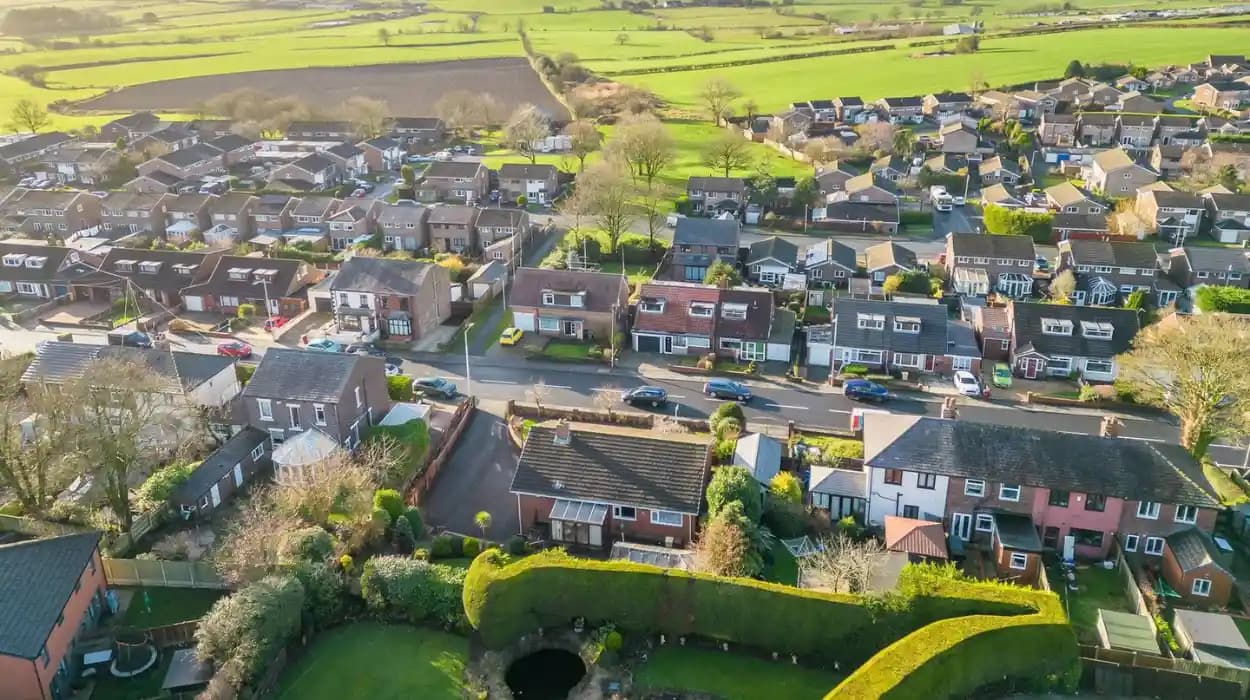
Blackrod, situated on the western edge of the Metropolitan Borough of Bolton in Greater Manchester, possesses an industrial history that reflects the wider transformation of north-west England during the Industrial Revolution. Once a rural township surrounded by farmland and woodland, Blackrod evolved into an important coal-mining and transport community between the eighteenth and twentieth centuries. Its proximity to valuable coal seams, expanding transport infrastructure, and growing manufacturing economy reshaped both the physical landscape and the lives of local residents.
Unlike larger industrial centres that relied primarily on textile production, Blackrod's development centred on coal extraction, railway expansion, and supporting industries. These activities generated employment, encouraged population growth, stimulated housing construction, and connected the settlement to regional markets across Lancashire and beyond.
Today, traces of this industrial heritage remain visible in former railway corridors, surviving historic buildings, old street patterns, and the surrounding landscape. Understanding Blackrod's industrial past provides valuable insight into how natural resources, engineering innovation, and community resilience shaped one of Bolton's oldest settlements.
Why did coal become the foundation of Blackrod's industrial development?
Coal transformed Blackrod from a small agricultural settlement into an industrial community by providing fuel for factories, homes, railways, and local businesses. Extensive coal seams attracted investment, created employment, encouraged transport improvements, and permanently altered the area's economy and settlement pattern.
For centuries, Blackrod existed primarily as a farming community. Agriculture dominated the local economy throughout the medieval and early modern periods. However, beneath the surrounding countryside lay valuable deposits belonging to the Lancashire Coalfield, one of Britain's most productive coal-producing regions.
Coal extraction expanded significantly during the eighteenth century as Britain's Industrial Revolution accelerated. Demand increased rapidly because coal supplied domestic heating, powered steam engines, and fuelled iron production. Industrial towns throughout Lancashire required dependable energy sources, making Blackrod strategically valuable.
Early mining relied on shallow bell pits before operators developed deeper shaft mining. Improvements in pumping technology enabled miners to reach previously inaccessible seams while reducing flooding underground. Steam-powered engines later improved drainage and ventilation, increasing productivity throughout the nineteenth century.
Mining companies invested substantial capital in new shafts, winding engines, workshops, and transport facilities. These developments generated sustained employment for miners, engineers, blacksmiths, carpenters, and labourers.
Coal production also stimulated supporting industries. Blacksmiths manufactured mining equipment, wheelwrights repaired transport wagons, and local merchants supplied food, clothing, and household goods to expanding mining families.
The presence of reliable coal reserves positioned Blackrod within a wider industrial network extending across Bolton, Wigan, Chorley, and Manchester. Rather than operating in isolation, Blackrod became part of an interconnected regional economy powered by fossil fuel extraction.
How did transport networks accelerate Blackrod's industrial expansion?
Transport improvements enabled Blackrod's coal industry to reach regional markets efficiently through turnpike roads, canals, and railways. Faster movement of coal, raw materials, manufactured goods, and workers stimulated economic growth while integrating Blackrod into Britain's expanding industrial economy.
Industrial success depended not only on resource extraction but also on efficient transportation. Before the eighteenth century, poor roads limited commercial development. Heavy coal wagons travelled slowly over muddy tracks, increasing costs and reducing competitiveness.
Turnpike trusts improved many regional roads by introducing toll-funded maintenance. Better road surfaces allowed heavier wagons to transport larger coal loads throughout Lancashire.
The construction of nearby canals further transformed regional trade. Although Blackrod itself did not sit directly on a major canal, neighbouring waterways significantly reduced transportation costs for bulk goods across the wider district. Canal transport proved especially efficient for coal because barges carried much larger loads than horse-drawn carts.
Railways ultimately revolutionised industrial transportation.
The arrival of railway infrastructure during the nineteenth century dramatically increased Blackrod's economic importance. Railway connections linked local collieries with major industrial centres, ports, and manufacturing districts. Coal reached consumers more quickly and at lower cost.
Rail transport produced additional economic benefits beyond freight.
Passenger services improved mobility for workers, merchants, and families. Businesses accessed broader markets while residents found employment opportunities across neighbouring towns.
Railway construction itself generated employment. Engineers, navvies, bricklayers, stonemasons, surveyors, and skilled craftsmen contributed to building embankments, bridges, stations, and permanent way.
Industrial transport reshaped the physical landscape. Railway cuttings, embankments, bridges, goods yards, and sidings permanently altered Blackrod's geography while creating infrastructure that continued serving later generations.
How did industrialisation transform Blackrod's community and population?
Industrialisation changed Blackrod from a dispersed rural settlement into a structured working community through population growth, new housing, expanding public institutions, and changing employment patterns. Mining and transport industries shaped everyday life across multiple generations of local families.
Employment opportunities attracted workers from surrounding villages and neighbouring counties. Population growth accelerated during the nineteenth century as mining operations expanded.
New residential streets emerged close to collieries and transport routes. Rows of terraced housing provided accommodation for mining families and industrial workers. Although modest in size, these homes represented significant improvements over earlier scattered rural dwellings by concentrating communities near workplaces.
Industrial employers frequently influenced community development by supporting housing, chapels, schools, or recreational facilities. Religious institutions expanded alongside residential growth, serving both spiritual and social functions.
Education gradually became more accessible following nineteenth-century educational reforms. Schools prepared younger generations for employment while improving literacy across industrial communities.
Commercial activity expanded alongside residential development. Shops, inns, bakeries, public houses, and local services emerged to support increasing populations.
Community identity became closely linked with mining occupations.
Families often worked within the same industries across multiple generations. Fathers, sons, brothers, and extended relatives frequently shared employment within local collieries, creating strong occupational traditions and mutual support networks.
Industrial employment also involved significant hardship. Long working hours, physically demanding labour, and workplace accidents remained common throughout much of the nineteenth century despite gradual improvements in safety regulation.
What industries supported Blackrod beyond coal mining?
Coal mining remained Blackrod's principal industry, but engineering, agriculture, transport services, construction, retail trade, and local manufacturing collectively diversified the economy. These interconnected sectors increased employment resilience while supporting long-term community development throughout the industrial period.
Although coal dominated economic activity, Blackrod developed a broader industrial ecosystem.
Engineering workshops repaired mining machinery, railway equipment, pumps, boilers, and steam engines. Skilled mechanics became increasingly important as industrial technology grew more sophisticated.
Construction industries expanded alongside population growth.
Builders constructed new housing, schools, chapels, warehouses, bridges, and commercial premises. Quarrying supplied stone for many local building projects.
Agriculture remained economically important despite industrial expansion.
Farmers continued producing livestock, dairy products, grain, and vegetables for growing industrial populations. Rather than disappearing, farming adapted to supply expanding urban markets.
Retail businesses multiplied throughout the nineteenth century.
General stores, butchers, tailors, cobblers, and public houses served increasingly concentrated residential neighbourhoods.
Transport services generated additional employment.
Railway staff included station masters, signal operators, maintenance workers, ticket clerks, guards, porters, and locomotive crews. Horse transport remained essential for short-distance deliveries despite railway expansion.
Women contributed significantly to the local economy through domestic service, retail work, education, textiles, lodging houses, and family businesses, although historical records often underrepresent their economic roles.
Together these industries produced a more diversified local economy capable of supporting community growth beyond the mining sector alone.
How did working conditions influence daily life in industrial Blackrod?
Industrial employment shaped daily routines through demanding physical labour, strict work schedules, occupational hazards, and close-knit neighbourhoods. Families adapted to long hours, economic uncertainty, workplace risks, and evolving social institutions while building resilient community networks.
Mining ranked among Britain's most dangerous occupations.
Workers descended deep underground before sunrise and frequently remained below ground for extended shifts. Ventilation challenges, flooding, roof collapses, and gas explosions presented constant hazards despite improving engineering standards.
Children also participated in industrial labour during earlier phases of the Industrial Revolution before successive Factory Acts and Mines Acts introduced restrictions and compulsory education.
Women's responsibilities extended beyond paid employment.
Many managed households under demanding economic circumstances while raising children, preparing meals, maintaining homes, and supplementing family incomes through informal work.
Industrial communities developed strong traditions of mutual assistance.
Friendly societies, religious congregations, trade organisations, and charitable groups provided support during illness, unemployment, workplace injury, or bereavement.
Public health gradually improved throughout the nineteenth and early twentieth centuries.
Investment in sanitation, drainage, water supplies, and medical services reduced disease risks associated with rapidly expanding industrial settlements.
Despite economic hardship, local sporting clubs, music groups, community events, chapel activities, and annual celebrations contributed to social cohesion and strengthened neighbourhood identity.
What caused the decline of Blackrod's traditional industries?
Economic restructuring, resource depletion, technological change, international competition, and shifting national energy policies gradually reduced coal mining and related industries during the twentieth century. Industrial decline reshaped employment, land use, and community identity across Blackrod.
British industry changed dramatically after the Second World War.
Coal production increasingly faced competition from imported fuels, oil, natural gas, and later renewable energy sources. Many older collieries became less economically competitive.
Mechanisation reduced labour requirements across mining and manufacturing.
Improved machinery increased productivity while decreasing employment opportunities.
Government restructuring of the coal industry accelerated pit closures during the second half of the twentieth century. Communities throughout Lancashire experienced significant economic adjustment as mining employment declined.
Rail transport also underwent substantial reorganisation.
Changes in freight patterns, road transport expansion, and rationalisation programmes altered traditional railway operations across northern England.
Former industrial land entered new phases of redevelopment.
Some sites became housing developments, business premises, green spaces, or recreational areas. Others returned gradually to natural vegetation through ecological succession and landscape restoration.
Although industrial employment diminished, Blackrod successfully evolved into a residential community connected to wider regional employment centres while preserving important aspects of its historical identity.
What industrial heritage survives in Blackrod today?
Historic buildings, railway infrastructure, former colliery landscapes, traditional street layouts, archaeological remains, and community memory preserve Blackrod's industrial heritage. These surviving features provide valuable evidence of the settlement's transformation during Britain's Industrial Revolution and subsequent economic change.
Many visible elements of Blackrod's industrial landscape remain despite redevelopment.
Historic railway corridors continue defining transport routes through the area. Bridges, embankments, and station-related infrastructure illustrate nineteenth-century engineering achievements.
Older residential terraces preserve the character of Victorian industrial housing.
These buildings demonstrate how communities organised themselves around employment centres while reflecting changing architectural standards throughout the nineteenth century.
Former mining sites remain identifiable through landscape features including spoil heaps, altered ground levels, restored open spaces, and archaeological evidence beneath modern development.
Historic churches, schools, and civic buildings document expanding public investment during industrial growth.
Local archives preserve photographs, maps, census records, business documents, and mining records that enable researchers to reconstruct community development across successive generations.
Heritage organisations continue documenting industrial remains through archaeological surveys, oral history projects, conservation initiatives, and educational programmes.
To experience this historic landscape in person today, consult our comprehensive [Exploring Blackrod on Foot: The Best Walking Routes and Local Landmarks] for itineraries and visiting parameters.
Industrial heritage contributes significantly to Blackrod's cultural identity by connecting present-day residents with generations whose labour shaped the modern settlement.
Why does Blackrod's industrial history remain important today?
Blackrod's industrial heritage explains the community's physical development, economic evolution, transport infrastructure, and cultural identity. Preserving this history supports education, heritage tourism, academic research, genealogy, and informed conservation of historically significant landscapes and buildings.
Industrial history provides context for understanding modern Blackrod.
Street layouts, housing patterns, transport corridors, and public spaces frequently reflect decisions made during the eighteenth, nineteenth, and early twentieth centuries.
Genealogists benefit from extensive historical documentation generated by industrial communities.
Census returns, parish registers, mining employment records, electoral registers, trade directories, and historic maps enable researchers to trace family histories across multiple generations.
Educational institutions increasingly use industrial heritage to explain broader themes including urbanisation, technological innovation, labour history, environmental change, and economic geography.
Heritage conservation also supports sustainable development.
Protecting historically significant buildings and landscapes preserves cultural continuity while encouraging sensitive regeneration rather than wholesale replacement.
Industrial archaeology continues expanding scholarly understanding of Britain's economic transformation. Excavations, landscape surveys, digital mapping, and documentary research reveal new evidence concerning mining technology, transport infrastructure, and everyday community life.
Tourism increasingly values authentic heritage experiences.
Visitors seek opportunities to understand how industrial communities contributed to Britain's global economic influence during the eighteenth and nineteenth centuries. Blackrod forms an important part of this wider historical narrative through its contribution to coal production, regional transport, and community development.
As environmental restoration progresses across former industrial landscapes, Blackrod demonstrates how communities adapt while retaining connections to their historical foundations. Its surviving heritage reminds future generations that modern settlements emerge through centuries of economic activity, engineering achievement, social change, and collective resilience.
Blackrod's industrial past represents far more than the history of coal extraction. It illustrates how geology, transport innovation, engineering, labour, and community development combined to transform a rural township into an important industrial settlement within Lancashire's historic coalfield.
Coal provided the initial catalyst, but railways, improved roads, local enterprise, and supporting industries created a diverse economic network that sustained population growth for generations. Industrialisation reshaped housing, education, commerce, religion, and public institutions while establishing the physical framework still visible across the village today.
Although traditional mining industries have disappeared, Blackrod's industrial legacy survives in its landscape, historic buildings, transport routes, archival records, and community identity. Preserving and understanding this heritage enriches historical scholarship, strengthens local pride, supports cultural tourism, and ensures that the achievements and experiences of earlier generations remain accessible for future study.
For historians, educators, researchers, genealogists, and visitors alike, Blackrod offers a compelling example of how Britain's Industrial Revolution transformed individual communities while contributing to profound national economic and social change.
FAQS
Why was Blackrod important during the Industrial Revolution?
Blackrod became important during the Industrial Revolution because it sat on valuable coal seams within the Lancashire Coalfield. Coal mining, expanding railway connections, and improved transport links helped transform the village into an industrial community that supported regional manufacturing and trade.