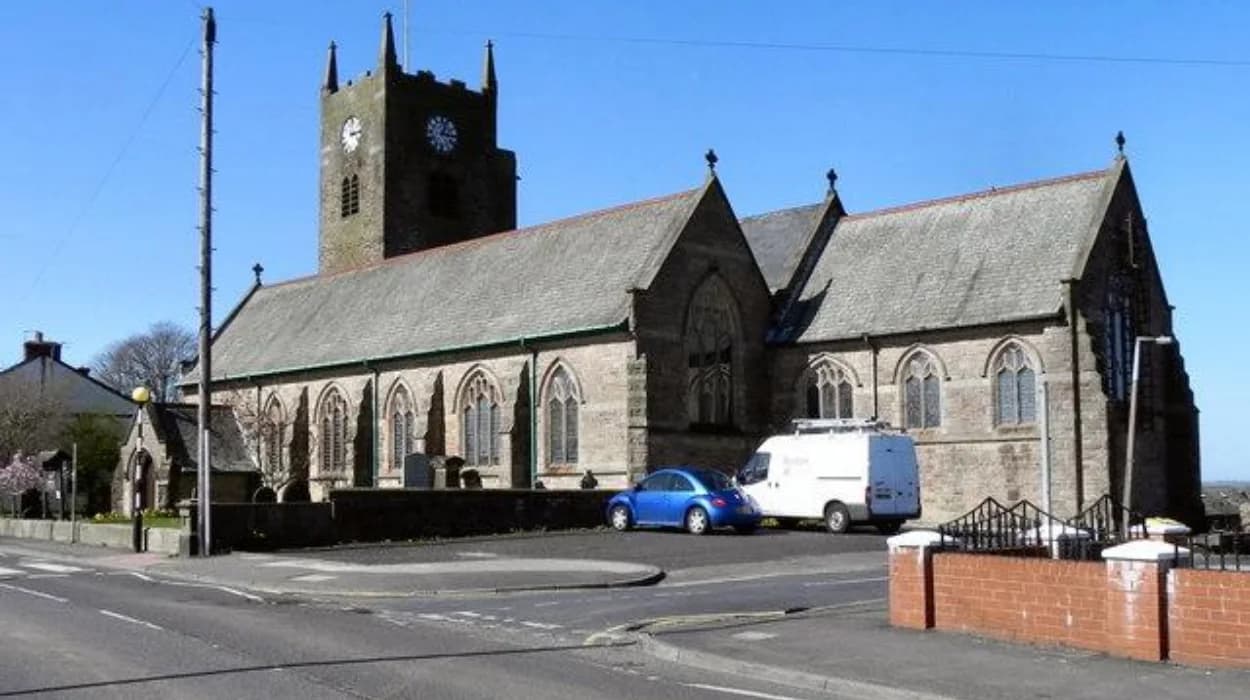
Blackrod is one of the oldest continuously inhabited settlements in the Borough of Bolton. Located on elevated ground west of Bolton and close to the historic boundary between Lancashire and Cheshire, the village developed from an early medieval settlement into a significant agricultural, industrial, and transport centre. Its history reflects wider patterns of settlement, religion, industry, and social change that shaped North West England over more than one thousand years.
What makes Blackrod one of Bolton’s oldest settlements?
Blackrod is one of Bolton’s oldest settlements because archaeological evidence, medieval records, and place-name studies demonstrate continuous habitation from the early medieval period, while its strategic location on important transport routes supported long-term economic and community development.
Blackrod occupies a prominent position on high ground overlooking the surrounding Lancashire landscape. The settlement's origins predate many neighbouring communities. Historical evidence indicates that the area formed part of an established agricultural landscape during the Anglo-Saxon period.
The name Blackrod is generally believed to derive from Old English elements referring to a dark or wooded clearing. Place-name research conducted by historical linguists links the settlement to early medieval woodland management and farming activity. Such naming conventions were common throughout northern England between the seventh and eleventh centuries.
The earliest documentary references appear in medieval records following the Norman Conquest of 1066. By the twelfth century, Blackrod was recognised as a distinct township within the historic parish structure of Lancashire. Its existence within manorial records confirms that it was already an established community by this period.
Blackrod's location contributed significantly to its longevity. Positioned near routes connecting Wigan, Bolton, Chorley, and Manchester, the settlement benefited from movement of people, livestock, and goods. This connectivity encouraged economic activity and ensured continued occupation through changing historical periods.
Unlike some industrial settlements that emerged rapidly during the eighteenth and nineteenth centuries, Blackrod evolved gradually over centuries. This continuous development provides historians with a valuable example of long-term settlement continuity within Greater Manchester's historic landscape.
How did Blackrod develop during the medieval period?
Blackrod developed during the medieval period as an agricultural township centred on farming, manorial administration, and parish life, with local families cultivating land, maintaining communal resources, and participating in the wider feudal economy of Lancashire.
Medieval Blackrod functioned primarily as a rural agricultural community. Most residents worked the land, producing crops and livestock that supported both local consumption and regional markets.
The medieval economy relied on open-field agriculture. Farmers cultivated strips of land allocated within larger communal fields. This system required cooperation among residents and reflected common agricultural practices throughout medieval England.
The manor formed the administrative centre of local governance. Under the feudal system, landholders owed obligations to their lord while receiving protection and access to land. Manorial courts regulated farming practices, property disputes, and local responsibilities.
Religion played a central role in community life. The local parish structure connected Blackrod to broader ecclesiastical networks across Lancashire. Churches provided religious services, social organisation, education, and record keeping. Parish registers later became essential resources for genealogical researchers tracing family histories.
The surrounding landscape contained agricultural fields, woodland, pasture, and common land. Medieval residents depended on these resources for food production, fuel, building materials, and grazing rights. Woodland management was particularly important because timber supplied construction materials and household fuel.
Population levels remained relatively modest throughout the medieval era. Most settlements in rural Lancashire contained small numbers of households compared with later industrial communities. Nevertheless, Blackrod maintained sufficient economic activity and social organisation to survive periods of political instability, disease, and economic fluctuation.
The settlement also benefited from regional trade networks. Markets in nearby towns enabled local producers to exchange agricultural goods for manufactured products and imported commodities. These commercial relationships strengthened Blackrod's economic resilience throughout the Middle Ages.
What role did religion play in Blackrod’s historical development?
Religion influenced Blackrod’s development through parish administration, education, social welfare, and community identity, while churches served as important centres for worship, record keeping, local governance, and collective decision-making across several centuries.
Religious institutions shaped daily life in Blackrod for hundreds of years. Before modern local government systems emerged, churches fulfilled many administrative and social functions alongside their spiritual responsibilities.
One of the most significant historic religious buildings is the parish church dedicated to St Katharine. The church became an important landmark within the settlement and reflected the continuing importance of Christianity in local society.
Churches maintained records of baptisms, marriages, and burials. These documents now provide historians and genealogists with valuable evidence about population trends, family structures, occupational patterns, and demographic change.
Religious observance structured the annual calendar. Major Christian festivals, including Easter and Christmas, influenced agricultural schedules, community gatherings, and local traditions. Parish events reinforced social cohesion among residents.
Educational provision was frequently connected to religious institutions. Before the expansion of state-funded education during the nineteenth century, many children received instruction through church-affiliated schools. Literacy levels gradually improved as educational opportunities expanded.
Religious organisations also played a role in charitable support. Assistance for poorer residents often came through parish systems designed to provide relief during periods of hardship. These mechanisms represented early forms of organised social welfare.
The survival of historic churches and associated records continues to contribute to understanding Blackrod's past. They provide direct evidence of continuity between medieval, early modern, and modern communities.
How did transport routes influence Blackrod’s growth?
Transport routes influenced Blackrod’s growth by connecting the settlement to regional markets, industrial centres, and neighbouring communities, enabling trade, employment opportunities, and population growth while integrating the village into broader economic networks.
Transport has been one of the defining factors in Blackrod's historical development. The settlement occupies a strategic position near important regional routes that evolved over centuries.
During the medieval period, roads connecting market centres facilitated movement of agricultural products. These routes linked Blackrod with neighbouring settlements and enabled participation in regional commerce.
The eighteenth century brought major improvements to transport infrastructure. Turnpike trusts invested in road construction and maintenance, creating more reliable routes for commercial traffic. Better roads reduced travel times and increased trade volumes.
The arrival of canals transformed transport across Lancashire. Although Blackrod itself was not a major canal port, nearby waterways improved access to wider markets and contributed to regional economic growth.
Railway development during the nineteenth century had an even greater impact. Connections to Bolton, Manchester, Wigan, and other industrial centres increased mobility for both workers and businesses. Rail transport supported industrial expansion and facilitated movement of raw materials and manufactured goods.
Improved transport also influenced settlement patterns. Residents gained access to employment opportunities beyond the immediate locality. This process accelerated during the late nineteenth and early twentieth centuries as commuting became increasingly practical.
Modern transport networks continue to shape Blackrod's role within Greater Manchester. Historic routes established centuries ago remain influential in determining patterns of movement, development, and economic activity.
How did the Industrial Revolution change Blackrod?
The Industrial Revolution transformed Blackrod from a predominantly agricultural settlement into a community connected to manufacturing, mining, and regional commerce, bringing population growth, new employment opportunities, and significant social and physical changes.
The Industrial Revolution fundamentally altered Blackrod's economic and social landscape between the late eighteenth and nineteenth centuries.
Lancashire emerged as one of Britain's most important industrial regions. The expansion of textile manufacturing, coal mining, and engineering created unprecedented demand for labour and infrastructure. Blackrod participated in this broader transformation.
Coal deposits in the surrounding area supported mining activity. The extraction of coal provided fuel for factories, transport systems, and domestic consumption. Mining employment attracted workers and contributed to local population growth.
Textile production represented another important economic sector. Lancashire became internationally recognised for cotton manufacturing, and communities throughout the region benefited from industrial investment and commercial expansion.
Industrialisation influenced housing development. New residential areas accommodated growing populations. Rows of workers' housing appeared near employment centres, reflecting patterns seen across northern England.
Economic opportunities expanded significantly. Whereas earlier generations depended largely on agriculture, nineteenth-century residents could work in mines, mills, transport services, engineering firms, and commercial enterprises.
The Industrial Revolution also brought social challenges. Rapid urbanisation created pressures on housing, sanitation, and public health. Local authorities gradually introduced improvements to address these issues.
Educational opportunities expanded during this period. Industrial employers increasingly required literate and numerate workers, encouraging investment in schools and educational institutions.
The transformation of Blackrod reflected broader national trends while retaining distinctive local characteristics rooted in its earlier agricultural heritage.
What historic buildings and landmarks define Blackrod’s heritage?
Blackrod’s heritage is defined by historic churches, traditional cottages, industrial-era structures, transport infrastructure, and surviving landscape features that collectively illustrate the settlement’s evolution from a medieval township to a modern community.
Historic buildings provide tangible evidence of Blackrod's long development. These structures help historians understand changing architectural styles, economic conditions, and community priorities.
St Katharine's Church remains among the most significant heritage assets. Its architectural features demonstrate successive phases of construction and restoration spanning multiple centuries.
Traditional stone-built cottages survive in parts of the village. These buildings reflect local construction methods and materials used before large-scale industrial development transformed regional architecture.
Industrial-era buildings illustrate the economic changes associated with the nineteenth century. Surviving structures linked to commerce, transport, and manufacturing provide insight into Blackrod's role within Lancashire's industrial economy.
Historic transport infrastructure also contributes to local heritage. Road alignments, railway features, and associated structures reveal how improvements in connectivity shaped community growth.
The wider landscape contains evidence of earlier land use patterns. Field boundaries, pathways, and agricultural features preserve elements of the historic environment even where modern development has occurred.
Conservation initiatives help protect these assets. Heritage organisations, local authorities, and community groups work to document and preserve important historical features for future generations.
To experience this historic landscape in person today, consult our comprehensive [Things to Do in Blackrod: Scenic Trails, Village Charm, and Nearby Attractions] for itineraries and visiting parameters.
How did Blackrod’s population and society change over time?
Blackrod’s population and society changed through agricultural development, industrialisation, improved transport, educational expansion, and modern suburban growth, creating a community that combines historic traditions with contemporary residential and economic functions.
Population growth occurred gradually during the medieval and early modern periods before accelerating during industrialisation.
Census records from the nineteenth century reveal substantial demographic change. Improved employment opportunities attracted new residents while declining mortality rates contributed to sustained population growth.
Occupational structures evolved significantly. Agricultural workers remained important, but increasing numbers of residents worked in mining, manufacturing, transport, retail, and professional occupations.
Educational attainment improved throughout the nineteenth and twentieth centuries. Government reforms expanded access to schooling and contributed to rising literacy rates across the population.
Women's roles also changed over time. Industrial employment, educational opportunities, and social reforms altered economic participation and public life. These developments reflected broader national trends affecting communities throughout Britain.
Housing patterns evolved alongside demographic growth. New residential developments accommodated changing population needs while improving living standards.
The twentieth century brought further transformation. Mechanisation reduced agricultural employment, while improvements in transport encouraged commuting to larger urban centres. Blackrod increasingly functioned as both a residential community and a local service centre.
Despite these changes, many aspects of community identity persisted. Local traditions, institutions, and historical awareness continued to shape collective identity across generations.
Why is Blackrod’s history important today?
Blackrod’s history remains important because it demonstrates long-term settlement continuity, preserves evidence of regional economic change, supports heritage education, and contributes to understanding how local communities adapted to major historical transformations.
Blackrod provides a valuable case study of historical continuity. Few settlements can demonstrate such a long sequence of occupation while retaining clear evidence of successive developmental phases.
The village illustrates key themes in British history. These themes include medieval agriculture, religious organisation, industrialisation, transport development, and suburban expansion. Together, these themes provide a comprehensive picture of social and economic change.
Historical research continues to reveal new information about the area. Archaeological investigations, archival studies, and landscape analysis contribute to a deeper understanding of local development patterns.
Genealogical researchers frequently use Blackrod's records to trace family histories. Parish registers, census returns, and local archives offer important sources for understanding ancestry and migration.
Heritage preservation supports education and tourism. Historic buildings, landscapes, and documentary collections enable visitors and residents to engage directly with the past.
Blackrod's history also demonstrates the importance of local communities in shaping national development. Major historical processes such as industrialisation occurred through the experiences of individual settlements and their residents.
Today, Blackrod remains an integral part of the Borough of Bolton while preserving connections to its medieval origins. Its surviving heritage assets, historical records, and community identity ensure that its story continues to inform understanding of Lancashire's past and Britain's wider historical development.
From its early medieval foundations to its modern role within Greater Manchester, Blackrod represents more than a local settlement. It serves as a living record of more than one thousand years of social, economic, religious, and cultural change. The preservation of that record ensures that future generations can continue to study, understand, and appreciate one of Bolton's oldest and most historically significant communities.
FAQS
What does the name Blackrod mean?
The name Blackrod is believed to derive from Old English words referring to a dark or wooded clearing. The name reflects the area's early landscape and agricultural origins.