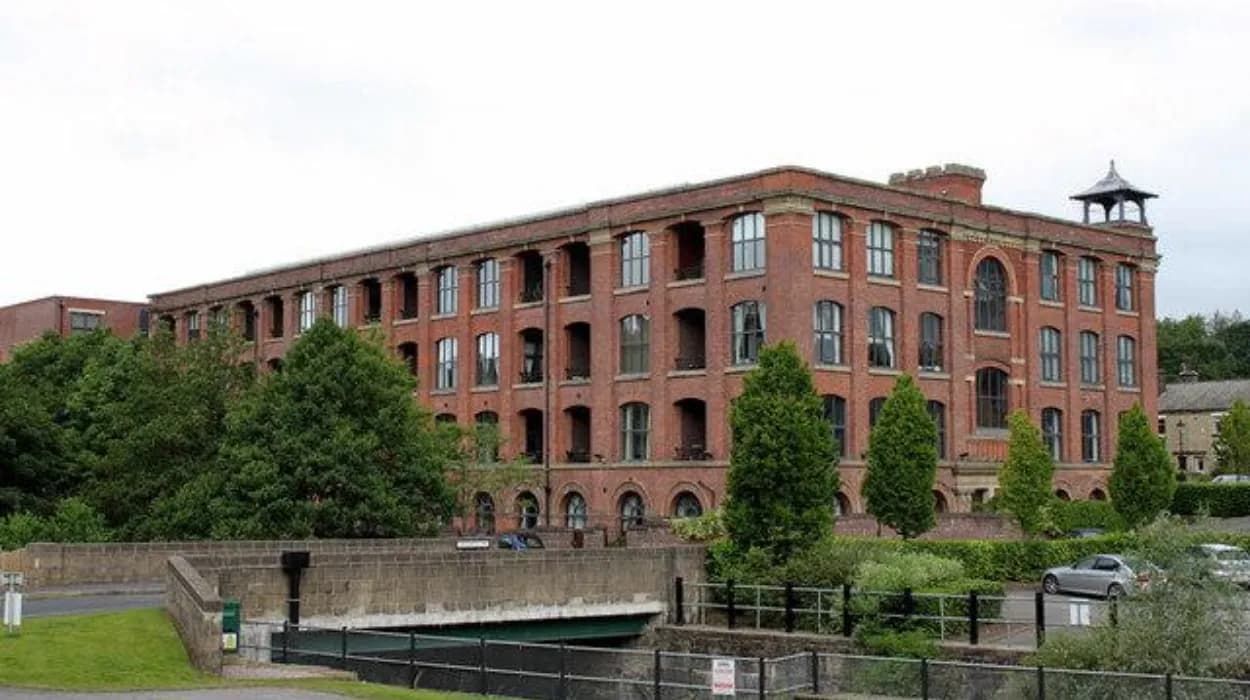
Astley Bridge stands as one of the most significant industrial districts in northern Bolton. The area developed from a rural settlement into a major centre of cotton manufacturing during the Industrial Revolution. Textile mills, transport infrastructure, engineering innovation, and workforce expansion reshaped the landscape, economy, and society of the district. The history of Astley Bridge provides a detailed case study of how the cotton industry transformed communities across Lancashire and helped establish Britain as the world's leading industrial power during the nineteenth century.
What was Astley Bridge before the Cotton Revolution?
Before industrialisation, Astley Bridge was a sparsely populated rural settlement north of Bolton. Agriculture dominated the local economy, while small-scale handloom weaving supplemented household incomes. The district consisted of farms, scattered cottages, streams, and open countryside connected to nearby market centres.
Astley Bridge derives its name from a bridge crossing the River Astley, a watercourse that historically marked part of the northern landscape of Bolton. Prior to the late eighteenth century, the area was characterised by agricultural land and dispersed settlement patterns typical of rural Lancashire.
The wider Bolton region already possessed a textile tradition before factory production emerged. Many families participated in the domestic system of textile manufacturing. Under this system, spinning and weaving occurred inside homes rather than dedicated industrial premises. Merchants supplied raw cotton and collected finished cloth from individual workers.
The geography of northern Bolton contributed to future industrial development. Fast-flowing streams provided water power opportunities. Nearby coal deposits supplied energy resources. Existing roads connected the area to regional markets including Manchester and Preston.
During the mid-eighteenth century, Lancashire experienced increasing demand for cotton goods. This growing market created the conditions that later enabled industrial entrepreneurs to establish mechanised production facilities throughout the county.
Why did cotton mills develop in Astley Bridge?
Cotton mills developed in Astley Bridge because the area combined access to water power, coal supplies, transport links, available land, and a growing workforce. These advantages made northern Bolton an attractive location for industrial investment and factory expansion.
The British Industrial Revolution accelerated during the late eighteenth century through a series of technological innovations. Machines such as the spinning jenny, water frame, and spinning mule dramatically increased textile production capacity.
Lancashire emerged as the centre of Britain's cotton industry. Several factors supported this dominance. The county possessed abundant coal reserves, established trading networks, and an experienced textile workforce. Bolton became one of the leading cotton manufacturing towns within this industrial region.
Industrial investors recognised Astley Bridge as an area suitable for expansion. Land availability exceeded that of more densely developed urban districts. Watercourses offered opportunities for early mill power systems before widespread steam adoption.
The expansion of canals and railway networks further enhanced industrial growth. Raw cotton imported through the Port of Liverpool could reach Lancashire factories efficiently. Finished textiles could then be distributed throughout Britain and exported internationally.
The cotton industry also benefited from Britain's global trading system. Cotton arrived from regions including the southern United States, India, Egypt, and the Caribbean. Lancashire mills transformed these raw materials into textiles sold across Europe, Asia, Africa, and the Americas.
Industrial growth in Astley Bridge reflected broader national economic changes. Britain's manufacturing sector expanded rapidly between 1780 and 1850. Cotton textiles became one of the country's most valuable export industries.
Explore More History Of Bolton
History of Astley Bridge: Lancashire Hamlet to Bolton Suburb
How did textile mills change the landscape of Astley Bridge?
Textile mills transformed Astley Bridge from rural countryside into an industrial district. Large factory buildings, workers' housing, transport routes, reservoirs, and engineering infrastructure replaced agricultural land, creating a densely developed manufacturing landscape that defined northern Bolton.
Industrialisation produced visible changes across the district. Multi-storey cotton mills became dominant landmarks. These structures were typically constructed from brick and stone and often incorporated large windows designed to maximise natural light.
Mill complexes required supporting infrastructure. Reservoirs supplied water for industrial processes. Chimneys dispersed emissions from steam-powered machinery. Engine houses accommodated increasingly powerful mechanical equipment.
The workforce required accommodation near factories. Rows of terraced housing appeared throughout the district. These developments enabled employers to recruit large numbers of workers who could travel to mills on foot.
Industrial growth encouraged the construction of public facilities. Schools, churches, shops, and community buildings emerged alongside residential neighbourhoods. The district evolved into a self-sustaining urban environment connected to the wider Bolton economy.
Road improvements facilitated movement between factories, residential districts, and commercial centres. Railway expansion strengthened connections with regional and national markets.
Many historic industrial structures remained visible well into the twentieth century. Although numerous mills were later demolished or repurposed, their influence continued to shape the urban form of Astley Bridge.
To experience this historic landscape in person today, consult our comprehensive [Things to Do in Astley Bridge: A Local Guide to Cafes, Walks, and Community Spots] for itineraries and visiting parameters.
Who were the key people behind industrial growth in Astley Bridge?
Industrial growth in Astley Bridge was driven by mill owners, engineers, entrepreneurs, investors, and workers. Their combined efforts established textile production networks, introduced technological innovations, financed expansion projects, and created the industrial economy that transformed northern Bolton.
The development of Bolton's cotton industry involved numerous influential business figures. Local industrialists invested substantial capital in factory construction and machinery procurement. Their enterprises contributed significantly to regional employment and economic output.
Among the most important innovators connected to Bolton was Samuel Crompton, inventor of the spinning mule in 1779. Although Crompton's invention originated elsewhere within the Bolton area, its impact extended throughout Lancashire's textile sector. The spinning mule combined features of earlier machines and revolutionised yarn production.
Engineering expertise played a critical role in industrial expansion. Designers improved steam engines, transmission systems, and manufacturing equipment. These advances increased productivity and reduced operational costs.
Investors financed factory construction during periods of rapid growth. Banks and commercial institutions supported industrial development through credit and investment mechanisms.
Workers formed the largest group contributing to industrial success. Men, women, and children performed numerous tasks within spinning and weaving operations. Their labour enabled factories to operate continuously and meet growing market demand.
Industrial leadership also extended beyond manufacturing. Religious leaders, educators, and civic officials contributed to the development of social institutions that supported expanding communities.
How did mill work affect daily life in Astley Bridge?
Mill work structured daily life through fixed schedules, factory discipline, wage labour, and urban living patterns. Employment opportunities increased household incomes, but industrial work also introduced long hours, health challenges, and significant social changes.
Before industrialisation, many textile workers controlled aspects of their own schedules under the domestic system. Factory production altered this arrangement. Workers now followed regimented timetables dictated by machinery and management.
A typical nineteenth-century working day often extended beyond ten hours. Employees operated spinning frames, power looms, carding machines, and auxiliary equipment within noisy factory environments.
Women represented a substantial proportion of the textile workforce. Their earnings contributed significantly to household finances. Child labour also formed part of early industrial employment practices before legislative reforms restricted working conditions.
Several Factory Acts introduced regulatory changes. Examples include the Factory Act of 1833 and the Factory Act of 1844. These measures established limitations on child labour, improved workplace oversight, and promoted gradual reform.
Urbanisation changed family life. Workers increasingly resided in densely populated neighbourhoods near factories. New forms of community organisation emerged through churches, schools, friendly societies, and recreational clubs.
Industrial employment also facilitated social mobility for some families. Stable wages enabled certain households to improve living standards, access education, and participate in expanding consumer markets.
What role did technology play in Astley Bridge's industrial success?
Technology enabled Astley Bridge's mills to increase production, reduce costs, and compete internationally. Innovations in spinning, weaving, steam power, and engineering transformed manufacturing efficiency and supported sustained industrial growth throughout the nineteenth century.
Technological innovation formed the foundation of the cotton revolution. Early mechanisation began with inventions that increased yarn production capacity. Subsequent developments improved weaving speed and cloth quality.
The spinning mule represented one of the most influential advances. By producing finer and stronger yarn, the machine enhanced manufacturing capabilities across Lancashire.
Steam power transformed industrial operations. Factories no longer depended exclusively on watercourses for energy. Steam engines allowed mills to operate more consistently and expand into locations beyond traditional water-powered sites.
Power looms accelerated weaving processes. Machine production surpassed manual output and contributed to substantial increases in textile availability.
Engineering improvements extended beyond machinery. Developments in iron production, transportation systems, and construction techniques supported industrial expansion.
Research conducted by economic historians indicates that Britain's cotton industry achieved productivity levels unmatched by most international competitors during the nineteenth century. This competitive advantage contributed significantly to national economic growth.
How did the cotton industry connect Astley Bridge to global trade?
The cotton industry linked Astley Bridge to international supply chains spanning multiple continents. Raw cotton imports, manufacturing processes, export markets, and financial networks connected northern Bolton directly to the expanding global economy of the nineteenth century.
Industrial Lancashire operated within a worldwide commercial system. Raw cotton travelled thousands of miles before reaching local factories. Major supply regions included the southern United States, western India, and Egypt.
Liverpool functioned as Britain's principal cotton-importing port. From there, transportation networks distributed materials to manufacturing centres such as Bolton.
Finished textiles entered international markets through extensive export systems. British cotton products reached Europe, Asia, Africa, Australia, and the Americas.
The scale of this trade was substantial. By the mid-nineteenth century, cotton textiles accounted for a significant proportion of British exports. The industry generated employment across shipping, finance, engineering, manufacturing, and retail sectors.
Global events directly affected Astley Bridge. The American Civil War between 1861 and 1865 disrupted cotton supplies and caused the Lancashire Cotton Famine. Many mills reduced production or temporarily closed due to shortages of raw materials.
These international connections demonstrate how local industrial communities participated in wider economic processes that shaped nineteenth-century globalisation.
What remains of Astley Bridge's industrial heritage today?
Astley Bridge retains significant evidence of its industrial past through surviving buildings, street patterns, community institutions, and historical records. These remnants preserve the legacy of the cotton industry and support ongoing heritage education and research.
Although much of the original industrial infrastructure disappeared during the twentieth century, important historical traces remain.
Former mill buildings continue to serve new purposes in some cases. Adaptive reuse projects have converted industrial structures into commercial, residential, or community spaces. These developments preserve architectural features while accommodating contemporary needs.
Street layouts often reflect nineteenth-century industrial planning. Residential terraces, transport corridors, and commercial districts continue to reveal historical development patterns.
Several heritage organisations maintain records documenting local industrial history. Examples include archival collections, census data, business records, photographs, maps, and oral histories. These sources assist researchers investigating family histories, economic development, and urban transformation.
Educational institutions increasingly incorporate local industrial heritage into teaching programmes. The history of textile manufacturing provides valuable insights into technological innovation, labour relations, migration patterns, and economic change.
Preservation efforts contribute to cultural tourism and community identity. Historic industrial landscapes help residents understand the origins of modern Bolton and the role of manufacturing in shaping regional development.
Why does the history of Astley Bridge's cotton mills still matter?
The history of Astley Bridge's cotton mills remains important because it explains the origins of modern Bolton, demonstrates the impact of industrialisation, preserves community identity, and provides evidence for understanding economic, technological, and social transformation across Britain.
Industrial heritage offers more than historical information. It provides a framework for understanding contemporary society. Many aspects of modern urban life emerged during the Industrial Revolution.
Factory production systems influenced labour organisation, technological innovation, and economic development. Urban growth patterns established during the nineteenth century continue to affect settlement structures today.
The history of Astley Bridge also contributes to wider discussions about industrial heritage preservation. Former manufacturing districts across Britain face decisions regarding conservation, redevelopment, and interpretation.
For educators, the area provides a local example of global historical processes. Students can examine how technological innovation, international trade, migration, and economic change affected everyday life.
For genealogical researchers, industrial records reveal valuable information about employment, residence, and family connections. Census returns, factory documents, and municipal archives provide detailed evidence regarding past generations.
For cultural tourists, surviving industrial landscapes offer direct engagement with Britain's manufacturing history. These locations illustrate how local communities participated in national and international transformations.
Astley Bridge's story reflects a broader historical reality. The cotton revolution reshaped landscapes, economies, and societies throughout Lancashire. Northern Bolton's experience demonstrates how industrialisation transformed rural settlements into interconnected urban communities. The mills that once dominated Astley Bridge no longer define the local economy, but their legacy remains embedded in the district's architecture, institutions, and collective memory. Understanding this history helps explain both the development of Bolton and the wider forces that shaped modern Britain.
FAQS
Why did Astley Bridge become important during the Industrial Revolution?
Astley Bridge became important because it had access to water power, coal supplies, transport links, and available land. These factors made it ideal for cotton mill construction and industrial expansion.