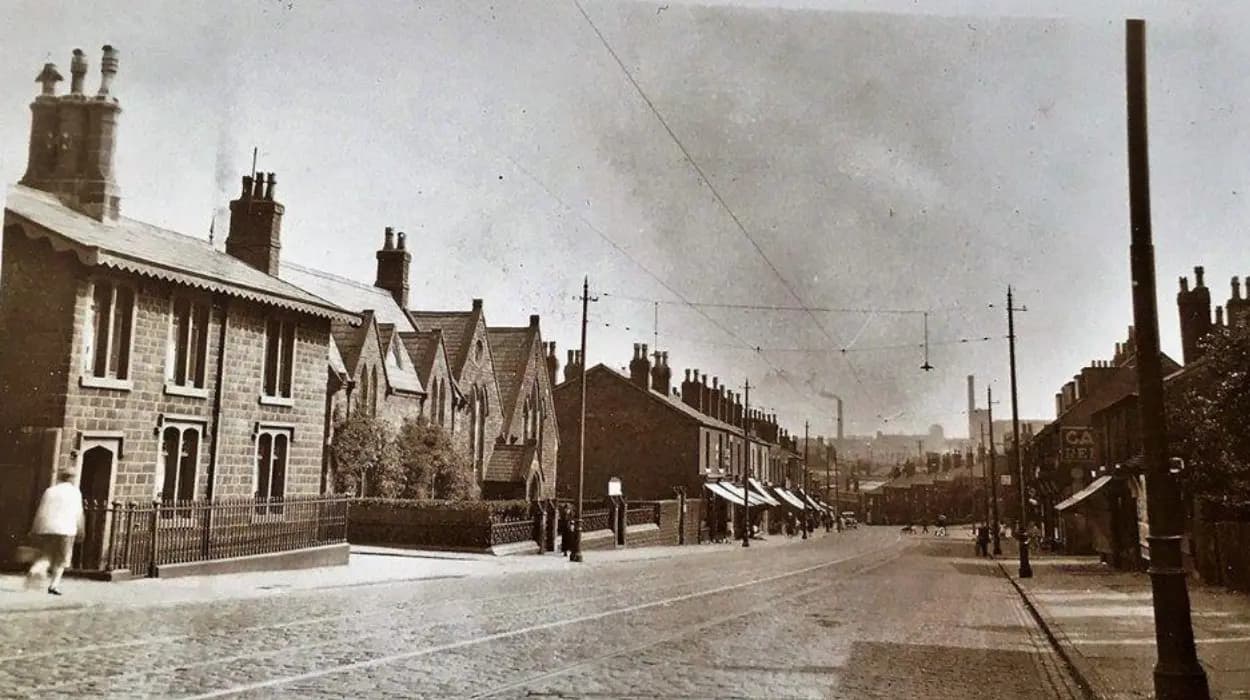
Astley Bridge is a historic district in the northern part of Bolton, Greater Manchester. Originally a small rural settlement within the historic county of Lancashire, it evolved during the nineteenth and twentieth centuries into one of Bolton’s most significant suburban communities. Its development reflects wider changes in English social, economic, industrial, and urban history, including agricultural transformation, textile manufacturing, transport expansion, and suburban growth.
Today, Astley Bridge retains visible links to its past through surviving churches, industrial buildings, historic roads, public parks, and residential districts. Understanding the history of Astley Bridge provides valuable insight into the broader story of Bolton’s rise from a market town into one of Britain’s leading industrial centres.
What is the historical origin of Astley Bridge?
Astley Bridge originated as a small rural settlement in the township of Sharples, Lancashire. Its name derived from a historic bridge crossing the River Astley or Astley Brook, which served local farming communities long before industrialisation transformed the area.
The earliest history of Astley Bridge is closely connected to the medieval township of Sharples. Sharples formed part of the ancient parish of Bolton-le-Moors, one of Lancashire's most important ecclesiastical and administrative divisions.
The name "Astley" has Anglo-Saxon origins. Linguistic evidence suggests it developed from Old English terms referring to an eastern woodland clearing or pasture. The bridge itself became an important local landmark because it connected agricultural settlements north of Bolton.
During the medieval period, the landscape consisted primarily of open fields, grazing land, woodland, and scattered farmsteads. Economic activity centred on agriculture. Farmers cultivated crops suitable for Lancashire's climate and raised livestock across the surrounding countryside.
Several medieval farms established the foundations of later settlement patterns. Examples include Old Hall estates, tenant farms, and agricultural holdings connected to local landowners. These properties influenced road networks and land divisions that remained visible for centuries.
The area's rural character persisted for hundreds of years. Population levels remained low, and settlement growth occurred gradually compared with rapidly expanding market towns elsewhere in England.
How did Astley Bridge develop before the Industrial Revolution?
Before industrialisation, Astley Bridge remained predominantly agricultural. Farming, cottage industries, and local trade supported residents, while connections to Bolton market encouraged economic activity without fundamentally altering the district’s rural landscape and settlement structure.
Between the sixteenth and eighteenth centuries, Lancashire experienced significant economic changes. Domestic textile production expanded throughout the county, creating supplementary income for rural households.
Many families in Sharples combined farming with handloom weaving. This dual economy became common across Lancashire. Households produced woollen and later cotton textiles from cottages and small workshops.
Bolton emerged as an increasingly important regional market centre during this period. Local farmers and craftsmen travelled regularly to trade goods, livestock, and manufactured products.
Transport infrastructure remained relatively basic. Roads often followed medieval routes and were heavily affected by weather conditions. Packhorse tracks connected settlements and enabled movement between rural communities.
Religious life played a central role in community organisation. Residents attended parish churches associated with Bolton-le-Moors. Church records from the period provide valuable evidence for genealogical researchers studying local families and population trends.
Population growth remained modest before industrialisation. Settlement patterns continued to consist primarily of dispersed farms rather than concentrated urban neighbourhoods.
These conditions created the foundation upon which nineteenth-century industrial expansion later occurred.
Why did Astley Bridge become an industrial suburb of Bolton?
Astley Bridge became an industrial suburb because Bolton’s textile industry expanded rapidly during the nineteenth century. Cotton mills, transport improvements, housing construction, and population growth transformed rural land into an integrated urban-industrial district connected to Bolton.
The Industrial Revolution fundamentally altered the character of Astley Bridge.
During the late eighteenth century and throughout the nineteenth century, Bolton became one of Britain's leading cotton-manufacturing centres. Technological innovations transformed textile production from domestic weaving into factory-based manufacturing.
Several factors encouraged industrial development in Astley Bridge.
First, the area possessed available land suitable for factory construction. Second, it benefited from proximity to Bolton while remaining less densely developed than the town centre. Third, local watercourses provided resources important for early industrial operations.
Cotton mills became dominant features of the landscape. These industrial complexes employed large workforces and attracted migrants from surrounding rural districts.
Industrialisation generated extensive housing development. Rows of terraced houses appeared to accommodate workers employed in mills and related industries. Residential streets expanded steadily throughout the nineteenth century.
The population increased significantly as employment opportunities attracted workers and families. New schools, churches, shops, and civic facilities emerged to support the growing community.
By the late Victorian era, Astley Bridge had evolved from a rural settlement into an established suburban-industrial district closely linked to Bolton's economic success.
Which industries shaped Astley Bridge’s growth?
The cotton textile industry dominated Astley Bridge’s development. Supporting sectors including engineering, transport services, construction, retail commerce, and public utilities contributed to economic expansion and reinforced the district’s position within Bolton’s industrial economy.
Cotton manufacturing represented the primary economic driver behind Astley Bridge's growth.
Lancashire became the global centre of cotton production during the nineteenth century. Bolton specialised particularly in spinning fine cotton yarns, a sector requiring skilled labour and advanced machinery.
Industrial facilities constructed near Astley Bridge formed part of this wider manufacturing ecosystem. Mills processed raw cotton imported through ports such as Liverpool before products entered domestic and international markets.
Engineering industries also became important. Local firms manufactured machinery required by textile producers. These businesses created additional employment opportunities and strengthened economic diversification.
Construction activity expanded alongside industrial growth. Builders erected housing, schools, churches, and commercial premises to meet the needs of a growing population.
Retail businesses flourished within emerging neighbourhood centres. Examples included grocers, butchers, drapers, and public houses serving local residents.
Public infrastructure improved throughout the nineteenth and early twentieth centuries. Water supplies, sanitation systems, road improvements, and public transport services enhanced living conditions and supported continued urban expansion.
Together, these industries transformed Astley Bridge into a thriving suburban community integrated within the wider industrial economy of Bolton and Lancashire.
How did transport influence the development of Astley Bridge?
Transport improvements accelerated Astley Bridge’s urbanisation by connecting residents, workers, and businesses to Bolton and surrounding areas. Better roads, railway access, and later public transport networks encouraged economic growth and residential expansion.
Transport infrastructure played a crucial role in shaping modern Astley Bridge.
Before industrialisation, movement relied on local roads and traditional routes connecting farms and villages. Increased industrial activity created demand for improved transportation systems.
Turnpike roads represented an important development during the eighteenth and nineteenth centuries. These improved highways facilitated movement of goods and people between Lancashire settlements.
Railway expansion transformed regional connectivity. Bolton became an important railway centre during the nineteenth century, linking local industries to national markets.
Although major railway infrastructure concentrated around Bolton itself, Astley Bridge benefited directly from enhanced access to employment centres and distribution networks.
The twentieth century introduced further transport developments. Tram systems improved local mobility, enabling workers to commute efficiently between residential districts and industrial workplaces.
Motor vehicle ownership expanded after the First World War. Road improvements accommodated increasing traffic volumes and encouraged suburban development beyond traditional industrial districts.
Modern transport corridors continue to follow routes established during earlier phases of urban expansion, demonstrating the lasting influence of historical infrastructure decisions.
What role did religion and education play in Astley Bridge’s history?
Religious institutions and educational facilities shaped community identity in Astley Bridge. Churches, chapels, and schools provided spiritual guidance, social organisation, literacy education, and civic leadership throughout periods of rapid population and economic growth.
Religious institutions became central features of nineteenth-century community development.
Population growth created demand for additional places of worship beyond existing parish structures. New Anglican churches, Methodist chapels, and other denominational buildings appeared across expanding neighbourhoods.
These institutions served multiple functions. They provided religious services, charitable support, educational opportunities, and social activities for residents.
Church architecture became a visible symbol of community investment. Victorian ecclesiastical buildings often featured Gothic Revival designs reflecting broader national architectural trends.
Education underwent substantial transformation during the nineteenth century. Early schooling frequently operated through church-based initiatives and charitable organisations.
National education reforms increased access to formal instruction. New schools opened to accommodate growing numbers of children living in industrial communities.
Educational improvements contributed to higher literacy rates and expanded employment opportunities. Schools also played an important role in preserving local identity and transmitting community values between generations.
Many historic educational and religious buildings remain significant heritage assets within Astley Bridge today.
How did Astley Bridge change during the twentieth century?
Twentieth-century Astley Bridge experienced suburban expansion, industrial decline, housing development, and economic diversification. Traditional textile manufacturing gradually diminished while residential growth, public services, and commercial activity reshaped the district’s character and function.
The twentieth century brought profound economic and social changes.
The First World War affected local industries and communities, as residents served in military forces and factories supported wartime production.
Following the war, housing development accelerated. New residential districts expanded beyond earlier Victorian industrial neighbourhoods.
The interwar period witnessed significant suburban growth. Improved transport and changing housing preferences encouraged development of lower-density residential areas.
After the Second World War, Britain experienced extensive economic restructuring. Lancashire's textile industry entered a prolonged period of decline due to international competition and technological changes.
Many historic mills closed during the second half of the twentieth century. This industrial contraction altered employment patterns and reshaped local economic structures.
Public-sector investment supported community adaptation. Examples included schools, healthcare facilities, recreational spaces, and infrastructure improvements.
Retail and service industries gradually replaced manufacturing as major sources of employment. Astley Bridge increasingly functioned as a residential suburb within the wider Bolton urban area.
These transformations reflected broader national trends affecting former industrial communities throughout northern England.
What historic landmarks and heritage assets survive in Astley Bridge today?
Astley Bridge retains important heritage assets including churches, former mill buildings, historic streets, public parks, memorials, and traditional housing. These surviving features provide tangible evidence of the district’s agricultural, industrial, and suburban development across centuries.
Historic architecture remains visible throughout the area.
Victorian and Edwardian residential streets illustrate the housing expansion associated with industrial growth. Many terraces and suburban homes retain original architectural characteristics.
Religious buildings represent some of the most prominent heritage landmarks. Churches constructed during the nineteenth century continue to serve as important community and historical resources.
Former industrial structures provide evidence of the area's manufacturing past. While many mills have been demolished or redeveloped, surviving buildings contribute to understanding Bolton's textile heritage.
Public parks preserve historic landscapes and recreational traditions. These green spaces emerged partly from Victorian concerns regarding public health and urban improvement.
War memorials commemorate residents who served during major conflicts, particularly the First and Second World Wars.
Local heritage groups, archives, and historical societies continue documenting and preserving Astley Bridge's historical record. Their work supports research, education, and conservation efforts.
To experience these historic landscapes and community green spaces in person today, consult our comprehensive [Exploring Astley Bridge Today: Parks, Local Walks, and Hidden Green Spaces in Bolton] for itineraries and visiting parameters.
Why is Astley Bridge historically significant today?
Astley Bridge is historically significant because it illustrates the transition from rural Lancashire agriculture to industrial urbanisation and modern suburban development. Its surviving buildings, landscapes, and records provide valuable evidence of Britain’s economic and social transformation.
Astley Bridge represents a microcosm of broader British historical developments.
Its early agricultural origins reflect medieval and early modern rural life. The district's industrial expansion demonstrates the transformative effects of the Industrial Revolution.
Its twentieth-century evolution illustrates the challenges and opportunities faced by communities adapting to post-industrial economic change.
Historical records associated with Astley Bridge provide valuable resources for researchers. Census returns, parish registers, land records, trade directories, and municipal archives help reconstruct patterns of migration, employment, family history, and community development.
For genealogical researchers, the area offers extensive documentary evidence spanning multiple centuries. These records contribute to understanding Lancashire family histories and wider population movements.
Educational institutions increasingly use local history to support place-based learning. Astley Bridge provides a practical example of how national historical processes affected individual communities.
Heritage preservation efforts ensure that significant buildings, archives, and cultural traditions remain accessible for future generations.
The continuing study of Astley Bridge strengthens understanding of Bolton's development, Lancashire's industrial heritage, and Britain's wider historical evolution.
Astley Bridge evolved from a rural Lancashire hamlet into an important industrial suburb and modern residential district. Its history encompasses agriculture, textile manufacturing, transport development, community institution building, suburban growth, and heritage preservation.
The area's transformation reflects several centuries of economic and social change. Medieval farming communities established the earliest settlement foundations. Industrialisation introduced cotton manufacturing, population growth, and urban expansion. Twentieth-century restructuring reshaped the district into a predominantly residential community while preserving important connections to its industrial past.
Today, surviving churches, historic housing, former industrial sites, parks, and archival records continue to document this remarkable journey. As part of Bolton's wider historical landscape, Astley Bridge remains an important example of how local communities adapted to changing economic conditions while retaining distinctive cultural and historical identities.
Its story remains essential to understanding both Bolton's heritage and the broader history of Lancashire's transformation during Britain's agricultural, industrial, and post-industrial eras.
FAQS
Where is Astley Bridge located?
Astley Bridge is located approximately 2.5 miles (4 km) north of Bolton town centre in Greater Manchester, England. It forms part of the Metropolitan Borough of Bolton and sits along the A666 Blackburn Road corridor.