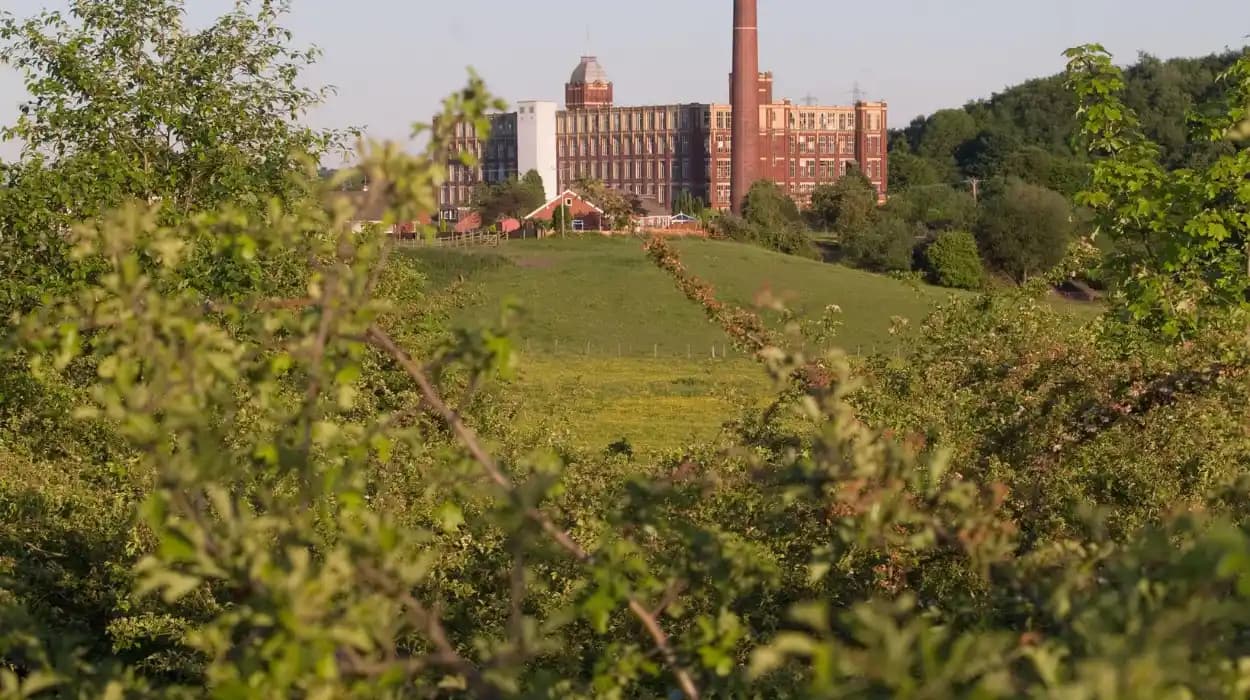
Astley Bridge stands as a historically significant district in northern Bolton, shaped by industrial expansion, textile manufacturing, and urban growth during the Industrial Revolution. The transformation of this area is best understood through the lens of “Astley Bridge and the Cotton Revolution: How Mills Transformed Northern Bolton”, a defining phase that converted rural farmland into one of Lancashire’s most structured mill-based urban environments.
The district’s evolution reflects broader economic and technological changes across eighteenth and nineteenth-century Britain, where mechanised cotton production reshaped settlement patterns, labour systems, and architectural development.
What is Astley Bridge and why is it historically significant in Bolton?
Astley Bridge is a district in northern Bolton, Lancashire, historically significant for its transformation during the Industrial Revolution. It developed from rural farmland into a dense mill suburb shaped by cotton manufacturing, engineering works, transport networks, and working-class housing between the late eighteenth and nineteenth centuries.
Astley Bridge forms part of historic Lancashire, now within Greater Manchester. It began as agricultural land with scattered farms and minor roads. Its significance increased when Bolton became a global cotton manufacturing centre.
The keyword theme “Astley Bridge and the Cotton Revolution: How Mills Transformed Northern Bolton” reflects this transformation, where industrialisation replaced agrarian land use with mechanised production systems.
The district became strategically important due to proximity to water sources, coal supply routes, and expanding transport infrastructure, enabling rapid mill construction and workforce settlement.
How did the cotton industry transform Astley Bridge during the Industrial Revolution?
The cotton industry transformed Astley Bridge by replacing farmland with mechanised mills, terraced housing, and industrial infrastructure. Steam-powered textile production drove urbanisation, population growth, and a structured wage-based economy between the late eighteenth and early twentieth centuries.
Mechanised spinning and weaving technologies replaced manual production systems. Steam engines enabled continuous mill operation independent of natural water flow, accelerating industrial output.
Large brick-built mills dominated the landscape. These structures housed spinning mules, power looms, and carding machines, requiring dense labour forces that reshaped settlement patterns.
The concept of “Astley Bridge and the Cotton Revolution: How Mills Transformed Northern Bolton” is visible in this shift, where industrial capital replaced agricultural land use entirely.
Which mills defined Astley Bridge’s industrial landscape?
Astley Bridge’s industrial landscape was defined by cotton spinning mills, engineering workshops, and dye works. These facilities formed an integrated production network supporting Bolton’s textile economy and shaping the district’s urban and architectural identity during the nineteenth century.
Cotton mills were multi-storey brick structures designed for durability, fire resistance, and machinery load distribution. Engineering works supplied machinery maintenance and replacement components.
Dye works processed raw textiles into finished goods, completing the production chain. Together, these industries formed a self-sustaining industrial ecosystem.
Historical mapping confirms dense mill clustering, consistent with other Lancashire industrial districts during peak production periods.
How did transport infrastructure support industrial growth in Astley Bridge?
Transport infrastructure in Astley Bridge supported industrial expansion through canals, railways, and improved road networks. These systems enabled efficient movement of raw cotton, coal, and finished textiles between mills and national export routes.
Canal networks connected Bolton to wider industrial regions, reducing transport costs for bulk goods. Railway expansion in the nineteenth century further integrated Astley Bridge into global trade systems via Liverpool docks.
Road improvements supported wagon-based logistics between mills, housing, and warehouses.
Transport development directly reinforced the industrial identity described in “Astley Bridge and the Cotton Revolution: How Mills Transformed Northern Bolton.”
What was the social impact of mill work on Astley Bridge communities?
Mill work in Astley Bridge created dense working-class communities defined by long working hours, wage labour, and industrial discipline. It shaped housing patterns, education systems, and social organisation throughout the nineteenth century.
Workers lived in terraced housing near mills, reducing travel time and reinforcing industrial dependency. Religious institutions and schools provided basic education and social support.
Overcrowding and industrial density influenced public health conditions documented in municipal records.
Despite hardship, strong community structures emerged, shaped by shared employment and cultural continuity.
What remains of Astley Bridge’s industrial heritage today?
Astley Bridge retains remnants of its industrial past through surviving mills, converted warehouses, terraced housing, and preserved street layouts. These features reflect nineteenth-century industrial planning and continue to define the district’s identity within modern Bolton.
Former mill buildings have been repurposed into residential and commercial spaces. Terraced streets remain structurally intact, demonstrating Victorian urban design principles.
These preserved elements form a physical record of “Astley Bridge and the Cotton Revolution: How Mills Transformed Northern Bolton.”
Heritage documentation by local archives ensures continued academic and cultural access to industrial history.
What can visitors explore in Astley Bridge today?
Visitors to Astley Bridge can explore historic streets, community parks, converted mill buildings, and local cafes. The area provides accessible insight into Lancashire’s industrial heritage within a modern suburban environment.
Victorian housing, former industrial sites, and community spaces illustrate the district’s evolution from manufacturing hub to residential suburb.
Cafes and shops often occupy historically significant buildings, blending heritage with contemporary use.
Walking routes allow exploration of industrial geography and urban development patterns.
Where can you find walking routes and green spaces in Astley Bridge?
Walking routes and green spaces in Astley Bridge are located around parks, river corridors, and repurposed industrial land. These spaces preserve historical landscape patterns while providing modern recreational access.
River Tonge corridors and former industrial routes have been converted into pedestrian-friendly pathways.
Parks occupy reclaimed industrial or agricultural land, reflecting post-industrial urban regeneration.
These spaces maintain continuity with the historical framework of “Astley Bridge and the Cotton Revolution: How Mills Transformed Northern Bolton.”
How has Astley Bridge evolved into a modern suburban district?
Astley Bridge has evolved into a suburban residential district through industrial decline, redevelopment of mill sites, and expansion of services such as education, healthcare, and retail infrastructure.
Many mills closed during the twentieth century due to global textile competition. These sites were repurposed or demolished.
Modern infrastructure integrates Astley Bridge into Greater Manchester’s urban system while retaining historical street layouts.
This evolution reflects the long-term transition initiated during “Astley Bridge and the Cotton Revolution: How Mills Transformed Northern Bolton.”
Why is Astley Bridge important for historical and genealogical research?
Astley Bridge is important for research due to its extensive industrial records, census data, and preserved urban structure. These sources support studies of migration, labour history, and family ancestry linked to Lancashire’s cotton industry.
Census records and employment archives document population growth and occupational structures.
Genealogical research benefits from detailed household and industrial records.
The district serves as a representative case study of industrial transformation in northern England.
FAQS
What was Astley Bridge like before industrialisation?
Before the Industrial Revolution, Astley Bridge was mainly farmland with scattered cottages, small farms, and rural tracks. The local economy was based on agriculture and domestic handloom weaving.