Key Points
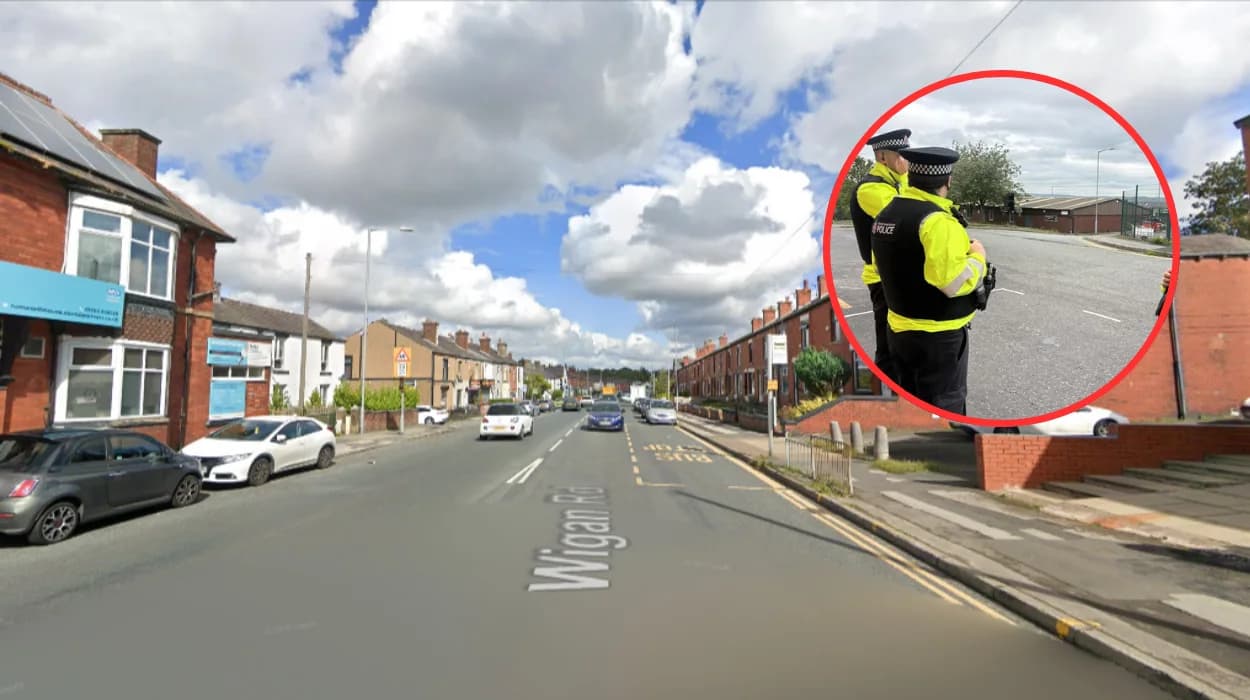
- Greater Manchester Police have conducted an intensive roadside safety operation on Washington Street and Wigan Road to target dangerous driving behaviours.
- The targeted traffic initiative was executed as a core component of the national Neighbourhood Policing Week framework.
- Officers intercepted between 15 and 20 vehicles within a 30-minute operational window, resulting in the immediate issuance of 10 traffic penalty tickets.
- Documented driving offences during the targeted sting included motorists using handheld mobile phones and transporting unsecured children.
- The operation directly responds to heightened community safety anxieties following a catastrophic head-on collision on Wigan Road that claimed four lives.
- Law enforcement personnel emphasized a dual approach of strict legal enforcement and direct roadside driver re-education to shift regional driving standards.
Bolton (Bolton Today) June 20, 2026 - A major traffic enforcement operation was launched by the Greater Manchester Police on Wigan Road and Washington Street to intercept dangerous drivers, crack down on severe traffic offences, and improve vehicular safety on a stretch of road notorious for fatal accidents. The targeted, high-visibility roadside sweep was executed by local neighbourhood policing teams to root out the "Fatal Four" motoring offences: speeding, drink and drug driving, mobile phone distraction, and the failure to wear mandatory seatbelts. Operating within a heavily coordinated framework, police officers utilized strategic spotters and specialized equipment to screen passing motorists, highlighting a rigorous zero-tolerance approach to unsafe driving patterns within the borough.
Why Was the Wigan Road Traffic Operation Launched?
The multi-agency road safety initiative was established to address long-standing public concerns regarding reckless driving, speeding, and structural safety on major arterial links in Bolton. As reported by Grace Williams of The Bolton News, the operation coincided with National Neighbourhood Policing Week, a dedicated seven-day law enforcement campaign designed to spotlight active community policing, lower crime rates, and foster direct public engagement across local boroughs.
The geographical placement of the roadside checkpoint was highly intentional. The corridor comprising Wigan Road and its connecting sectors has frequently been flagged by local residents, transport authorities, and municipal councillors as an area vulnerable to high-speed violations. By establishing an immediate, high-visibility presence, the Greater Manchester Police aimed to disrupt dangerous driving habits before they resulted in further vehicular harm.
What Offences Were Detected by Officers on the Ground?
During the morning operation, a steady stream of vehicles was systematically diverted away from primary arterial routes into designated holding areas for detailed compliance checks. According to the on-the-scene report by Grace Williams of The Bolton News, police units deployed advanced tactical methods, including concealed "spotters" positioned further up the road. These spotters were tasked with observing traffic flows and identifying approaching drivers actively committing visible infractions.
The operation quickly yielded results. Within a single 30-minute window, officers intercepted between 15 and 20 vehicles, resulting in the immediate issuance of 10 traffic penalty tickets. Among the most severe infractions witnessed by journalists on the ground was a motorist caught actively operating a mobile phone while driving, alongside an unsafe vehicle carrying four young children completely unsecured without seatbelts across the rear passenger seats.
How Did Law Enforcement Organise the Roadside Operation?
The deployment required seamless logistical coordination to ensure that stopping vehicles did not provoke traffic delays or compromise safety on active public routes. To achieve this, the Greater Manchester Police selected Washington Street, situated just off Deane Road, as their primary processing zone. This location provided an expansive, secure off-road environment where pulled-over motorists could be interviewed, breathalysed, and issued documentation safely away from fast-moving traffic.
As detailed by Grace Williams of The Bolton News, the tactical toolkit available to the neighbourhood teams included calibrated speed-detection guns, roadside breathalyser units, and real-time access to the National Police Computer database. This allowed law enforcement personnel to rapidly verify vehicle registration details, insurance policies, and driving licence validity during standard random stops.
Explore More Bolton Crime News
Bolton Police Arrest Two and Seize Multiple Vehicles, Bolton 2026
Man Arrested After Racially Aggravated Incident: Bolton Town Centre 2026
What Did the Leading Officers State About the Initiative?
The broader strategic objectives of the initiative were detailed extensively by senior personnel overseeing the traffic deployment. As reported by Grace Williams of The Bolton News, Sergeant Oliver Cooper, the officer leading the traffic operation, stated that:
"Today we are carrying out a standard traffic operation for the local neighbourhood teams. The neighbourhood team is split between the north, south and west of Bolton. Every week, each of the teams does a traffic operation in an area on their side."
Sergeant Oliver Cooper further explained that specific timing variables, such as major sporting events, are routinely factored into their deployment matrices to catch drivers operating under the influence the morning after. As recorded by Grace Williams of The Bolton News, Sergeant Oliver Cooper remarked:
"With the England game last night, there may be a lot of people who were drinking and decided to drive to work this morning. If we see anyone that we think has done anything like that, it's our opportunity to pull them over, have a chat and breathalyse them."
Beyond legal prosecution, the operation placed a heavy emphasis on direct emotional intervention and driver re-education. As noted in the coverage by Grace Williams of The Bolton News, Sergeant Oliver Cooper emphasised the moral duty felt by local officers when managing these routes, stating:
"It's a massive area for speeding with the fatality at the start of the year. It's a huge focus for us and, as a neighbourhood team, we take it very personally when sad things like that happen. If we do see anyone who isn't following the law, we don't just give them a ticket and send them on their way. We remind them that people have died on this road and of the consequences of doing things like not wearing a seatbelt or paying attention."
Sergeant Oliver Cooper concluded his address by underscoring the collaborative nature of the safety campaign, adding that it remains heavily backed by municipal representatives and the local population. As reported by Grace Williams of The Bolton News, Sergeant Oliver Cooper added:
"It's not just about giving tickets, it's about education on careful driving especially on Wigan and St Helens Road. There's still a lot of progress to be made."
How Does the Public React to Random Vehicle Stops?
The efficacy of roadside operations relies on building trust and maintaining clear lines of communication with the motoring public. Frontline officers noted that while initial interactions can occasionally be tense, the vast majority of drivers become supportive once the underlying safety context is explained.
As reported by Grace Williams of The Bolton News, Police Constable Conor Finch commented on the community dynamic, stating:
"It's a good way to engage with the community, especially in Bolton. When we do speak with drivers they understand. At first they might be a bit wary, but we just explain we're trying to improve the standards of the road. It's down to us to make sure we reassure the driver of the intention of it."
By shifting the tone from punitive enforcement to community preservation, officers reported that the local population expressed appreciation for the visible crackdown, particularly given the historical context of collisions within the district.
What Past Incidents Prompted This Strict Enforcement?
The heightened urgency surrounding the Greater Manchester Police's traffic sweeps is tied directly to a history of catastrophic collisions on Bolton’s road network. Most notably, a devastating head-on collision occurred on Wigan Road, involving a local taxi and a private vehicle.
The catastrophic impact resulted in the tragic deaths of four individuals, sent shockwaves through the local community, and triggered an intensive investigation that led to the subsequent arrest of four individuals. Law enforcement officials have openly acknowledged that the memory of this event heavily drives their current zero-tolerance policies. By continuously targeting speeding hot spots and driver distraction on Wigan Road and St Helens Road, the neighbourhood teams aim to systematically eliminate the localized driving behaviours that previously led to such loss of life.