Key Points
- Decision Imminent: Bolton Council is progressing a comprehensive report regarding proposed Traffic Regulation Orders (TROs) to address severe, long-standing parking congestion in the Rumworth ward.
- Targeted Streets: The proposed parking interventions are specifically targeted at alleviating traffic chaos and blockages on Rutland Street, Auburn Street, and Ashburn Street.
- Community Frustration: Local residents have actively spoken out, revealing that narrow dead-end roads have transformed into a "free car park" for shoppers and visitors, leaving vehicles abandoned for days.
- Safety and Access Hazards: Heavily congested streets have obstructed essential emergency services, health carers, delivery drivers, and general motorists, leading to multi-vehicle stand-offs and localized gridlock.
- Financial Impact: Local motorists have suffered vehicular damage due to the tight corridors, with one driver reporting repair costs approaching £500 from scratches caused by larger vehicles navigating the gridlock.
- Compromise via Consultation: Following a robust public consultation that drew a significant number of initial objections, council highway officers have revised the Traffic Regulation Order to balance pedestrian safety with the retention of residential parking.
- Implementation Strategy: The revised schema proposes "No Waiting At Any Time" (NWAT) restrictions, which will physically manifest as double yellow lines on critical junction corners to safeguard pedestrian visibility and turning movements.
- Two-Stage Approval Timeline: The proposal underwent initial deliberation at the council's Informal Executive Cabinet Member meeting on June 4, with a definitive, legally binding vote scheduled for a formal council assembly on June 17.
Bolton (Bolton Today) June 6, 2026 — A final municipal determination regarding controversial parking restrictions for a series of residential streets in Bolton plagued by severe, long-standing traffic issues is officially scheduled to occur later this month. Writing for The Bolton News, prominent local government reporter Isobel Forbes confirmed that a finalized report regarding proposed Traffic Regulation Orders within the Rumworth ward is actively progressing through the local authority's statutory decision-making channels. The legislative framework is designed to target critical structural bottlenecks on Rutland Street and Auburn Street, where unmanaged vehicle densities have pushed local infrastructure to its absolute breaking point.
The structural crisis escalated into a matter of official council intervention after localized groups of homeowners and motorists stepped forward to blow the whistle on what they describe as daily, systemic traffic paralysis. According to investigative findings compiled by Isobel Forbes of The Bolton News, residents have firmly asserted that ongoing parking problems are creating immense, daily difficulties for ordinary motorists, essential healthcare carers, commercial delivery operations, and blue-light emergency services. The upcoming vote represents the culmination of a multi-month battle between frustrated neighborhood groups, local business patrons, and municipal transport planners trying to safely navigate the demands of urban density.
What is causing the parking crisis on Rutland Street?
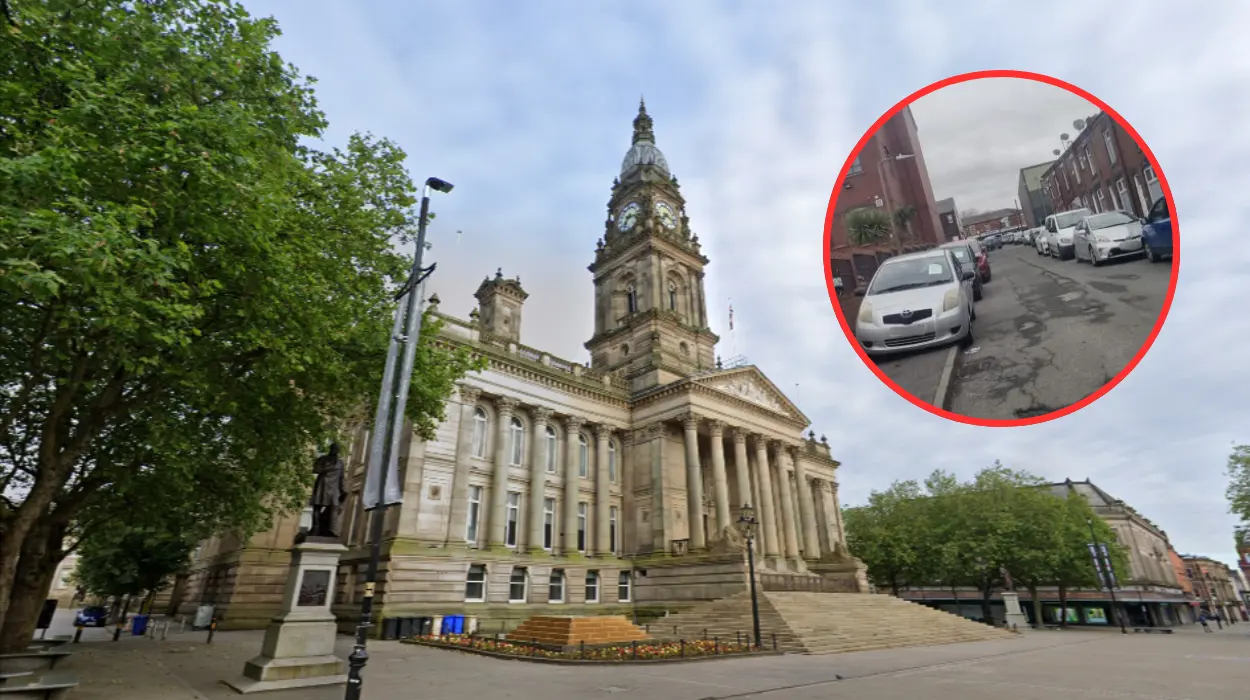
The underlying catalyst for the neighborhood’s traffic gridlock stems from a combination of geographical design and external commercial exploitation. As documented by reporter Isobel Forbes in The Bolton News, frustrated individuals living directly on Rutland Street previously reported that their narrow, dead-end road had essentially been subverted into a "free car park" utilized heavily by shoppers and visitors traveling to surrounding commercial businesses. Because the road features no active parking meters or permit mandates, vehicles are frequently abandoned along the kerbside for consecutive days at a time, leaving actual homeowners with nowhere to park their own vehicles.
This displacement effect has triggered a dangerous, systemic overflow into neighboring arteries. Informing The Bolton News, local residents detailed that surrounding secondary streets are routinely subjected to identical pressures. The intense concentration of stationary vehicles along both sides of these narrow corridors leaves inadequate room for vehicular passage, routinely causing absolute chaos, severe blockages, and high-stress stand-offs between oncoming drivers who find themselves trapped face-to-face without a visible point of egress.
How are congested roads impacting Bolton drivers financially?
Beyond the daily psychological strain of navigating localized gridlock, the parking crisis on Rutland Street has begun to inflict measurable, direct financial damage upon local property owners and commuters. The sheer density of parked vehicles has narrowed the functional roadway to such a degree that ordinary maneuvers have become high-risk situations.
According to the official reporting published by Isobel Forbes of The Bolton News, one heavily impacted motorist reported being forced to pay a bill of almost £500 to repair extensive external damage caused to their vehicle. The vehicle had been severely scratched and scuffed by larger transport vehicles that were desperately trying to force their way through the heavily congested, narrowed street. For many residents, this financial penalty represents an unfair tax on their living conditions, directly caused by municipal inaction and the overflow of commercial parking into residential zones.
When will Bolton Council make a final decision on the TRO?
In response to the mounting civic pressure, Bolton Council has established an expedited, two-phase timeline to push the Traffic Regulation Order through its necessary legislative stages. The authority is utilizing an incremental review process to ensure that all administrative and legal protocols are fully satisfied before the restrictions become enforceable under British highway law.
Detailing the exact bureaucratic roadmap, an official spokesperson for Bolton Council stated to The Bolton News that:
"The report is to be presented at our Informal Executive Cabinet Member meeting on June 4 for discussion."
The spokesperson further clarified the secondary, binding step of the process, stating:
"Following this, subject to the necessary approvals, it will be formally presented at a meeting on June 17 for a final decision."
The local authority has confirmed that the complete, unedited final report will be uploaded and made available for public examination on the official council website in due course.
Explore More Bolton Council News
Bolton Council Blames Parked Cars For Bury Road Bin Delays, 2026
Radcliffe Road Roadworks Set to Cause Commuter Disruption: Darcy Lever 2026
How did public feedback shape the revised parking plans?
The rollout of the parking strategy has not been without significant friction. When municipal highway planners initially drafted the Traffic Regulation Order for the wider Rumworth ward, their sweeping approach encountered intense resistance from various segments of the community who feared a total loss of essential near-home parking spaces.
As reported by Isobel Forbes of The Bolton News, following a recently concluded public consultation window, a significant number of formal objections were officially submitted by the public in direct response to the council's original, more restrictive blueprints. Council highway officers openly acknowledged this pushback, noting that the robust community feedback directly compelled them to pivot to a significantly revised, more balanced approach. The newly amended proposals have been meticulously engineered to significantly boost overall road safety and preserve pedestrian sightlines while actively retaining as much valuable on-street parking as humanly possible for the immediate residents who rely upon it daily.
Where will the new 'No Waiting At Any Time' lines be painted?
The technical centerpiece of the revised Traffic Regulation Order focuses heavily on protecting critical junctions and turning radiuses where visual obstructions pose the highest risk to pedestrians and passing vehicles. The council's intervention relies on strategically expanding "No Waiting At Any Time" restrictions, which will ban stationary vehicles entirely from key structural points.
As mapped out in the official council documentation reviewed by The Bolton News, there are currently four distinct NWAT areas located on the physical pavement corners along Ashburn Street. Under the newly updated, revised proposals, four additional NWAT restrictions would be legally introduced at the remaining unprotected junction corners on that very same street. While the public consultation maps utilized an array of highly distinct, contrasting color codes to help residents visually differentiate between long-standing existing restrictions and newly proposed interventions, Bolton Council officials clarified that all newly ratified road markings will ultimately be painted as standard, legally enforceable double yellow lines on the asphalt if final approval is granted.
Why are emergency services and delivery drivers at risk?
The driving force behind the community's refusal to accept the status quo is the growing fear of a catastrophic delay in emergency response times. Because Rutland Street operates as a tight, dead-end road, any vehicle that blocks the central corridor effectively seals off the remainder of the street from the outside world.
Residents have repeatedly and urgently raised public warnings regarding these perilous parking conditions. Writing for The Bolton News, Isobel Forbes detailed that community members have explicitly warned that heavily parked, double-sided streets actively obstruct sprawling emergency service vehicles—such as fire engines and ambulances—where every single passing second is critical. Furthermore, the lack of turning space routinely forces larger commercial delivery vehicles into incredibly complex, blind reversing maneuvers across multiple intersections, dramatically elevating the risk of property damage and collisions with pedestrians.
What happens if the new parking restrictions fail to work?
While the impending June 17 municipal vote is viewed as a monumental step forward, highway planners and ward politicians openly recognize that painting double yellow lines may not instantly cure the deep-seated congestion problems plaguing the Rumworth area if driver compliance remains low.
To address these lingering anxieties, the local authority has signaled an ongoing commitment to the area, refusing to treat the upcoming Traffic Regulation Order as a static, one-time fix. Speaking on behalf of the local authority to The Bolton News, an official spokesperson for Bolton Council emphasized their long-term contingency strategy, stating:
"If issues do persist, then highways officers are happy to work with local ward councillors and residents to try to alleviate parking problems using appropriate and balanced measures."
This open-ended commitment ensures that if the new yellow lines simply displace the commercial traffic deeper into the residential suburbs, further traffic calming measures, permit zones, or heightened enforcement patrols can be legally deployed to defend the neighborhood's accessibility.