Key Points
- Nearly a month of traffic disruption is expected on Radcliffe Road in Darcy Lever due to essential highway repair and maintenance works.
- Multi-way traffic signals will be operational between Bowstone Rise and Crowness Kennels to manage the traffic flow.
- The essential maintenance scheme is scheduled to run from June 4 until June 30, 2026.
- Bolton Council Highways has assigned a high-impact rating to the project, warning of significant delays.
- Peak travel times, specifically the morning and evening rush hours, are projected to see the most severe traffic congestion.
- Motorists are being strongly urged to plan ahead, allow extra travel time, and seek alternative routes where possible.
- The local authority emphasized that the works are vital for improving road safety and preserving the long-term condition of the local highway network.
- Affected parties, including residents and business owners, can contact the council via email at highways@bolton.gov.uk for further details.
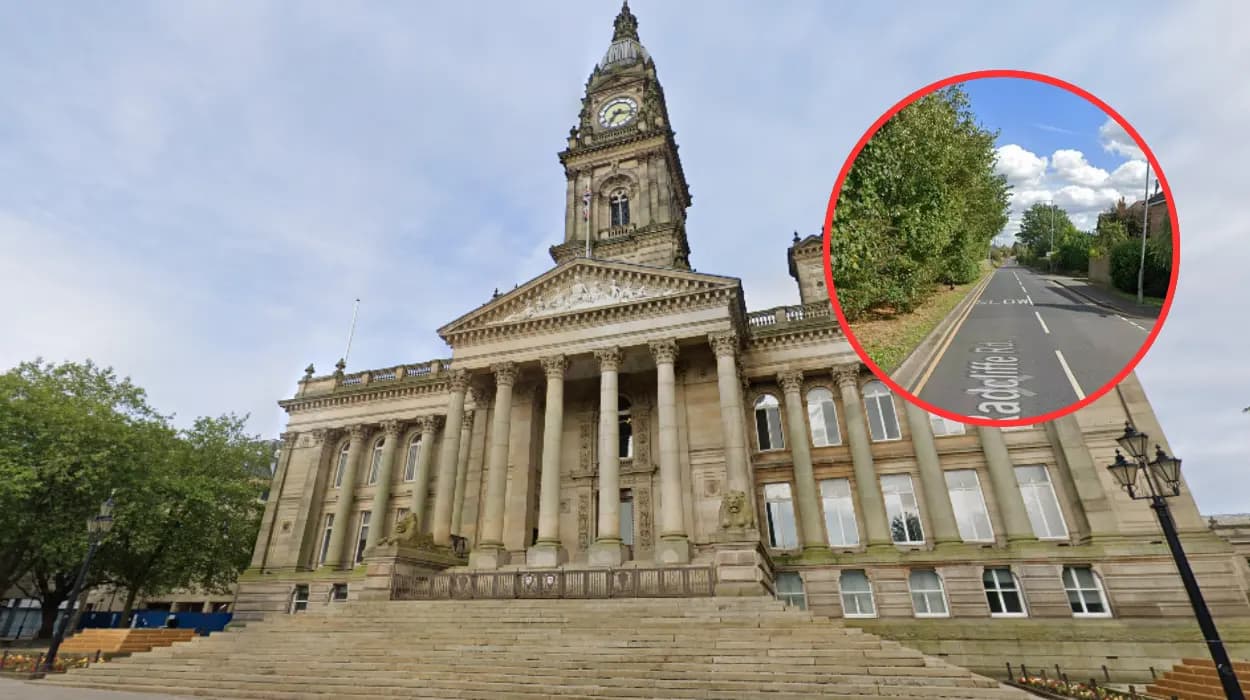
Darcy Lever (Bolton Today) June 4, 2026 - Motorists traveling through Darcy Lever are facing nearly a month of travel disruption as essential highway repair and maintenance works officially get underway on Radcliffe Road. As reported by Isobel Forbes of The Bolton News, Bolton Council Highways has implemented multi-way temporary traffic signals along a busy stretch of the route, spark warnings of significant delays for commuters, local residents, and surrounding businesses. The disruptive works, which began today, are scheduled to continue until June 30, 2026, as part of a wider local authority campaign to upgrade the borough's infrastructure.
The traffic control measures are concentrated specifically on the section of Radcliffe Road stretching between Bowstone Rise and Crowness Kennels. Due to the high volume of daily traffic that relies on this corridor, transport officials have categorised the project with a high-impact rating. This designation indicates that substantial queues are highly probable, with the worst of the congestion expected to manifest during peak morning and evening commuting hours. Consequently, drivers are being strongly advised to recalculate their journey times or bypass the area entirely.
Why Are the Radcliffe Road Roadworks Happening Now?
The introduction of temporary traffic management measures on this key Darcy Lever artery is part of a coordinated effort by the local authority to address deteriorating road surfaces. As reported by Isobel Forbes of The Bolton News, the infrastructure scheme falls directly under Bolton Council’s targeted programme of highway improvements. The council has clarified that the primary objectives of the nearly four-week project are to maintain stringent road safety standards and to elevate the baseline physical condition of the local road network.
Local highway authorities routinely assess structural integrity to schedule interventions before deep-set wear leads to safety hazards. According to the publication's coverage, Bolton Council stated that the maintenance work is necessary to keep the highway network in good condition and help prevent more extensive, highly expensive repairs from being required in the future. By intervening with resurfacing and foundational maintenance at this stage, the council aims to secure the long-term viability of the road.
What Structural Areas and Dates Are Affected by the Traffic Management?
The spatial scope of the roadworks is confined to a specific, highly utilised geography within Darcy Lever, meaning the logistical fallout will be highly localized but intensely felt. As reported by Isobel Forbes of The Bolton News, the multi-way traffic signals will actively control vehicle flow on Radcliffe Road between the junctions of Bowstone Rise and Crowness Kennels. This specific corridor serves as a vital connective link for local traffic moving across the borough.
In terms of duration, the disruption will span the majority of the month. The operational timeline supplied by transport planners dictates that the multi-way signals will remain active 24 hours a day from June 4 through to June 30, 2026. This extensive timeframe reflects the intricate engineering requirements of the highway maintenance programme, which involves stripping back damaged top layers, reinforcing substandard foundations, and laying fresh, durable tarmac.
Explore More Bolton Council News
Blackburn Road Roadworks Threaten Major Traffic Delays: Bolton 2026
Council Plans Security Upgrades at Longsight Park: Harwood 2026
How Will the Disruption Impact Daily Commuters and Local Businesses?
For the thousands of motorists who utilise Radcliffe Road for their daily commute, the high-impact rating assigned by Bolton Council Highways serves as an official warning of severe delays. As reported by Isobel Forbes of The Bolton News, the temporary traffic lights are expected to affect traffic flow along the busy route throughout the duration of the project, creating disruption for commuters, residents, and businesses in the area.
The implementation of multi-way signals effectively reduces the available road capacity, forcing opposing lanes of traffic to take turns navigating the single open lane. This operational bottleneck is expected to trigger tailbacks that could ripple outward into adjacent residential areas of Darcy Lever. Businesses situated near Bowstone Rise and Crowness Kennels face potential logistical challenges, as delivery vehicles, employees, and customers confront unpredictable travel windows.
What Specific Advice Has Been Given to Motorists to Avoid Delays?
With severe congestion anticipated, transport officials have issued actionable advice to individuals who regularly traverse Radcliffe Road. As reported by Isobel Forbes of The Bolton News, drivers are being urged to allow extra time for journeys and consider alternative routes where possible.
Navigational planning will be paramount for drivers aiming to mitigate the impact of the roadworks on their daily schedules. Local driving experts suggest that commuters should exploit alternative regional arteries, such as the A666 (St Peters Way) or bury roads farther afield, depending on their final destinations. Additionally, making trips outside of the traditional morning and evening rush-hour windows could drastically reduce the time spent waiting at the temporary signals.
How Can Residents Contact Bolton Council Highways for More Information?
Recognising that long-term roadworks can cause unforeseen challenges for those living in the immediate vicinity, Bolton Council has opened official channels for public communication and grievance redress. As reported by Isobel Forbes of The Bolton News, anyone requiring further information about the scheme can contact Bolton Council Highways at highways@bolton.gov.uk.
This dedicated email link allows residents to inquire about specific access requirements, voice concerns regarding the timing of the signals, or request updates on the progress of the engineering team. Local authorities highly recommend that any commercial operators with specific loading dependencies along Radcliffe Road establish contact early to coordinate movements and minimise commercial disruption.
The Broader Context of Bolton's Highways Maintenance Strategy
To fully comprehend why a month-long disruption on Radcliffe Road is deemed necessary by local officials, it is crucial to examine the overarching logistical and financial strategies governing Bolton’s transport infrastructure. Local councils across the United Kingdom face a compounding challenge: balancing tightening municipal budgets against an aging road network that suffers from escalating structural wear due to heavier modern vehicles and increasingly volatile weather patterns.
How Does Preventive Maintenance Save Taxpayer Money?
The decision to execute a four-week repair programme on Radcliffe Road represents a classic example of preventive asset management. In asset engineering, waiting for a road surface to completely fail—a state characterized by deep, rim-damaging potholes and substrata erosion—is far more expensive than intervening while the road is still salvagable. Complete road reconstruction requires deep excavation, extensive material costs, and prolonged road closures that can last for months rather than weeks.
By deploying multi-way signals and undertaking comprehensive surface maintenance now, Bolton Council is effectively sealing the road against water ingress, which is the primary catalyst for winter pothole formation. This strategic choice aligns with national guidance from the Department for Transport, which urges local authorities to adopt a "clear alliance" between routine inspections and early intervention to maximise the efficiency of public spending.
What Challenges Do Local Businesses Face During Extended Roadworks?
While the long-term benefits of a smooth, safe road surface are undisputed, the short-term economic realities for local traders during works can be challenging. For retail establishments, service providers, and industrial units operating out of Darcy Lever, a reduction in traffic flow or difficult road access often correlates with a temporary drop in footfall.
Customers are notoriously sensitive to traffic delays; if a routine trip to a local shop involves sitting in a queue on Radcliffe Road for an extra twenty minutes, consumers frequently choose to divert their business to retail parks or competitors accessible via unencumbered routes. To counteract this, local business forums often encourage councils to deploy clear "Business Open as Usual" signage well ahead of the traffic control zones, ensuring that passing trade is not entirely lost to the detour routes.
How Do Modern Traffic Signals Mitigate Delays in Real-Time?
The multi-way traffic signals deployed between Bowstone Rise and Crowness Kennels are a significant evolution from the fixed-time traffic lights of the past. Modern highway maintenance contracts typically mandate the use of smart, sensor-driven temporary signals. These systems use microwave vehicle detectors mounted on top of the light units to actively monitor the length of approaching traffic queues.
If the sensor detects a substantial backlog of vehicles building up from the direction of Bowstone Rise, the internal computer algorithm can dynamically extend the green light phase for that specific approach. Conversely, if no vehicles are detected arriving from the Crowness Kennels direction, the system shortens that phase to clear the busier side more rapidly. While these smart systems cannot eliminate delays when road capacity is halved, they are instrumental in preventing complete gridlock during the volatile peak hours highlighted by transport planners.
As the June 30 completion date approaches, Bolton Council Highways engineers will continue to monitor traffic flow data to fine-tune the signal timings, ensuring that the necessary pain of infrastructure renewal is managed as smoothly as possible for the community of Darcy Lever.