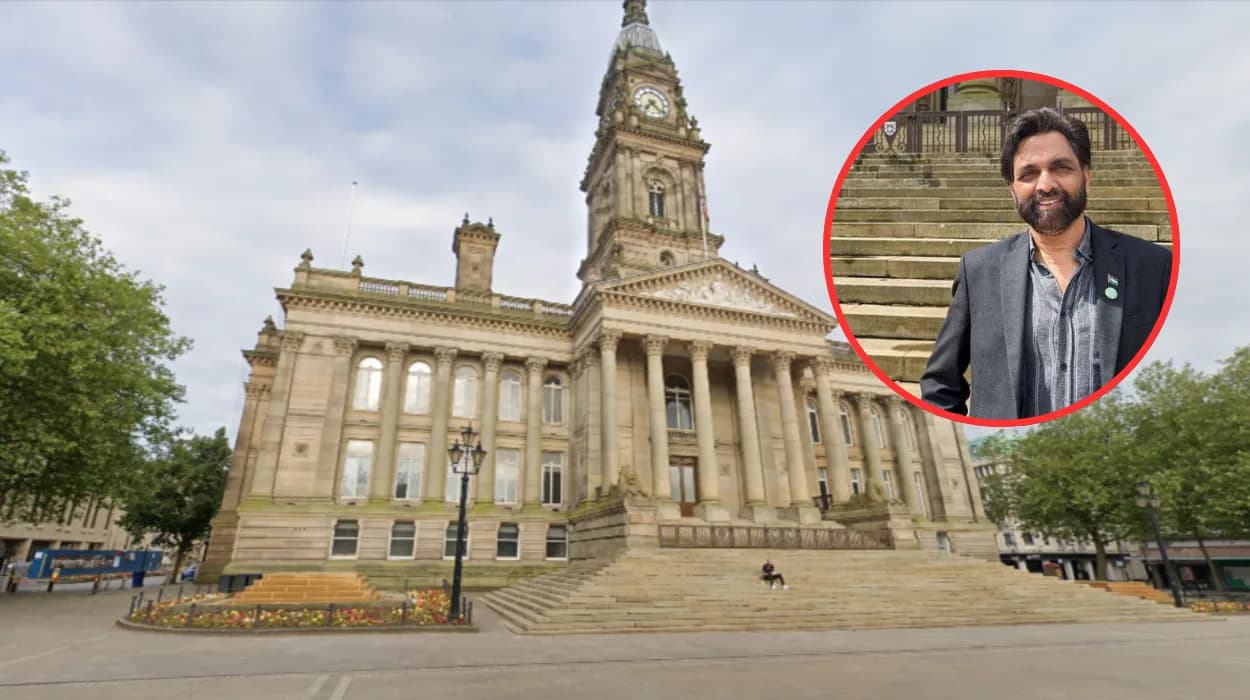
Key Points
- Labour Administration Expected: The Labour Party is poised to retain political control of Bolton Council ahead of a pivotal annual general meeting vote.
- Greens 'Frozen Out': Green Party leader Councillor Hanif Alli has publicly claimed that his party has been completely excluded from leadership negotiations by Labour.
- Horwich and Blackrod Alliance: Labour has instead focused its efforts on strategic negotiations with the Horwich and Blackrod First Independents (HBFI) to secure power.
- Concessions Secured: HBFI leader Councillor David Grant confirmed that "tough negotiations" took place, resulting in Labour conceding to specific localized requests.
- No Overall Control: The recent local elections left Bolton Council in a state of No Overall Control (NOC), with Labour remaining the largest party despite suffering significant electoral losses.
- Loss of Former Leader: Labour's seat count dropped to 20, notably losing the Tonge with the Haulgh seat previously held by former council leader Nick Peel.
- New Labour Leadership: Following the election setback, Councillor Akhtar Zaman was chosen as the new leader of the Labour group, alongside Councillor Martin Donaghy as deputy leader.
- Upcoming Decision: The definitive vote to establish the new town hall leadership is scheduled to take place at Bolton Town Hall on Wednesday, May 20.
Bolton (Bolton Today) May 19, 2026 - The local authority found itself thrust into intense political uncertainty following the May 7 local elections, which stripped the ruling Labour group of its stable footing and plunged the town hall into a state of No Overall Control. The electoral fallout was severe for the incumbent administration, marked most dramatically by the unseating of former council leader Nick Peel, who lost his Tonge with the Haulgh ward. In the immediate aftermath of the defeat, the wounded Labour group moved swiftly to restructure its executive hierarchy, electing Councillor Akhtar Zaman as the new leader of the Labour group and appointing Councillor Martin Donaghy to step up as his deputy. To bridge the 11-seat deficit needed to pass the crucial threshold of 31 votes at the upcoming Annual General Meeting (AGM), the new leadership was forced to initiate immediate cross-party dialogue, the fallout of which has now burst into the public domain.
Why are the Greens claiming they were frozen out?
The delicate process of forming a minority or coalition administration has sparked fierce public acrimony. As reported by Chief Reporter Joe Harrigan of The Bolton News, Green Party leader Councillor Hanif Alli claimed that Labour has intentionally "frozen out" his party from any meaningful participation in governance negotiations. Councillor Alli expressed deep dissatisfaction with the ideological direction of the discussions, revealing that Labour had chosen to bypass progressive alliance options to secure an understanding with right-leaning localist groups instead.
According to the report by Joe Harrigan of The Bolton News, Councillor Hanif Alli stated that:
"We are confident that, with the current momentum and continued public support, we can take more Labour seats off Labour next year."
The Green Party leader did not hold back in his assessment of the local Labour apparatus, framing the decision to exclude his party as a symptom of electoral anxiety. As recorded by Joe Harrigan of The Bolton News, Councillor Hanif Alli further remarked:
“Yes, we are disappointed that Labour have gone down the route they have and frozen us out of negotiations in favour of HBFI but this is politics, and not really surprising to be honest knowing that Bolton Labour is in free fall and feels threatened by the Green Party.”
Is there internal dissent within the Bolton Labour Party?
The accusations levelled against the new town hall leadership extended beyond external complaints of political exclusion. The Green leadership suggested that the strategy pursued by Councillor Zaman has caused friction within Labour's own rank-and-file membership.
As reported by Joe Harrigan of The Bolton News, Councillor Hanif Alli alleged:
“We are led to believe some members within the Labour party are themselves unhappy with the direction being taken by the new leadership, particularly given HBFI's previous voting records and positions taken in the past against Labour.”
Despite the sting of being sidelined on the eve of the council's AGM, the Green Party sought to pivot toward a message of long-term grassroots resilience. As detailed by Joe Harrigan of The Bolton News, Councillor Hanif Alli concluded:
“The Green Party will continue doing what delivered success for us this year: fighting a clean, positive campaign focused on residents, not political games.”
How has Labour’s new leadership responded to the allegations?
Faced with direct allegations of political freezing and internal party discord, the newly minted leader of the Labour group maintained a guarded, diplomatic posture, refusing to disclose the operational details of the ongoing political horse-trading.
As reported by Joe Harrigan of The Bolton News, Councillor Akhtar Zaman stated that he could not comment on specific negotiations at this stage, asserting:
“We are working together with other parties for the good of Bolton, and that is my primary aim at the moment.”
With the future stability of the borough's public services hanging in the balance, the Labour leader emphasised that civic duty, rather than partisan advantage, was guiding his team's actions. As published by Joe Harrigan of The Bolton News, Councillor Akhtar Zaman added:
“It would not be appropriate to comment on negotiations but the best interests of Bolton are at the heart of everything we are doing.”
Explore More Bolton Council News
Bolton Council to Choose New Leader at Vital Town Hall Meeting, Bolton 2026
Dr John Walsh OBE Loses Bolton Seat to Reform UK, Astley Bridge 2026
What did the Horwich and Blackrod First Independents gain from negotiations?
The primary beneficiary of Labour’s hunt for council chamber votes appears to be the Horwich and Blackrod First Independents (HBFI), a localist party that holds a crucial balance of power. Rather than denying the existence of a conditional deal, the leadership of the independent block confirmed that they had successfully leveraged their positions to extract policy guarantees from Labour.
As reported by Joe Harrigan of The Bolton News, Horwich and Blackrod First leader Councillor David Grant stated that he also could not comment on the exact specifics of negotiations at this stage, but confirmed a positive outcome for his group, saying:
“HBFI have had constructive conversations with the Labour group and after tough negotiations they have conceded to our requests.”
The independent leader defended the transactional nature of the talks, framing the concessions won from the larger party as a major victory for his specific constituents. As recorded by Joe Harrigan of The Bolton News, Councillor David Grant added:
“That is to the good of Horwich and Blackrod, which is exactly what we are about.”
What is the current political composition of Bolton Council?
To understand the mathematics driving these intense municipal maneuvers, the full distribution of the 60 council seats across Bolton must be examined. The local elections left the borough profoundly divided, with no single entity commanding an absolute mandate to govern.
How are the major parties balanced?
The traditional heavyweight parties find themselves in an unusually constrained position:
- The Labour Party: Remains the largest single faction within the town hall, controlling exactly 20 seats.
- The Conservative Party: Tied for the position of the second-largest political group, holding 10 seats.
- Reform UK: Matched the Conservatives' performance, establishing a powerful presence in the chamber with 10 seats.
How strong are the smaller parties and independents?
The remaining 20 seats in the chamber are distributed among a diverse array of smaller, specialized parties and independent politicians:
- The Liberal Democrats: Retain a significant blocking position with five seats.
- The Green Party: Holds four seats, matching their highest level of local influence prior to the negotiation fallout.
- Horwich and Blackrod First Independents (HBFI): Holds four seats, which have proven mathematically vital for Labour's survival strategy.
- Farnworth and Kearsley First: Controls three seats in the southern portion of the borough.
- Unhaligned Independents: The final three seats are occupied by solo operators, including Councillor Ayyub Patel and Councillor Samantha Williamson—who operate under the localised Communities First alliance banner—and Councillor Andrea Taylor-Burke, who represents the Little Lever and Darcy Lever area.
What are the wider implications for Bolton’s governance?
The impending vote on Wednesday, May 20, represents more than just a procedural selection of a council leader; it sets the operational framework for how local services, planning permissions, and budgets will be managed in a highly polarized chamber. For Labour, relying on the acquiescence or active support of localist groups like the Horwich and Blackrod First Independents means that the administration's broader borough-wide agenda may frequently have to be adjusted to satisfy hyper-local demands.
The vocal frustration of the Green Party indicates that the upcoming council term will likely be characterised by aggressive opposition from the left, with the Greens already eyeing next year's electoral cycle to erode Labour's urban base. Concurrently, the formidable presence of 10 Conservative and 10 Reform UK councillors ensures that any consensus built by a minority Labour executive will face rigorous scrutiny from a strong right-wing opposition block. Residents across Bolton now await the formal proceedings at the town hall to see how this complex web of political compromises will translate into daily civic leadership.